


Last updated: April 2026
If you've ever finished a long session with a sore wrist or a buzzing hand, anti-vibration pickleball paddle tape might be the cheapest fix you haven't tried yet. For under $15, it can meaningfully change how a paddle feels on hard drives and off-center hits. We've tested it across a range of paddle types — here's what actually works, how to apply it right, and who benefits most.
What Is Anti-Vibration Pickleball Paddle Tape?
Anti-vibration paddle tape is a thin, flexible damping material applied directly to a pickleball paddle to absorb and dissipate the shock that transfers to your hand during play. The most widely used product is 3M™ Vibration Damping Tape 435 — an industrial-grade damping tape originally designed for HVAC and machinery applications that players discovered works exceptionally well on pickleball paddles.
The tape consists of a dead-soft aluminum foil layer bonded to a viscoelastic polymer adhesive. The polymer layer is the key — it converts mechanical vibration energy into heat, dissipating it before it reaches the grip. This same technology is used in cars, aircraft, and industrial equipment where vibration damping matters.
Why Players Use Anti-Vibration Tape
Pickleball paddle vibration is most noticeable in three situations:
- Off-center hits — contact away from the sweet spot creates more twisting and vibration than center hits
- Hard outdoor balls — 40-hole outdoor balls are firmer than indoor balls and transfer more shock on contact
- Drives and resets at the kitchen — blocking fast drives involves absorbing pace, which sends vibration through the paddle into your arm
Players with tennis elbow, wrist tendinitis, or hand sensitivity are the most common adopters. But even healthy players notice the improvement — shots feel more solid, less "pingy," and hand fatigue comes later in long sessions.
Our Testing Results: Does It Work?
We tested 3M 435 tape across six paddles with different core constructions: two polymer honeycomb paddles, two foam-core paddles, one fiberglass, and one graphite. Key findings:
- Polymer honeycomb paddles showed the most noticeable improvement — the tape fills in the high-frequency buzz that honeycomb cores produce on off-center hits
- Foam-core paddles already damp vibration well; improvement was subtle
- Graphite-face paddles saw significant improvement on hard flat drives where graphite tends to transmit more shock
- Full perimeter application performed better than partial for vibration reduction; handle-only placement helped more with grip feel
One standout feature is its customizability — you can apply more or less tape, in different positions, until you find the feel you want. Unlike permanent paddle modifications, the tape peels off cleanly without leaving residue.
3M Vibration Damping Tape 435 — Key Specs
- Material: Dead-soft aluminum foil + viscoelastic polymer adhesive
- Width: 0.5 inches standard (can be cut to any width)
- Weight added (full perimeter): ~6 grams
- Temperature range: Effective even at very low temperatures — outdoor use in cold weather is fine
- Durability: Weather-resistant, UV-resistant; won't degrade from sweat or outdoor exposure
- Removal: Peels cleanly, no adhesive residue left on paddle
How to Apply Anti-Vibration Tape — Step by Step
- Clean the surface. Wipe down the edge guard or handle with a dry cloth. Remove any existing tape or debris so the adhesive bonds properly.
- Cut to your desired length and width. For a full perimeter wrap, measure your paddle's edge guard circumference (most paddles run 24–28 inches). Cut strips to match. For handle placement, a 2–3 inch piece under your grip is a common starting point.
- Peel the blue transition tape. This protective liner covers the adhesive side. Peel it away just before application.
- Apply with firm, even pressure. Place the tape on the edge guard or handle, press down with a hard surface (like the back of a spoon or a plastic card) rather than dragging your fingers. Smooth from center outward to prevent bubbles.
- Cover with edge guard tape (perimeter only). The aluminum foil surface is reflective and can be distracting in sunlight. Wrap the perimeter with standard edge guard tape on top to cover it. This also protects the damping tape from wear.
- Test and adjust. Hit a few shots. If you want more damping, add another layer. If the paddle feels too muted (rare), remove a section. Finding the right amount is quick — most players settle in 1–2 sessions.
Placement Options and Their Effects
Perimeter / Edge Guard Placement
The most popular choice. Wrapping the tape around the full edge guard perimeter targets off-center vibration at its source — where the paddle face meets the frame. Effect: reduced buzz, softer feel on mishits, slightly increased stability.
Handle / Under-Grip Placement
Place a strip under your overgrip on the handle. This damps the vibration that travels from the paddle face through the shaft into your hand. Best for players whose discomfort is more in the palm and fingers than the wrist. Less material needed; a 2-inch piece is usually enough to notice a difference.
Combined Placement
Some players use both — perimeter for off-center shock, handle for overall feel. Start with one placement, evaluate, then add the other if you want more effect. Don't over-damp: too much tape can mute the feedback you need for touch shots at the kitchen.
Who Benefits Most
High-impact use cases:
- Players recovering from or managing tennis elbow, golfer's elbow, or wrist inflammation
- Players transitioning from softer wooden paddles to graphite/composite who find the new paddle "harsh"
- Players who use outdoor balls frequently (firmer and more shock-generating than indoor)
- Players with long sessions (2+ hours) who notice progressive hand fatigue
Less likely to notice a difference:
- Players using foam-core paddles (already well-damped)
- Players with consistent center-hit mechanics (less vibration in the first place)
Common Mistakes When Applying Anti-Vibration Tape
The tape works well when applied correctly — here are the four mistakes that reduce its effectiveness:
- Skipping surface prep. Dirt, sweat residue, or old adhesive prevent a clean bond. A quick wipe with a dry cloth before application makes a real difference in tape longevity.
- Applying too much tape. More layers don't always mean more damping. Over-taping can mute the paddle's feedback to the point where soft touch shots feel disconnected. Start with a single layer and add more only if you want additional damping.
- Leaving the aluminum surface exposed on the perimeter. The foil backing is reflective — on outdoor courts in direct sun, the glare can be distracting to you and your opponents. Always finish a perimeter application with edge guard tape on top.
- Applying to the handle without an overgrip on top. If the tape is exposed under your fingers rather than under an overgrip, it wears down much faster from grip friction. Apply under a fresh overgrip for best durability.
Complete Your Court Setup
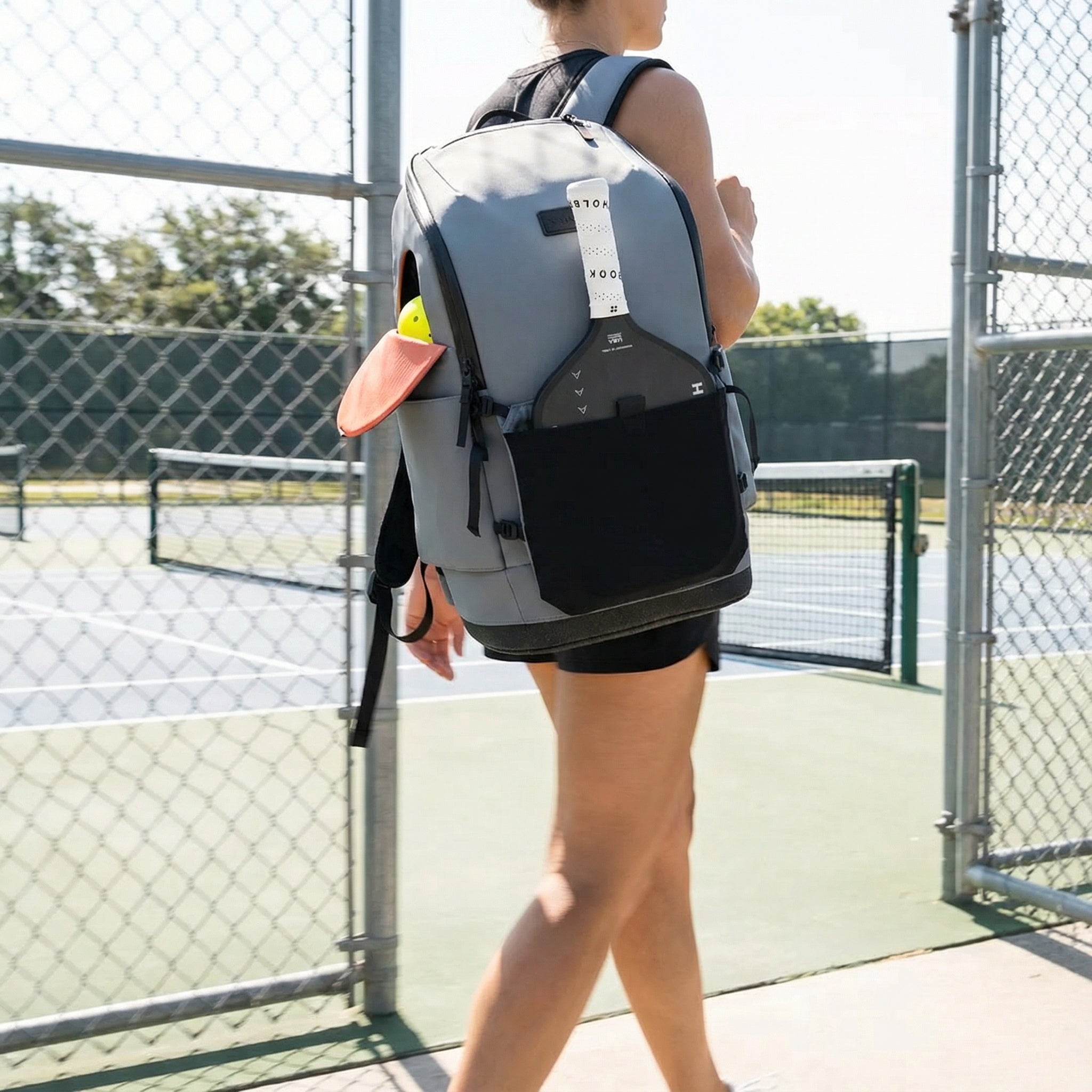
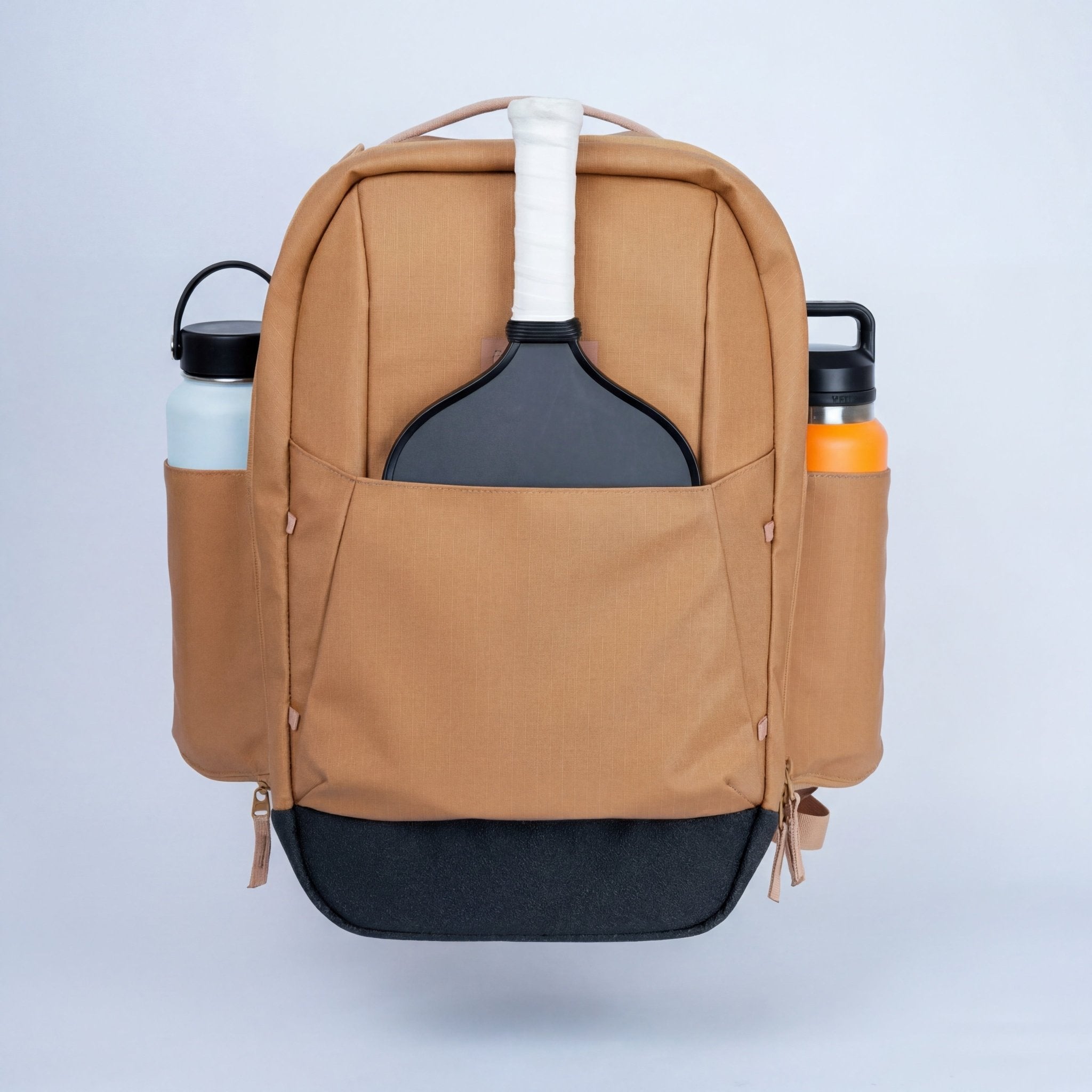
Anti-vibration tape optimizes what's in your hand — but the right bag optimizes what you carry to court. The FORWRD Court Caddy was designed with 500+ real players and has a modular paddle sleeve that protects your tape-modified paddles from scratching against each other during transport. YKK AquaGuard zippers keep everything dry on outdoor courts. If you're serious enough about your paddle to add damping tape, you're serious enough to carry it in a bag designed for the sport.
Shop the Court Caddy — or check the Court Ranger V2 for a slimmer carry with the same build quality.
Frequently Asked Questions
Does anti-vibration tape actually work on pickleball paddles?
Yes. 3M 435 measurably reduces paddle shock across graphite, composite, and wood paddle types. Players managing tennis elbow or wrist sensitivity consistently report reduced discomfort. Results vary by paddle construction, but the improvement is noticeable on most modern paddles.
Where do you put anti-vibration tape on a pickleball paddle?
The most effective placements are around the edge guard perimeter or under the grip on the handle. Perimeter placement damps vibration at the point of off-center contact; handle placement affects feel during follow-through. Most players prefer perimeter placement as their first application.
Does anti-vibration tape add weight to the paddle?
Minimally. A full perimeter application of 3M 435 tape adds about 6 grams — less than 0.25 oz. This is within normal paddle weight variation and won't meaningfully change swing weight or balance for most players.
Will it affect my paddle's warranty?
It depends on the manufacturer. Most paddle warranties cover manufacturing defects, not modifications. Adding tape to the outside of the paddle should not void a warranty, but check with your specific brand if you're concerned. Because 3M 435 removes cleanly, you can always take it off before sending a paddle in for warranty service.

Leave a comment
This site is protected by hCaptcha and the hCaptcha Privacy Policy and Terms of Service apply.