

Last Updated: May 2026
Key Facts
- Ben Johns has held the top men's DUPR ranking for multiple consecutive years and is the only professional to consistently compete — and win — across all three formats simultaneously.
- Anna Leigh Waters is the benchmark for women's professional pickleball, with more PPA Tour titles across formats than any other active female player.
- DUPR (Dynamic Universal Pickleball Rating) is the sport's official global ranking system — used from recreational 3.5 players to the top professionals. Ratings above 6.5 indicate advanced play; above 7.0 indicates elite professional level.
- CJ Klinger made one of the fastest rises in PPA Tour history — from outside the top 20 to consistent top-10 within a single season.
- Professional pickleball prize money has grown substantially, with top players now building six-figure incomes from tour winnings, equipment sponsorships, and coaching.
- The PPA Tour and Major League Pickleball (MLP) are the two primary professional circuits. PPA runs individual tournaments; MLP uses a team-franchise model.
- Pickleball's professional landscape has attracted former tennis players, table tennis athletes, and multi-sport competitors — accelerating the skill ceiling faster than any prior racquet sport.
Professional pickleball's talent depth is now real enough that the rankings above position 5 shift meaningfully every few months. The players below have earned their spots through sustained performance — not one hot week. Here's who's actually dominating and what separates them from the field.
Top Men's Pickleball Players — Ranked
#1 — Ben Johns
Ben Johns is the clearest #1 in professional pickleball by almost every available metric. His DUPR rating has held above 7.35 — the highest consistently recorded in the system — while he competes across all three professional formats simultaneously. That simultaneous three-format dominance is essentially unprecedented. Most elite doubles specialists protect their energy by limiting singles exposure; Johns wins in all three on the same weekends.
His technical contributions have reshaped how pickleball is played at every level. Johns popularized two-handed backhands and early spin-serve adoption before the rules closed some of those options. His kitchen-line positioning and shot selection are studied by coaches and used in instructional content globally. If you want one player's match footage to study for strategy, it's Johns.
#2 — JW Johnson
JW Johnson is the most credible challenger to Johns' top spot and the player who comes closest to matching him across formats. His footwork is exceptional, his baseline game is elite, and his composure in high-pressure moments has produced repeated championship-level performances. Johnson's ranking has been a fixture in the top 3, and the gap between him and Johns has narrowed as his game has matured.
#3 — Federico Staksrud
Staksrud has become one of the most reliable performers on the professional circuit. Multiple finals appearances across a season — without winning everything — actually tells a specific story: he's good enough to reach the end consistently, and the competition to win at that level is extremely concentrated. His game is defined by controlled aggression and exceptional patience in dink exchanges. He rarely gives opponents easy points.
#4 — Andrei Daescu
Daescu is a men's doubles specialist whose results speak clearly. Five men's doubles gold medals in a single PPA season is a number that earns permanent credibility — you don't accumulate that without genuinely elite partnership chemistry and court awareness. His read of the game and ability to put away balls at the right moments make him one of the most difficult opponents in team formats.
#5 — Christian Alshon
Christian Alshon has demonstrated the kind of consistency that separates real top-5 players from one-tournament peaks. Performance variations at this level are normal — the field is that deep — but Alshon keeps showing up in title contention across multiple seasons, which is the actual proof of elite status.
#6–10: The Next Tier (and Why the Gap Is Smaller Than You Think)
The difference in talent between ranks 6 and 10 in professional pickleball is legitimately smaller than in most sports. These players can — and do — upset anyone ranked above them on a given tournament weekend. Key players to know:
- CJ Klinger — One of the sport's fastest-rising careers. Went from outside the top 20 to consistent top-10 in a single season. Dangerous in both doubles formats, with the mental composure to match.
- Hayden Patriquin — Competed at the professional elite level as a teenager. His results alongside Ben Johns in doubles signaled long-term potential that typically takes years to develop.
- Tyson McGuffin — A veteran who helped grow the professional sport's profile before it had a mainstream audience. Continues to compete at the top level and has the kind of court presence that younger players study.
- Riley Newman — Known particularly for his mixed doubles performance and court IQ. Keeps himself in championship contention through intelligence and consistency rather than raw athleticism alone.
- Dylan Frazier — Growing tournament presence and consistent results make him one of the most complete players at this tier.
Top Women's Pickleball Players — Ranked
#1 — Anna Leigh Waters
Anna Leigh Waters is the benchmark for women's professional pickleball. Her dominance across multiple formats and her ability to sustain it over consecutive seasons — not just peak and fade — is what separates her from the field. She's the kind of player who makes other elite players better just by being the standard they're measured against.
Waters came from a competitive tennis background, and the footwork and ball-tracking skills from that sport translate clearly into her pickleball game. Her ability to generate pace and control simultaneously is rare; most players who can hit hard sacrifice some placement to do it. She doesn't.
#2–5: The Women's Field
The women's professional tour features genuine depth behind Waters, with players who consistently reach finals across multiple formats. The top five in women's pickleball typically includes players who've excelled in tennis, volleyball, or table tennis — sports that share the hand-eye coordination and strategic positioning requirements that translate well.
The women's mixed doubles specialists often show different strengths than their women's-doubles counterparts — adapting playing style when partnered with male players requires specific tactical flexibility that separates the most versatile athletes from the rest of the field.
"We designed the Court Caddy after spending time watching what serious tournament players actually carry — multiple paddles, a change of clothes, a laptop or tablet for filming and review. The pros don't carry one paddle. They show up ready for a full day."
— Topher Lake, FORWRD Co-founder
What Makes a Professional Pickleball Player Elite
The skills that separate players ranked 5.0 from those ranked 7.0+ aren't a mystery. They're just difficult to acquire. (New to the sport yourself? Our no-fluff how to play pickleball guide covers all the fundamentals.)
- Third-shot drop consistency — At the professional level, third-shot drops land within inches of the net repeatedly under pressure. Recreational players who can execute this shot 50% of the time in practice see it fall to 20% in competition. Pros maintain 85%+.
- Kitchen-line patience — Most amateurs want to speed up the ball and end the point. Professional pickleball often involves extended dink exchanges because both players understand that the first unforced error loses. Elite players can sustain these exchanges indefinitely.
- Two-hands usage — Popularized by Johns and now common across the professional field, the two-handed backhand provides additional power and deception without sacrificing placement control.
- Format versatility — True elite players compete across singles, doubles, and mixed doubles. This isn't just scheduling — it requires genuinely different strategic mindsets and physical demands from each format.
Professional Pickleball Rankings Explained
Two systems matter most for understanding professional pickleball standings:
DUPR (Dynamic Universal Pickleball Rating): The sport's official global system. Ratings run from 2.0 (complete beginner) to 7.5+ (world-class professional). Your rating updates after every sanctioned match based on who you played and whether you won. For reference: 4.0 is a solid recreational player; 5.0 is competitive amateur; 6.0+ is high-level competitive; 7.0+ is professional elite.
PPA Tour Points: Tournament-specific points that determine seeding and bracket positioning within the PPA circuit. These don't translate directly to DUPR — they measure tour-specific performance, not universal skill level.
Rankings significantly affect tournament seeding and prize money. Higher-ranked players receive favorable draw positions and automatic qualification for premier events — which creates a compounding effect: better seeds face easier early-round opponents, preserving energy for later rounds when it matters most.
Gear Serious Players Carry
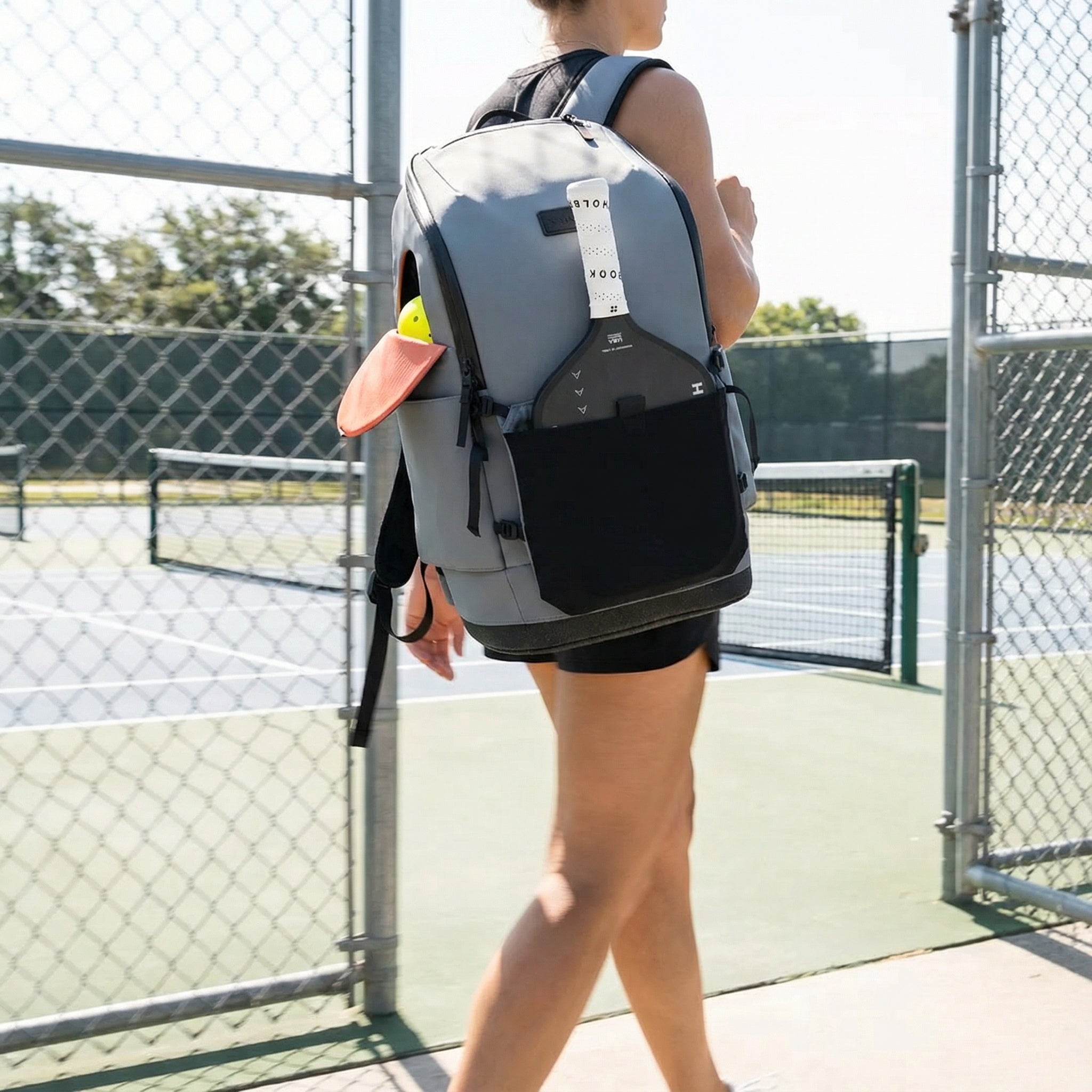
This section isn't about the pros using different balls or paddles than you can buy — it's about the organizational reality of tournament play. A serious pickleball player at any level — from 4.0 weekend competitor to PPA Tour professional — arrives at a tournament with multiple paddles (in case one breaks or needs restringing), a change of clothes for extended match days, court shoes, grip tape, and usually some form of device for reviewing footage.
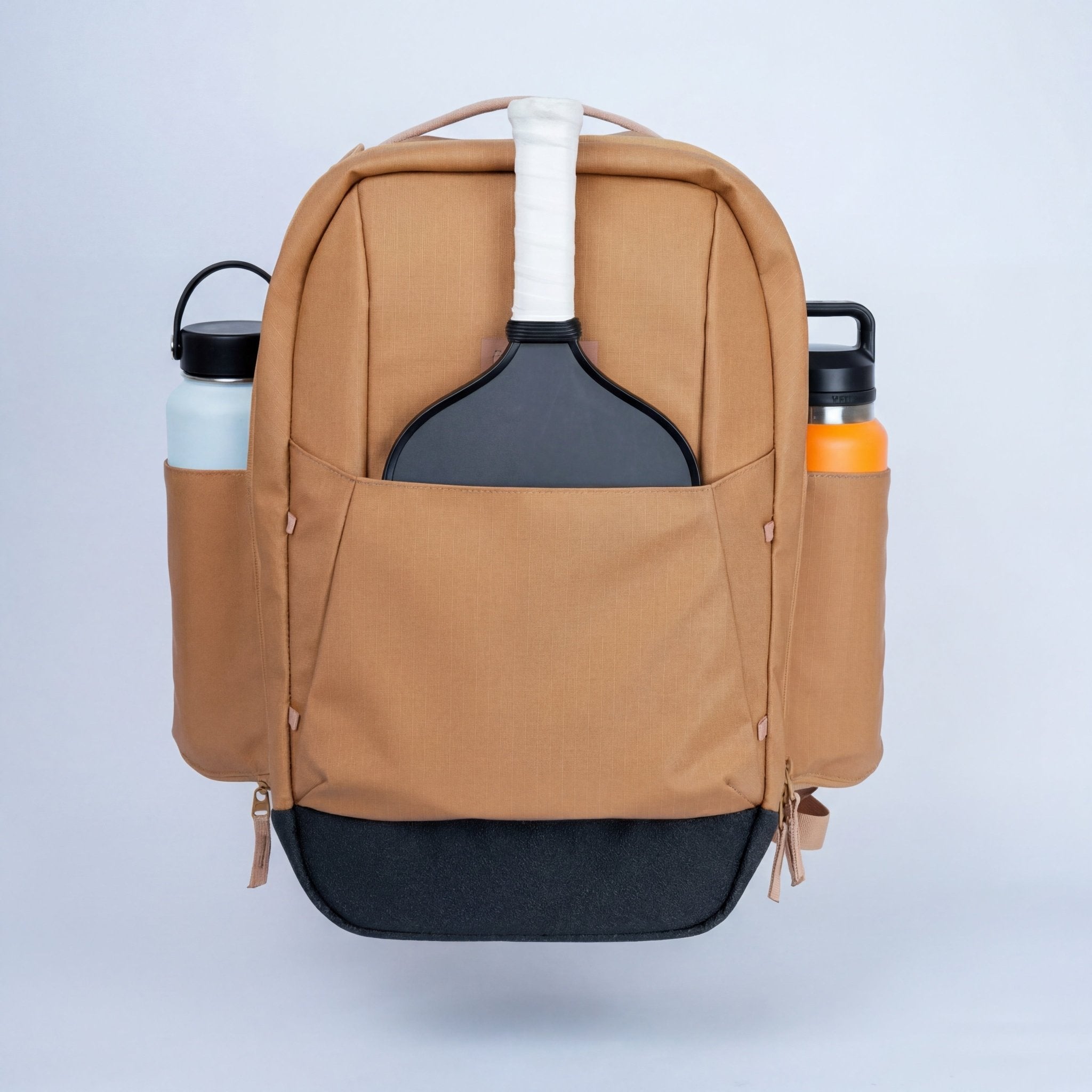
That's not a single-paddle sleeve bag situation. The Court Caddy Backpack was built specifically for this load: modular paddle sleeve, 15" padded laptop compartment, YKK AquaGuard zippers, and enough organization that you can find anything quickly between matches. At $325, it's designed for the player who takes the sport seriously enough to warrant gear that matches that commitment.
If you're a lighter packer or want the everyday carry version, the Court Ranger V2 handles 2–3 paddles, a 16" laptop, and daily essentials at $195. Both were designed with input from 500+ real players and featured in The Dink, Pickleball Effect, and The Kitchen.
The Future of Professional Pickleball
Professional pickleball's evolution is happening fast enough that any specific prediction about rankings risks being outdated within months. What's clearer: the sport is attracting genuine athletic talent from adjacent sports, the prize money and professional infrastructure are growing to support full-time careers, and the technical level of the game continues to advance in ways that make today's professional matches more watchable and more technically demanding than anything from five years ago.
Young players like Hayden Patriquin and CJ Klinger demonstrate that the talent pipeline is real. The combination of veterans like McGuffin and Johns establishing competitive standards while rising players push the ceiling creates the kind of competitive environment that builds sport credibility. The best outcome for professional pickleball is that Ben Johns keeps winning until someone is actually good enough to consistently beat him — and that player is already on the tour.
Frequently Asked Questions
Who is the #1 ranked pickleball player in the world?
Ben Johns is consistently ranked #1 in men's professional pickleball, holding a DUPR rating above 7.35 — the highest sustained rating recorded in the system. He competes across singles, men's doubles, and mixed doubles simultaneously, which is what separates his claim to #1 from any other professional in the sport. Anna Leigh Waters holds the equivalent position in women's professional pickleball. Current rankings are always available at DUPR.app.
How is DUPR rating calculated in pickleball?
DUPR (Dynamic Universal Pickleball Rating) calculates your rating based on every sanctioned match result — who you played, whether you won or lost, and the margin of victory. The system updates dynamically after each match. Ratings range from 2.0 (absolute beginner) to 7.5+ (world-class professional). A 4.0 rating indicates solid recreational play; 5.5+ indicates strong competitive amateur level; 7.0+ is professional elite. You can register and track your rating at DUPR.app.
Who is the best female pickleball player right now?
Anna Leigh Waters is consistently ranked as the top women's professional pickleball player, with multiple PPA Tour titles across formats. She came from a competitive tennis background, and her combination of footwork, shot selection, and format versatility (singles, women's doubles, mixed doubles) gives her the broadest claim to the top ranking. As with all professional rankings, current standings should be verified at DUPR.app.
What tours do professional pickleball players compete on?
The two primary professional circuits are the PPA Tour (Professional Pickleball Association) and Major League Pickleball (MLP). The PPA Tour runs traditional individual tournaments with prize money and DUPR-relevant results. MLP uses a team-franchise model where players are drafted onto teams and compete collectively. Top players often participate in both circuits throughout the season. The APP Tour provides an additional competitive circuit particularly important for players developing their professional careers.
Can amateur players compete against professionals in pickleball?
Some pickleball tournaments include both open amateur divisions and professional draws, held at the same venue and sometimes on the same day. However, open pro draws require a qualifying DUPR rating or direct invitation. Most recreational and competitive amateur players compete within rating-banded divisions (4.0, 4.5, 5.0) rather than open professional events. The pathway from high-level amateur to professional typically involves building a 6.0+ DUPR rating through sanctioned tournaments.
What skills separate professional pickleball players from 5.0 amateurs?
The primary separators between 5.0 competitive amateurs and professional players are: third-shot drop consistency under tournament pressure (pros maintain this at 85%+ in competition; amateurs drop to 20–40%); kitchen-line patience in extended dink exchanges; format versatility across singles and doubles simultaneously; and mental performance under pressure. Physical conditioning matters too — professional tournament days can involve multiple long matches over 8+ hours, and fitness determines execution quality in later rounds.

Leave a comment
This site is protected by hCaptcha and the hCaptcha Privacy Policy and Terms of Service apply.