

FORWRD earns affiliate commission on Pickleball Central product purchases through links in this article. This doesn't affect the price you pay. We only recommend gear we genuinely believe in.
Last Updated: May 2026 | By Cosmo, FORWRD Gear Team
Best Pickleball Paddles for Intermediate Players 2026: The 3.0–4.0 Upgrade Guide
At 3.0, a $200 paddle is a waste. At 3.8, a $75 paddle is holding you back. That's the honest version of this article, and it's the one nobody else is writing. Most paddle guides give you a ranked list and tell you the most expensive pick is the best pick. We're not doing that here.
We asked 500+ players from our community about their gear decisions — the same players who gave us feedback on our bag design — and the intermediate plateau came up over and over. Players told us they had no clear guidance on when to spend more on a paddle. They'd just bought a $175 carbon fiber slab at 3.1 DUPR and couldn't figure out why their game wasn't improving. Spoiler: the paddle wasn't the problem. But neither was staying with a $40 beginner paddle at 3.7.
This guide is structured as a DUPR development path. You'll find specific recommendations at 3.0, 3.2–3.5, and 3.5+. Find your current level, read that section, and skip the rest if you want. No fluff. Let's get into it.
Already want the full gear picture? Check out our complete pickleball equipment guide for 2026 — it covers everything from shoes to balls to bags, so you're not just making a smart paddle choice.
How to Know You've Outgrown Your Beginner Paddle
Your beginner paddle isn't failing you. You're failing it — and that's actually the good news.
Most starter paddles are built with one job: get you on the court, absorb your mishits, and not embarrass you. They do that job well. They're typically aluminum or polymer core, graphite or composite face, somewhere between 7.5 and 8.5 oz, and they'll set you back $30–$60. Fine for learning. Not fine for 3.0+ play.
Here's how you know you've crossed the line:
- Your dinks are inconsistent even when your placement is right. Beginner paddles have dead zones near the edges where the ball just doesn't respond predictably. You're compensating with your wrist when the paddle should be doing the work.
- You're losing balls you shouldn't on third-shot drops. A 3.0-level third shot drop requires real feel feedback. Thick, soft beginner cores mask that feedback entirely.
- You've been playing 6+ months, 3+ times a week, and your rate is stuck. Gear isn't the only variable, but equipment-ceiling is real. A better paddle amplifies what you already know how to do.
- You hit a good drive and the paddle twists in your hand. Cheap edge guards and lightweight cores flex on contact. A quality intermediate paddle gives you a stable response, on-center or off.
None of this means you need to spend $200. It means you need to spend smarter. The paddles in this guide range from $75 to $120, and every one of them is a meaningful step up from a starter paddle without the price tag that makes you feel like you need to justify the purchase at rec play.
The Intermediate Player's Paddle Specs: What Actually Changes at 3.0+
You don't need to become a materials scientist. But understanding three specs — face material, core thickness, and weight — will tell you almost everything you need to know about whether a paddle suits your current game.
Face Material: Graphite vs. Carbon Fiber
Beginner paddles almost always use composite (fiberglass weave) faces. They're durable and cheap. Intermediate paddles step up to either graphite or carbon fiber, and the difference matters.
Graphite is smooth, slightly flexible, and forgiving. You get a larger effective sweet spot, softer ball response, and it's more consistent on off-center hits. Great for 3.0–3.4 players who are still developing shot placement consistency.
Carbon fiber is stiffer, creates more spin thanks to a textured grit surface, and gives sharper feedback on every hit. That feedback is a gift to a player who already has solid mechanics. It's punishing if you don't. At 3.5+, you've built enough muscle memory to benefit from it. Below that, the extra feedback mostly just tells you how many mistakes you're making.
Core Thickness: 13mm vs. 16mm
This is the most underrated spec in intermediate paddle selection. Thicker cores — 16mm — create a softer, more controlled feel and a larger sweet spot. Thinner cores — 13mm and under — are springier, livelier, and generate more power.
At 3.0–3.4, you want 16mm. Control over power, every time. You're still working on placement consistency; extra pop is the last thing your dinking game needs.
At 3.5+, you can start making a real choice. If you're a baseline player who loves driving from the transition zone, 13mm has its appeal. If you're a kitchen-first player who wins on dink wars and resets, stay at 16mm.
Weight: Light, Medium, or Heavy?
Intermediate paddles typically run 7.5–8.5 oz. Here's the real-world breakdown:
- Under 7.8 oz (light): Faster swing, easier on the elbow, better for quick hands at the net. Less pop on drives.
- 7.8–8.2 oz (medium): The sweet spot for most intermediate players. Enough weight for stable drives, light enough for dink volleys.
- Over 8.2 oz (heavy): More power without extra swing speed — useful for players who have shoulder or wrist issues and can't swing fast. Fatigues slower players in long sessions.
If you're dealing with tennis elbow or a shoulder that talks to you after a two-hour session, go lighter and add lead tape later if you want more mass. Don't start heavy and try to manage pain.
Best Pickleball Paddles for Intermediate Players 2026
Five picks. Ranked budget to premium. Each one matched to a specific DUPR range — because "best" only means something when it's "best for you right now."
1. Diadem Icon V1 Graphite — $74.96 (was $99.95)
Best for: 3.0–3.2 DUPR | Face: Graphite | Core: 8mm poly
At 3.0, this is the paddle. The Diadem Icon V1 is a graphite-face paddle from a racquet brand that actually knows what it's doing. At $74.96 on sale from $99.95, it's the most honest entry into real intermediate gear — not a rebranded Amazon paddle with a brand name slapped on it, but a purpose-designed piece of equipment from a company with a warranty program and engineering pedigree from the tennis world.
The 8mm core keeps it lively without making it twitchy. The graphite face rewards players who are still building their touch at the kitchen — it's forgiving enough to mask minor placement errors while giving you enough feedback to start dialing in your dink consistency. The sweet spot is meaningfully larger than anything in the carbon fiber tier, which matters when you're still at a stage where off-center hits happen regularly.
What it won't do: generate serious spin, give you the crisp feedback of a textured carbon face, or keep up with you at 3.5+. The face texture wears faster than carbon fiber. You'll likely be ready to upgrade in 12–18 months of regular play — and that's fine. At this price, you're buying the right tool for right now, not a paddle you're hoping to grow into.
We have a full Diadem Icon V1 Graphite review if you want the deep breakdown on specs and feel.
Check Price at Pickleball Central — $74.96 →
2. Selkirk SLK Halo Pro XL — $99.99
Best for: 3.0–3.4 DUPR (dink-focused) | Face: Carbon hybrid | Core: Poly honeycomb
At 3.0–3.2 and you already know your game is kitchen-first? The SLK Halo Pro XL deserves serious consideration over the Diadem. It's $25 more, but you get an XL face — noticeably wider than a standard shape — which gives you a larger forgiving zone right where dink players need it most: the lower half of the paddle.
Selkirk built the SLK line as their entry-intermediate tier, and it shows in a good way. The carbon hybrid face sits between pure graphite and full raw carbon fiber — you get more spin potential than a graphite paddle without the punishing feedback of a high-end carbon face. It's a sensible middle ground for players who are developing touch but want to start building spin habits early.
The XL shape does come with a trade-off: the handle is slightly shorter. If you like a two-handed backhand, try it before you commit. For standard one-handed backhand players and dink-dominant 3.0–3.4 players, the XL face is pure upside.
No sale price here — $99.99 is the regular price and it's fair for what you're getting: a recognizable brand with real customer support, a paddle that plays above its price point, and a shape that genuinely helps developing kitchen games.
3. Six Zero Double Black Diamond Control 16mm — $90.00 (was $180.00)
Best for: 3.5–4.0 DUPR | Face: Premium carbon fiber | Core: 16mm poly
This is the pick of the entire guide for players around 3.5–4.0 DUPR who are serious about control. At $90 — down from $180 — the Six Zero Double Black Diamond Control 16mm is the most overdelivering deal on this list.
Six Zero is an Australian brand that built a cultish following in the premium paddle space before most American players had heard of them. The Double Black Diamond Control is their technique-first paddle: 16mm thick carbon fiber face, built for players who want to dominate the kitchen, reset under pressure, and generate consistent spin without arm-swinging power plays. It's not a paddle that flatters every style. If you want to bang from the baseline, this isn't your paddle. If you want to win dink wars and reset every hard attack cleanly, this is the paddle.
At full price ($180), it was a premium buy you had to think hard about. At $90, it's the clearest value on this list. The carbon fiber face gives you legitimate spin generation and crisp feedback — the kind you can only use well if your mechanics are already there. At 3.5+ DUPR, they are. At 3.2, they probably aren't yet.
Honest trade-off: this paddle rewards commitment to a control-based style. If you're still figuring out your game identity at 3.4, the JOOLA Hyperion below gives you more flexibility.
Check Price at Pickleball Central — $90.00 →
4. JOOLA Ben Johns Hyperion 3S 16mm — $119.95 (was $259.99)
Best for: 3.2–3.8 DUPR | Face: C-grade fiberglass | Core: 16mm poly
The most broadly recommended intermediate paddle on this list — and at $119.95 off from $259.99, it's a genuinely remarkable deal on a paddle attached to the most recognizable name in professional pickleball.
The Hyperion 3S 16mm uses a C-grade fiberglass face — not Ben's pro-level raw carbon fiber, but a textured fiberglass construction that gives you spin capability and solid feedback without the punishing stiffness of full carbon. The 16mm core keeps the sweet spot wide and the feel controlled. It's a paddle that does a lot of things well without doing any one thing badly. That's either a feature or a limitation depending on who you are.
For players at 3.2–3.5 who are still identifying their game style, the JOOLA Hyperion 3S is an excellent choice precisely because it doesn't force you into a corner. You can drive with it, you can dink with it, and you can reset with it — all without the paddle fighting you. At 3.5–3.8, it still holds up, though you might start to feel the ceiling if you're a spin-heavy or power-heavy player who needs a more specialized tool.
The JOOLA brand also means you're buying into a legit warranty and spare parts ecosystem. If the edge guard cracks six months in, you're talking to a real company.
Check Price at Pickleball Central — $119.95 →
5. Selkirk VANGUARD Pro Epic — $119.99 (was $229.99)
Best for: 3.5–4.0 DUPR (power-control balance) | Face: Carbon fiber | Core: Poly honeycomb, elongated shape
At 3.5+, you've earned an opinion about your game. The Selkirk VANGUARD Pro Epic is built for players who know they want to develop a power-control balance — who aren't pure kitchen players and aren't pure bangers, but who want a premium carbon fiber face and an elongated shape that gives them reach at the net without sacrificing the pop on transition zone drives.
The carbon fiber face is the real story here. Selkirk's face construction gives you genuine spin generation — the kind that starts showing up in your serve, in your third-shot drives, and in your cross-court dinks when you catch the face texture right. At 3.5+ DUPR, you're playing enough intentional pickleball that those spin shots are becoming weapons rather than accidents.
The elongated shape does require adjustment. If you're coming from a standard-face paddle, give it two weeks before you judge it. Your dink position and ready stance will shift slightly. Once they do, the extended reach at the kitchen line is a real advantage in fast-exchange volley situations.
At $119.99 off from $229.99, this is premium carbon fiber at an intermediate price point. It's the right paddle for a player who's serious about developing toward 4.0 and wants equipment that grows with them rather than a paddle they'll outgrow in six months.
Check Price at Pickleball Central — $119.99 →
Carbon Fiber vs. Thermoformed: Is the Price Jump Worth It at 3.5?
You'll see "thermoformed" all over paddle marketing in 2026. Here's what it actually means and whether it matters for your game right now.
Standard paddles are built in layers: face material bonded to the core, edge guard attached separately, handle bolted on. It's a solid construction method that produces good paddles at $75–$120. Every pick in this guide except the VANGUARD Pro Epic uses this construction at the core level.
Thermoformed paddles are molded as a single unit under heat and pressure, fusing the face material directly to the core without seams or separate bonding agents. The result is a stiffer, more responsive feel — sometimes described as "alive" — and a more consistent flex across the entire paddle face. The edge-to-edge sweet spot is more uniform. You also get better durability because there are no glue lines to fail over time.
The honest answer on whether it's worth it at 3.5: maybe.
If you're at 3.5 and your consistency at the kitchen is already solid — if your third-shot drops land in the kitchen 7 out of 10 attempts and your resets are reliable under pressure — thermoformed construction gives you real upside. The crisper feedback makes the difference between a mediocre reset and a good one more apparent, which accelerates your improvement.
If you're at 3.5 and you're still having consistency issues — if kitchen errors are costing you points in rec games — the thermoformed feel will mostly just amplify your mistakes. You don't need to spend $200+ on a thermoformed paddle yet. The Six Zero Double Black Diamond and the Selkirk VANGUARD Pro Epic in this guide both give you carbon fiber performance at a more sensible intermediate price point while you're still developing the mechanics to unlock full thermoformed benefits.
The price jump to thermoformed ($180–$250+) is worth it when you're consistently playing at 3.8–4.0+ and you're actively drilling, not just recreational play. At that level, the equipment ceiling matters. Below it, consistent practice with a quality carbon fiber paddle will improve your game faster than the latest thermoformed tech.
Want the full strategic picture once you're past 4.0? Our guide to advanced pickleball strategies for intermediate to advanced players covers exactly what changes in your game between 3.5 and 5.0 — including how your equipment needs shift.
Complete Your Setup
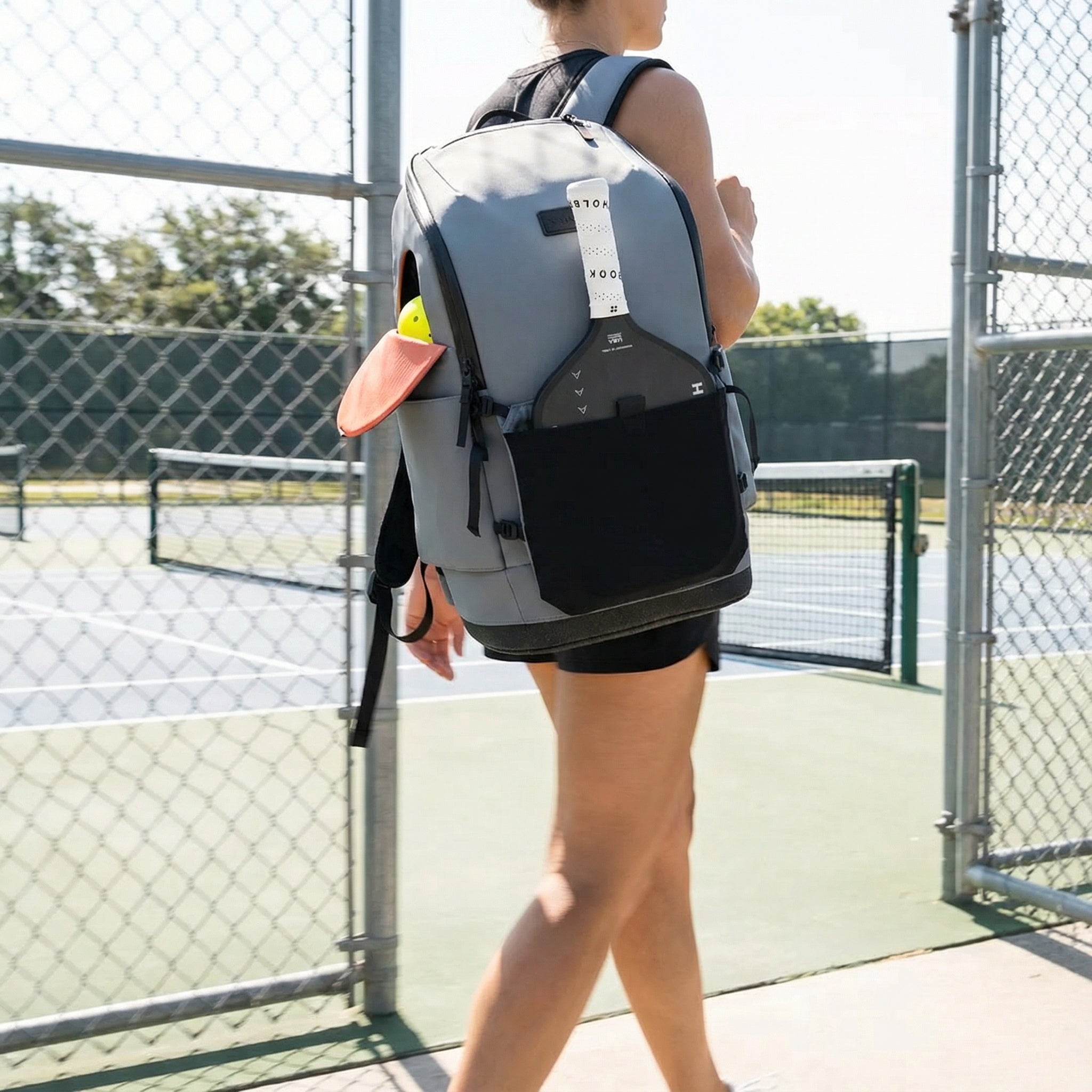
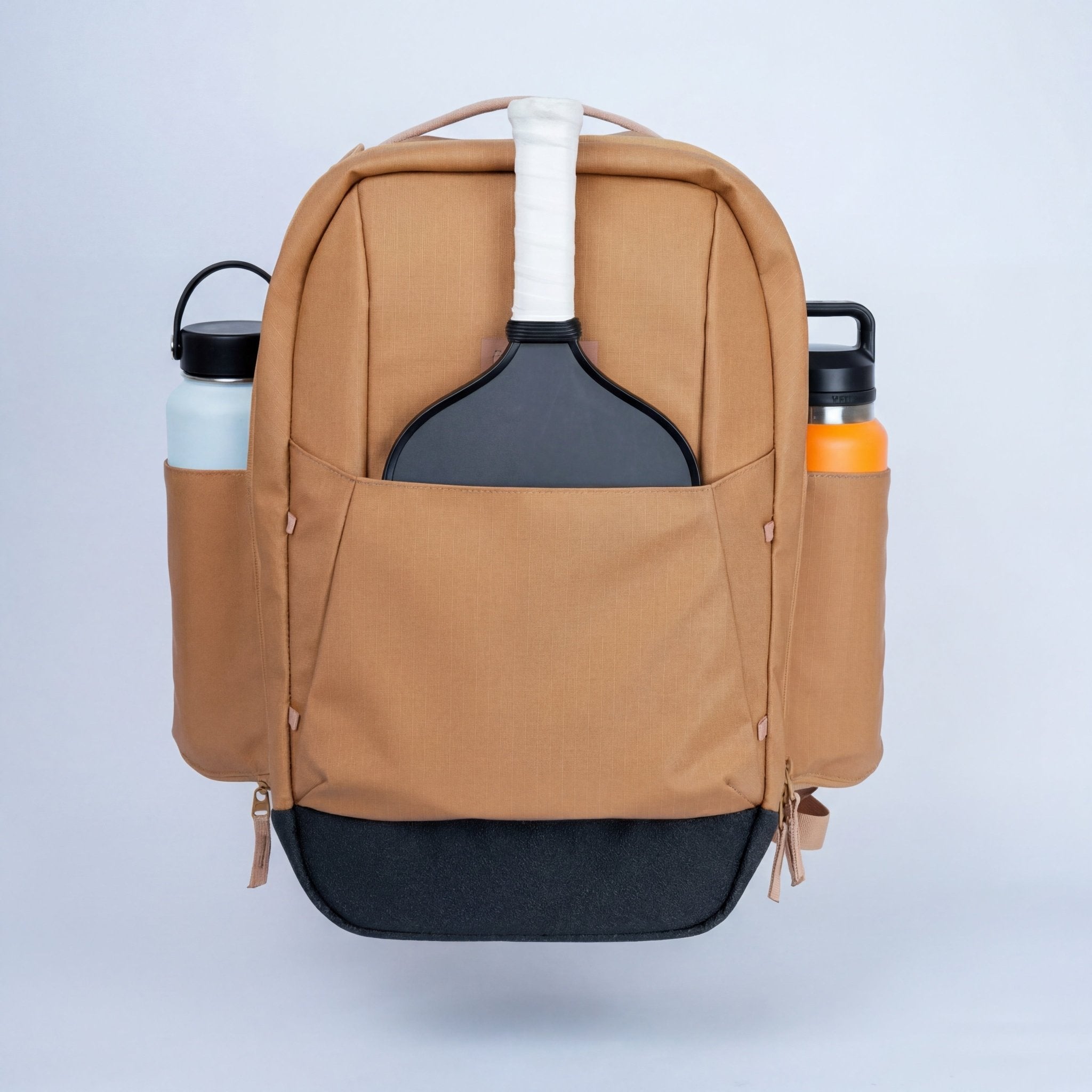
Testing paddles at different DUPR levels means you're carrying multiple paddles to the court — or at least carrying your current one without it getting beat up in a duffel bag. The FORWRD bag lineup was designed around exactly this problem.
The Court Caddy ($325) fits up to 4 paddles in its modular sleeve system — so when you're testing paddles at different DUPR levels, everything travels organized. No rattling, no scratched faces, no digging through a main compartment to find your second paddle before drills.
If you want a lighter carry for single-court sessions, the Court Ranger V2 ($195) has a dedicated paddle sleeve that holds up to 3 paddles securely — still organized, but in a form factor that doesn't look like you're hauling a rolling suitcase to a rec game.
Both bags were shaped by feedback from 500+ players in the FORWRD community, including the same intermediate players who pushed us to write this guide.
FAQ
What paddle should a 3.5 pickleball player use?
At 3.5 DUPR, you're ready for a carbon fiber face paddle and should be looking at 16mm core thickness if control is your priority. The Six Zero Double Black Diamond Control 16mm at $90 is the strongest value at this level — premium carbon fiber construction at a price that doesn't require you to justify it to yourself every time you use it. If you're a 3.5 player developing a power-control balance game, the Selkirk VANGUARD Pro Epic at $119.99 is the next step up.
When should I upgrade from a beginner pickleball paddle?
The clearest signal is inconsistency that isn't explained by your technique. If your dinks are unpredictable on good swings, your third-shot drops have no feel feedback, or your drives twist the paddle in your hand on off-center contact — and you've been playing 4+ months at 3+ times a week — it's time. The other clear trigger is hitting a rating of 3.0 DUPR. At that point, your beginner paddle's skill ceiling is lower than yours. You don't need to spend $200. Spending $75–$120 on the right intermediate paddle will do more for your game than any amount of drilling with equipment that's holding you back.
Is a carbon fiber paddle worth it for intermediate players?
Yes — at 3.5+ DUPR. No — at 3.0–3.2 DUPR. Carbon fiber faces give you more spin potential and sharper feedback on every hit. That feedback is an asset when your mechanics are consistent enough to benefit from it. Below 3.5, the extra sensitivity mostly amplifies errors. Above 3.5, it accelerates improvement by making the difference between good shots and great shots tactile and immediate. The Six Zero Double Black Diamond Control and the Selkirk VANGUARD Pro Epic on this list both offer carbon fiber at $90–$120 — which means you're not paying $200+ to find out if carbon fiber works for your game.
What weight paddle is best for intermediate pickleball?
For most intermediate players — 3.0 to 4.0 DUPR — the sweet spot is 7.8–8.2 oz. Light enough for quick hands at the kitchen, heavy enough for stable drives from the baseline and transition zone. If you're dealing with any elbow or shoulder discomfort, go toward the lighter end (7.5–7.8 oz) and don't try to tough it out with a heavier paddle. If you're a power player who hates how soft light paddles feel on drives, go toward 8.2–8.5 oz. Don't add lead tape until you've played 20+ hours with a paddle at its stock weight — most players who think they need tape are actually adjusting swing mechanics and don't need extra mass.

Leave a comment
This site is protected by hCaptcha and the hCaptcha Privacy Policy and Terms of Service apply.