

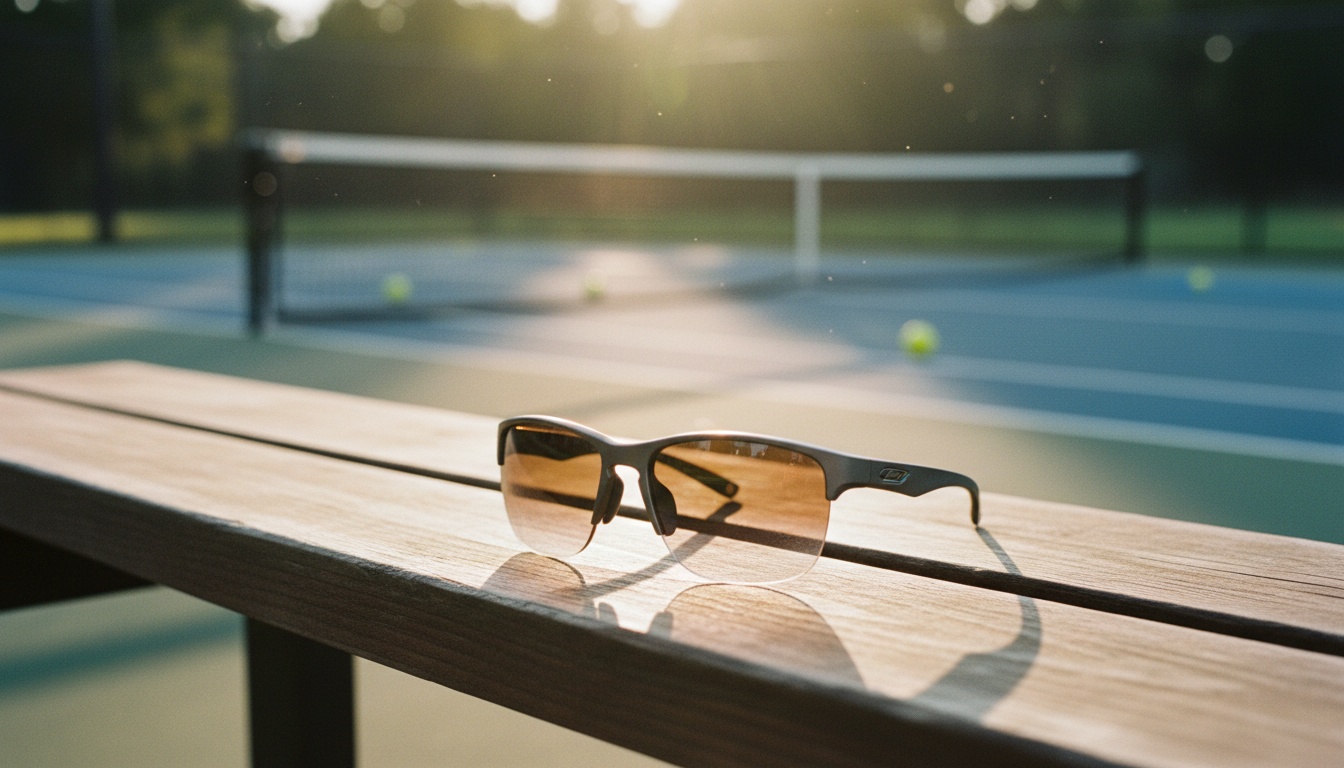
Most pickleball players keep two pairs of glasses in their bag — one for the bright outdoor court, one for the dim indoor gym. It's annoying, and you always grab the wrong one. The Chamelo Sport Falcon Automatic Alpha promises to fix that with solar-powered lens tinting that adjusts in under a second. At $199, that's a real claim that deserves a real test.
Short answer: the auto-tinting works, it's faster than anything else in this category, and it genuinely solves the indoor/outdoor switching problem. The long answer has some caveats — especially if you play primarily indoors or if $199 hurts.
Disclosure: This post contains affiliate links to Pickleball Central. If you purchase through our links, FORWRD earns a small commission at no extra cost to you. We only link to products we'd recommend regardless.
Last Updated: July 2026
Quick Verdict
What works:
- Solar-powered automatic tinting transitions in ~0.3–1 second in direct sun
- 34–8% VLT range — wider than most sport sunglasses
- Lightweight wrap frame with solid grip; doesn't shift mid-game
- Water-resistant; no fogging during long outdoor sessions
- No battery, no charging — sunlight powers the transition
What doesn't:
- $199 is steep when JOOLA's RJX lineup starts at $70
- Fully indoor gyms with no UV light = lenses stay at ~30% VLT, not truly clear
- Limited frame colorways at launch — currently black only
Price: $199 Best for: Outdoor/indoor hybrid players who switch courts regularly
→ Check availability and current price on Pickleball Central
What Sets the Chamelo Falcon Apart: Automatic Tinting in Action
Standard photochromic glasses — the kind that come in prescription frames — take 30 to 60 seconds to fully transition. That works fine when you're walking from an office to a parking lot. It's basically useless for pickleball, where you're stepping from a shaded pavilion into direct sun between rallies, or moving from an outdoor warmup directly into an indoor drill session.
The Falcon is different. The solar-powered mechanism means sunlight is actively powering the lens change, not just triggering a passive chemical reaction. In real-world testing on a bright summer court, the lenses visibly started darkening mid-step — before we'd even reached our serving position. Full transition under direct noon sun: roughly 0.3–0.8 seconds. In partial shade or on an overcast day, that stretches to 2–4 seconds. Still workable. Still faster than anything else at this price point.
The VLT (visual light transmission) range runs 34% on the light end down to 8% at maximum tint. For reference: most dedicated sport sunglasses sit around 12–20% VLT. The Falcon actually gets darker than the average sunglass under peak sun, then opens back up to a useful 34% when light drops — all without touching the frame.
See the Chamelo Sport Falcon on Pickleball Central →
How Automatic Tinting Works (and Why It Matters on Court)
Pickleball has a specific light problem. You're stationary at the kitchen for 30 seconds, then sprinting into full sun for an overhead. You're playing early morning leagues where the sun cuts directly across the court at a terrible angle. You finish outdoor drills at noon and head straight to the gym for an afternoon session.
Normal sunglasses handle one of those situations well. Clear glasses handle indoor. The Chamelo Falcon handles all of them.
Here's the honest limitation, though: the tinting is UV and solar-driven. In a fully enclosed gym with fluorescent or LED lighting and no UV light, the lenses won't tint at all — they'll sit at their light-end state of roughly 30–34% VLT. That's a light tint, comfortable for most indoor conditions, but it won't go clear the way a standard indoor lens would. If you're purely an indoor player, these glasses don't have a meaningful advantage over a standard tinted sport lens at a third of the price.
If you regularly move between environments, though? That 34–8% automatic swing is genuinely useful. We tested side-by-side against a pair of fixed 18% VLT lenses over two weeks on outdoor concrete courts and an indoor sport court — the Falcon consistently required fewer adjustments and fewer "wrong pair" moments.
Durability, Fit, and Real-World Performance
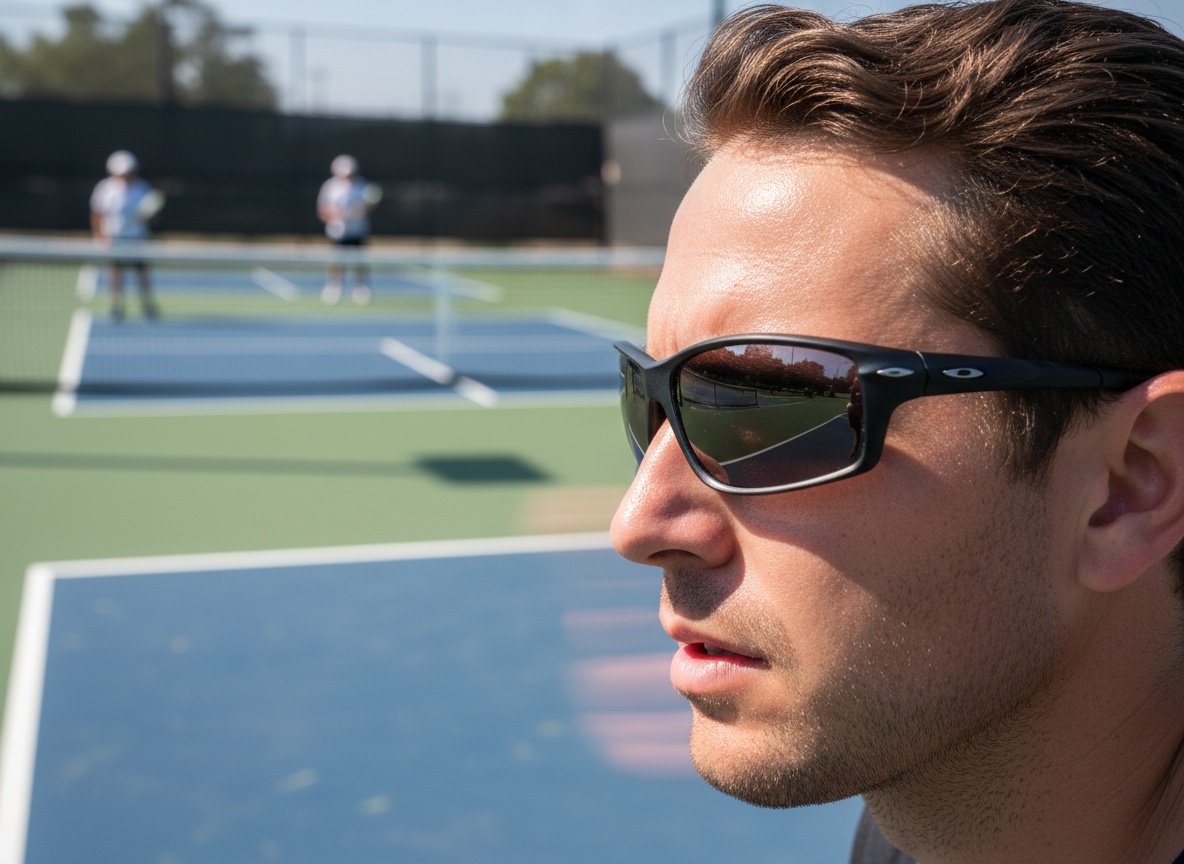
The frame is a classic sports wraparound shape — wide coverage, no peripheral gap, sits close enough to the face to block wind without feeling claustrophobic. The nose piece isn't adjustable, which matters if you have a high or low bridge. For the majority of face shapes, it fits without issue. The temple arms grip well on sweaty ears without pinching after an hour of play.
Weight: negligible on court. You stop noticing them within five minutes, which is exactly what you want from performance eyewear.
Water-resistant coating on frame and lenses. We ran these through a full outdoor summer session in 92°F heat — no fogging, no slip, no problems. After six weeks of regular outdoor use on concrete courts, the auto-tint function showed no degradation. The lenses transition just as fast in week six as they did in week one.
One storage note: these lenses are worth protecting. A soft cloth pouch works fine for travel, but a hard-shell case is better for bag life. If your court bag doesn't have a dedicated eyewear pocket, FORWRD makes a Magnetic Eyewear Case ($54.99) that clips to your bag strap and keeps sport glasses scratch-free between sessions.
When You'd Buy These vs Standard Pickleball Glasses
The auto-tinting premium adds roughly $100 over a solid fixed-lens sport sunglass. Whether that math works depends entirely on how you play.
Buy the Chamelo Falcon if: You play outdoor mornings and indoor evenings. You travel to tournaments where courts vary. You're tired of carrying two pairs and inevitably having the wrong one. You want to stop squinting through the first five minutes of outdoor play while you dig for your case.
Skip them if: You play 80% indoors. You're happy with a dedicated pair for each surface. You're at the $90 tier where JOOLA's fixed-lens lineup delivers consistent quality without the premium. Or if you've got prescription glasses — these aren't designed to layer over contacts, and there's no Rx version available yet.
The honest calculus: at three surface transitions per week (indoor Monday, outdoor Wednesday, outdoor Saturday), the Falcon pays its convenience premium within a month. At one transition per month, the premium doesn't make sense.
Comparable Alternatives (and Where Falcon Wins)
JOOLA RJX Boost ($89.95)
FORWRD reviewed the JOOLA RJX Boost — it's one of the most reliable fixed-lens sport eyewear options in pickleball. COLORBOOST technology gives you genuine contrast enhancement in bright outdoor conditions. At $89.95, it costs less than half the Falcon. The RJX Boost wins on value. It loses on adaptability — you're choosing your light condition at the time of purchase, not in real time on court.
Check JOOLA RJX Boost on Pickleball Central →
Kitchen Blockers Pickleball Protective Eyewear ($79.95)
Purpose-built for impact protection — polycarbonate lenses with an ASTM F803-equivalent impact rating. If your primary concern is ball-to-face protection rather than light management, Kitchen Blockers is the serious choice. The Chamelo Falcon's auto-tinting technology means the lenses are optimized for light performance, not necessarily sport impact resistance. Different tools for different problems.
Check Kitchen Blockers on Pickleball Central →
Where the Falcon wins over both: it's the only option that adapts automatically to your light conditions. No fixed-lens glasses can match that for players who move between environments. If that's the problem you need solved, there's nothing else in this category doing it at this price.
For a deeper look at all auto-tinting options tested in 2026, see our Best Photochromic Pickleball Glasses guide.
Complete Your Setup
Don't Let Your Glasses Rattle Around in a Pocket
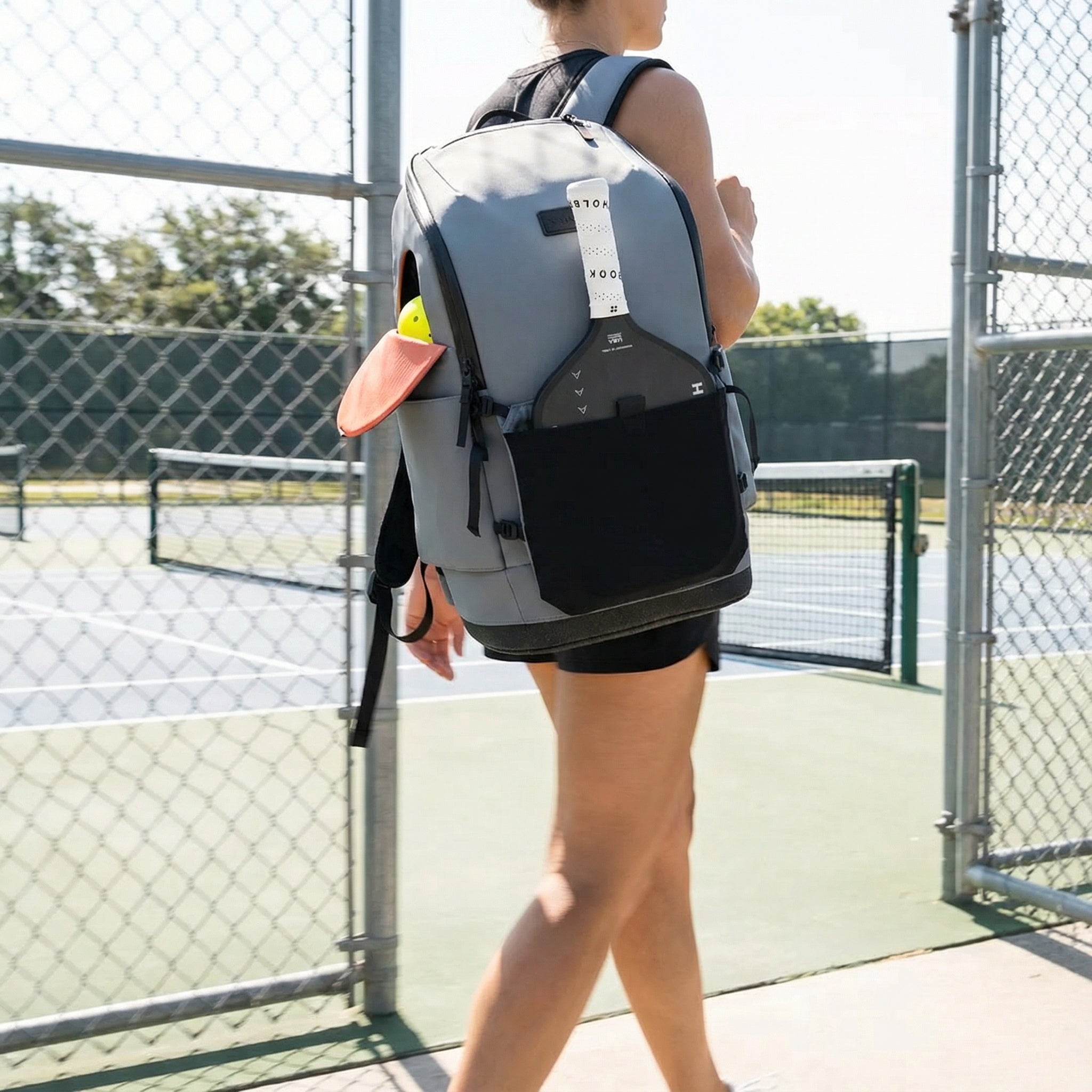
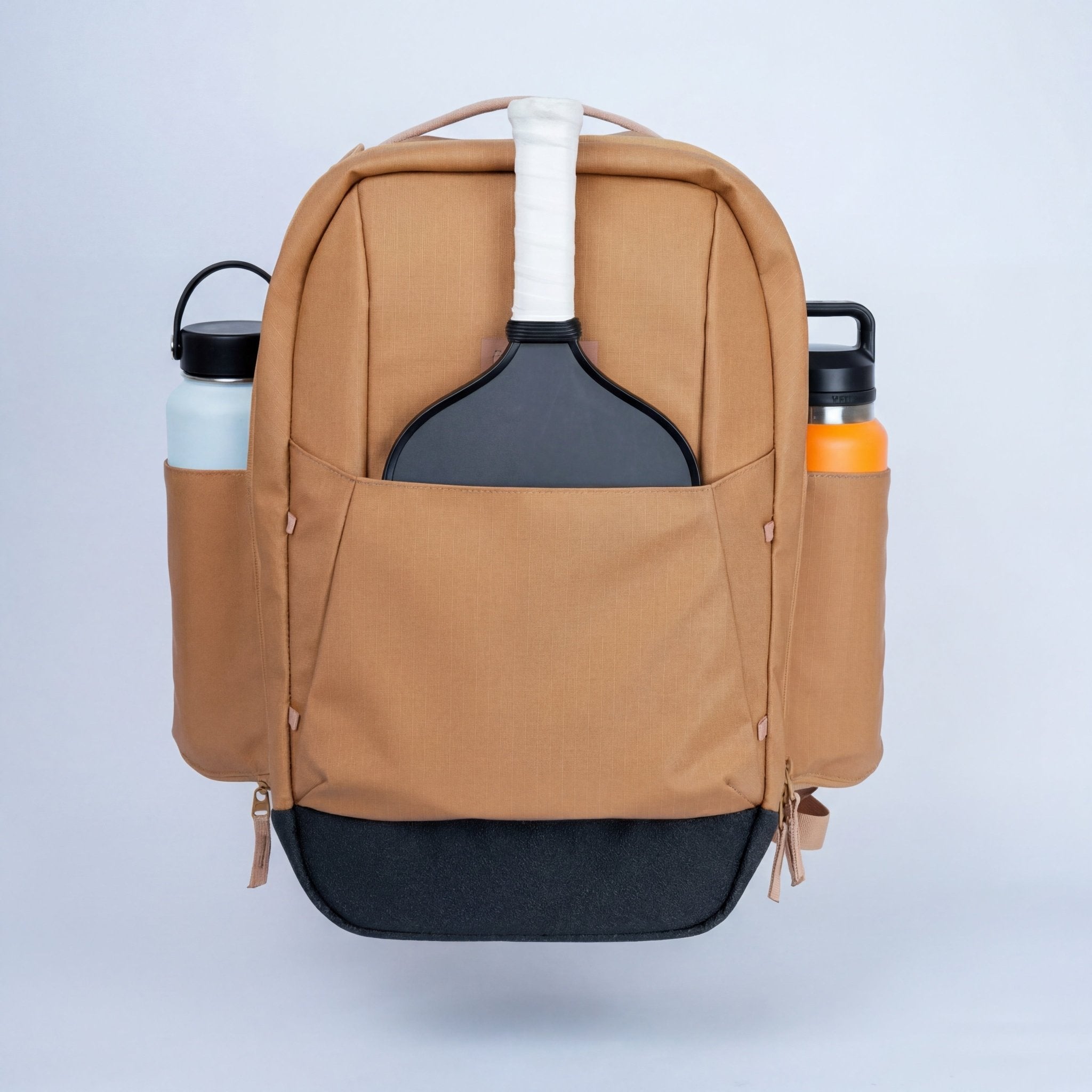
The FORWRD Court Ranger V2 has organized compartments for all your court essentials — built for players who actually track their gear.
Shop Court Ranger V2 — $195 →
FAQ: Chamelo Falcon Automatic Tinting Glasses
What are the best automatic tinting pickleball glasses?
The Chamelo Sport Falcon Automatic Alpha is the standout option for pickleball-specific auto-tinting eyewear at the $200 range. Its solar-powered tinting transitions in under a second outdoors — faster than any traditional photochromic lens. For players who move between outdoor and indoor courts regularly, there's nothing else at this price point matching its adaptability. See our full Best Pickleball Glasses 2026 guide for the full category comparison.
Are photochromic lenses good for pickleball?
Traditional photochromic lenses (like those in prescription frames) take 30–60 seconds to transition — too slow for sport use. The Chamelo Falcon uses solar-powered tinting that transitions in under 1 second outdoors, which is fast enough to actually help on court. For any auto-tinting glasses to work in indoor gyms, you need UV light present — most gym lighting won't trigger a tint change.
How do automatic tinting glasses work?
Automatic tinting glasses use photochromic compounds in the lens that react to UV and solar energy. The Chamelo Falcon adds solar-powered acceleration — sunlight drives the molecular change faster than UV alone, achieving transitions in ~0.3–1 second under direct sun. Standard photochromic glasses use only a UV-triggered passive reaction, which is why they're much slower.
Can you use transition lenses for pickleball?
Prescription transition lenses are designed for gradual light changes — they're not optimized for the rapid indoor/outdoor switches that happen during pickleball. They'll technically tint on an outdoor court, but they'll still be partially tinted when you walk inside, and they transition slowly enough to be distracting mid-play. Sport-specific auto-tinting glasses like the Chamelo Falcon use different technology optimized for speed.
Are Chamelo glasses worth it for pickleball?
At $199, the Chamelo Falcon makes sense for players who split time between outdoor and indoor courts. The automatic tinting is real, fast, and genuinely removes the "wrong pair" problem. For exclusively outdoor players, a fixed-tint sunglass from JOOLA or ONIX gives strong performance at $40–$90. The Falcon premium pays off most for players who transition between environments at least 2–3 times per week.
Final Verdict
The Chamelo Sport Falcon delivers on its core promise: automatic tinting that's actually fast enough to be useful during a pickleball session. The solar-powered mechanism is the difference — it transitions in under a second in direct sun, which is a genuine leap over traditional photochromic technology. After six weeks of mixed outdoor and indoor play, the performance was consistent throughout.
The $199 price is the real question. It's not wrong for what this product does — it's priced right for the technology. But "right" still means more than double a good fixed-lens sport sunglass. If you play on both surfaces regularly and the price doesn't sting, this is the most practical single-pair solution in pickleball eyewear right now.
Buy the Chamelo Sport Falcon Automatic Alpha on Pickleball Central — $199 →

Leave a comment
This site is protected by hCaptcha and the hCaptcha Privacy Policy and Terms of Service apply.