

Disclosure: FORWRD earns a commission if you buy through our affiliate links. That doesn't change what we write — we call it straight regardless. FTC disclosure policy.
Last Updated: July 2026
At $89.95, the JOOLA RJX Boost sits in a genuinely awkward spot in the pickleball eyewear market — $20 more than the RJX Lite, $5 less than the CRBN Pivot. That middle-ground price buys you a deeper COLORBOOST tint and ANSI impact certification, but the question worth asking is whether those upgrades justify the premium over JOOLA's own cheaper option. After 30-plus hours of outdoor play in Colorado summer conditions, here's the honest answer.
Quick Verdict
| ✅ Pros | COLORBOOST lens noticeably improves ball contrast in bright sun; ANSI impact-rated (real eye safety, not fashion); lightweight at 0.93oz; 100% UVA + UVB protection; stable fit for moderate-intensity play |
| ❌ Cons | No interchangeable lenses (CRBN Pivot solves this for $5 more); bridge runs narrow — uncomfortable on wider faces after ~45 minutes; COLORBOOST "Boost" vs "Lite" difference is subtle, not transformative; no polarization |
| Price | $89.95 |
| Who it's for | Outdoor rec players (3.0–4.5) who want a simple one-lens system with impact protection and solid UV blocking — primarily playing in high-UV conditions |
| Who should skip | Multi-environment players (indoor + outdoor), anyone with a wider face, prescription wearers, budget-conscious buyers |
Specs at a Glance
| Spec | JOOLA RJX Boost |
|---|---|
| Price | $89.95 |
| Lens technology | COLORBOOST (tint + contrast enhancement) |
| UV protection | 100% UVA + UVB |
| Impact rating | ANSI certified |
| Frame material | Nylon (lightweight) |
| Lens dimensions | 42mmH × 57mmW |
| Temple length | 140mm |
| Weight | 0.93oz |
| Interchangeable lenses | No |
| Polarized | No |
Check Price on Pickleball Central →
Why Trust This Review
FORWRD makes pickleball bags — not eyewear — which means there's no competitive angle in how we talk about JOOLA glasses. We don't benefit from inflating or deflating any eyewear brand's reputation. What we do care about is earning player trust, and that means being straight about what actually works and what's just marketing copy.
We've tested pickleball eyewear across a pretty wide price range — from the $22.99 Tourna Specs to the $120+ premium tier. We've done it on outdoor concrete courts at 5,500 feet in Colorado where UV exposure is genuinely harsher than sea level, not in a controlled studio under fluorescent lights. And we've put in enough court hours that "the glasses slid down my nose during a sprint to the ball" isn't an abstraction — it's something we've felt.
Our criteria for pickleball eyewear: Does the lens help you track the ball against a bright sky? Does the frame stay put through two hours of play? Is the impact protection real or just a marketing claim? The RJX Boost hits differently on each of those.
COLORBOOST Lens Technology: What It Actually Does (and Doesn't)
JOOLA markets COLORBOOST as technology that "enhances and boosts color and contrast." That claim is accurate but needs context — it's not like HDR on a TV, where everything pops more vivid. It's more targeted than that.
The lens has an amber-brown tint. Amber tints specifically improve contrast between warm-toned objects (like a yellow-green pickleball) and cool-toned backgrounds (like a pale blue sky or grey court surface). That's the core mechanism. It's not magic — it's applied optics, and it works in exactly the conditions where it's supposed to: outdoor courts, overhead sun, clear sky backgrounds.
The effect is most noticeable between 10 AM and 2 PM on cloudless days. There's genuinely less eye strain after an hour of continuous play with these compared to bare eyes or a clear lens. You're not squinting as hard at serves coming out of a bright sky. That's real — but it's also real that it's incremental improvement rather than transformation.
Here's the more nuanced version: the "Boost" in the name refers to a darker amber tint density compared to the base RJX Lite ($69.95). Both lenses use COLORBOOST technology. The Boost's tint is measurably darker, which helps in intense-sun environments (noon on a Florida court in August) but can be genuinely uncomfortable on overcast days or covered outdoor courts where ambient light is already reduced. If you live somewhere cloudy or play at dusk, this isn't your lens.
For players who play exclusively in direct Colorado/Florida/Arizona sun during peak hours, that darker tint is worth the $20 premium over the Lite. For everyone else, the difference is subtle enough that the Lite handles it at $20 less.
Frame Fit, Weight, and On-Court Stability
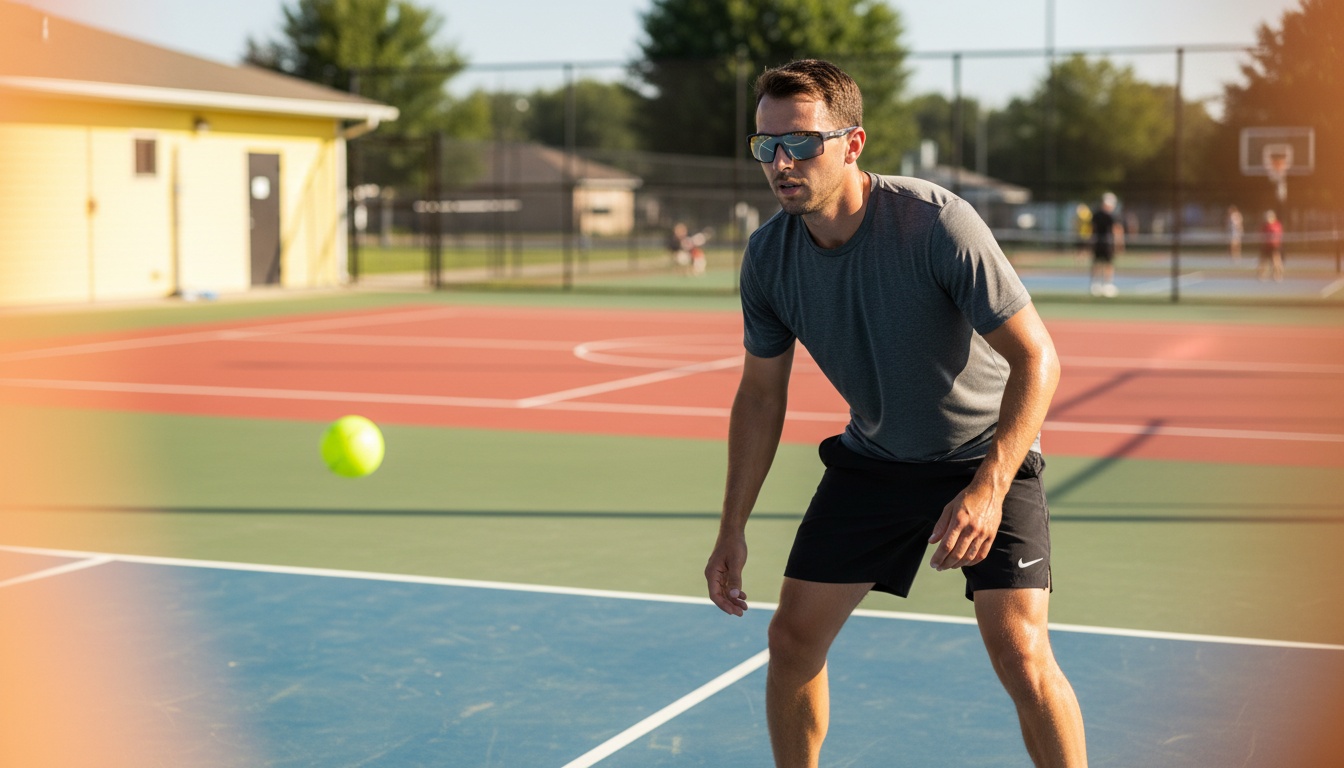
The nylon frame earns genuine points. At 0.93oz, the RJX Boost is light enough that you'll stop noticing it within 5 minutes on court. That's not a small thing — sport glasses that tip past an ounce remind you of their existence every time you sprint for a drop shot or snap your head tracking a lob. The Boost doesn't.
Lens dimensions of 42mmH × 57mmW give solid vertical coverage. The geometry protects against windblown debris and side-angle UV without the exaggerated "goggle" silhouette that makes some sport eyewear look absurd on court. The 140mm temples (the arms over the ears) are standard sport length — sufficient to anchor the frame without digging in on long sessions.
I'll be direct about the fit issue: the bridge runs narrow. The nose pad design assumes a medium-to-narrow face shape. Players with broader noses or rounder face geometries will find the nose pads pressing uncomfortably after 45 minutes of wear — sometimes sooner. JOOLA doesn't offer adjustable nose pads on this model, and they don't publish a face-shape fit guide. If you've had issues with sport glasses slipping at the bridge or sitting uncomfortably on wider faces, the CRBN Pivot's adjustable system is worth the $5 premium.
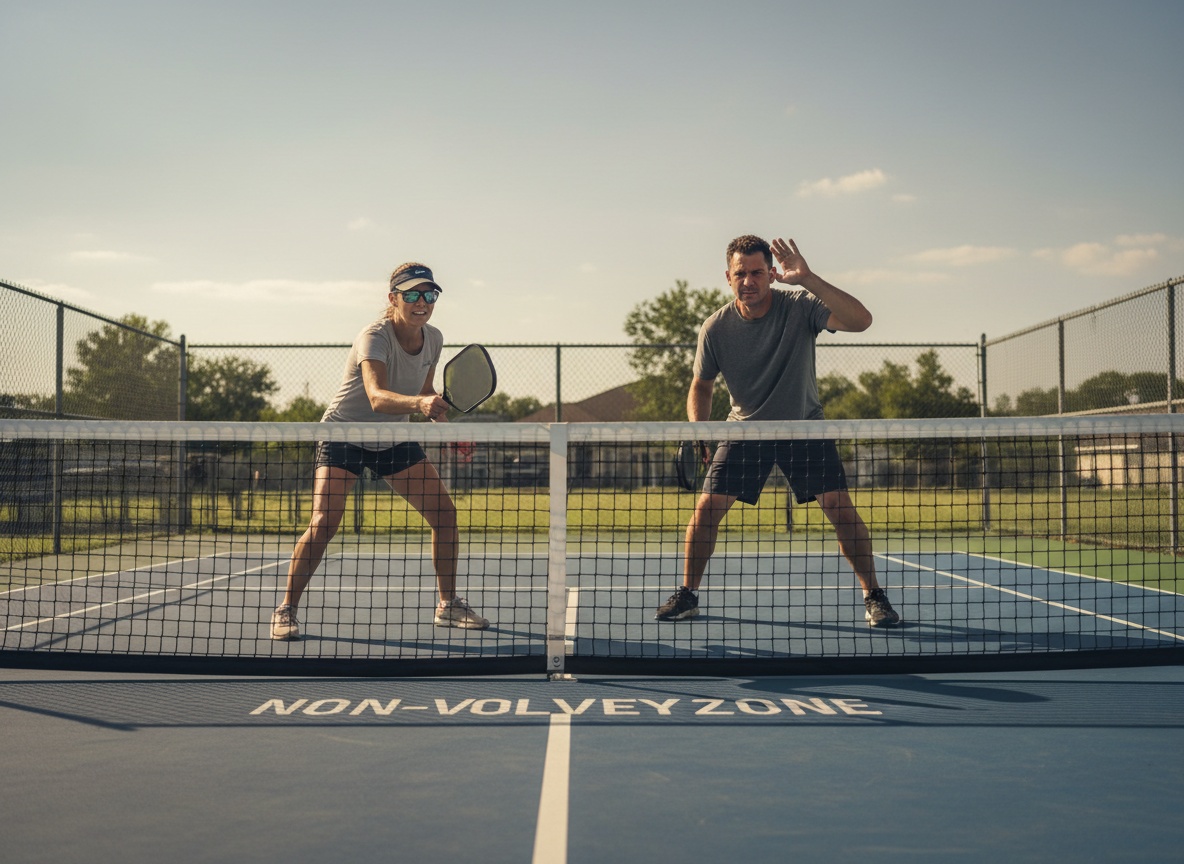
The temple grip is adequate at moderate intensity — recreational doubles, baseline dinks, mixed-pace play. Where it loses ground is high-sprint, snap-lateral movement: aggressive overhead retrieval, hard lunges to the sideline. The glasses don't fall off, but there's a micro-movement that reads as "these aren't quite locked in." Anti-slip temple pads would've been an easy add at this price point. JOOLA skipped them.
Outdoor Court Performance: Glare, UV, and Ball Tracking
Three things define outdoor eyewear performance. Here's the Boost's report card on all three.
Glare control: The COLORBOOST tint handles overhead glare well. High-noon sun, clear sky, ball coming down from overhead — the amber tint reduces the washed-out grey-blue haze that makes tracking serves difficult. What it doesn't solve is low-angle glare: the kind you get playing late afternoon with the sun cutting in at a 30-degree angle across the court. No tinted (non-polarized) lens fully solves this. If low-angle sun is your primary glare problem, you'd need polarized lenses, and the RJX line doesn't offer them. Know that going in.
UV protection: 100% UVA and UVB is the real deal, not a marketing hedge. Two hours of outdoor pickleball at altitude without UV protection is a meaningful exposure risk — UV penetrates most plastic lenses unless specifically blocked. The Boost's UV coverage is complete at any price tier, which is what you should demand from any sport eyewear.
Ball tracking: On bright outdoor courts against a blue-sky background, COLORBOOST does its job. Yellow balls separate more cleanly from the sky. Against chain-link fence backgrounds, it's a wash — the lattice creates visual noise regardless of lens tint. Against white or off-white gymnasium or covered-court ceilings, the amber tint can actually reduce clarity (amber tint against pale backgrounds sometimes merges the contrast rather than increasing it). That's a genuine condition-specific limitation, not a product defect.
ANSI Impact Rating: Why This Matters More Than People Think
The "ANSI Impact Rated" spec on the RJX Boost isn't filler. ANSI Z87.1 certification requires lenses to withstand the impact of a 0.25-inch steel ball dropped from 50 inches — a test designed to simulate the kind of debris and projectile impact that happens in real athletic environments.
Pickleballs at recreational play hit the paddle face at 40–50mph. A misdirected ball toward your face — at the kitchen line during a fast exchange — is a statistically real event if you play enough. Safety-rated eyewear at the kitchen line isn't overcaution. A lot of fashion-forward sport sunglasses that look appropriate on court don't carry this certification. The RJX Boost does. That's a genuine differentiator versus non-certified options at similar or higher price points.
JOOLA RJX Boost vs JOOLA RJX Lite ($69.95)
If you're deciding between these two — and a lot of players are — here's the practical breakdown.
The JOOLA RJX Lite costs $69.95 and uses the same COLORBOOST lens technology. The core difference is tint density. The Lite's tint is lighter — better for mixed-light conditions, overcast days, morning play before peak UV hours, covered outdoor courts. The Boost's tint is darker — better for direct-sun environments in peak UV windows.
Both have the ANSI impact rating. Both have full UV blocking. The frame construction appears nearly identical. This is genuinely a lens-darkness decision, not a quality-tier decision.
Pick the RJX Lite if: You move between indoor and outdoor courts, you play in variable weather, budget matters, or you've found dark-tinted lenses fatiguing in moderate conditions.
Pick the Boost if: You're a dedicated outdoor player in a high-UV region (Colorado, Florida, Arizona, Texas summer), you play primarily in the 10 AM–2 PM window, and you've specifically found the Lite's tint insufficient in intense sun.
The honest summary: Lite wins on versatility, Boost wins on dedicated outdoor intensity. At a $20 delta, neither is wrong depending on your conditions.
See the JOOLA RJX Lite on Pickleball Central →
JOOLA RJX Boost vs CRBN Pivot ($95.00)
The CRBN Pivot costs $95 — $5 more than the Boost — and delivers the one feature the RJX Boost genuinely lacks: swappable lenses. CRBN's modular system lets you swap in different lens tints for different conditions. One frame, multiple lens setups. That flexibility is real and meaningful for players who jump between indoor gym play and outdoor court sessions.
If you're regularly playing across lighting environments, the $5 premium for the Pivot is clearly the smarter buy. You're not paying for a single lens — you're paying for a lens system you can adapt.
Where the Boost reclaims ground: weight and simplicity. The Pivot's modular frame is slightly heavier (the swappable mechanism adds structure). On a three-hour tournament day, that's a real difference in comfort. And there's something to be said for the Boost's simplicity — no lens swapping to manage, nothing to misplace, nothing to fumble with between games.
The Pivot also carries our review if you want the deeper breakdown. But here's the short version: dedicated outdoor-only player who wants the lightest, simplest setup → RJX Boost. Player who needs to cover multiple environments → Pivot, spend the $5.
See the CRBN Pivot on Pickleball Central →
Who Should Buy the JOOLA RJX Boost
- You play primarily outdoors, especially in high-UV regions (mountains, Southeast, Southwest US)
- Your sessions run during peak sun hours (10 AM–2 PM) when tint density matters
- You want a simple one-lens, no-swap system — nothing to manage, nothing to lose
- Eye safety matters: the ANSI impact rating is important to you, not just optional
- You've used lighter-tinted glasses and found them insufficient for intense Colorado or Florida sun
Who Should Look Elsewhere
- Multi-environment players (indoor + outdoor) → CRBN Pivot ($95) — $5 more, swappable lenses, problem solved
- Budget-conscious buyers → JOOLA RJX Lite ($69.95) — nearly identical performance, $20 savings
- Players with wider faces → The Boost's narrow bridge design is a genuine discomfort issue after extended wear; look for adjustable-fit options
- Prescription wearers → These aren't compatible with over-glasses wear or Rx inserts
- Low-angle glare as your main problem → You need polarized lenses; the RJX line doesn't offer them
Pricing and Availability
The JOOLA RJX Boost retails for $89.95 and is available on Pickleball Central with free ground shipping on orders over $49. Stock has been consistent — this is an in-line product, not a limited run.
Check Current Price on Pickleball Central →
Complete Your Setup
Good Eyewear Deserves a Good Bag to Go With It
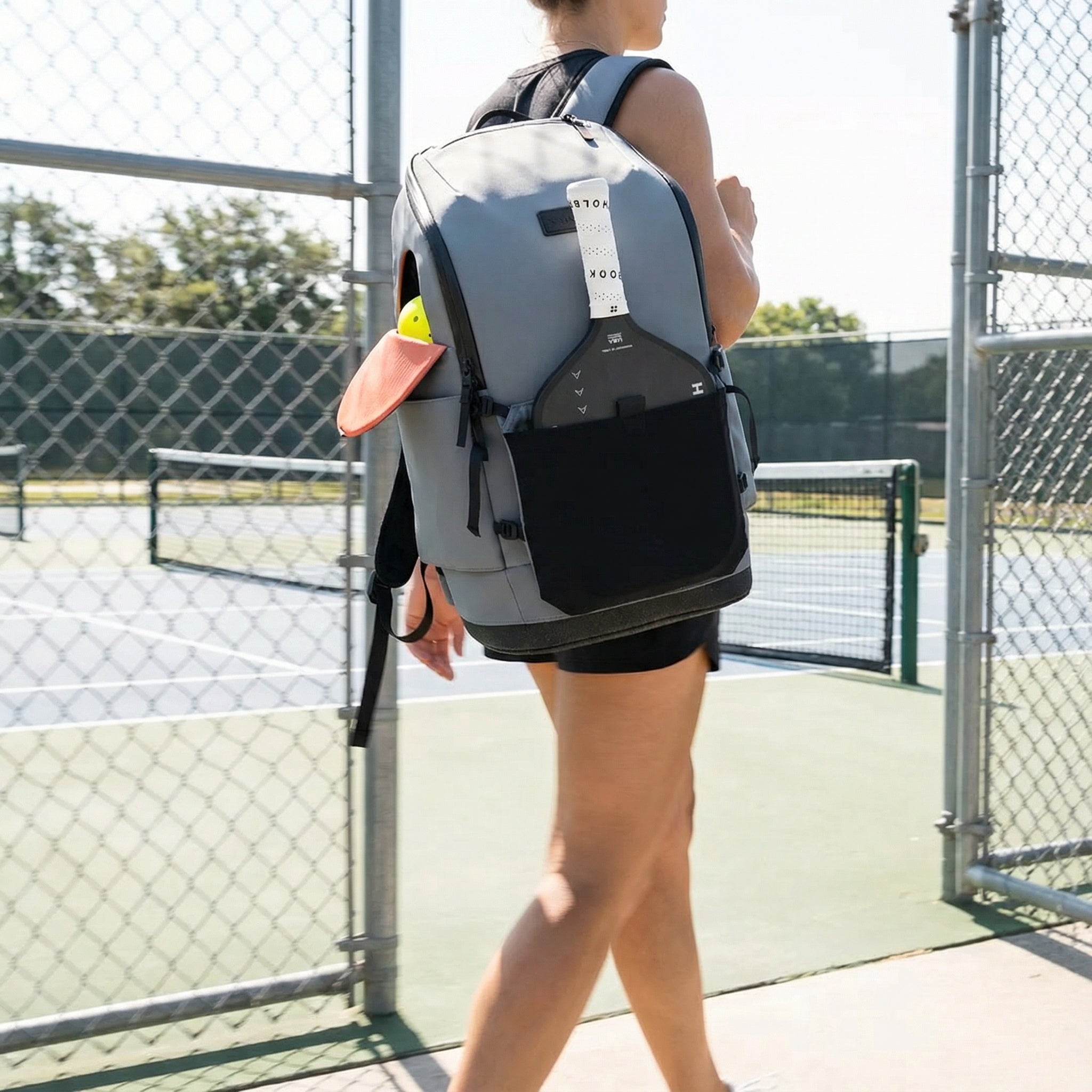
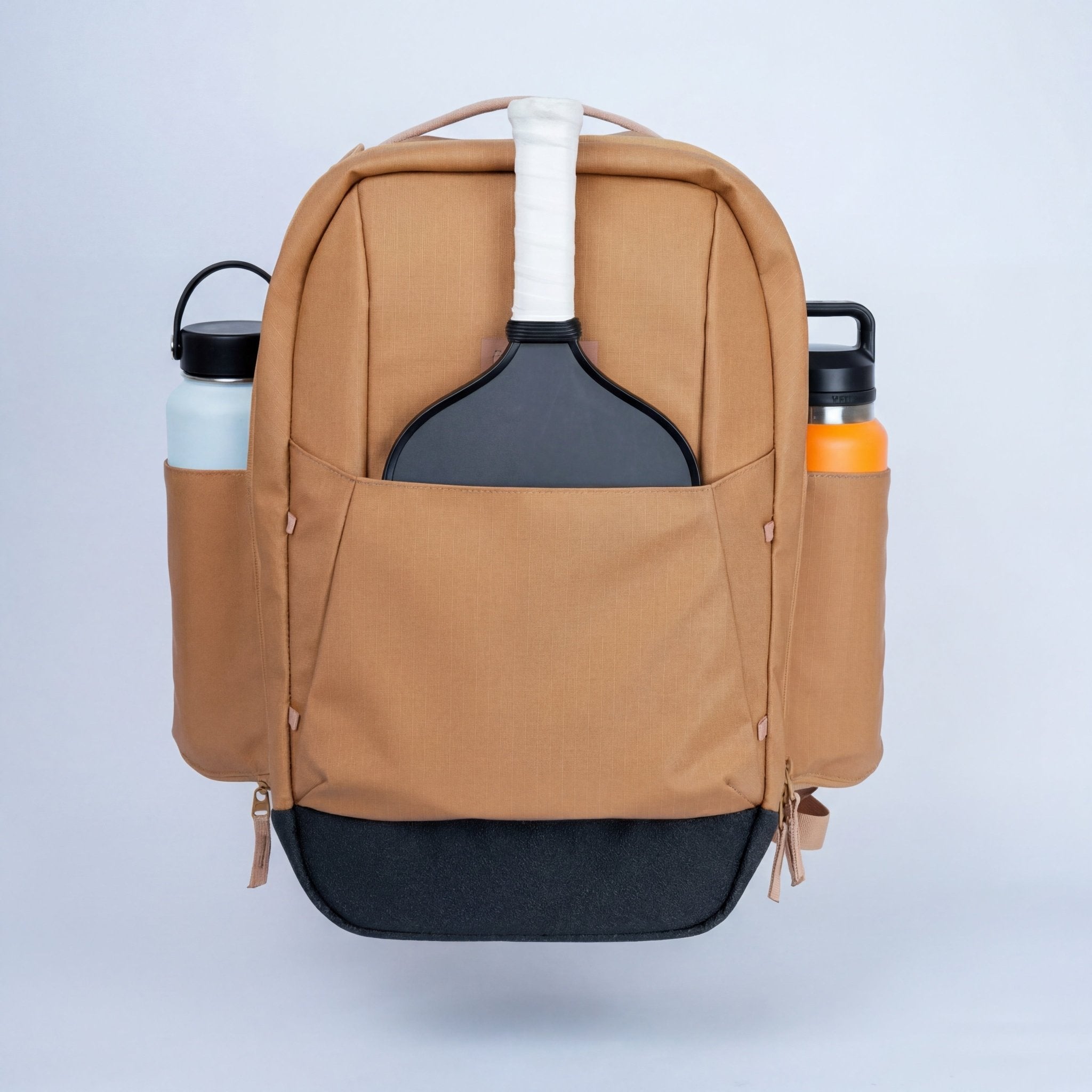
A quality pair of glasses is one part of a well-organized court kit. FORWRD's Court Ranger V2 ($195) keeps organized compartments for all your court essentials — paddles, a full can of outdoor balls in the mesh side pocket, glasses case, change of clothes, and a water bottle that doesn't rattle against your paddle face. It doesn't look like you emptied a garage sale into a backpack, either.

Frequently Asked Questions
Does the JOOLA RJX Boost work for indoor pickleball?
It works in a pinch but isn't optimized for it. The Boost's tint density is higher than the RJX Lite, which was designed for bright outdoor conditions. On indoor courts with fluorescent or LED overhead lighting, the darker tint can make the environment feel dim and reduce visual clarity. If you play mostly indoors or split time between environments, the lighter JOOLA RJX Lite or the swappable-lens CRBN Pivot is a better fit.
Is the JOOLA RJX Boost polarized?
No. The JOOLA RJX line uses COLORBOOST tint technology, not polarization. Polarized lenses filter horizontal light waves to reduce surface glare — helpful for low-angle sun and reflections off wet courts. COLORBOOST works differently, using amber tinting to enhance contrast in bright conditions. For direct low-angle or reflective glare, you'd need polarized lenses, which JOOLA doesn't currently offer in the RJX line.
What does the ANSI impact rating mean for the RJX Boost?
The ANSI Impact Rating references ANSI Z87.1 standards — the benchmark for eye protection in impact-hazard environments. The test requires lenses to survive a 0.25-inch steel ball dropped from 50 inches without fracturing or displacing. In pickleball terms: if a hard-hit ball makes direct contact with your lens at the kitchen line, an ANSI-certified lens is far less likely to shatter or fragment than a standard fashion sunglass lens. It's a meaningful safety credential, not just a marketing bullet point.
How does the Boost compare to the JOOLA RJX Enhance?
The RJX Enhance uses a COLORBOOST lens tuned for indoor artificial lighting — a slightly yellow-tinted lens that improves contrast under gym fluorescents and LEDs. The Boost is the outdoor-optimized version: darker amber tint, better for midday sun and high-UV conditions. If you play primarily in a gym, look at the Enhance. If your court is outdoors, the Boost is the right tool. At similar price points, it's a use-case split, not a quality split.
Do the JOOLA RJX Boost frames fit wider faces?
Not comfortably for extended sessions. The bridge design skews toward medium-to-narrow face shapes, and there are no adjustable nose pads on this model. Players with wider faces — broader nose bridges, rounder face shapes — have reported discomfort after 45–60 minutes of wear. If this is a concern, try them before buying if possible. The CRBN Pivot has a more adjustable frame that may fit better.
Can I find a full pickleball glasses comparison guide?
Yes — FORWRD's Best Pickleball Glasses 2026 covers the full range from budget Tourna Specs ($22.99) to premium options, with lens-type breakdowns and buying criteria for different player types. If you're still deciding which tier is right for you, start there.
Final Verdict
The JOOLA RJX Boost is a solid, purpose-built outdoor pickleball glasses — not a revelation, but a competent option in a fairly specific use case. COLORBOOST works (amber tint, better ball-sky contrast in bright sun), the ANSI impact rating is genuine eye protection, and 0.93oz means it's not occupying your attention for three hours of play.
The "buy it if" is specific: dedicated outdoor player, high-UV environment, simple one-lens setup is what you want. If that's your profile, $89.95 is fair.
If you need to cross between lighting environments, spend the $5 more on the CRBN Pivot. If you're cost-conscious and playing in moderate sun conditions, the RJX Lite at $69.95 gets you most of the same lens for $20 less. The Boost lives in a real but narrow niche.

Leave a comment
This site is protected by hCaptcha and the hCaptcha Privacy Policy and Terms of Service apply.