

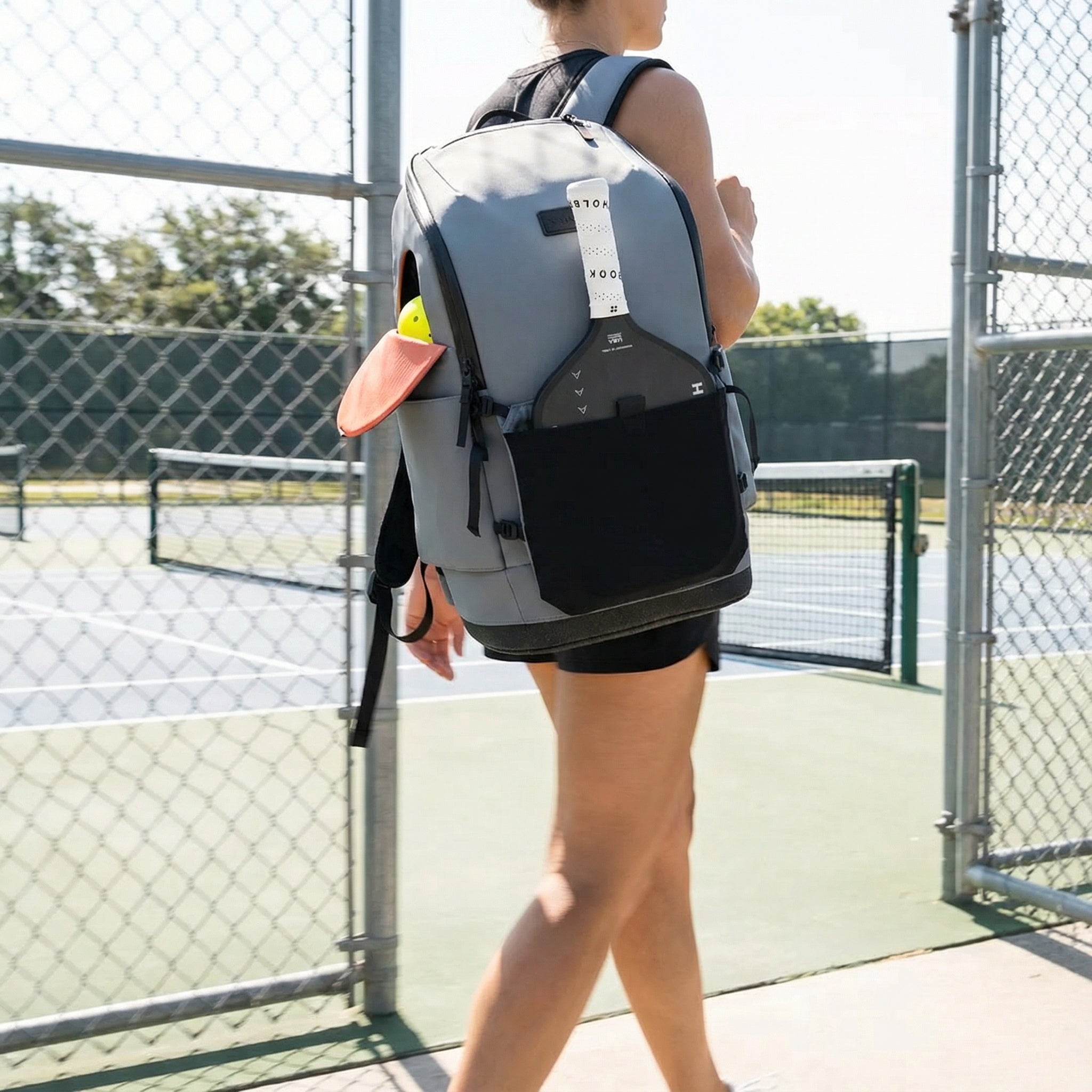
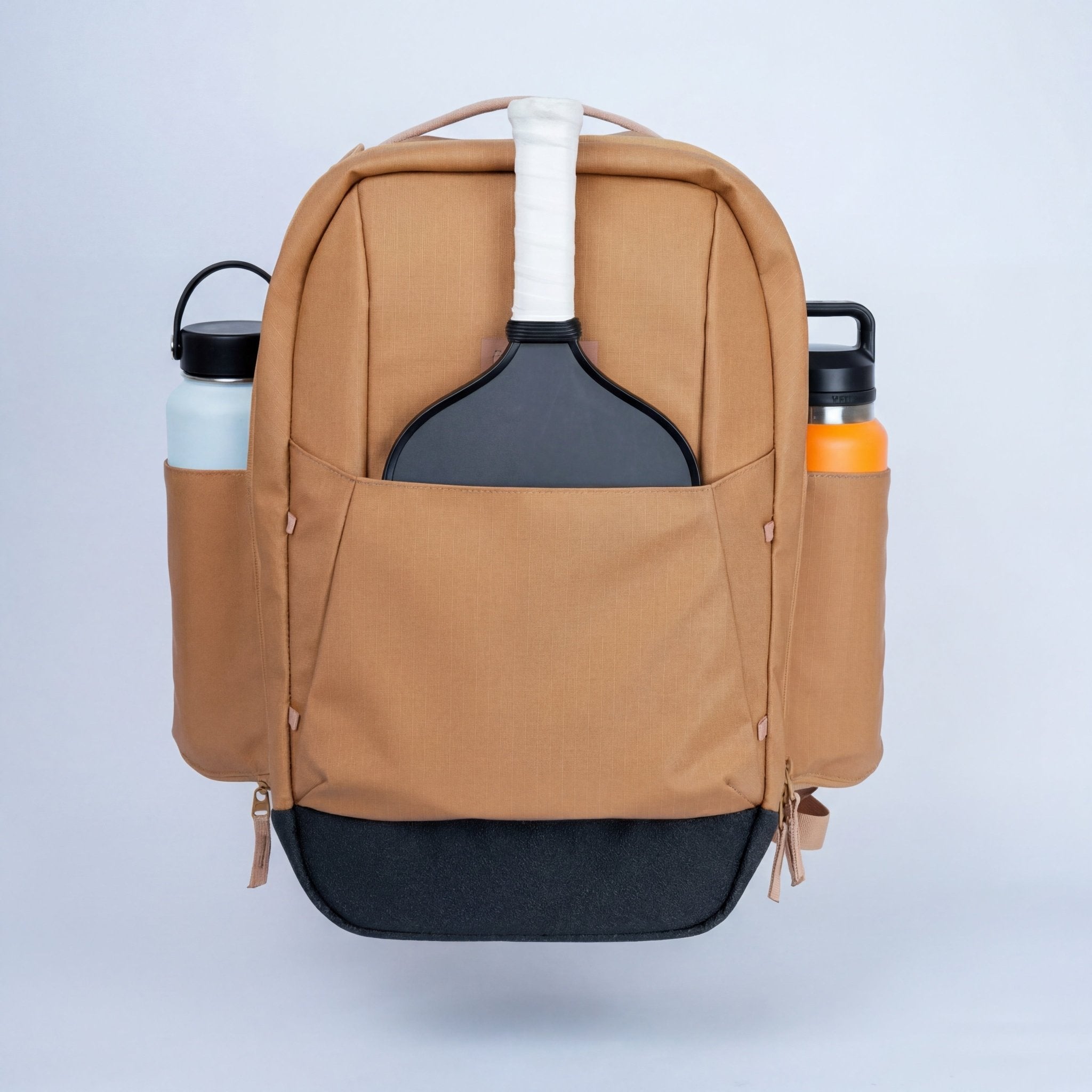
Here's the honest reality: most players who spend $200–$325 on a premium pickleball bag treat it like a disposable grocery tote. They toss it in a hot car trunk after outdoor sessions, forget the zipper until it sticks, and wonder why the bag smells like a gym locker by month four. A properly maintained bag — one with a TPU-coated ripstop shell and YKK AquaGuard zippers — can last 5–7 years without issue. A neglected one starts showing real problems at 18 months.
The short answer: clean your pickleball bag every 2–3 weeks if you play 3+ times per week, monthly if you play casually. Last updated: July 2026.
This guide is written for owners of premium bags — the materials behave differently than budget nylon, and so does the care routine. It applies directly to the Court Caddy ($325) and Court Ranger V2 ($195), and to any bag using similar TPU-coated fabric and YKK AquaGuard hardware.
How Often Should You Clean Your Pickleball Bag?
The answer is: more often than you probably do it now. Three specific signs tell you a clean is overdue regardless of your schedule:
- The zipper pulls are stiff or gritty. Court dust packs into the coils and acts like grinding paste every time you open the bag.
- You can smell it from arm's length. Ball fuzz traps sweat and bacteria — once the odor hits that threshold, you're well past due.
- The paddle sleeve interior feels tacky. Overgrip residue, sunscreen, and sweat combine into a sticky film that accelerates material breakdown.
Beyond those red flags, here's a practical cleaning schedule by play frequency:
| Play Frequency | Full Clean | Spot Clean | Zipper Lube |
|---|---|---|---|
| 4–5x per week | Every 2 weeks | After every outdoor session | Monthly |
| 3x per week | Every 3–4 weeks | Weekly | Every 6 weeks |
| 1–2x per week | Monthly | After outdoor sessions | Every 3 months |
| Occasional / casual | Every 6–8 weeks | As needed | Twice yearly |
Outdoor concrete courts accelerate all of these timelines. The concrete dust — plus sunscreen and sweat from summer play — is harder on bag materials than indoor gym floors. If most of your sessions are outdoor, bump the cleaning frequency up one tier.
What to Clean: A Pocket-by-Pocket Breakdown
Most bag care guides say "wipe it down." That's not specific enough. A packed pickleball bag has five distinct micro-environments, each collecting different debris. For the full approach to organizing what goes where before you clean, see our Pickleball Bag Organization Tips guide.
The Paddle Sleeve (Highest Priority)
This is where the most residue accumulates. Overgrip material leaves a sticky film; paddle edges deposit rubber dust. Every 5–6 sessions, run a damp microfiber cloth — water only, no detergents — along the interior walls. Dry completely before reinserting paddles. Trapped moisture is what causes early material breakdown in this compartment.
The Main Compartment
Ball fuzz is the main culprit. A pickleball sitting in a bag for a week sheds a surprising amount of material, which traps odors. Remove all balls after every session. Once a month, wipe down the interior with a cloth dampened in mild soap solution, then dry fully.
The Water Bottle Pockets
The most neglected pockets and the most likely to smell. Water bottles condensate — that moisture pools at the base of the pocket and creates mold conditions within days in a hot car. After every session, pull the bottle out and let the pocket air with the bag open. Monthly, wipe with diluted white vinegar (1:4 vinegar to water). It kills bacteria without degrading the synthetic lining.
The Laptop / Tablet Compartment
Usually the cleanest compartment since it stays sealed. Still — check monthly for moisture and wipe the edges where the zipper meets fabric. If you carry a laptop to outdoor courts and it's been a hot session, give the compartment 30 minutes to air before zipping closed.
The Bag Base
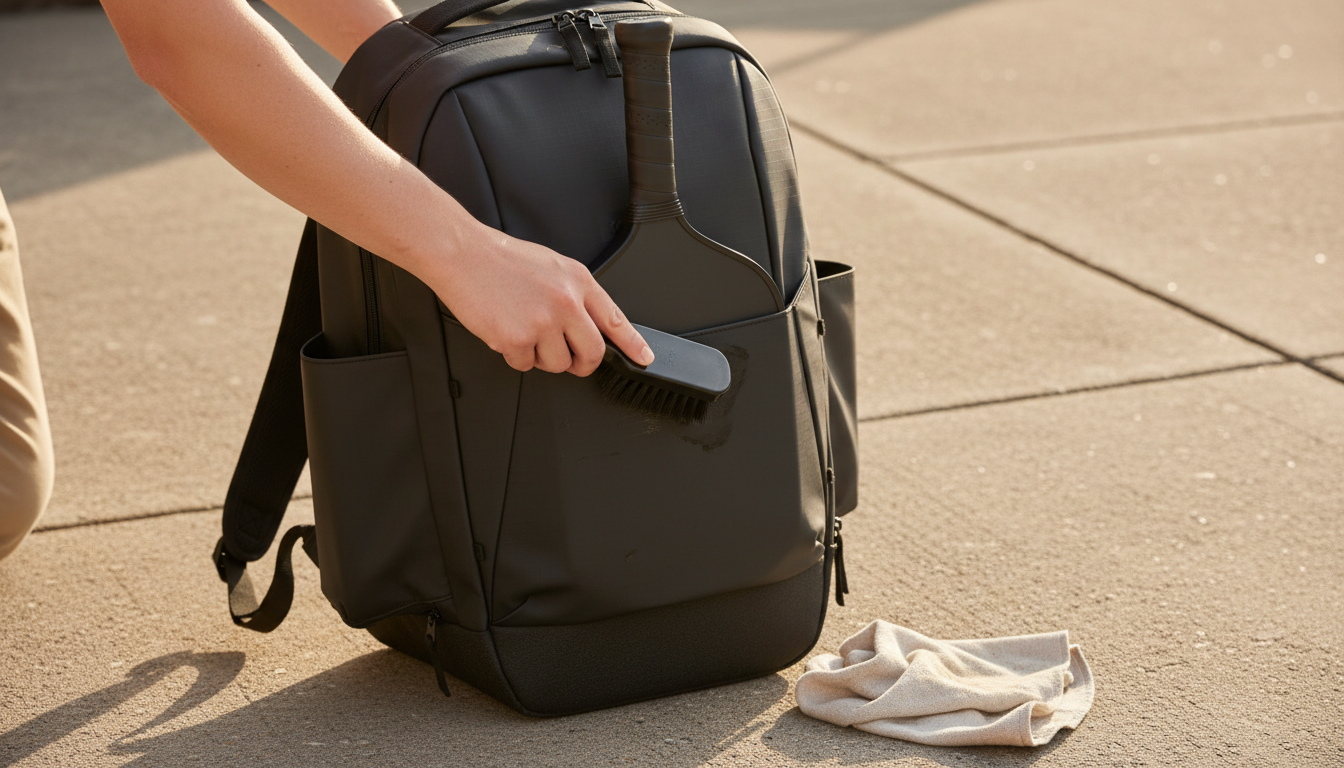
TPU-coated bases are designed to sit on any surface, but they still accumulate court grit. A soft brush and damp cloth after every few outdoor sessions keeps that grit from working its way into the lower body of the bag.
How to Clean a Pickleball Bag: Step-by-Step
The right process takes about 15 minutes and doesn't damage the materials. Don't skip the first rule: machine washing destroys both the TPU coating and the YKK AquaGuard waterproofing. It's not recoverable.
- Empty everything. Every pocket, every hidden compartment. You'll find a rogue ball in there — everyone does.
- Shake it out. Turn it upside down over a trash can. The amount of court dust and ball fuzz that comes out will surprise you.
- Brush the exterior. Use a soft-bristled brush with a mild soap solution — diluted dish soap, nothing more aggressive. Work in small sections and don't scrub hard on TPU panels.
- Wipe the exterior. Damp cloth (not soaking wet) to remove soap residue. The TPU coating repels water, so it dries quickly.
- Clean the interior compartments. Per the pocket-by-pocket breakdown above. Use a fresh, damp cloth for each compartment — you're not cleaning if you're just moving bacteria between pockets.
- Air-dry completely. Set upright with all zippers open for at least 2 hours. Occasional drying in direct sunlight helps with odors, but don't make it a habit — extended UV exposure will fade the exterior over time.
"After testing bags with 500+ players, one pattern was consistent: bags that came back clean after two years were from players who had a routine. Not an elaborate one — just a habit of airing out after every session and doing a real clean once a month." — Grub, FORWRD Co-Founder
Caring for a Court Caddy or Court Ranger V2?
Both bags use TPU-coated ripstop and YKK AquaGuard zippers — this entire guide applies directly. If you're still shopping, both are built to last years with basic maintenance.
YKK AquaGuard Zipper Care: The Most Important Step Most Players Skip
A stuck or failing zipper isn't usually a manufacturing defect. It's almost always deferred maintenance — and it's entirely preventable.
Here's what actually happens: Court dust (especially concrete grit) packs into the YKK coil during play. Every time you open and close the zipper, those particles act as grinding paste against the coil teeth. Over 300–400 openings, that's enough abrasion to cause binding and eventually coil separation.
The YKK AquaGuard specifically has a polyurethane waterproof coating on the coil that resists sweat salt corrosion. But that coating needs occasional maintenance to stay effective.
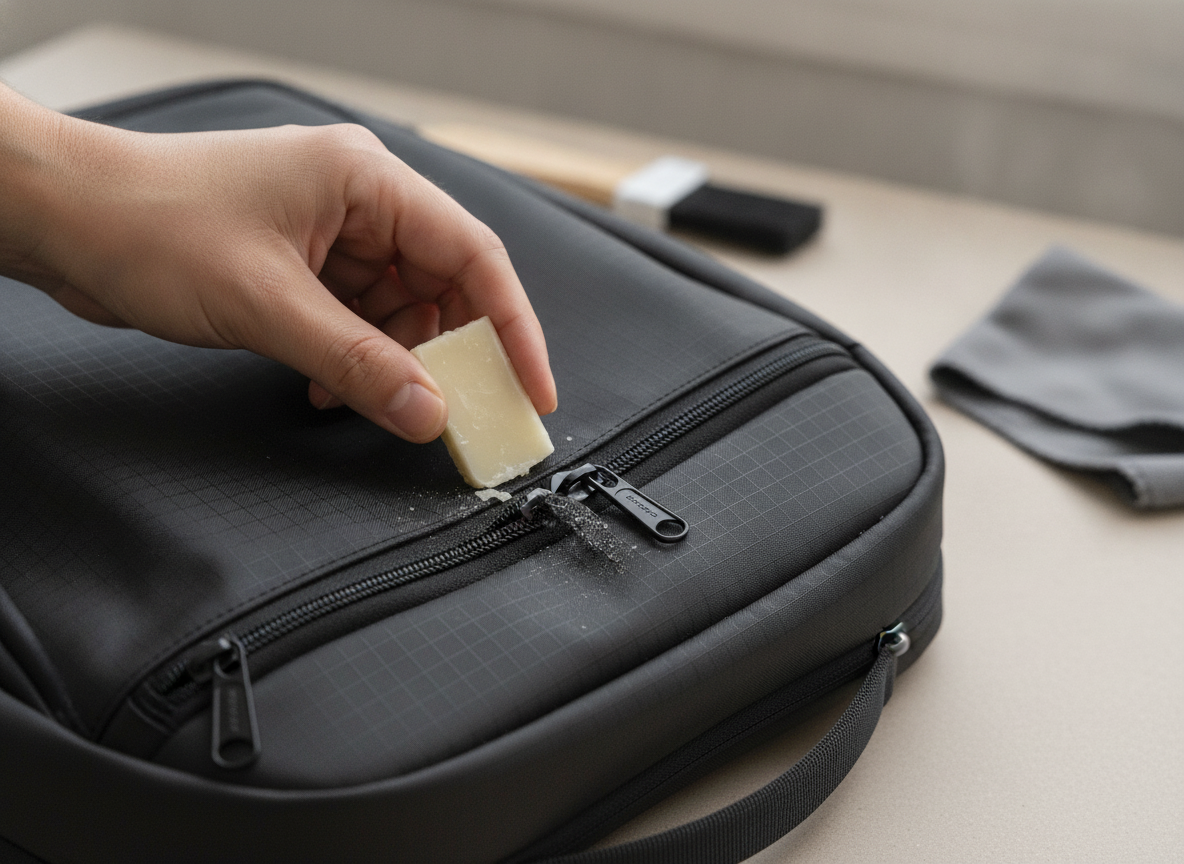
How to Lubricate Your Zippers
Three options work, in order of preference:
- Beeswax or candle wax (best). Rub directly on the open coil teeth. Close and open the zipper several times to work it in. Non-corrosive, long-lasting, doesn't attract dirt.
- Dry PTFE lubricant (good). Available at outdoor gear stores. Apply, let dry fully, then run the zipper. Leaves no residue to catch grit.
- Zipper-specific lubricants. Gear Aid Zipper Lubricant works, but some formulas leave a residue that catches dirt — reapply more frequently.
What to avoid: WD-40 (petroleum-based; degrades the polyurethane coating), soap or detergent directly on the zipper teeth, and machine washing (the heat cycle destroys the coil alignment on AquaGuard zippers).
Dealing With Smell: Sweat, Ball Fuzz, and the Outdoor Court Problem
A pickleball bag develops its own signature smell from three sources: overgrip sweat absorbed into the paddle sleeve lining, ball fuzz trapping bacteria, and outdoor court residue (rubber particles, concrete dust, sunscreen).
What actually works:
- Cedar inserts. A small cedar block in the main compartment absorbs odor-causing moisture without chemicals. Replace every 6 months.
- Baking soda sachets. Leave a small cloth bag filled with baking soda in the main compartment overnight after a particularly sweaty session. Remove before the next session.
- White vinegar spray. Diluted 1:4 in water, applied lightly to interior surfaces, then fully air-dried. Kills bacteria without leaving residue.
- Air it out after every session. Open every zipper, flip the bag over, leave it in a ventilated space for 30 minutes. This alone eliminates 80% of odor buildup — and almost no one does it consistently.
What doesn't work: dryer sheets inside the bag. They mask smell for a session or two, but the fragrance compounds can degrade synthetic linings over time. Skip them.
Storage: How to Extend Your Bag's Life Between Sessions
The single worst thing you can do to a premium pickleball bag: leave it wet, in a closed car trunk, in summer heat.
TPU-coated ripstop has a thermal limit. Sustained temperatures above 140°F — easily reached in a parked car in summer sun — can cause the coating to soften, shift, and bond to itself or adjacent materials. It doesn't happen after one session. But after 10–15 heat exposure incidents, you'll see stiff crinkled fabric panels and zipper deformation that can't be reversed.
Storage rules worth following:
- Air-dry before storing. Even "dry enough" isn't good enough — trapped moisture in a sealed bag grows mold within 24–48 hours in warm conditions.
- Store with zippers slightly open. Allows residual humidity to escape and prevents the coil from compressing in a fixed position for weeks.
- Keep it upright, not compressed. A bag stored flat under heavy gear develops permanent crease lines in the frame and paddle sleeve.
- Climate-controlled storage for breaks. If you're not playing for 2–3+ weeks, store the bag in a closet rather than a garage or shed.
Warranty and Care: What Does (and Doesn't) Affect FORWRD's Coverage
FORWRD offers a lifetime warranty on manufacturing defects for both the Court Caddy ($325) and Court Ranger V2 ($195). The distinction between "manufacturing defect" and "neglect-accelerated wear" is worth understanding.
The warranty covers: zipper coil separation due to manufacturing fault, strap attachment failure, seam separation under normal load, and material delamination on bags not subjected to chemical or heat damage.
The warranty doesn't cover: zipper damage from machine washing, TPU coating degradation from chemical solvents, strap fraying from incorrect storage or abrasion, and heat damage from repeated high-temperature exposure.
In practice, a properly maintained bag hits none of those exclusions. The routine in this guide keeps you well inside the warranty's protective zone — a Court Caddy cared for correctly should outlast 3+ years of heavy tournament play without any claim needed. If ergonomic strap wear is a concern alongside longevity, see our Best Pickleball Bag for Back Pain guide for how strap design interacts with wear patterns.
Care vs. Neglect: What 6 Months Looks Like
| Component | 6 Months of Proper Care | 6 Months of Neglect |
|---|---|---|
| YKK AquaGuard Zippers | Smooth operation, waterproof coating intact | Stiff pulls, embedded grit, coil separation starting |
| TPU-Coated Exterior | Repels water, clean fabric appearance | Grit embedded in coating, crinkle spots from heat exposure |
| Paddle Sleeve Interior | Clean lining, no residue | Sticky overgrip film, possible adhesion to paddle handles |
| Shoulder Straps | Padding intact, no salt deposits | Sweat salt stiffening the padding, webbing discoloration |
| Bag Odor | Neutral | Persistent odor that spot-cleaning can't fully fix |
| Interior Lining | Clean, no bacterial buildup | Mold-risk conditions from repeatedly sealed-in moisture |


Ready to upgrade to a bag built to last? Shop the Court Caddy — designed with 500+ real players and built for years of serious play.
FAQ: Pickleball Bag Care Questions
How do you clean a pickleball bag?
Empty it completely, shake out debris, then wipe the exterior with a soft brush and mild soap solution. Clean interior compartments with a damp cloth. Air-dry fully with all zippers open for at least 2 hours. Never machine wash — heat and agitation destroy both the TPU coating and YKK zipper coil alignment.
How often should you clean your pickleball bag?
Every 2–3 weeks if you play 3+ times per week; monthly for casual players. Outdoor concrete courts accelerate this — if most of your play is outdoor, clean one tier more frequently than the schedule above suggests.
Can you machine wash a pickleball bag?
No. Machine washing destroys the YKK AquaGuard zipper's coil alignment and degrades the TPU waterproof coating on the fabric. Hand wash only with a soft brush and mild soap solution, then air-dry completely.
How do you care for YKK zippers on a pickleball bag?
Lubricate the coil teeth with beeswax or dry PTFE lubricant every 4–6 weeks if you play regularly. Avoid WD-40 (degrades the polyurethane coating). After outdoor sessions, brush visible grit off the zipper before closing — this prevents the grinding paste effect that causes early zipper failure.
How do you get the smell out of a pickleball bag?
Consistent air-drying after every session is the most effective prevention. For existing odor: apply diluted white vinegar (1:4 with water) to interior surfaces, air-dry completely, then leave a cedar insert or baking soda sachet in the bag overnight. Persistent smell usually means the interior lining needs a deeper clean, not just masking.
Does cleaning a pickleball bag void the warranty?
Proper hand cleaning doesn't affect FORWRD's warranty. Machine washing, chemical solvent exposure, and heat damage can void coverage — stick to the hand-wash method in this guide. A well-maintained Court Caddy or Court Ranger V2 should never need a warranty claim on materials in the first place.

Leave a comment
This site is protected by hCaptcha and the hCaptcha Privacy Policy and Terms of Service apply.