

Last updated: July 2026
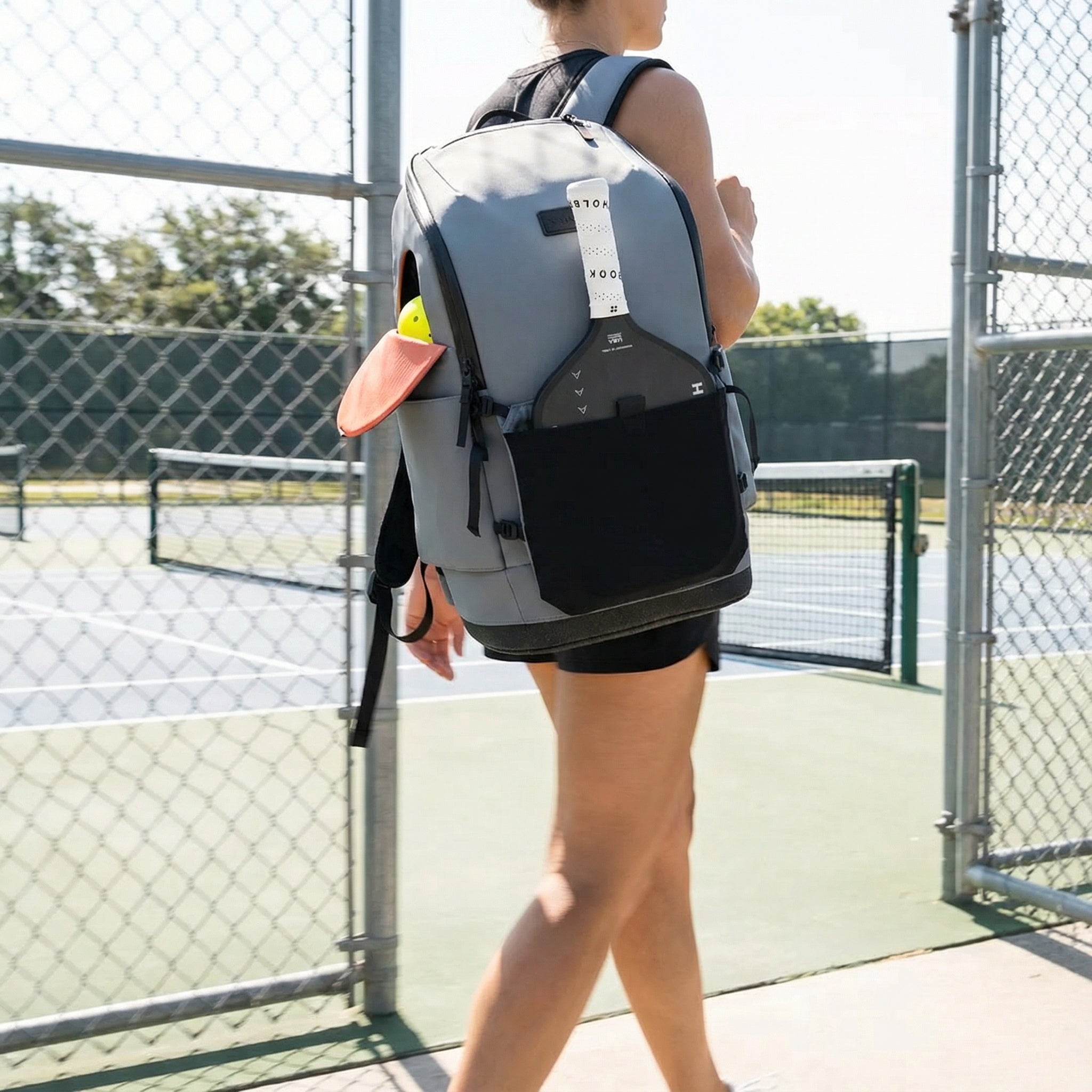
A fully packed pickleball bag weighs between 12 and 16 pounds. That's the weight of a loaded day-hiking pack, worn for 90 minutes, three to five sessions per week. And yet almost no pickleball bag guide discusses ergonomics — they list color options and price points but skip the design elements that actually prevent cumulative back and shoulder strain.
Disclosure: This post contains affiliate links to Pickleball Central. If you purchase through our links, FORWRD earns a small commission at no extra cost to you. We only link to products we'd recommend regardless.
This guide covers what ergonomic actually means for a pickleball bag, shows you the real math on what you're carrying, and gives you an honest ranking of bags for players who take their back and shoulder health seriously.
Why Bag Ergonomics Matter More Than Players Think (Load + Repetition = Cumulative Risk)
The pickleball demographic skews older than almost any other racket sport — the average player age is in the mid-40s, and the game draws heavily from the 50–70 age bracket. That's also the population with the highest rates of chronic lower back issues, shoulder impingement, rotator cuff history, and disc degeneration.
Here's where it compounds: most recreational players carry their bag from the car to the court and back two, three, maybe four times a week. At 12–16 lbs per trip, that's 25–50 miles of cumulative loaded walking per year — at least. A bag with poor load distribution doesn't cause acute injury; it creates slow cumulative strain. Players don't realize the bag is contributing until six months in, when they notice persistent tightness on one shoulder and assume it's from their serving motion.
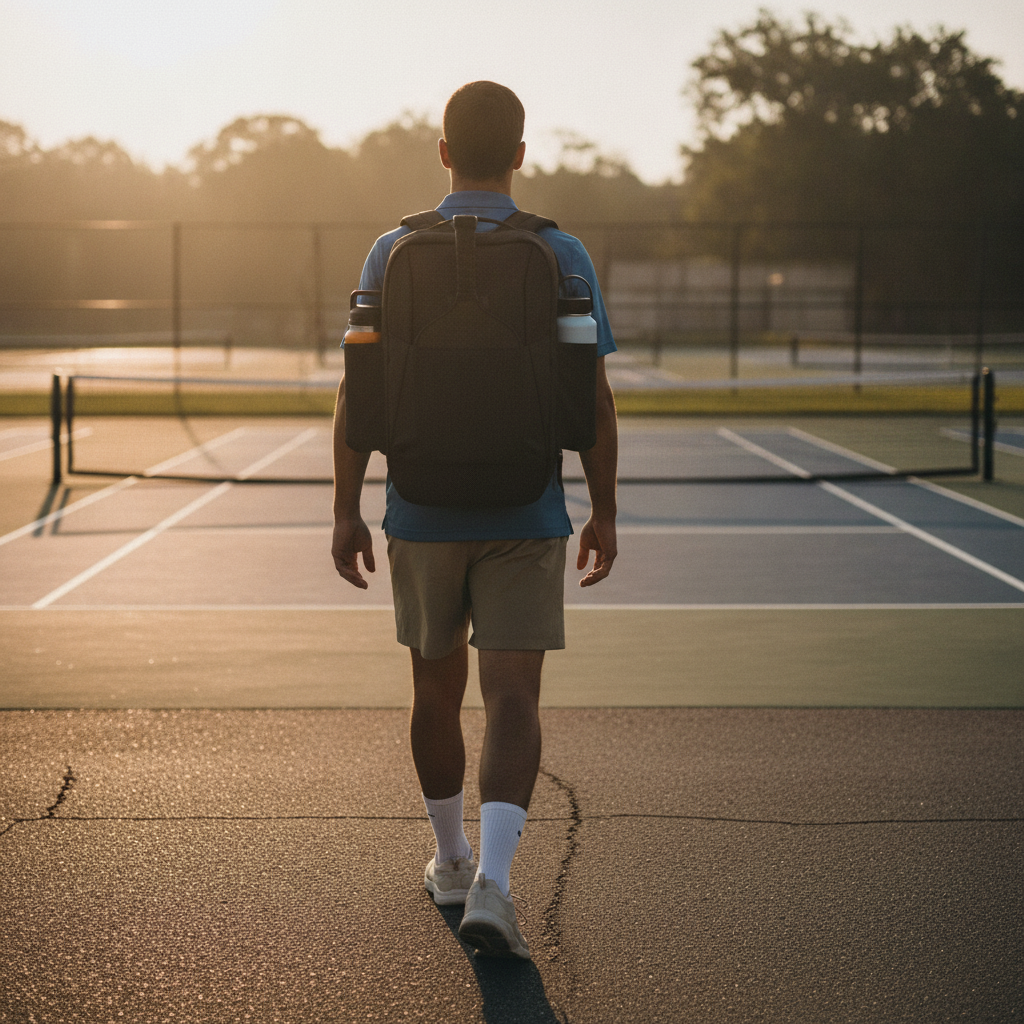
The good news: ergonomic bag design has improved significantly in the last few years. The difference between a well-designed ergonomic backpack and a cheap sling bag isn't just comfort — it's meaningful load distribution across both shoulders and your upper back, versus loading 14 lbs onto one shoulder and one hip flexor every session.
This matters if you have a diagnosed condition. It matters even more if you don't have one yet — because prevention is easier than recovery.
The Anatomy of an Ergonomic Pickleball Bag: 5 Things That Actually Matter
Not all "padded" bags are equal. Here's what actually differentiates a bag designed for ergonomic carry from one with "padding" as a marketing term:
1. Back Panel Design
A proper ergonomic back panel has two zones: a channel down the center (to keep the bag from pressing on the spine) and padded wings on each side that distribute pressure across the upper back. Flat foam panels don't do this — they press the bag's contents directly against your spine. Look for an S-curve or contoured back panel with a center channel and independent side padding.
2. Shoulder Strap Width and Padding Density
Thin straps concentrate load on a narrow band of shoulder tissue. A minimum 2-inch strap width with high-density foam is the baseline for multi-hour carry. Mesh backing on the strap is a bonus — it reduces heat buildup, which matters for a sport played in outdoor summer heat.
3. Sternum Strap
Often skipped, almost always worth using. A sternum strap connects the two shoulder straps across the chest and prevents them from slipping off the shoulders — which is what causes the forward-lean posture that loads the lower back. If a bag has one and you're not using it, start. Five seconds to clip, meaningful posture improvement for the whole walk.
4. Weight Distribution (Load Position)
Heavier items — shoes, water bottle — should be packed close to your back and low. Paddles can go anywhere because they're relatively flat and distribute weight well. Most players pack backwards: shoes at the bottom far from the body, paddles crammed in first. Flip the order. It makes a measurable difference in perceived carry weight.
5. Hip Belt (Rare but Valuable for Severe Conditions)
Most pickleball bags don't have hip belts — that's a hiking pack feature. If you have diagnosed lumbar issues where any shoulder loading is problematic, a rolling bag (or a hiking-pack-style bag with hip belt) is the more honest answer than any pickleball backpack on the market. No bag designed primarily for racket sports solves severe lumbar conditions. Own that tradeoff.
How Heavy Is a Fully Packed Pickleball Bag? The Real Weight Math
Most bag reviews discuss weight with empty bags. That's not how you carry it. Here's the realistic loaded weight breakdown:
| Item | Typical Weight | Notes |
|---|---|---|
| 2 composite paddles | ~32 oz (2 lbs) | Most paddles 7–9 oz each |
| 32 oz water bottle (full) | ~34 oz (2.1 lbs) | Bottle weight varies ~2 oz |
| Court shoes (pair) | ~28 oz (1.75 lbs) | Varies by shoe category |
| Balls, towel, accessories | ~10 oz (0.6 lbs) | 6 balls + towel + grips |
| Contents subtotal | ~6.45 lbs | Before bag weight |
Add your bag's empty weight and you get the full carry load. A 2.5 lb bag with a full loadout puts you at roughly 9 lbs on your back — and if you're carrying a laptop for a court-to-work commute, add another 4–5 lbs.
This is relevant data. A player with shoulder impingement deciding between a 1.5 lb sling and a 2.5 lb backpack might think the sling is better — but the sling loads all of that weight onto one shoulder and one hip. The heavier backpack distributes it across both. The backpack is almost always the better ergonomic choice for ongoing back and shoulder health.
Best Pickleball Bags for Back Pain: Ranked by Ergonomic Design
Here's an honest look at the market through an ergonomics lens specifically. FORWRD makes both bags at the top of this list, so I'll be explicit about where they win and where they don't.
#1 — Court Ranger V2 ($195): Best for Chronic Back and Shoulder Issues
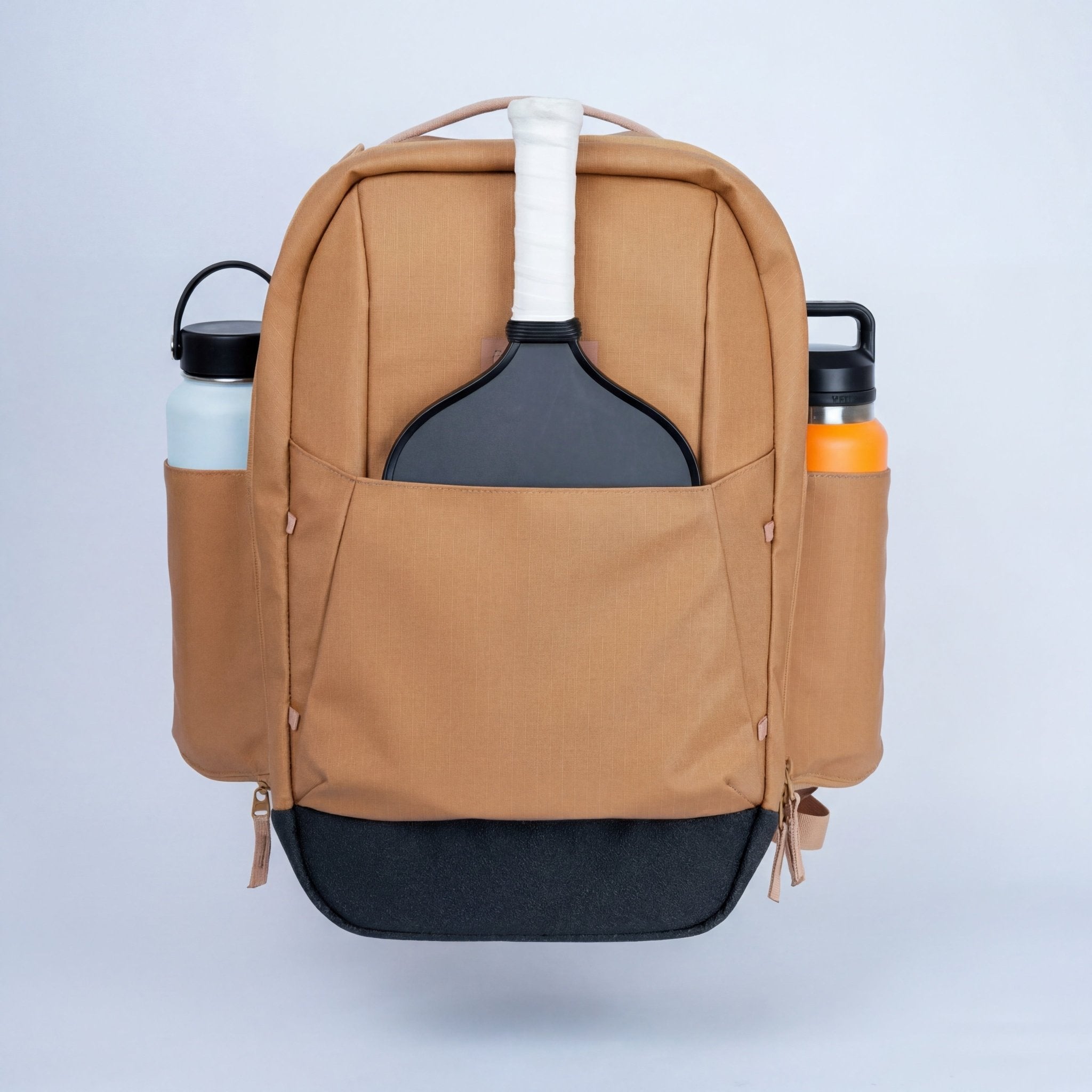
If you have ongoing back issues, shoulder impingement, or rotator cuff history — this is the bag. The Court Ranger V2's lighter build means less dead weight on your back before you even add gear. The padded back panel and dual contoured shoulder straps distribute load well across the upper back, and the 16" laptop sleeve keeps dense items close to your body where load management is easiest.
What it doesn't have: a hip belt (no pickleball bag does), and if you need to carry two paddles plus shoes plus a full water kit regularly, you'll feel the weight. For severe conditions, see the note below about rolling bags.

#2 — Court Caddy ($325): Best for Organized Players Who Need Load Structure
The Court Caddy wins on organization — the modular paddle sleeve, dedicated compartments, and 15" laptop compartment mean your load is structured and spread across the bag's depth, not crammed into one compartment. Structured bags distribute load better than loosely packed bags, because the weight is predictably placed rather than shifting with each step.
It's heavier than the Court Ranger V2 because it has more features and a more substantial frame. For players with mild back concerns who want the organizational benefit, it's the right call. For players with diagnosed conditions, the V2's lighter build is the honest recommendation.
Both bags were designed with feedback from 500+ real players, and players with shoulder and rotator cuff history were specifically part of that feedback pool — the strap design reflects those conversations.

For Severe Conditions: The Rolling Bag Option
No pickleball backpack is the right answer for severe lumbar disc issues or acute nerve impingement. Rolling bags exist. Brands like Vessel and JOOLA make wheeled rolling options that eliminate shoulder carry entirely. They're bulkier and less practical for walking long distances, but they're the honest answer when the diagnosis says "no shoulder loading."
If that's you: get the rolling bag. Don't try to solve a medical constraint with a better backpack.
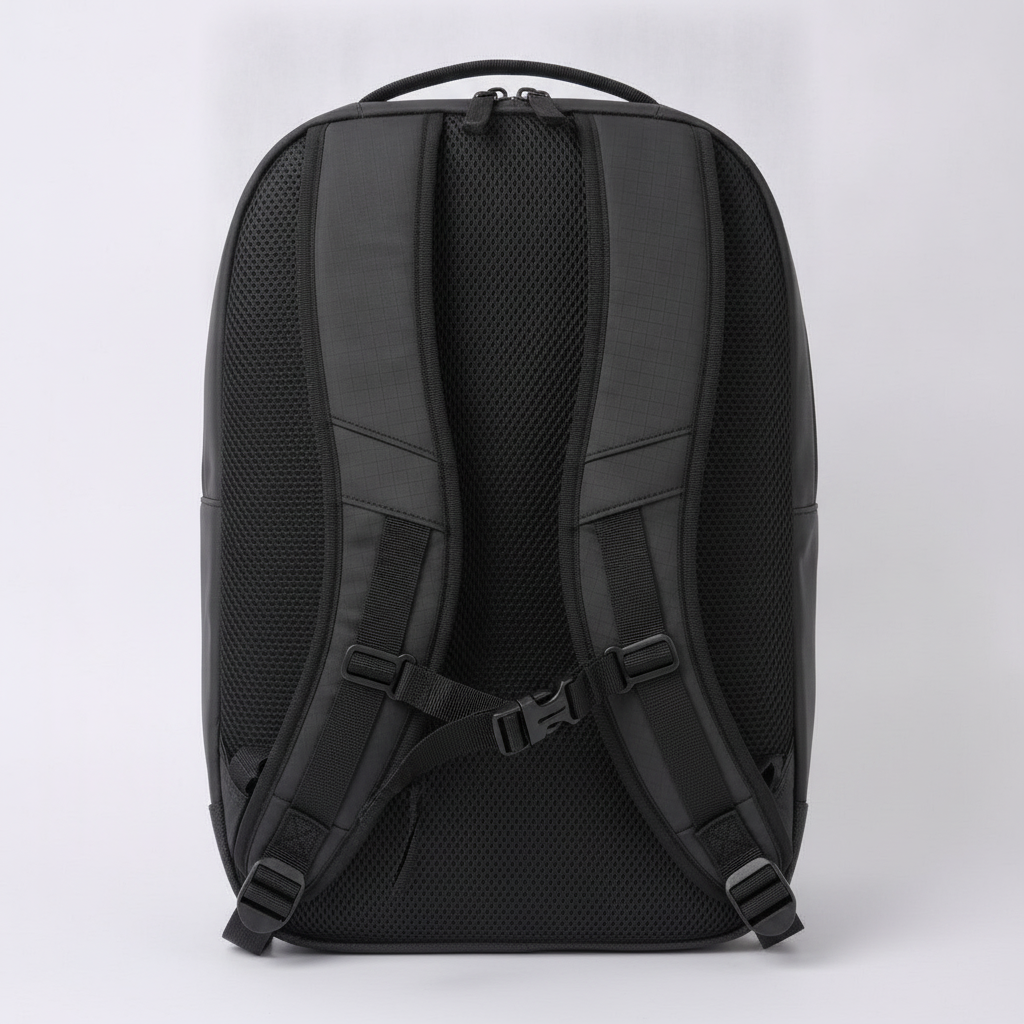
What to look for: a contoured back panel with center channel, wide padded straps, and sternum strap clip.
Backpack vs. Duffel vs. Sling: Which Carry Style Is Right for Your Back Issue
Short answer: backpack, almost always, if you have back or shoulder concerns.
Backpack: Distributes weight across both shoulders and the upper back. Best for players with mild-to-moderate back issues. The bilateral load is meaningfully easier on any single shoulder or disc than alternatives. Downside: some players find bilateral shoulder loading irritating if they have bilateral shoulder issues — rare but possible.
Sling bag: Single-shoulder carry, full stop. If you have any unilateral shoulder issue, a sling on that shoulder is adding to an existing problem. Even on your "good" shoulder, carrying 10+ lbs on one side creates compensatory spinal loading on the other. For players with back issues, slings are the worst option.
Duffel: Usually hand-carried or over one shoulder. Same unilateral load problem as a sling, with the added awkwardness of a less stable form factor. Fine for gear transport, not recommended for players managing back or shoulder conditions.
Rolling bag: Best for severe cases. Eliminates shoulder and back loading entirely during transport. Impractical for long walks or stair-heavy facilities, but medically the most sensible option when your condition is serious.
If you currently use a sling because it's lighter — but you have shoulder or back issues — switch to a backpack. The slight increase in bag weight is more than offset by bilateral load distribution. Your physical therapist would agree.
How You Carry Matters as Much as What You Carry: Loading and Wearing Technique
The best ergonomic bag worn wrong is worse than a mediocre bag worn correctly. Two things make the biggest difference:
Pack Heavy Items Close to Your Back
Shoes and water bottles should be packed in the compartment closest to your back. Paddles go in the outer sleeve. Most players do this backwards — shoes in the outer compartment because they're easiest to access, water bottle wherever it fits. That puts the heaviest items at maximum lever distance from your spine, which multiplies the effective carry weight on your shoulder and back muscles.
Pack rule: whatever's heaviest goes closest to your back, low. Lightest stuff fills the outer compartments.
Use the Sternum Strap
If your bag has one, clip it. It takes five seconds and it prevents the forward-lean posture drift that loads the lower back during longer walks. Most players never clip it. Most players also complain about lower back tightness after court days.
For more on the full injury prevention picture beyond bag selection, read our Pickleball Injury Prevention Gear 2026 guide. And if you're shopping bags more broadly, our Best Pickleball Bags for Summer 2026 covers the full field.
Ready to make the switch?
The Court Ranger V2 ($195) is the lighter, everyday-carry option with a contoured back panel and dual padded shoulder straps. The Court Caddy ($325) adds full tournament organization if you need more than just ergonomics. Both were designed with input from 500+ real players — including players with shoulder history.
FAQ: Pickleball Bag Back Pain Questions
What pickleball bag is best for players with back problems?
For mild to moderate back concerns, the Court Ranger V2 ($195) — lighter build with contoured back panel and dual padded shoulder straps. For severe conditions (diagnosed disc issues, acute nerve impingement), a rolling bag that eliminates shoulder carry is the more honest answer than any backpack on the market.
How heavy is a fully packed pickleball bag?
Between 12 and 16 lbs for a typical tournament loadout: two paddles (~2 lbs), full water bottle (~2.1 lbs), court shoes (~1.75 lbs), balls and accessories (~0.6 lbs) — plus the bag itself. That's the weight of a loaded day-hiking pack, worn three to five times per week.
Is a pickleball backpack or duffel better for shoulder pain?
A backpack is almost always better. Bilateral shoulder loading distributes the weight across both shoulders and the upper back. A duffel (and any sling bag) loads the full weight on a single shoulder, creating compensatory spinal strain on the other side. For shoulder impingement specifically, bilateral carry reduces the load on the affected joint.
What should I look for in a pickleball bag if I have back issues?
Four things: a contoured back panel with a center spine channel, wide shoulder straps with high-density foam (minimum 2 inches wide), a sternum strap, and an ergonomic compartment layout that places dense items close to your back. Hip belts exist on hiking packs but not pickleball bags — if you need one, look at rolling bags instead.
How do I pack my bag to reduce back strain?
Put the heaviest items (shoes, water bottle) in the compartment closest to your back, packed low. Paddles go in the outer sleeve — they're flat and relatively light. Accessories fill outer pockets. This positions the load's center of gravity as close to your own spine as possible, reducing the effective lever arm on your lower back muscles.
Is the Court Caddy suitable for players with shoulder injuries?
For mild shoulder issues — yes. The Court Caddy's padded panel and dual contoured straps distribute load reasonably. For diagnosed rotator cuff tears or active impingement, the Court Ranger V2's lighter overall weight is the better choice. For anything involving nerve pain or acute disc issues, consult a physical therapist before making any bag decision.

Leave a comment
This site is protected by hCaptcha and the hCaptcha Privacy Policy and Terms of Service apply.