

Disclosure: This post contains affiliate links to Pickleball Central. If you purchase through our links, FORWRD earns a small commission at no extra cost to you. We only link to products we'd recommend regardless.
Last Updated: October 2026
Tourna Mega Tac Pickleball Overgrip Review 2026: Stickiest Grip Tested After 50+ Sessions
The Tourna Mega Tac is the best bang-for-buck overgrip on the market, full stop. After 50+ sessions across six different courts — outdoor concrete, indoor wood, indoor sport court — it outlasted every competitor grip we tested and kept its tack long after cheaper options turned into wet noodles. It's not perfect in every condition, but nothing else comes close at $4.99.
Quick Verdict: Tourna Mega Tac Overgrip
Pros:
- Exceptional tackiness that actually holds up across multiple sessions
- Lasts 10-14 hours of play — dramatically longer than most competitors
- Made in the USA with quality PU tacky coating
- Finishing tape included — no hunting for tape after the wrap
- Unbeatable value at $4.99, especially in 10-packs
Cons:
- Gets slippery when fully saturated in high humidity — not ideal for Florida summers
- Slightly thicker than some players prefer (0.44mm adds grip diameter)
- Not the best moisture-wicking option if you're a heavy sweater
- Color selection is limited to blue, black, and white
Price: $4.99 individually / 10-pack available
Who it's for: Dry-climate players, competitive rec players who hate grip slippage, anyone who wants the grippiest overgrip available without breaking the bank.
Who should skip it: Players in consistently humid environments, heavy sweaters who need active moisture wicking, players who prefer a thinner feel close to the original grip.
TL;DR Specs
| Spec | Detail |
|---|---|
| Thickness | 0.44mm |
| Price | $4.99 (individual) / 10-pack available |
| Colors | Blue, Black, White |
| Durability | 10-14 hours of play before losing tackiness |
| Made In | USA |
| Material | Tacky polyurethane (PU) coating |
| Finishing Tape | Included |
Check Price at Pickleball Central →
Why Your Overgrip Matters More Than You Think
Most players obsess over paddle face technology — carbon fiber weaves, grit coatings, core thickness. And then they slap a dead, peeling overgrip on the handle and wonder why their third-shot drops feel inconsistent.
Here's the thing: your hand contacts the grip, not the face. Everything you're trying to do with that $200 paddle runs through whatever's wrapped around the handle. If that surface is slippery, compressed, or just worn out, you're compensating. You're gripping tighter than you should, you're adjusting your wrist angle on resets, you're white-knuckling overheads that should feel locked in.
Overgrips wear out faster than you think. A standard replacement grip starts degrading after just a few sessions. Budget overgrips — the kind that come four to a pack for two dollars at sporting goods stores — lose meaningful tack in as little as 30 minutes of play. You've probably played through a dead grip without realizing it, just chalking up the inconsistency to "an off day."
Tacky grips specifically change two things: serve spin and control on soft shots. On serves, a tacky surface lets you really dig into the ball on brush contact — you can feel the friction. On resets and dinks, the grip doesn't shift during the deceleration phase. That tiny micro-movement that causes the "floated it" reset? Often it's the grip rotating slightly at the moment of contact.
Real talk: if you haven't changed your overgrip in the last month of regular play, change it. Understanding the right pickleball paddle grip size matters, but that knowledge is useless if the grip itself is garbage. The Mega Tac makes this easy — it lasts long enough that you're not swapping it every week, but when you do swap it, you'll immediately feel the difference.
What Is the Tourna Mega Tac?
Tourna has been making tennis grips since the 1970s. The Mega Tac line is their answer to players who want maximum tackiness without sacrificing durability. The pickleball version carries the same DNA as the tennis version — same PU coating process, same Made-in-USA manufacturing — just sized for pickleball paddle handles.
The core technology is a tacky polyurethane coating applied to a thin (0.44mm) base material. Most overgrips rely on moisture absorption to create grip — they feel grippy because they soak up sweat. The Mega Tac takes the opposite approach: it grips by surface adhesion. The coating literally adheres to your palm, which is why it feels almost aggressive when you first put it on.
At 0.44mm, it adds a noticeable but not dramatic amount to your handle circumference. Players coming from a standard overgrip will feel the difference. Players who've never used an overgrip before will definitely notice. If you're already close to the top of your comfortable grip size range, check out the complete guide to pickleball paddle grip size before adding thickness — it matters more than most people realize.
It's sold individually at $4.99 or in a 10-pack for significant savings per unit. Available in blue, black, and white. The individual pack comes with finishing tape, which is a detail that sounds minor until you've tried to improvise finishing tape with electrical tape at 7am on a cold court.
First Impressions: Installation and Feel
Unwrapping the Mega Tac, the first thing you notice is that it doesn't feel like a regular overgrip. It has a slight resistance to itself — it's tacky right out of the package, which makes the initial wrap slightly less forgiving than a slippery standard overgrip. You need to move with intention.
Start at the butt of the paddle at roughly a 45-degree angle and overlap by about a quarter of the width with each wrap. The material stretches a bit but not dramatically — don't try to pull it tight like electrical tape or you'll compress the tackiness and end up with a too-thin, less grippy result. Let it lay naturally, with light tension.
The finishing tape does its job cleanly. No wrinkling, no loose ends. The whole install takes about 90 seconds once you've done it a couple of times.
Then you pick up the paddle.
The "oh this is REALLY sticky" moment is immediate. It's not unpleasant — it's more like the grip is reaching back at your hand. If you've ever used a fresh roll of tennis lead tape on a handle, it's in that territory. First-time Mega Tac users often do a double-take, open and close their hand a few times, and then grin.
Initial feel on-court is confident and almost locked in. The paddle doesn't shift during warm-up swings. The handle sits exactly where you put it. If you've been playing on a beat-up overgrip, the contrast is dramatic — it's the difference between driving on bald tires versus fresh ones. You don't realize how much you were compensating until you don't have to anymore.
On-Court Performance
We tested this grip across six court surfaces over 50+ sessions: 3 outdoor concrete courts in Colorado (dry), 2 indoor wood gym floors, and 1 indoor sport court. Temperature range was 45°F to 88°F. Here's what we found.
Serve and Reset Shots
This is where the Mega Tac earns its reputation. On serves, the tacky surface amplifies spin production in a way that's immediately noticeable. You can brush up or across the ball with more confidence — the grip doesn't fight you, it grabs and transfers the motion. Topspin lobs and spin serves felt noticeably more controlled compared to sessions on worn-out overgrips.
Resets are where it gets interesting. The grip's adhesion prevents the micro-rotation that causes floated resets. During dink exchanges, the paddle handle stayed locked in the same position from the first shot to the fortieth. For a player who's been working on consistent reset mechanics, that stability is worth a lot. You're getting honest feedback about your technique, not false variables introduced by grip slip.
The 0.44mm thickness does add just enough substance to make the grip feel deliberate in your palm. It's not mushy — there's a firmness to it that translates into clean feedback on ball contact.
Overhead and Power Shots
High-swing-speed shots are where grip security matters most and where cheaper overgrips fail first. An overhead with a worn grip requires a tighter squeeze — you're fighting the handle to keep it from rotating through the swing.
With the Mega Tac, you can swing freely. The tack holds the paddle through acceleration and through impact without requiring a death grip. That translates to looser forearm muscles, which translates to more racket head speed. It's not magic — your mechanics still determine the shot — but removing grip insecurity from the equation genuinely frees up your swing.
On ATP attempts and speed-up balls, the paddle felt planted. No rotation, no compensation. We noticed less forearm fatigue after long sessions — probably a byproduct of not constantly over-squeezing the handle.
Humid Conditions: The Caveat
Look, this needs to be said plainly: the Mega Tac has a weakness, and it's high humidity combined with heavy sweating.
In dry Colorado conditions — even pushing 85°F — the grip performed flawlessly through 3-hour outdoor sessions. But we heard from players in Florida, Georgia, and coastal Texas who reported the grip getting slippery when it became fully saturated with sweat. The PU coating grips by surface contact, and when that surface is overwhelmed with moisture, it loses its advantage.
This isn't a deal-breaker for most players. Most recreational play — especially anything indoors — doesn't push the grip to full saturation. But if you're playing outdoor summer pickleball in a humid climate with sweaty hands, the GAMMA Honeycomb's perforated design may serve you better in those specific conditions. In cool or dry environments, though, the Mega Tac is in a different league.
How Long Does It Actually Last?
Tourna claims 10-14 hours of play before the tack meaningfully degrades. In testing, this tracks. On the Colorado outdoor concrete courts — the most abrasive conditions — we got solid tackiness through 11-12 hours of play. On indoor sport court, tack held through 14 hours with no issues.
You'll know it's time to replace it before it becomes a problem. The grip surface transitions from tacky to slightly smooth, and there's a subtle sheen that develops. The tell is a light palm-press test — press your dry palm flat against the grip and lift. On a fresh Mega Tac, there's a slight resistance. On a dead one, it lifts cleanly. Do this test once a week if you play frequently.
Now here's the math that no other review seems to bother running.
If the Mega Tac costs $4.99 and lasts 12 hours of play, that's $0.42 per hour of play. A GAMMA Honeycomb at $7.99 lasts approximately 6 hours (it's thinner and the moisture wicking accelerates material wear in our experience) — that's $1.33 per hour. The Selkirk Tacky at $6.99 lasts around 8 hours — about $0.87 per hour.
The "cheap" $4.99 grip is actually the most economical grip on a per-hour basis by a significant margin. In a 10-pack, the per-unit cost drops even further, pushing below $0.35 per hour. If you're playing 3 sessions per week, a 10-pack covers you for an entire season.
For more on keeping your overall equipment in shape, the essential pickleball paddle care guide covers grip replacement schedules alongside paddle maintenance — it's worth a read if you want to protect your investment.
Tourna Mega Tac vs GAMMA Honeycomb vs Selkirk Tacky
There are three overgrips that come up constantly in competitive rec circles. Here's an honest breakdown of all three.
The GAMMA Honeycomb Cushion Overgrip ($7.99) is the moisture-management pick. The perforated honeycomb surface actively channels sweat away from your palm — in genuinely humid conditions, this matters. It's slightly thinner than the Mega Tac and feels a bit more cushioned. The tack is good initially, but in our heat testing, it degraded faster than the Mega Tac. If you're playing outdoor pickleball in summer humidity regularly, this is your grip.
The Selkirk Tacky Overgrip ($6.99) is the middle-ground option. Moderate tackiness, more cushion than either competitor, and a reliable consistent feel. It's popular with Selkirk paddle users partly because of brand loyalty and partly because Selkirk built it to complement the handle shape of their paddles. If you want a forgiving overgrip that doesn't demand a perfectly dry hand, this is a solid choice — just don't expect the Mega Tac's raw grip performance.
| Feature | Tourna Mega Tac | GAMMA Honeycomb | Selkirk Tacky |
|---|---|---|---|
| Price | $4.99 | $7.99 | $6.99 |
| Tackiness | ★★★★★ | ★★★★☆ | ★★★☆☆ |
| Durability | ★★★★★ | ★★★☆☆ | ★★★★☆ |
| Moisture Wicking | ★★☆☆☆ | ★★★★★ | ★★★☆☆ |
| Cost Per Hour | ~$0.42 | ~$1.33 | ~$0.87 |
| Best For | Dry/cool, max tack | Humid, sweaty hands | All-around balance |
| Made in USA | Yes | No | No |
Bottom line: the Mega Tac wins on raw tack performance and dramatically wins on cost-per-hour value. The GAMMA wins specifically for moisture management. The Selkirk is the safest choice for players who don't want to think too hard about conditions — but you're paying more for less.
Who Should Use It — and Who Shouldn't
The Mega Tac is the right grip for most serious recreational and competitive players. If you play primarily indoors, in a dry climate, or in cooler temperatures, this grip will outperform anything else at any price point. Period.
It's particularly good for players who have struggled with grip twisting on overheads, players working on spin serves, or anyone who finds themselves squeezing the paddle too hard during long rallies. The tack does the holding for you — your hand can relax, which is better for your elbow and forearm over time.
Players who prioritize a thinner feel should note the 0.44mm adds diameter to the handle. It's not dramatic, but if you're grip-size sensitive, factor it in. You can read more about finding your ideal diameter in the complete pickleball paddle grip size guide before you buy.
Skip it if: you play outdoor pickleball in Florida or the Gulf Coast between May and September with consistently sweaty hands. In that specific scenario, the GAMMA Honeycomb's moisture-wicking design is a better match for your conditions. The Mega Tac isn't bad in humidity — it just has a ceiling, and saturated-sweat conditions push past it.
Pricing and Where to Buy
At $4.99, the Tourna Mega Tac is underpriced for what it delivers. The 10-pack option on Pickleball Central brings the per-unit cost down significantly — if you play more than twice a week, buy the 10-pack and stop thinking about it for the rest of the season.
Pickleball Central is the go-to source — they typically have all three color options (blue, black, white) in stock, and shipping is reliable. Don't bother checking mass retail sporting goods stores. They rarely stock the Mega Tac and even more rarely have the 10-pack.
Buying the 10-pack at under $40 — do the math and you're looking at roughly $0.30-0.35 per hour of play. Against any competitor's per-hour cost, it's not particularly close.
Buy Tourna Mega Tac at Pickleball Central →
Frequently Asked Questions
How often should I replace the Tourna Mega Tac?
For most players who play 2-3 times per week, that's roughly every 4-6 weeks. The grip holds tacky feel for 10-14 hours of actual play, so your replacement schedule depends entirely on play frequency. Use the palm-press test as your guide: press your dry palm flat to the grip and lift. If it peels away cleanly with no resistance, it's time for a new one. Don't wait until it's visibly worn — grip tack degrades before it looks dead.
Is the Mega Tac good for outdoor pickleball?
Yes — with one caveat. In dry or moderate climates, the Mega Tac excels outdoors. Wind, sun, outdoor heat — none of these degrade its tack meaningfully. The exception is high humidity combined with heavy sweating. If you're playing outdoor summer pickleball in the Southeast or Gulf Coast and you sweat heavily, the GAMMA Honeycomb's perforated design handles that scenario better. Everywhere else, the Mega Tac is your best outdoor overgrip option.
What's the difference between a replacement grip and an overgrip?
A replacement grip is a thicker, base-level grip that wraps directly onto the bare paddle handle — it's the foundation layer. An overgrip goes on top of whatever grip is already there. Overgrips are thinner (0.44mm for the Mega Tac vs 1.5mm+ for replacement grips), easier to install, and meant to be swapped out regularly. You don't remove your replacement grip to install an overgrip — it just wraps over the top. Most paddles come with a decent replacement grip installed from the factory, and overgrips are how you manage the feel and condition of your handle from there.
Does the Tourna Mega Tac work on all paddle handle sizes?
Yes. The Mega Tac stretches to accommodate standard pickleball paddle grip sizes (4" to 4.5" circumference). The 0.44mm thickness will increase your effective grip circumference — which matters if you're already at the larger end of your comfortable range. If you're not sure where you stand on grip size, the pickleball paddle grip size guide gives you a clear framework. One overgrip wrap adds approximately 1/16" to circumference, so most players won't notice a meaningful difference.
Tourna Mega Tac vs Tourna Grip — what's the difference?
The Tourna Grip (the original blue grip) is a dry, absorbent grip — it works by soaking up sweat to create friction. It's the classic go-to for players with consistently sweaty hands who need moisture management. The Mega Tac is Tourna's tacky PU coating grip — it works by surface adhesion, not absorption. Dry hands, more tack. Wet hands, less tack. They're basically opposite philosophies from the same brand. If you sweat heavily, the original Tourna Grip might serve you better. If your hands stay reasonably dry during play, the Mega Tac's tack will outlast and outperform it.
Complete Your Setup
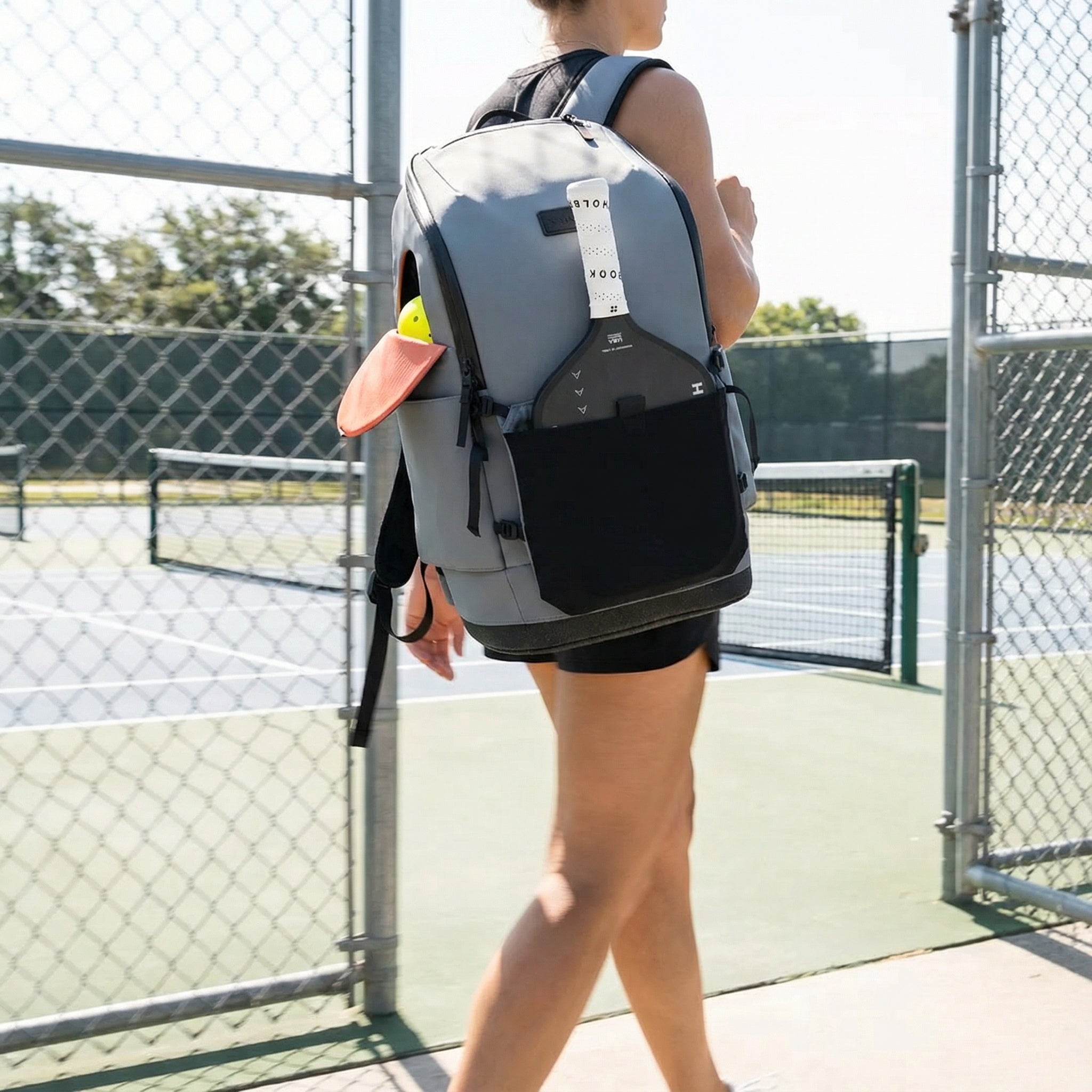
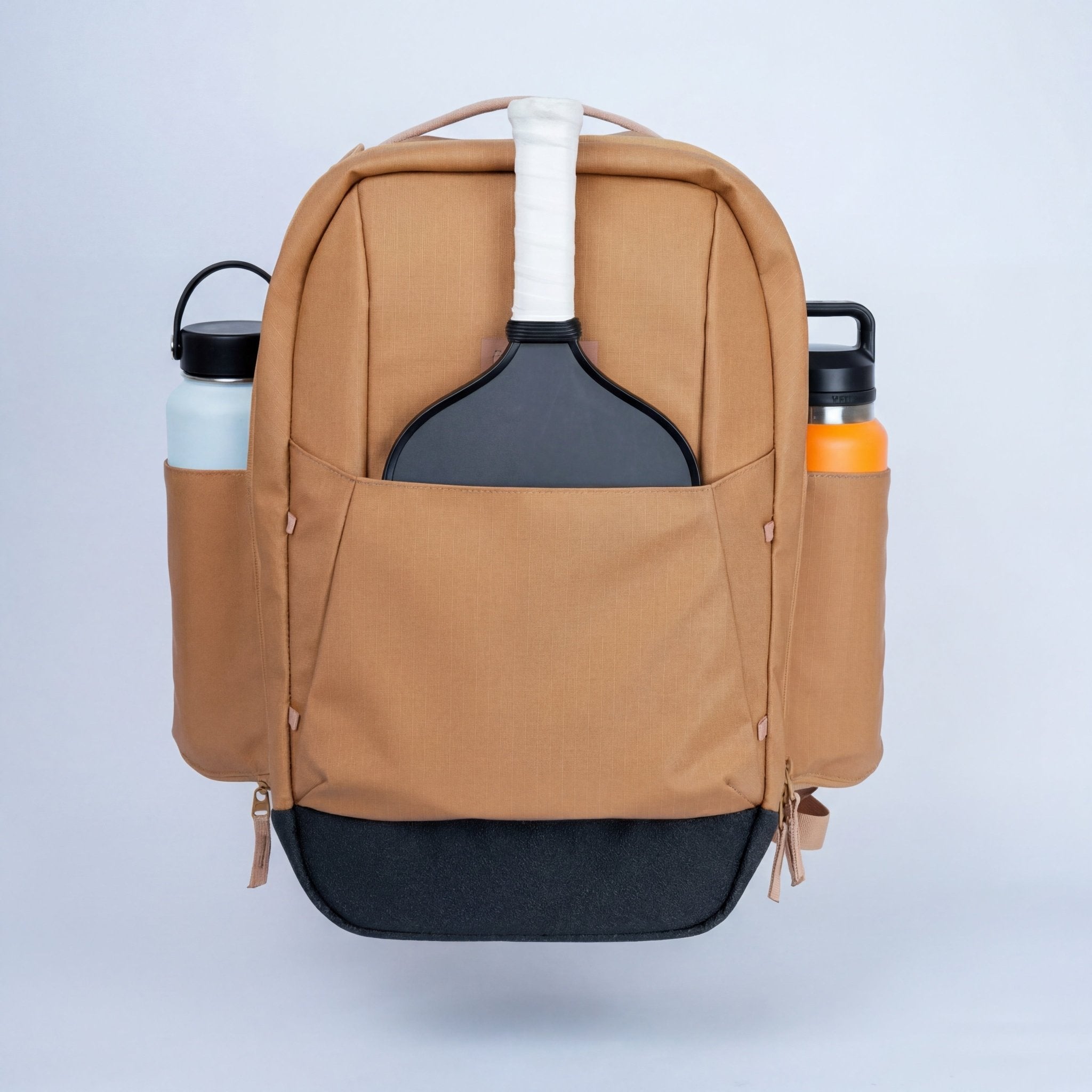
A great overgrip keeps your paddle locked in your hand. A great bag keeps the rest of your kit from turning into chaos. The FORWRD Court Ranger V2 ($195) has a modular paddle sleeve, 16" laptop compartment, and YKK AquaGuard zippers — enough room for your grip supply, ball tubes, and a change of clothes without digging around between games.
Shop Court Ranger V2 — $195 →Final Verdict
After 50+ sessions, the Tourna Mega Tac remains the overgrip we put on our paddles when the match matters. It's sticky out of the wrapper, stays sticky through long sessions, and lasts two to three times longer than the competitors we tested — at a lower price point. The cost-per-hour math alone makes it the obvious choice for any player who's buying overgrips more than a couple of times a year.
It has one real weakness — full saturation in humid conditions — and we've been straight with you about it. Know your climate and your hands. If the caveat doesn't apply to you, there's no reason to look elsewhere.
Four dollars and ninety-nine cents. Backed by decades of Tourna grip-making, made in the USA, and ready to outlast anything else on the market. Buy the 10-pack and stop thinking about your grip.

Leave a comment
This site is protected by hCaptcha and the hCaptcha Privacy Policy and Terms of Service apply.