

You can have the cleanest third shot on your court. But if you and your partner move out of sync, leave the middle wide open, or hesitate on every shared ball — you'll lose to teams with half your shot-making ability and twice your coordination.
Last Updated: May 2026
Teamwork drills are not stroke drills. They're exercises designed to train communication, coordinated movement, and shared decision-making between doubles partners — the things no amount of solo wall practice will fix. This guide gives you ready-to-run drills organized by skill level, with clear instructions you can take to the court today.
The Four Pillars of Doubles Teamwork
Every strong doubles team operates on four pillars: communication, synchronized movement, role clarity, and trust under pressure. These aren't abstract coaching concepts — they determine whether you cover the court as a unit or leave exploitable gaps between you.
When you drill with intention, you're always training at least one of them. Mindless rallies where you "just keep it in play" won't cut it. The goal is deliberate repetition that transfers directly into match situations:
- Calling "mine" early on a floating middle ball at 7-7 without hesitation or collision
- Advancing to the kitchen line together after a deep return, closing off angles
- Knowing exactly who covers the middle if a poach fails before it happens
- Maintaining verbal communication when you're down two points in a tight game
These outcomes don't happen by accident. They happen because teams drill specific scenarios until the right response becomes automatic.
Communication Drills
Clear, consistent communication is the fastest way to significantly improve your doubles game within a few practice sessions. Coaching data suggests 70–80% of doubles errors stem from communication breakdowns — missed calls, late calls, or no calls at all. Fix this, and you fix most of your unforced errors.
"Doubles chemistry isn't about being best friends with your partner — it's about having drilled enough together that you both know instinctively where the other person is going. That comes from reps, not from talking. You can't shortcut it."
— Topher, FORWRD Co-Founder & 4.5-rated doubles player
"Call Every Ball" Drill
Two players rally crosscourt or straight-on at the NVZ line. The rule: the striker must say "mine" before hitting every single ball.
- Early calls — before the ball crosses the net, not after contact
- Volume loud enough for your partner to hear clearly
- Brief eye contact or head turn to confirm
This drill feels awkward at first. That's the point — you're overriding the habit of hitting in silence. Run it at the start of every practice session.
"Middle Boss" Drill
Both partners at the kitchen line facing two opponents or a ball machine. Any ball passing near the middle must be claimed out loud by one player before contact.
- Late calls (after contact) don't count
- Missing a call entirely triggers a quick consequence: 5 shadow split-steps immediately
- Track "clean claims" vs. hesitation errors over 10–15 minutes
This drill directly addresses one of the most common problems in doubles — balls dying in the middle because neither partner committed. After 10–15 minutes of Middle Boss, you'll find yourselves calling middle shots automatically during real games.
"Shot Plan Huddle" Drill
Before each mini-rally (first to 3 points), partners take 10 seconds to agree on one tactical focus. Examples:
- "All soft dinks to their lefty backhand"
- "Attack the middle on any ball above the net"
- "Third ball targets the weaker opponent"
After the rally, take 15–30 seconds to review: Did we follow the plan? What broke down? This builds the habit of playing with strategy rather than just reacting shot by shot.
"Silent Signals" Drill
At the baseline, the serving team uses simple hand signals behind the back before the serve:
- 1 finger — drive the third shot
- 2 fingers — drop the third shot
- Open hand — lob
Partners execute the plan without verbal cues. After 10–12 serves, reset and switch who signals. Tournament-level doubles teams use hand signals constantly — this is where you build that foundation without tipping off opponents.
Movement & Positioning Drills
The best doubles teams move like they're connected by a short rope. Synchronized court positioning is what separates teams that look polished from teams that leave one player stranded while the other charges the net.
Research on high-DUPR doubles play shows that synchronized teams maintain a 6–8 foot lateral spread at the kitchen line, covering roughly 80% of incoming shots. Desynchronized teams lose that coverage entirely — and opponents who recognize it will exploit it within a few points.
"Shadow Partner" Drill
One player (the leader) moves along the baseline and up toward the NVZ. The partner mirrors every movement — side-to-side and in-out — maintaining consistent distance.
- Phase 1: No ball. Just movement. Leader changes direction randomly; partner shadows without the ball.
- Phase 2: Add a soft feed. Leader moves according to the ball; partner shadows without hitting.
- Phase 3: Full play — partner now hitting and shadowing.
This drill ingrains the habit of watching your partner's position, not just the ball. Switch roles after each phase.
"Step Together to the Kitchen" Drill
Both partners start at the baseline facing two opponents or a coach feeding from the opposite NVZ. After each return, partners must advance in unison to the kitchen line. Neither player should be more than 3–4 feet ahead of or behind the other.
Stop and correct whenever there's a significant depth difference. The goal is arriving together — not one player rushing the net while the other lingers in the transition zone.
"Kitchen Line Slide" Drill
Both partners at the kitchen line facing two feeders. Feeders hit balls wide to alternating sidelines. Partners must slide together, keeping inside shoulders roughly aligned.
- Ready position between each shot
- Split-step before each ball arrives
- Never crossing feet — always shuffle
Organized gear means
more time drilling
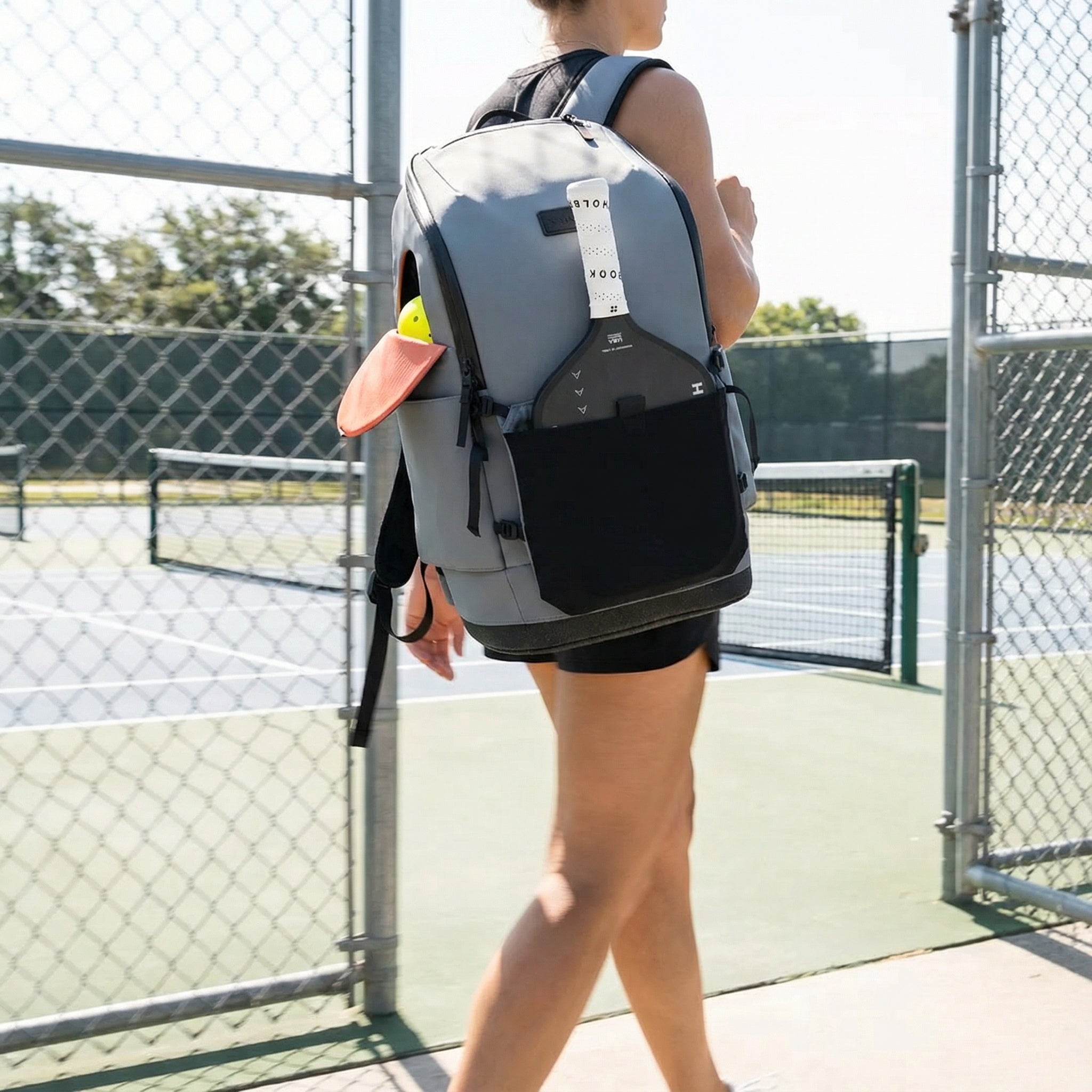
Court markers in the front pocket. Extra balls in the side sleeve. Paddles protected in the integrated sleeve. Arrive and start your first drill in under two minutes.
Drills by Skill Level (DUPR 2.5 → 4.0+)
Different DUPR levels benefit from different drill complexity. A 2.5 player needs foundational habits. A 4.0 player needs situational patterns and pressure-tested execution. Here's how to structure practice at each level.
- Call Every Ball warm-up every session
- Basic kitchen dinking with soft shot emphasis
- Step Together advance drill
- Shadow Partner without a ball
- Middle Boss to eliminate hesitation
- Third shot drop with partner movement
- Simple stacking walk-throughs
- Shot Plan Huddle drill
- Poach & Cover patterns with pre-agreed roles
- Middle attack sequences with scripted responses
- Pressure games to 5 with tactical constraints
- Video review of drill sessions
Recommended Weekly Volume by Level
Consistency matters more than intensity. Pick a sustainable structure and hold to it.
- 2.5–3.0: 10–15 minute focused blocks, twice per week. Prioritize communication over complexity.
- 3.0–3.5: 20–30 minute teamwork segments before or after regular games. This is where doubles strategy starts clicking.
- 3.5–4.0+: Dedicated 45–60 minute sessions. Add video review. Track metrics week over week.
Advanced Drills: Poaching, Stacking & Patterns
Once basic communication and movement are solid, advanced teams drill specific coordinated patterns that win points in tournament play. These drills simulate game situations where split-second decisions and partner trust determine outcomes.
"Poach & Cover" Drill
Partners start at the NVZ vs. two opponents or a coach feeding crosscourt. One player is designated the poacher. When the poacher crosses the center line to intercept, the partner automatically slides behind to cover the open space — no verbal confirmation needed.
- Rotate poaching roles every 8–10 balls
- Track successful poaches vs. errors caused by poor coverage
- Progress: add pre-agreed signals before the poacher moves
Clinic data suggests teams drilling Poach & Cover improved poaching success by 35% over 4–6 week periods, turning passive rallies into offensive winners.
"Stacking Walk-Through" Drill
Without opponents, practice serve and return patterns where both players start on one side (stacked) then quickly move to preferred court positions.
- Phase 1: Footwork only — serve motion, then both partners shuffle to final positions.
- Phase 2: Add a ball and a 20-second shot clock to simulate tournament pacing.
Stacking keeps your stronger forehand in the middle or exploits a weaker opponent's positioning. This drill makes the footwork automatic so you can focus on shot selection during live play — not choreography.
"Third Shot Team Pattern" Drill
Server and partner script a 3–4 ball sequence before each point:
- Deep serve targeting opponent's feet
- Third shot drop into a specific quadrant
- Agreed pressure shot — middle attack or drive at the weaker opponent
Partners name the pattern before serving: "Pattern A: drop then middle." Teams that master third shot patterns win an estimated 65% more points than those who improvise.
"Target & Reset" Team Drill
Both partners at the NVZ. Opponents alternate fast drives and soft dinks. Before starting, defending team agrees on one shared goal:
- "Reset every fastball into the middle third"
- "All resets below net height"
- "Every reset followed by a step forward"
After each point: verbally confirm — "Did we achieve it?" This builds controlled reset habits under realistic pressure. DUPR data shows 3.0+ players reset successfully 60% of the time vs. 25% for 2.0 players. This drill closes that gap.
Mental & Supportive Habits Built Through Drills
Teamwork drills aren't just physical. They build emotional habits — encouragement, resilience, trust — that show up when you're down 9–10 in a tight game. A positive attitude under pressure doesn't appear magically. It develops through repeated positive interactions during practice.
The "Positive Call-Back" Rule
During all teamwork drills, partners say one short positive comment after each rally:
- "Nice idea" — on a well-chosen shot that didn't land
- "Good drop" — acknowledging good execution
- "Thanks for the cover" — after a successful Poach & Cover
This isn't empty cheerleading. It builds the verbal support habit that keeps partners connected during difficult stretches. Teams that practice this report faster recovery after point losses in competitive settings.
Post-Drill Check-In
After 15–20 minutes of drills, take 2–3 minutes to share:
- One thing that felt better than last session
- One specific focus for the next block
Keep feedback constructive and future-oriented: "We're calling the middle earlier" rather than "You keep missing calls." This frames practice as progress, not critique.
Sample Weekly Practice Plans
Most rec and league players only play games and rarely drill. Even one structured teamwork session per week makes a measurable difference in how you perform when it counts.
60-Minute Plan for 3.0–3.5 Teams
| Time | Drill | Focus |
|---|---|---|
| 10 min | "Call Every Ball" dinks at the NVZCrosscourt, switching sides every 2 min | Communication warm-up |
| 15 min | Shadow Partner + Step TogetherNo ball first, then add feed | Synchronized movement |
| 20 min | Poach & Cover OR Third Shot PatternPick one and go deep on it | Advanced pattern work |
| 15 min | Practice game to 11Apply 1–2 teamwork goals from drills | Transfer to live play |
30-Minute Pre-League-Night Plan
| Time | Drill | Focus |
|---|---|---|
| 5 min | Kitchen dinks with communication emphasis | Quick communication reset |
| 10 min | Kitchen Line Slide drill | Lateral movement patterns |
| 15 min | "Middle Boss" game to 7 | Pressure communication |
Gear Setup for Efficient Drill Sessions
Serious doubles teams benefit from a dedicated, well-organized practice kit. When you show up with everything ready, you spend practice time on the court — not scrambling for equipment.
What to Bring to a Serious Drill Session
Imagine a pair training for a local club championship. They run 45-minute early-morning drills before work, three days a week. Their bag is packed the night before: paddles protected, balls accessible, cones in the front pocket, water bottle in its sleeve. They arrive, unzip, and start the first drill in under two minutes.
That's the difference between good teamwork on the court and good organization off it.
Built for players
who drill often
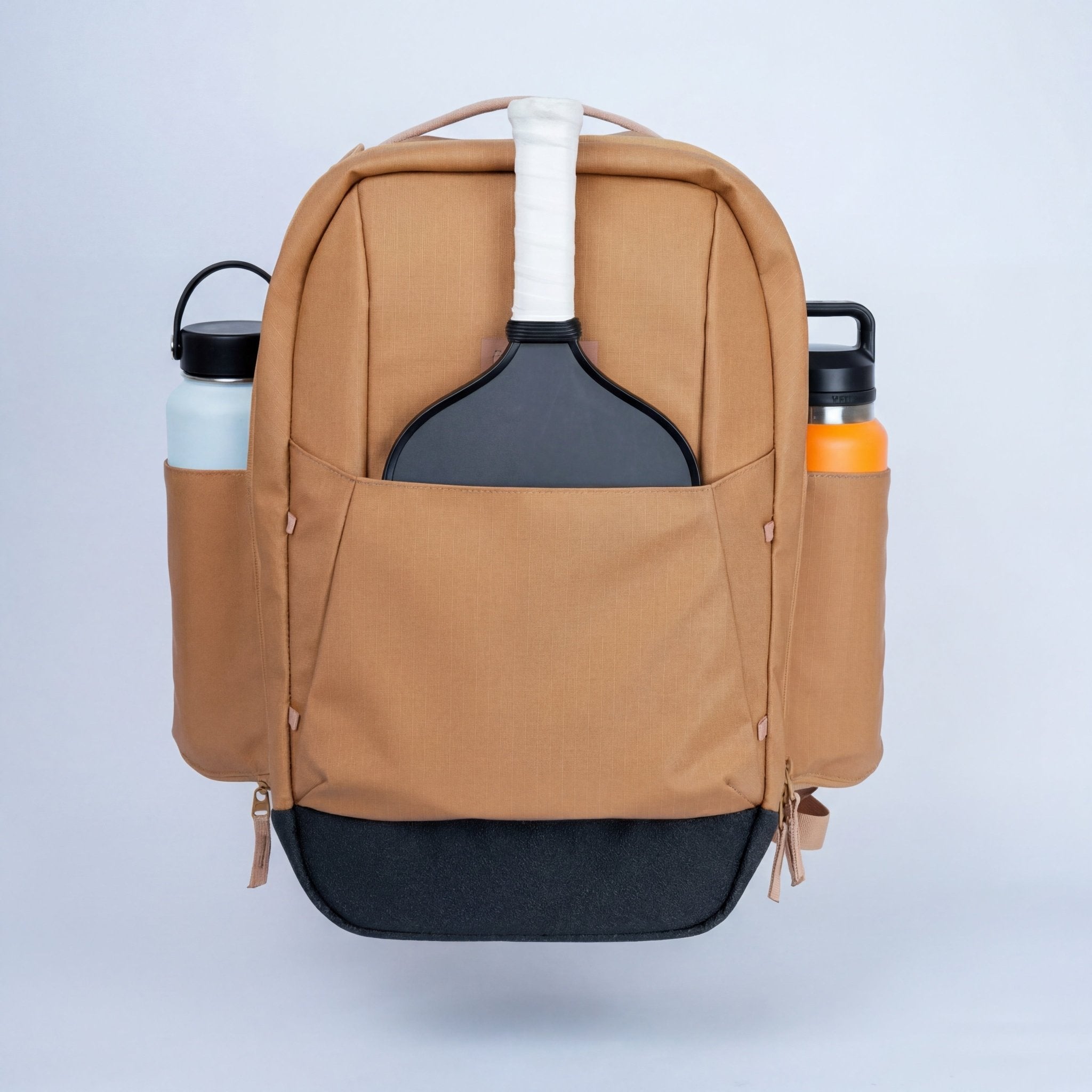
Separate compartments for clean and sweaty gear. Quick-access pockets for balls and markers. Padded paddle sleeves. Dual metal fence hooks. Designed around your real court routine — not someone's idea of what a pickleball bag should look like.
How to Know If Drills Are Working
Improvement that feels subjective often shows up clearly in simple data. Track these metrics over 4–6 weeks:
- Unforced errors from miscommunication — should measurably decrease within 3–4 weeks
- Balls left in the middle during games — track missed calls per game and chart them
- Reset success rate — are you getting the ball below net height under pressure?
- League match results against similar-level teams — the ultimate signal
Keep notes in your phone or a small notebook stored in your court bag. Teams that drill consistently for 4–6 weeks and track it report noticeable improvement in decision-making speed, court coverage, and win rate against familiar opponents.
Frequently Asked Questions
Build Chemistry. Win Together.
Consistent teamwork drills transform how doubles partners move, communicate, and trust each other in real matches. The team that drills together — even 30 minutes a week — develops habits that teams who only play games never build.
Pick two drills from this guide and run them before your next match. Start with Call Every Ball if you haven't been communicating out loud. Start with Step Together to the Kitchen if you and your partner keep arriving at the net at different times. One focused session beats a month of game play for building the specific habits that win doubles points.
Show up ready. Drill with intention. And bring gear that keeps up with the work.

Leave a comment
This site is protected by hCaptcha and the hCaptcha Privacy Policy and Terms of Service apply.