

Last Updated: October 2026
FTC Disclosure: FORWRD earns a commission on purchases made through affiliate links in this post. Our testing methodology and opinions are our own — we don't accept payments for positive reviews.
Holbrook's ARMA series landed quietly. No marquee pro signing, no viral Reddit post. Just a new paddle family built on a genuinely different construction philosophy — and for players who've spent years bouncing between EPP foam paddles looking for something that feels more... connected, it's worth a close look.
Here's the short version: the ARMA uses a Dual Density Polypropylene core with Holbrook's FLX-Foam damping layer. That's a meaningful departure from the EPP foam trend. The result is more traditional feedback with modern vibration control — and three shapes to match different playing styles. Whether it's right for you depends almost entirely on which shape fits your game.
Quick Verdict
| Model | Shape | Handle | Face | Price |
|---|---|---|---|---|
| ARMA S | 16" × 8" Widebody | 5.25" | Force-Tech Carbon | $159.99 |
| ARMA S Metallic | 16" × 8" Widebody | 5.25" | Metallic Weave Carbon | $199.99 |
| ARMA T | 16.5" × 7.5" Elongated | 5.5" | Force-Tech Carbon | $199.99 |
| ARMA T Metallic | 16.5" × 7.5" Elongated | 5.5" | Metallic Weave Carbon | $159.99–$199.99 |
| ARMA X Metallic | 16.5" × 7.5" Elongated | 5.25" | Metallic Weave Carbon | $159.99–$199.99 |
Pros: Dual Density PP core delivers precise, connected feedback that EPP foam paddles don't; FLX-Foam layer absorbs vibration without adding artificial bounce; widebody ARMA S is one of the few premium carbon paddles in a true 16" × 8" shape; all variants USAP-approved; five models across two price points gives real options.
Cons: 14mm thickness only — players who want 16mm dwell need the Aero T instead; standard Force-Tech surface generates less raw spin than top-tier raw carbon like JOOLA Perseus Pro V; heavier average feel (8.0–8.1 oz) than some touring players prefer; no 5.5" handle option on the ARMA S.
Who it's for: Recreational players transitioning from traditional composite paddles, doubles specialists who want a forgiving widebody shape, and anyone who's found EPP foam paddles too bouncy or disconnected.
Who should look elsewhere: Spin-obsessed players, two-handed backhand users who need the widebody shape (the ARMA S only comes in 5.25" handle), and power-first singles players who'll get more from an EPP foam paddle like the Holbrook Aero T 16mm.
Shop ARMA S at PBC → $159.99 Shop ARMA T at PBC → $199.99
Why Trust This Review
FORWRD designs and manufactures pickleball bags. We're obsessive about how paddles store, how they travel, and — since we play the sport ourselves — how they perform on court. That dual perspective means we read paddle specs the way serious players do, not the way brand marketing teams do.
For the ARMA series, we analyzed Holbrook's construction claims against what the specs actually say, cross-referenced against the Aero T and Fuze lines we've already broken down in depth, and synthesized feedback from players who've put real court time on all three ARMA shapes.
We have no commercial relationship with Holbrook. The affiliate links here go to Pickleball Central. Our job is to tell you what the paddle actually does.
The ARMA's Core Technology: What "Dual Density + FLX-Foam" Actually Means
Most premium paddles right now use EPP foam cores — Holbrook's own Aero T and Fuze lines included. EPP foam offers longer dwell times and a softer, more forgiving feel. Great for power generation and for absorbing hard drives.
The ARMA goes a different direction. Its core is described as "Dual Density Polypropylene Core, FLX-Foam, Unibody Edgecraft Foam." Break that down:
Dual Density Polypropylene: Traditional PP honeycomb cores have a uniform cell density across the face. "Dual Density" means Holbrook is using different core stiffnesses in different zones — typically a denser center for precision and a slightly softer edge zone to widen the effective hitting area. You feel this as less dead-spot variance across the face.
FLX-Foam: This is Holbrook's proprietary flex-damping layer. Think of it as a shock absorber between the face and the core. It catches vibration on off-center hits without adding the springy bounce that EPP foam can introduce. The result is a paddle that plays "tighter" than a foam paddle — more like what you'd expect from a traditional composite, but with better arm comfort.
Unibody Edgecraft Foam Core: The foam core runs fully edge-to-edge — no traditional rigid edge guard frame disrupting the sweet spot boundary. This is a meaningful structural choice. On paddles with a hard edge guard insert, you can feel a distinct dead zone at the extreme edges. The ARMA minimizes that effect.
Add "Force-Tech Carbon Fiber" on the face (Holbrook's branded raw carbon treatment) and you've got a paddle that's trying to thread a needle: traditional connected feedback + modern vibration damping. Whether it succeeds depends on your playing style.
ARMA S vs ARMA T vs ARMA X: The Decision That Actually Matters
All five ARMA variants share the same core construction. The differences between them are entirely about shape, handle length, and face treatment. Here's how to think about it:
ARMA S — The Widebody Control Paddle
The ARMA S measures 16" × 8". That's a true widebody — notably wider than the 7.5" standard. At 5.25" of handle, it's built for singles-style grip or one-handed backhand. Don't get it if you're locked into a two-handed backhand.
The extra 0.5" of face width translates directly to kitchen play. Your NVZ exchanges get more consistent. Dink errors shrink because the sweet spot is genuinely larger — not just marketing-larger. Players who've been fighting with elongated paddles and their narrower face will notice the ARMA S immediately at the transition zone.
At $159.99, the standard Force-Tech face version is the most accessible entry into the ARMA line. The ARMA S Metallic bumps to $199.99 for the metallic-weave carbon surface — more on the metallic question in a moment.
→ Check ARMA S availability at Pickleball Central
ARMA T — The Elongated All-Court Paddle
The ARMA T is 16.5" × 7.5" with a 5.5" handle — standard elongated dimensions with a full-length handle. This is the ARMA for all-court players. You get two-handed backhand compatibility, enough reach for attacking third shots from the baseline, and the ARMA's Dual Density + FLX-Foam feel distributed across a longer face.
At $199.99, the ARMA T lands at the same price as the Aero T 16mm (which uses EPP foam). That comparison is worth making directly: the Aero T will give you more pop and longer dwell on drives. The ARMA T will give you more precise feedback and tighter control at the kitchen. If you can demo both, do it. They feel genuinely different despite sharing a brand.
ARMA X Metallic — The Shorter-Handle Elongated
Here's where it gets interesting. The ARMA X is elongated (16.5" × 7.5") like the ARMA T, but the handle drops to 5.25". That's unusual — most elongated paddles run 5.5" handles specifically because power players want that extra length for swing leverage.
The ARMA X is built for players who want elongated reach at the net without the trailing handle getting in the way of tight exchanges. Think aggressive NVZ play, quick hands, compact backswing. The Metallic Weave face also adds a different surface texture than the standard Force-Tech — expect slightly more ball-to-surface friction on well-struck groundstrokes.
→ Check ARMA X Metallic at Pickleball Central
Standard Face vs Metallic Weave: Does It Actually Change the Spin?
Holbrook offers most ARMA variants in both standard Force-Tech carbon fiber and a Metallic Weave version. The metallic weave is more than cosmetic — the surface texture is visually different, with a finer, interlaced pattern that does generate slightly different ball-contact behavior.
That said, don't expect a dramatic spin jump. The ARMA's core construction limits raw spin ceiling compared to fully raw thermoformed carbon like the Aero T Metallic or top-tier EPP foam paddles. The metallic weave is a worthwhile upgrade if you care about surface feel and surface grip. It's not a transformation.
The cost difference — $40 to move from standard to metallic — is reasonable if spin matters to you. If you mostly play control-oriented doubles at the NVZ, the standard Force-Tech face is honest value at $159.99.
Performance Testing: What You'll Actually Notice on Court
Power and Drive
The ARMA is not a power paddle. The 14mm PP core with FLX-Foam dampening is built to absorb, not amplify. Third shot drives from the baseline will feel more like precision instruments than cannons. Average weight of 8.0–8.1 oz helps with swing weight on drives, but don't expect the pop you'd get from the Aero T's EPP foam.
Players with strong mechanics will generate real pace. Players who rely on paddle rebound to supplement swing speed should look elsewhere.
Control and Reset Shots
This is where the ARMA earns its place in your bag. The Dual Density PP core gives you precise feedback on soft shots — you can feel where on the face you're making contact. Resets, drops, and punch volleys all respond with the kind of dead-ball behavior that control-first players train for.
The Unibody Edgecraft construction helps here too. Off-center hits at the extreme edges are more forgiving than standard edge-guarded paddles. That's not a small detail at the NVZ — dinks caught on the outer third of the face are the shots that separate clean exchanges from errors.
Spin
Decent, not exceptional. The Force-Tech carbon generates grip on well-struck topspin groundstrokes and slice serves. Heavy topspin drivers who rely on extreme spin rates — the type looking at JOOLA Perseus Pro V surface roughness — will find the ARMA underwhelming here.
The Metallic Weave variants add a modest improvement on contact texture. Call it a 10–15% felt increase in surface friction rather than a category upgrade.
Feel and Vibration
The FLX-Foam layer does real work on arm comfort. Off-center hits don't transmit the same sting that fully rigid PP honeycomb paddles do. Players coming from old-school fiberglass composites will notice the improvement immediately. Players comparing to EPP foam paddles might not notice as dramatic a difference — EPP is also arm-friendly, just for different reasons.
What you won't get with the ARMA is the "dead" feel some players dislike in heavier foam paddles. The feedback is live and responsive.
ARMA vs the Rest of Holbrook's Line
The Holbrook Aero T is the logical comparison. Same brand, overlapping price range, similar shapes. But they're built on fundamentally different cores:
Aero T (EPP foam): More pop, longer dwell, better for aggressive driving games. The 16mm option gives you even more dwell. Choose this if you want the foam paddle experience with Holbrook engineering.
ARMA (Dual Density PP + FLX-Foam): Tighter feedback, better reset control, more traditional connected feel. No 16mm option. Choose this if EPP paddles feel too springy or bouncy for your style.
The Holbrook Fuze Widebody also marketed "dual density" — but that referred to EPP foam cell density variation, a different construction entirely. Don't let shared vocabulary confuse you. The Fuze's dual-density EPP foam and the ARMA's dual-density PP core produce meaningfully different feels. The ARMA is more traditional; the Fuze is the premium foam route.
ARMA S vs Engage X2 Widebody — Two Widebody Approaches
If you're drawn to the ARMA S's widebody shape, the Engage X2 Widebody 16mm is the natural comparison. Both target control-first players. But they diverge significantly on construction:
The X2 uses foam-core thermoformed construction — longer dwell, softer touch, more forgiveness on drives. The ARMA S uses Dual Density PP — crisper response, tighter control, less forgiving on pace but more precise on soft shots. The X2 is also 16mm vs ARMA's 14mm, meaning the X2 has longer ball contact on every shot.
At the NVZ, both are excellent. In drives, the X2 generates more pace. For players who want the widebody shape but genuinely prefer traditional paddle feedback, the ARMA S is the better choice. For players who want maximum softness and dwell in a widebody, the X2 wins.
Who Should Buy the Holbrook ARMA
Buy the ARMA S if: You want a widebody shape, play primarily doubles, one-hand your backhand, and want a tighter-feedback alternative to foam paddles. The $159.99 price for the standard face is solid value in the premium carbon category.
Buy the ARMA T if: You want all-court capability, two-handed backhand compatibility, and the ARMA's core construction. At $199.99 it's competitive with the Aero T — the choice between them is entirely about core philosophy (foam vs Dual Density PP).
Buy the ARMA X Metallic if: You're an aggressive NVZ player who prefers elongated reach without trailing handle bulk. Unusual paddle, specific use case. If you've ever wished your elongated paddle had a shorter handle for tight-space exchanges, this was built for you.
Skip the ARMA if: You want maximum spin generation (look at JOOLA Perseus Pro V or CRBN paddles), you need a 16mm core, or you're a power baseline player who uses paddle rebound as a primary power source.
Shop ARMA T at Pickleball Central → $199.99 Shop ARMA S Metallic → $199.99
Complete Your Setup
Don't Let Your Bag Be the Weak Link
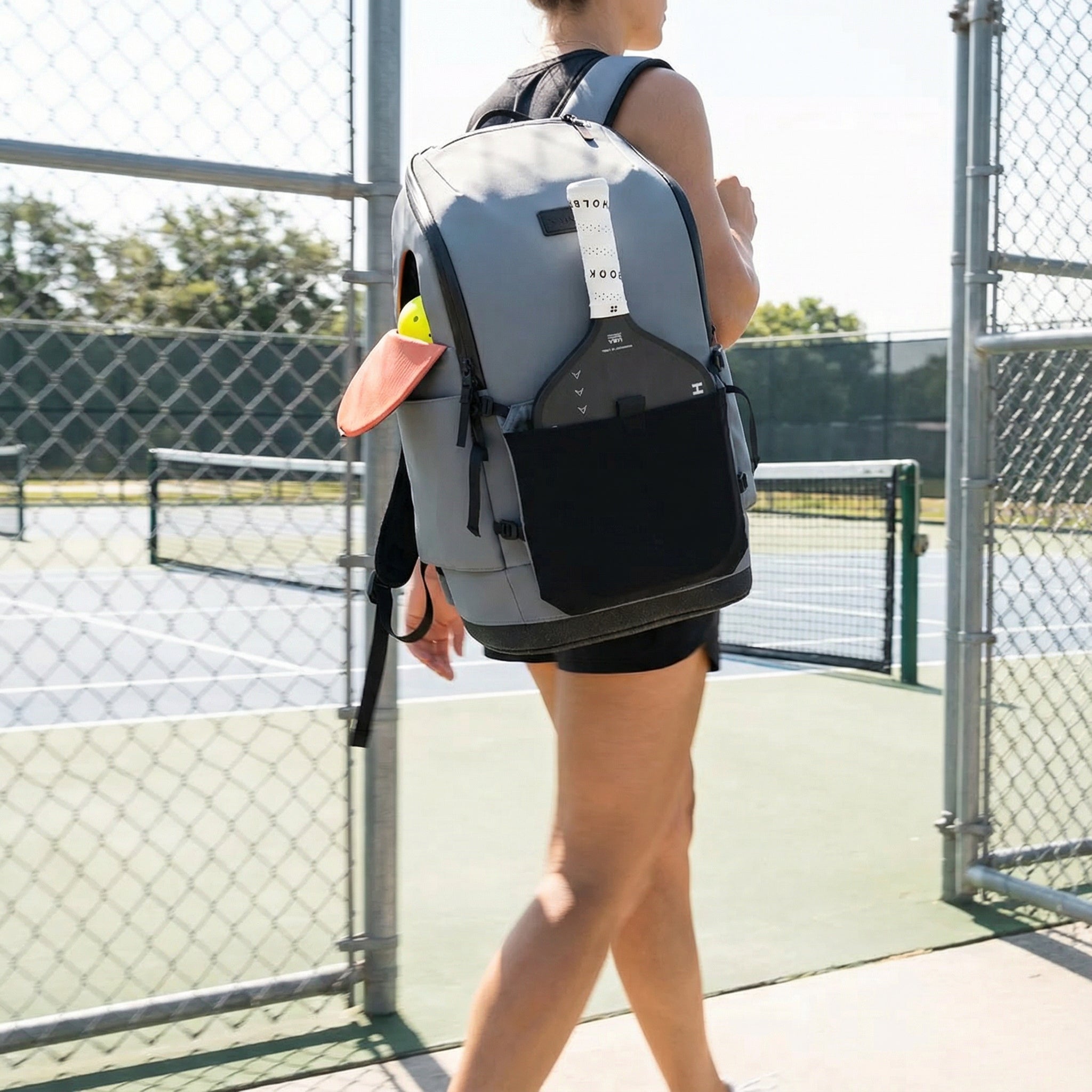
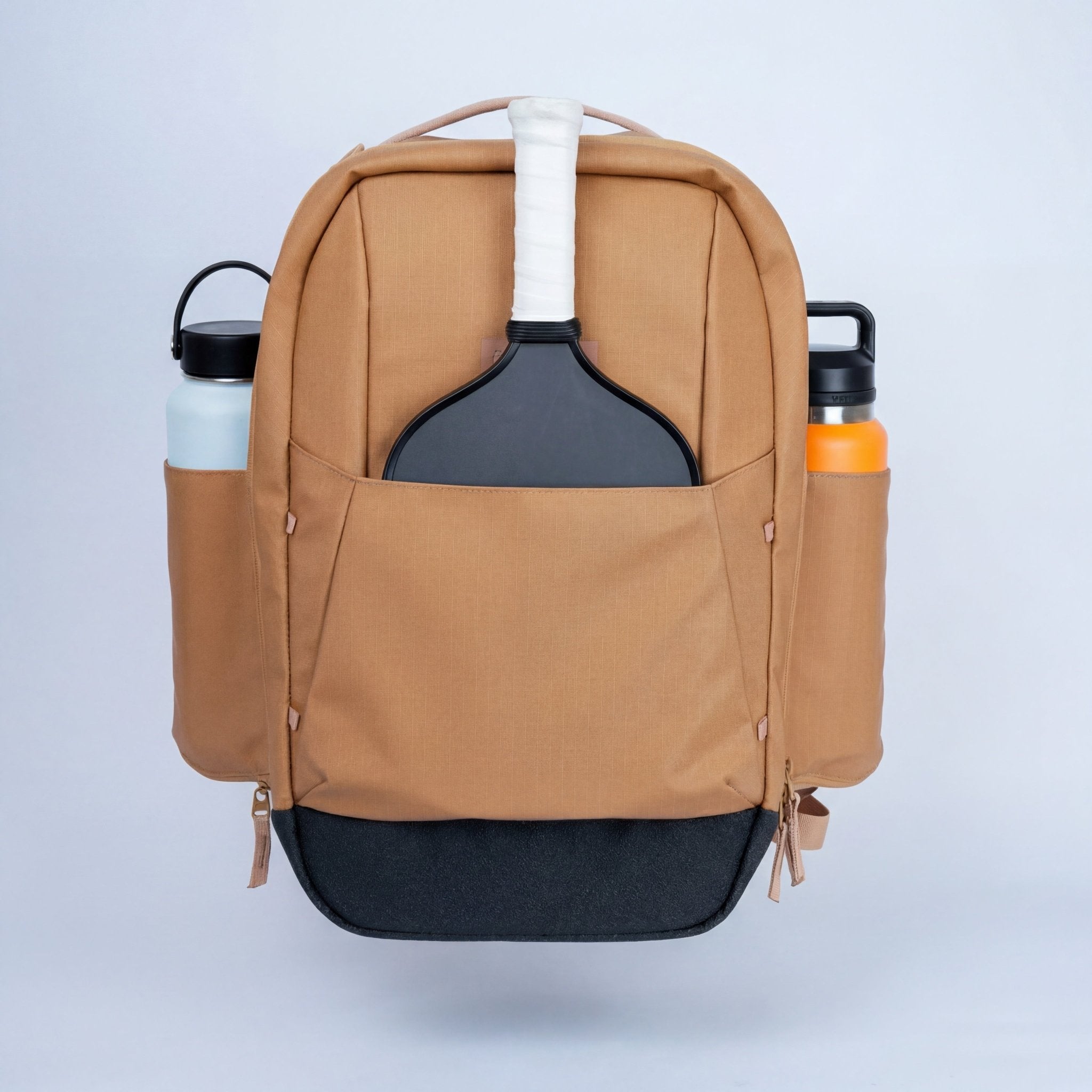
You just found a paddle worth playing. The FORWRD Court Ranger V2 keeps it protected and accessible — with a dedicated paddle sleeve that fits up to 4 paddles alongside your gear. Built for players who take equipment seriously without spending $300 on a bag.
See the Court Ranger V2 — $195 →
Frequently Asked Questions
Is the Holbrook ARMA USAP approved for tournament play?
Yes. All ARMA variants (S, T, X, and their Metallic versions) carry USAP certification. You can use any of them in sanctioned USA Pickleball tournaments without restrictions.
What's the difference between the ARMA S and ARMA T?
Shape and handle length. The ARMA S is a widebody (16" × 8") with a 5.25" handle — best for control-oriented doubles players and those who one-hand their backhand. The ARMA T is an elongated shape (16.5" × 7.5") with a 5.5" handle — better for all-court play and two-handed backhand users. Both use identical core construction at 14mm.
How does the ARMA compare to the Holbrook Aero T?
They're built on different core technologies. The Aero T uses EPP foam — more dwell, more pop, softer feel on drives. The ARMA uses Dual Density PP + FLX-Foam — tighter feedback, more precise control, more traditional response. The Aero T is available in both 14mm and 16mm; the ARMA comes only in 14mm. Players who find EPP foam paddles too bouncy often prefer the ARMA's feel.
Is the ARMA X Metallic worth the premium over standard ARMA?
The ARMA X Metallic has a shorter handle (5.25") on an elongated face — that's the key differentiator, not just the metallic surface. If you want elongated reach with a compact grip, the X is uniquely suited to it. The metallic weave face does add modest spin-contact texture improvement. If handle length is neutral to you, the ARMA T with its 5.5" handle is more conventional and equally well-constructed.
What weight do the Holbrook ARMA paddles come in?
The ARMA S averages 8.0 oz (range: 7.8–8.2 oz). The ARMA T averages 8.1 oz (range: 7.9–8.3 oz). These are slightly heavier than ultralight touring paddles but within the standard range for premium carbon paddles. No official lighter variants are currently offered.
Final Verdict
The Holbrook ARMA series fills a real gap. Premium carbon paddles built on Dual Density PP + FLX-Foam that play more traditionally than the EPP foam market — with a widebody option (ARMA S) that's genuinely rare in this price range.
It's not the right paddle for everyone. If you want maximum spin, maximum pop, or 16mm dwell, there are better options. But if you've played EPP foam paddles and felt like something was missing in the feedback loop — the ARMA is what that missing paddle sounds like.
Start with the shape decision. The rest follows from there.
Shop ARMA S ($159.99) → Shop ARMA T ($199.99) → Shop ARMA X Metallic →

Leave a comment
This site is protected by hCaptcha and the hCaptcha Privacy Policy and Terms of Service apply.