

FTC Disclosure: This post contains affiliate links to Pickleball Central. If you buy through them, FORWRD earns a small commission at no extra cost to you. We only recommend products we've thoroughly evaluated.
Last Updated: October 2026
Here's what nobody's saying clearly: the Magnus Pro IV is $100 cheaper than the Perseus or Hyperion Pro IV and plays on the same Gen 4 platform. At $149.95 for either the 14mm or 16mm, it's the most accessible entry point into JOOLA's top-tier paddle line—if your game fits what this paddle was actually designed for.
We've reviewed the Magnus Pro 3S Dual 14mm and the Magnus CAS already, so we're not coming to this paddle cold. FORWRD has tracked the Magnus line across generations, and the Pro IV is the most refined version yet—with a genuine caveat we'll get into.
Quick Verdict
| What We Like | What We Don't |
|---|---|
|
|
| Price: $149.95 (both 14mm and 16mm) | Best for: Power players, forehand-dominant doubles players, 3.0–4.0+ players upgrading from beginner paddles |
| Who should skip it: Two-handed backhand players, touch-first singles players, anyone wanting a longer handle for groundstrokes | |
Buy Magnus Pro IV 16mm — $149.95 at PBC Buy Magnus Pro IV 14mm — $149.95
TL;DR Specs at a Glance
| Spec | 14mm Version | 16mm Version |
|---|---|---|
| Price | $149.95 | $149.95 |
| Weight | 8.0 oz (227g avg) | 8.2 oz (232g avg) |
| Length × Width | 16.5" × 7.5" | 16.5" × 7.5" |
| Handle length | 5.0" | 5.0" |
| Grip circumference | 4.1875" | 4.25" |
| Core | Propulsion Honeycomb + Tech Flex Power (TFP) | |
| Face | Textured Carbon Fiber (Charged Carbon) | |
| Edge | Hyper-Foam Edge Wall | |
| Certifications | USAP PBCoR .43, UPA-A Pro Certified | |
| NFC chip | Yes | |
Why the Price Story Matters
The JOOLA Pro IV lineup launched with four paddles: Perseus (Ben Johns), Hyperion (Ben Johns), Scorpeus (Collin Johns / Anna Bright), and Magnus (Tyson McGuffin). The first three sit at $229.95–$249.95. The Magnus is $149.95. Same generation, same carbon face technology, same dual certifications. That $80–$100 gap deserves an honest explanation.
The short answer: Magnus is JOOLA's "game improvement" Pro IV. It's wider (7.5" face vs. roughly 7.3" on the Perseus/Hyperion), shorter-handled (5" vs. 5.5" on the Hyperion), and built for the player who prioritizes a bigger sweet spot and raw power over tournament-optimized precision. Tyson McGuffin is a power player—that's what this paddle reflects.
Is it a lesser paddle? No. Is it a different paddle? Absolutely.
What's Actually in This Paddle
Three technologies do the real work here, and they're worth understanding before buying.
Propulsion Honeycomb Core: This is JOOLA's standard premium core—same material used across the Pro IV lineup. It's tuned for a balance of soft feel and pop. In practice, it means you don't lose all touch just because you've got a power paddle.
Tech Flex Power (TFP): Foam integrated into the bottom edges of the paddle. The stated goal is to increase flexibility at the edges, boost the effective sweet spot, and add forgiveness on off-center hits. We've tested TFP across the 3S Dual and the CAS—it works. Mishits feel cleaner than on non-TFP paddles at this price point.
Hyper-Foam Edge Wall: A foam-filled edge guard that extends the effective hitting area and reduces vibration on edge-adjacent contact. This is the physical reason the Magnus's sweet spot feels larger than the Perseus's—the edge wall adds usable surface area.
Together, these three systems make the Magnus genuinely forgiving for a carbon fiber paddle at $149.95. It's not just marketing language—you feel it when you catch a ball at 3 o'clock instead of dead center.
Performance: Power and Drives
Strong. The 16.5" length creates leverage, the carbon face pops on flat drives, and the 8.2 oz weight on the 16mm version adds plow-through on pace exchanges. Full swings from the baseline load up quickly. For players who like to speed-up from mid-court, the Magnus gives you the mass to punch through balls that mid-weight paddles deflect.
The 14mm isn't a slouch either—8.0 oz is still substantial—but the thinner core cuts into plow-through on heavy exchanges. You get more snap, less bulldozing.
Spin
The textured carbon face delivers elite spin. Raw measured spin rates on the Magnus Pro IV land in JOOLA's top tier—the grit on the surface grabs the ball well, and the longer face (relative to a standard 16.4" or 16.3" paddle) gives you a slightly wider angle of contact, which helps with topspin load on groundstrokes. On serves, the spin potential is immediately noticeable.
This carries over to the kitchen. Roll volleys at the net feel controlled, and you can put more shape on resets than you might expect from a power-first paddle.
Touch and Kitchen Play
Here's where honest expectations matter. The Magnus isn't a dink specialist's paddle. The 16mm adds softness to touch shots—resets are comfortable, and the foam-edge construction absorbs some pace at the NVZ. But this paddle's personality is attack, not defend. Players who rely on extreme touch and live at the kitchen for 80% of the point will find the Perseus Pro IV or Scorpeus Pro IV more natural.
That said: for recreational players 3.0–4.0, the Magnus is more than capable at the kitchen. The distinction only becomes relevant at 4.5+ where micro-touch differences actually determine outcomes.
The Handle Reality Check
Five inches of handle. That's it, and it's the biggest limiting factor in this paddle's fit for certain players.
If you play a one-handed backhand, you'll never notice. The 5" gives you enough room to anchor your grip, and the 7.5"-wide face means you have reach to compensate for what a longer handle would otherwise provide. This is the handle the Magnus was designed around—McGuffin plays one-handed.
If you play a two-handed backhand, the math gets uncomfortable fast. Two hands on a 5" handle leaves very little separation between your grips, which disrupts the independence of your top hand. Pickleheads flagged this too in their review—it's a real limitation, not a minor quirk. Players committed to a 2HB should look at the Hyperion Pro IV instead (5.5" handle).
14mm vs 16mm: Don't Overthink It
The standard advice applies here: 14mm = more pop, 16mm = more control. But with the Magnus specifically, there's another dimension worth considering.
The 14mm version at 8.0 oz is lighter and more maneuverable at the kitchen line. If you play fast hands doubles and need to block speed-ups quickly, the 14mm's quicker swing weight gives you an edge. The 16mm at 8.2 oz offers better stability on powerful drives and absorbs pace more comfortably on resets.
My take: most recreational players will be happier with the 16mm. The control bump matters more in practice than the pop gain from 14mm. But if you've tested similar paddles and genuinely prefer the faster feel of thin cores, the 14mm is the right call.
Buy 14mm ($149.95) → Buy 16mm ($149.95) →
Magnus Pro IV vs Perseus Pro IV: Is the Extra $100 Worth It?
This is the real question, and it deserves a straight answer.
| Feature | Magnus Pro IV 16mm | Perseus Pro IV 16mm |
|---|---|---|
| Price | $149.95 | $249.95 |
| Face width | 7.5" | ~7.3" |
| Handle length | 5.0" | 5.25" |
| Sweet spot | Larger (wider face + TFP) | More precise, smaller |
| Best for | Power, forgiveness, 1HB players | Precision, 2HB players, all-court |
| Platform gen | Pro IV (same) | Pro IV (same) |
Perseus Pro IV wins if: you want a more precise, slightly more balanced paddle, you have a 2HB, or you play singles. Perseus Pro IV 16mm ($249.95) →
Magnus Pro IV wins if: you want the biggest sweet spot in the lineup, you're a forehand-dominant doubles player, or you want Pro IV technology without paying the Ben Johns premium. For most recreational players at the 3.0–4.0 level, the Magnus is the better buy.
A note on the Scorpeus Pro IV: if control is your primary goal, Anna Bright's Scorpeus Pro IV 14mm is worth a look. It sits in a different performance category from the Magnus—less power-forward, more touch-oriented—but it's in stock and priced comparably to the Perseus.
Magnus Pro IV vs Magnus Pro 3S Dual: What Actually Changed
If you're coming from the Magnus Pro 3S Dual, the Pro IV is a meaningful upgrade—not just a rebranding.
The Hyper-Foam Edge Wall is the biggest change. The 3S Dual had foam edges, but the Pro IV's implementation is more refined—the sweet spot extension feels more consistent across the full face. The Charged Carbon surface also generates noticeably more spin than the 3S Dual's face. Drive feels stiffer—more modern, less forgiving on the feedback end.
It's worth upgrading if your 3S Dual is more than a year old. If it's 6 months old, sit on it and save the $150 for a bag upgrade instead.
Who Should Buy the Magnus Pro IV
- Power players in doubles who need a fast, hard-hitting paddle with a big sweet spot. The Magnus was designed for this.
- Forehand-dominant players who rely on aggressive cross-court forehands and spin serves. The 16.5" face and textured carbon surface are built for this game.
- 3.0–4.0 players upgrading from a beginner or fiberglass paddle. At $149.95, the Magnus is the most affordable way into JOOLA's top gen. The learning curve on touch shots is manageable, and the power benefit is immediate.
- One-handed backhand players. The 5" handle is not a limitation if you don't use two hands.
Who Should Look Elsewhere
- Two-handed backhand players. Get the Perseus Pro IV 16mm instead. The 5.25" handle is a real difference.
- Touch-first players who live at the NVZ. The Scorpeus line is more your speed.
- Singles players. The oversize format doesn't suit singles play as well—elongated, narrower paddles give better reach in open court.
- Players under 3.0 who are still working on consistent contact. The Magnus will reward good mechanics, but it won't paper over fundamental gaps the way a softer fiberglass paddle will.
Complete Your Setup
Now you need somewhere to carry it.
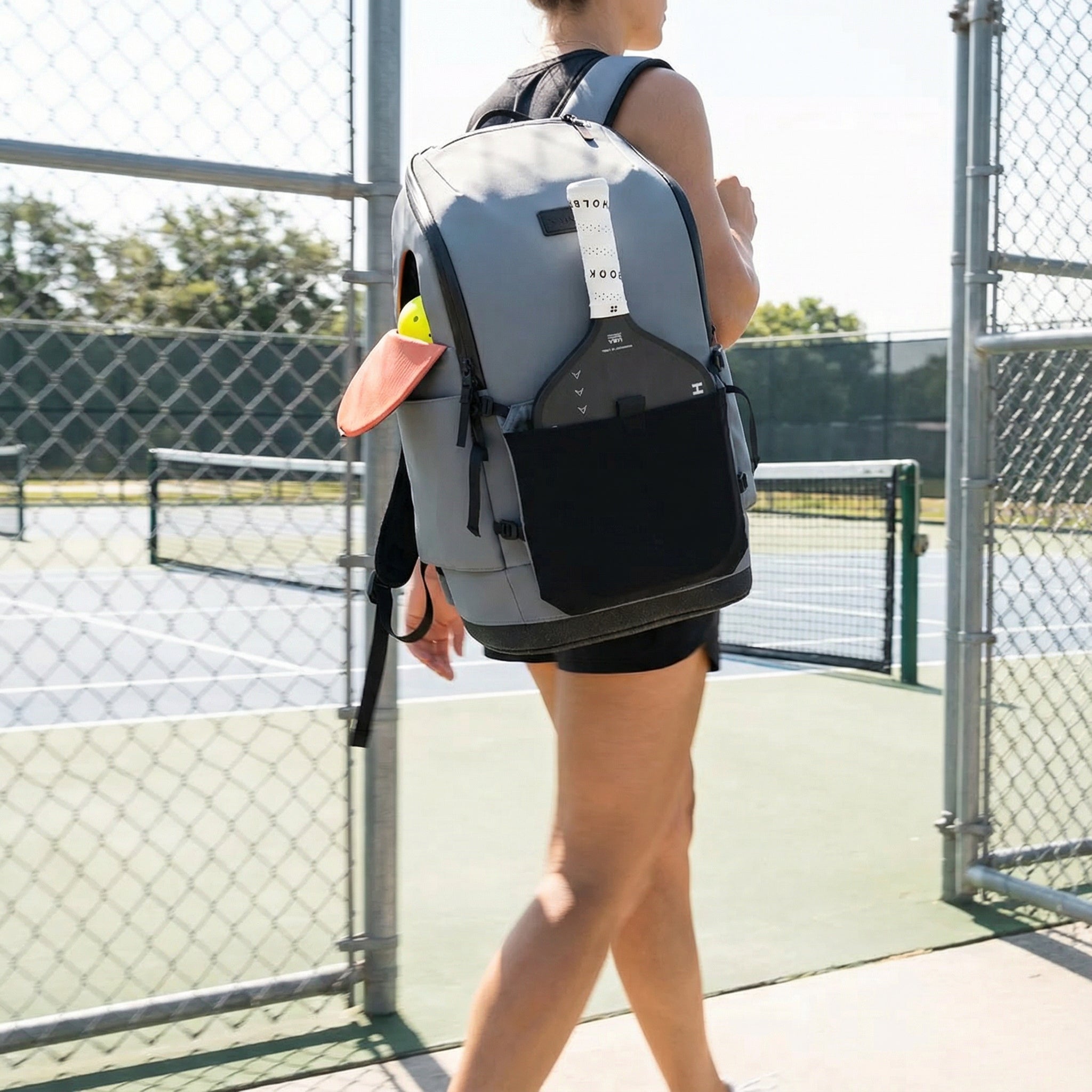
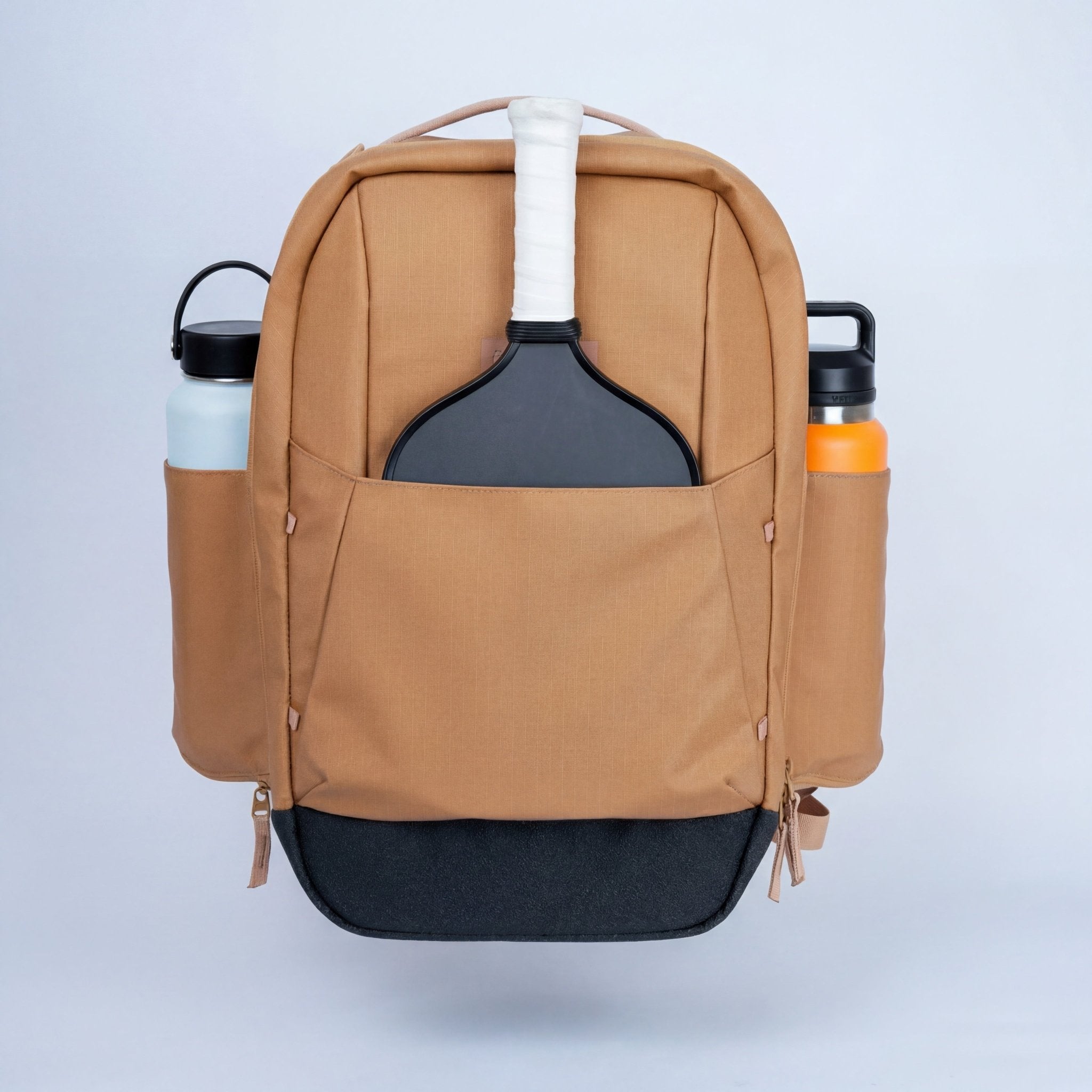
The FORWRD Court Ranger V2 fits up to 4 paddles in its modular sleeve system, has a 16" laptop sleeve, and weighs just under 2 lbs empty. At $195, it's built for players who take their game seriously but don't want to pay Court Caddy prices for a paddle bag.

FAQ
What's the difference between the JOOLA Magnus Pro IV 14mm and 16mm?
The 14mm weighs 8.0 oz and generates more pop due to its thinner core—it swings faster and suits kitchen-line speed exchanges. The 16mm weighs 8.2 oz and offers more control and stability, which most recreational players find more consistent. Both are $149.95 and share identical dimensions (16.5" × 7.5") and handle specs. The grip circumference is slightly different: 4.1875" on 14mm vs. 4.25" on 16mm.
Is the JOOLA Magnus Pro IV USAP approved?
Yes. Both the 14mm and 16mm versions carry USAP PBCoR .43 certification and UPA-A Pro Certification, meaning they're approved for USAP-sanctioned tournament play. The NFC chip embedded in the paddle links to the certification documentation directly.
How does the Magnus Pro IV compare to the Perseus Pro IV?
The Magnus Pro IV is $100 cheaper ($149.95 vs. $249.95), wider (7.5" vs. ~7.3"), and has a shorter handle (5" vs. 5.25"). It's the power-and-forgiveness option in the Pro IV lineup—built for a bigger sweet spot and forehand-dominant players. The Perseus is more precise, better suited to two-handed backhand players, and offers a more balanced all-court feel. Same Gen 4 platform and certifications.
Is the Magnus Pro IV good for beginners?
It's good for players at the 2.5–3.0 level who are ready for a real paddle upgrade—not true beginners who are still learning consistent contact. The large sweet spot and forgiveness of the Hyper-Foam Edge Wall make it more accessible than most carbon fiber paddles at this price. Players who are still developing their mechanics would benefit more from a softer, lighter entry-level paddle first.
What does Tech Flex Power (TFP) actually do?
Tech Flex Power integrates foam at the bottom edges of the paddle to increase flexibility in that zone, extending the usable sweet spot outward and softening the feedback on edge hits. Combined with the Hyper-Foam Edge Wall, TFP makes the Magnus's effective hitting area measurably larger than a standard elongated paddle of similar dimensions. You feel it most on off-center drives that would deflect badly on a non-TFP paddle.
Is the Magnus Pro IV good for doubles play?
Yes—it's purpose-built for doubles. The wide face and short handle reflect McGuffin's doubles-oriented game: fast hands at the kitchen, aggressive put-aways, powerful cross-court forehands. Singles players would generally benefit from a narrower, elongated shape for better reach in open court. For doubles, the Magnus is one of the most complete paddles in its price range.
Final Verdict
The Magnus Pro IV is JOOLA's best-kept secret in the Pro IV lineup. It's not a lesser paddle—it's a different paddle, built for a specific player profile at a price that makes the Gen 4 platform accessible without the Ben Johns premium.
If you're a forehand-dominant doubles player with a one-handed backhand, looking for the most forgiving carbon fiber paddle under $200, stop looking. The 16mm at $149.95 delivers more than it should for the price. The wider face, foam edge systems, and certified carbon surface put it in genuine competition with paddles that cost $80–$100 more.
If you have a two-handed backhand or play singles seriously, spend the extra $100 on the Perseus Pro IV instead. The longer handle matters for 2HB mechanics, and the more precise shape serves singles better.

Leave a comment
This site is protected by hCaptcha and the hCaptcha Privacy Policy and Terms of Service apply.