

Disclosure: This post contains affiliate links to Pickleball Central. If you purchase through our links, FORWRD earns a small commission at no extra cost to you. We only link to products we'd recommend regardless.
Pickleball is easy to learn and almost impossible to stop playing — partly because the sport itself is addictive, partly because the community around it is unusually welcoming. This guide covers everything you need to find courts near you, join open play, choose a league, navigate the social rules of the game, and eventually build the kind of regular group that makes 6 AM Tuesdays feel mandatory. Whether you've never held a paddle or you're looking to level up from casual to competitive, start here.
Last Updated: October 2026
Why Pickleball Has the Best Community in Sports
Show up to a tennis court as a stranger and you'll leave as a stranger. Show up to a pickleball court and someone will hand you a paddle before you've finished tying your shoes.
That's not a generalization — it's the culture, baked in from the sport's origins as something invented at a backyard to fill an afternoon. Pickleball was never designed to be exclusive. It was designed to be fun, accessible, and played with whoever was around. That DNA survived the jump from backyard novelty to America's fastest-growing sport, and it's still the reason a 32-year-old and a 67-year-old can have an honest, competitive match and both enjoy it.
By 2026, there are an estimated 13+ million active pickleball players in the U.S. That number gets cited constantly — but the more relevant stat is what happens once people start playing. Survey after survey puts "the community" as the number-one reason people keep playing. Not the exercise. Not the competition. The people they meet on court.
That community operates by unwritten rules, shared apps, local clubs, national networks, and a deeply practical culture of helping beginners look less like beginners. This guide covers all of it — how to find your people, join the right game for your level, earn your place at the kitchen line, and eventually become the person who hands someone else a paddle on a Tuesday morning.
"Every court I've ever shown up to — stranger, new city, no friends — someone waved me in within five minutes. Tennis took me a decade to feel that comfortable. Pickleball took five minutes." — Topher, FORWRD co-founder
How to Find Pickleball Courts Near You
Courts are everywhere once you know where to look. Five tools do 90% of the work:
1. Places2Play (USA Pickleball's Official Directory)
places2play.org is the most comprehensive court database in the country — maintained by USA Pickleball and fed by community submissions. Search by zip code and filter by indoor/outdoor, surface type, lighting, and whether the courts are dedicated or shared with tennis. As of 2026, the database lists over 11,000 unique court locations. Start here first.
2. Pickleheads
pickleheads.com combines court listings with a community layer — you can see who's playing, when, and join games in advance. It's the closest thing pickleball has to a unified social platform that actually keeps data current. Especially strong in mid-sized cities where you need to filter by activity level, not just location.
3. DUPR's Court Finder
The DUPR app (Dynamic Universal Pickleball Rating) doesn't just track ratings — it has an integrated map for finding nearby games and courts. If you're already using DUPR to track your matches (you should be — more on this in the Ratings section), the court finder saves you switching between apps.
4. Google Maps
Obvious, but don't skip it: type "pickleball courts near me" in Google Maps. Parks and recreation departments aren't always listed on the specialty apps. Many city courts appear in Google Maps before they're submitted to Places2Play. Check hours and whether reservations are required — most outdoor municipal courts are walk-on, but indoor rec center courts often require booking.
5. Local Facebook Groups
Search "[Your City] Pickleball" on Facebook. Every mid-sized city has at least one, most large cities have several. These groups are where you'll find the information that doesn't make it to official directories: "the courts at Riverside Park have new nets," "Eastside Athletic Club does free open play on Thursdays," or "anyone who wants to drill at 7 AM, DM me." Real-time intel from actual players beats any static directory.
Beyond apps, check directly with your city parks and recreation department. Hundreds of cities have added dedicated pickleball courts since 2022, and not all of them update third-party directories quickly. A five-minute call can reveal courts you'd never find otherwise.
→ Full breakdown: How to Find Pickleball Courts Near Me: 6 Best Tools (2026)
→ Also useful: Discover the Best Pickleball Courts Near You (2026)
Open Play: How It Works and How to Show Up Right
Open play is the backbone of the pickleball community. It's how most players go from "I took a lesson once" to "I play five days a week." Understanding how it works — and how to navigate it as a newcomer — is the difference between a great first experience and a confusing, frustrating one.
The Basic Format
Open play sessions (also called "drop-in play") are structured around a simple rotation system. Courts are assigned by time slot, and players rotate on and off as games finish. There's typically no pre-registration required — you show up, add your paddle to the stack or line, and play when it's your turn.
Some facilities use a formal paddle rack. Others use a line of paddles placed face-down at the net post. Either way, the principle is the same: first in, first on. Violating the paddle stack order — jumping ahead, skipping your turn, playing extended games with the same partner — is the single fastest way to make enemies at a new court.
What to Bring
Most open play sessions provide balls, but bringing your own tube is a low-cost way to earn goodwill fast. A standard tube of outdoor pickleballs runs $10-15 and tells the court you're serious. The JOOLA Agassi/Graf set ($129.95) is a solid all-in-one starter option if you're still figuring out your gear setup — it includes a paddle, balls, and a bag so you show up ready.
Skill Levels at Open Play
Open play sessions vary widely in skill level. Some are explicitly rated (beginner, intermediate, advanced). Many are mixed. When you're new, look for sessions labeled "beginner," "2.5-3.5," or "all levels welcome." If you're unsure where you fit, err toward the lower-skill session and play up — better to win occasionally than to spend the morning apologizing for errant shots.
The Social Bit
Introduce yourself. Say your name, ask theirs. The culture rewards this. It's fine to ask about skill level — "Is this mostly 3.0-3.5?" is an accepted question. What's not fine: playing aggressively with newcomers who clearly can't handle pace, declining to play with certain people because of their level, or checking your phone between points.
→ Full guide: How to Find Pickleball Games Near You: Apps, Clubs & Open Play
The Apps Running the Pickleball World
Four apps do most of the organizational heavy lifting for community play. You don't need all four, but knowing what each does saves time:
DUPR (Dynamic Universal Pickleball Rating)
The closest thing pickleball has to a universal identity system. DUPR calculates your rating from every recorded match you play, regardless of where or against whom. A DUPR 3.82 means the same thing at a public park in Denver as it does at a club in Naples, FL. Free to use. iOS and Android. Beyond ratings, it has court finders, match scheduling, and league integration. If you're only going to download one app, make it this one.
Playtime Scheduler
The scheduling workhorse for clubs and facilities. Most pickleball clubs that run structured open play or group drill sessions use Playtime to manage reservations. You'll create an account once, and every club you join will route their bookings through it. Not consumer-facing — it's where you go because the club told you to — but once you're in, it runs smoothly.
Pickleheads
Court directory plus social layer. Good for discovering new courts in your area and seeing what games are planned. Also useful when traveling — search a destination city and see active courts before you land.
Global Pickleball Network
Less well-known but strong for finding leagues specifically. If you're looking to join a structured competitive league rather than casual open play, globalpickleball.network has the most comprehensive league directory in the country — 500+ leagues as of 2026.
→ More on apps and court-finding tools: How to Find Pickleball Games Near You: Apps, Clubs & Open Play
Joining a Pickleball Club: What It Costs, What You Get
Clubs are the next step up from ad-hoc open play. A club creates structure, regularity, and — most importantly — a defined group of people who will expect to see you on Tuesday morning. That social accountability is the mechanism that turns "I should play more" into "I play four times a week."
Types of Clubs
Park and recreation clubs are the most common and usually the cheapest. They're organized through city parks departments or community centers, often run by volunteers, and typically cost $40-100/year in membership dues. You get access to organized open play, sometimes skills clinics, and a community Facebook or GroupMe thread that coordinates games between sessions.
Private club affiliates operate inside a tennis or multi-sport club. These have higher membership costs — $50-200/month is typical — but offer dedicated court time, ball machines, coaching staff, and structured programming. If you want to improve quickly and have the budget, this is the fastest route.
USAP-registered clubs are official USA Pickleball member clubs. They follow USA Pickleball's guidelines, participate in sanctioned events, and often run ambassador programs for new players. Membership gets you access to the national USAP community. Search the USA Pickleball club directory at usapickleball.org.
What to Ask Before Joining
- When do members actually play, and what's the skill range at those sessions?
- Is there a beginner program or orientation for new members?
- How many courts does the club have, and how contested are they at peak times?
- Is there a trial period before you commit to annual dues?
→ Full guide: How to Join a Pickleball League or Social Club in 2026
Pickleball Leagues: Casual, Competitive, and Seasonal
Once you've got a few months of open play under your belt, leagues are the natural next step. They add structure, competition, and a measurable goal — which, for most players, is exactly what keeps the game from plateauing into routine.
Recreational Leagues
The gentlest entry point. Rec leagues prioritize social play over standings, mix skill levels within a range, and often end the session at a local restaurant. Registration fees run $50-150 for a 6-10 week season. Most parks and rec departments run one in spring and one in fall. Some cities have year-round programs.
Competitive Rec Leagues
A step up in seriousness — these leagues track standings, have formal match formats (usually best-of-3 to 11), and use ratings to seed matchups. They're still community-oriented, but the focus shifts from "everyone plays" to "the better team wins." DUPR ratings often form the basis for skill divisions.
Indoor Leagues
Winter in most of the country means moving indoors — converted gyms, dedicated indoor pickleball facilities, and multi-sport complexes. Indoor leagues run September through March in cold-weather markets and are year-round in warmer ones. The bounce characteristics change slightly with an indoor ball, but the community dynamic is the same — if anything, indoor leagues feel tighter because you're seeing the same people in a smaller space every week.
Summer Leagues
Summer leagues are the most social. Longer daylight hours, outdoor courts, casual atmosphere. They're also where a lot of new players get their first structured competitive experience, since summer leagues tend to be more beginner-tolerant than fall/spring competitive programs.
→ Finding a summer league: Summer Pickleball League 2026: How to Find, Join, and Thrive
→ Registration guide: Summer Pickleball League Registration 2026: Find Your Fit
→ Indoor season prep: Indoor Pickleball League Season Prep: The 2026-2027 Guide
Pickleball Etiquette: The Unwritten Rules That Hold It Together
Pickleball's culture runs on unwritten rules that every regular player knows and every newcomer has to learn. None of these are formally codified. All of them matter. Breaking them — especially repeatedly — will get you quietly excluded from games, which is a worse punishment than it sounds when the entire appeal of the sport is the people.
Respect the Paddle Stack
The rotation system only works if everyone honors it. Your paddle goes to the end of the line when you arrive. You play when it's your turn. You don't save spots, you don't play an extra game because "we didn't get a full game," and you don't skip over paddles you don't feel like playing with. This is the cardinal rule.
Call Your Own Lines — Honestly
In recreational play, players make their own line calls on their side of the court. The standard is: if you're not 100% sure it was out, it's in. Benefit of the doubt goes to the opponent. Players who call everything out, or who inconsistently call lines depending on the score, are universally disliked. The community notices and remembers.
Say "Good Game"
Every game ends at the net. Both teams tap paddles or shake hands — whatever the group does — and say good game. Say it regardless of how the game went. The social compact of pickleball lives in that five-second interaction.
Match Your Shot Selection to the Level
A 4.5 slamming rollover shots into the feet of 2.5 players isn't impressive — it's rude. In mixed-level open play, adjust your shot selection to give people a competitive game. You can still win. You can still play well. But playing to humiliate is a quick way to find yourself with no one to play with.
Let the Ball Go If It's Going Out
You'll get better at reading errant shots. When a ball is clearly going long or wide, let it go rather than hitting it back and creating confusion about whether you're playing a dead ball or not. Yelling "bounce it!" on a serve you think might be long is acceptable and helpful.
→ Deep dive: Pickleball Etiquette: The Unwritten Rules That Actually Matter
→ For new players: Pickleball Court Etiquette: Unwritten Rules Beginners Need
→ Line call disputes: Pickleball Line Call Rules 2026: Handle Disagreements Right
How to Start Your Own Pickleball Group
Sometimes you can't find a game — so you make one. Starting your own regular group is more achievable than it sounds and produces the most satisfying kind of pickleball community: the people who show up specifically for each other.
The Minimum Viable Game
You need: a court, a net, four people, and a ball. If you have access to a public court with an existing net, you just need three other people. That's it. The barrier is lower than almost any other organized sport.
Courts at public parks are free. If a net isn't available, the Rally Deluxe Portable Net System ($159.99) sets up in about five minutes on any flat surface — a driveway, a gym floor, a cul-de-sac. Portable nets are how a lot of the best regular games in the country started: someone hauled one to a park, four people played, and six months later there were 20 regulars and a waitlist.
Finding Your First Three Players
- Post in your local Facebook pickleball group: "Looking for 3 people to start a regular Tuesday morning game at [court]. Beginner-friendly."
- Ask neighbors. The conversation starter is easy — "I've been trying to get into pickleball, you should come play with us."
- Post at your gym, church, or workplace. People self-select in.
- Join a beginner open play session once, find two other beginners who seem regular, suggest a side game.
Keeping It Going
Consistency matters more than quality. Same time, same place, every week. The regularity is what converts casual interest into habit. Use a group text or GroupMe thread to confirm the game each week and cover court logistics. Once you have 8+ regulars, it runs itself.
When It Grows
Once your group consistently has more people than courts, you're running a mini open play session. At that point, implement the paddle stack — it's the natural transition from "friends showing up" to "a real pickleball community."
"We started with four people in a parking lot with a portable net. Two years later, same four people, plus 40 others who found us through word of mouth. The portable net is still in someone's trunk." — Grub, FORWRD co-founder
DUPR and Ratings: Understanding Where You Fit
The DUPR (Dynamic Universal Pickleball Rating) is the closest thing pickleball has to a universal skill benchmark. Understanding what ratings mean in practice — especially in community play — saves the discomfort of showing up to the wrong game.
How DUPR Works
DUPR calculates your rating from the results of every match you log. Win against higher-rated players, your rating goes up more. Lose against lower-rated players, it goes down more. The algorithm accounts for margin of victory (11-9 vs 11-2 has different weight) and the strength of your opponent. The result is a number from 2.0 to 8.0 that theoretically means the same thing anywhere in the country.
What the Numbers Mean in Practice
- 2.0-2.5: Complete beginner. Learning rules, developing basic shots. Likely your first 1-3 months.
- 3.0-3.5: Recreational. You can sustain a rally, know the kitchen rules, and have a functional serve. Most casual open play players fall here.
- 4.0-4.5: Intermediate to advanced. Consistent third shot drops, working the kitchen game, understanding strategy. Club and league play.
- 5.0+: Competitive/semi-pro. Tournament players, coaches, professionals.
For community play purposes, the most important threshold is 3.5. Below 3.5, you're learning the game. Above 3.5, you're playing the game. Most open play sessions labeled "intermediate" will have players in the 3.5-4.5 range. Don't walk into a 4.0+ session as a new 3.0 — the gap is larger than the numbers suggest.
Getting Your First DUPR Rating
Download the DUPR app, create a profile, and log matches. You need at least five logged results to generate a stable rating. Ask regular open play partners to log games with you — most will, especially at clubs that use DUPR for league seeding. You can also self-report casual games, though tournament and league results carry more weight in the algorithm.
Local Tournaments: More Social Than You'd Think
The word "tournament" scares off players who think it means serious competition, strict rules, and a vibe more like a job interview than a game. Local rec tournaments aren't that.
Most local pickleball tournaments — especially anything under USAPA sanctioning that's labeled "recreational" or "silver" — are fundamentally social events. The competition is real, but the format is designed around community. Most events have multiple skill brackets so you're playing against people at your level. Many have consolation brackets so you keep playing even if you lose early. The sideline conversations, the warmup court chaos, the post-match lunch — this is where people make friends they'll play with for years.
First-timers often report that a local tournament was the thing that pushed them from "casual player" to "real pickleball person." There's something about preparing for a specific event, competing against real opponents, and navigating the format as a team (most events are doubles) that accelerates both skill and community belonging.
→ Finding local events: How to Find Pickleball Tournaments Near Me in 2026 (4 Ways)
→ First tournament guide: First Pickleball Tournament in 2026: The Honest Beginner's Guide
Pickleball on Vacation: Play Everywhere You Travel
One of the genuine advantages of pickleball's growth is that there are now courts everywhere worth going. Arizona, Florida, California, the Pacific Northwest — wherever you're traveling, there's almost certainly a court within 10 minutes of your hotel. And the culture is consistent: show up, add your paddle, play.
Finding Courts When You Travel
Use Pickleheads or DUPR's court map before you leave. Search the destination city, note the three closest courts to where you're staying, and check whether they have organized open play sessions during your trip dates. Facebook groups for the destination city's pickleball community are the best intel on when the good games happen.
Resort Pickleball
A growing number of resorts have added dedicated pickleball courts, programming, and pros on staff. Places like La Quinta Resort, Rancho Valencia, and Miraval offer serious pickleball infrastructure alongside the spa. If you're planning a trip specifically around playing, these properties are worth the premium. You'll meet other pickleball-focused travelers who tend to be strong players and good people.
Playing Well on the Road
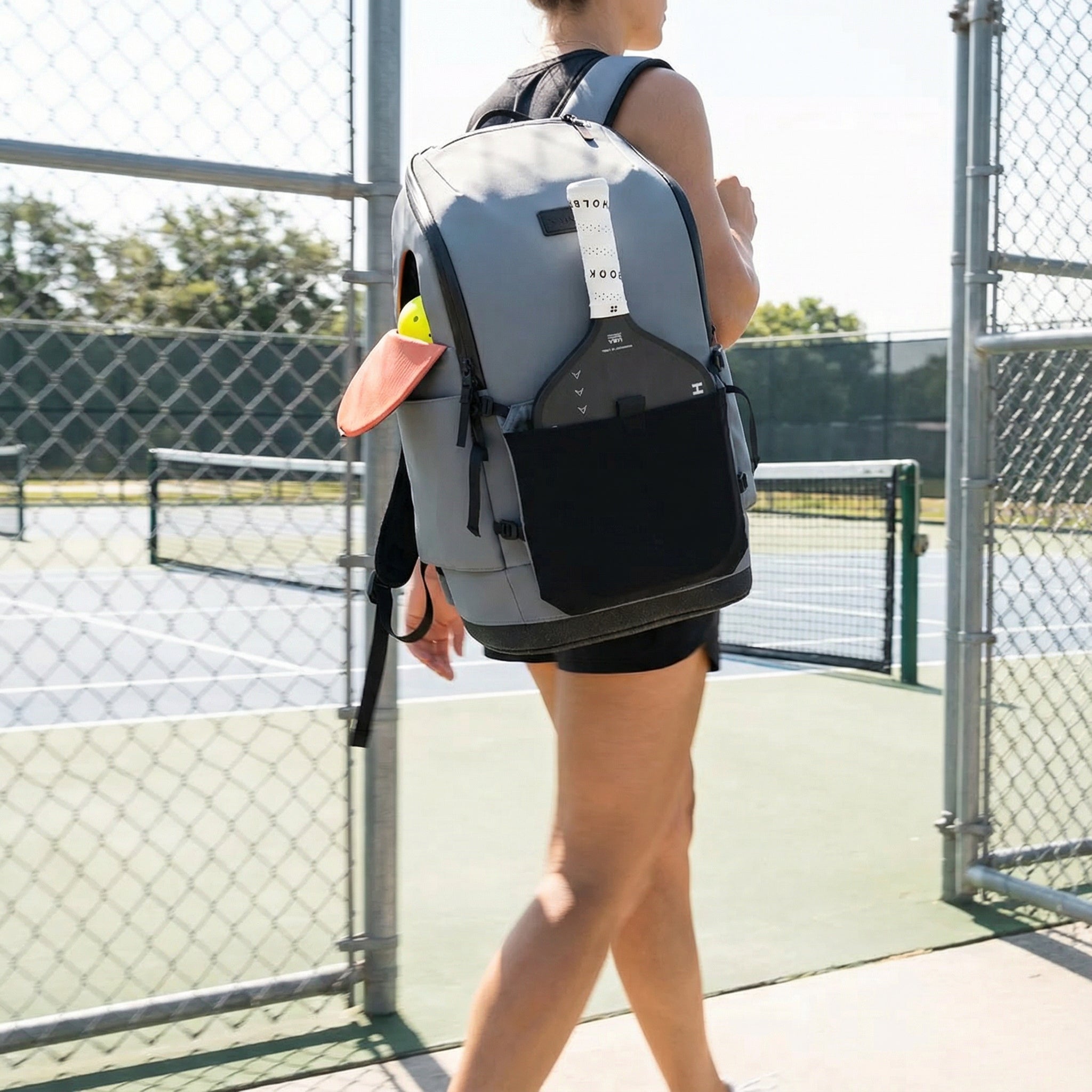
The one practical consideration: your bag. Packing your paddle safely, bringing your own balls (outdoor and indoor play can differ), and having everything organized for a quick transition from hotel to court makes travel pickleball actually work. A structured bag with a dedicated paddle sleeve and separate ball pocket eliminates the hassle of rooting through a generic gym bag for gear when you're trying to make it to open play by 8 AM.
→ Best travel destinations: Best Pickleball Vacation Destinations 2026: Where to Play
→ Resort guide: Best Luxury Pickleball Resorts 2026: Where to Play & Stay
→ Destination overview: Top Pickleball Vacations: Play, Relax, and Discover New Destinations (2026)
Backyard Pickleball: Build Your Own Court, Grow Your Own Community
If you have a driveway, a backyard, or access to any flat paved surface at least 30' × 60', you can build a court. A home court is the fastest way to play more often — and frequently becomes the nucleus of a local community you didn't expect to create.
Minimum Setup Requirements
A regulation pickleball court is 20' × 44'. You can mark one with tape on a hard surface, chalk on asphalt, or permanent paint on a poured slab. The Lines and Corners system ($34.97) is the fastest portable line solution — it sets up in minutes and stores flat in a bag. Pair it with a portable net and you have a fully functional court anywhere there's flat space.
What a Home Court Creates
People who build home courts almost universally report the same thing: it starts as a personal convenience and becomes a social hub. You invite two friends, they invite two more, and six months later your Sunday morning game has a rotation of 12 people and someone always bringing coffee. The game comes to you — which removes every excuse for not playing.
→ Full setup guide: Pickleball Home Court Setup: The Complete 2026 Guide
Getting Kids Into Pickleball
Pickleball is one of the few sports where kids and adults can genuinely compete on the same court — with the right skill pairing, a 12-year-old can beat a 45-year-old, and both will have enjoyed it. That dynamic makes youth pickleball a natural entry point for families who want a shared activity that doesn't need to be split by age group.
Where Youth Programs Are Found
- School PE programs: Hundreds of districts have added pickleball to physical education curricula since 2022. Check with your child's school.
- USA Pickleball's Youth Pathway Program (YPP): Designed for ages 7-17. Focuses on fun-first skill development. Find a YPP provider at usapickleball.org.
- After-school and club leagues: Growing fast in most cities. Often run through recreation departments or private clubs as a 6-10 week session format.
- Summer camps: Pickleball-specific day camps are now available in most major metro areas. Some tennis clubs offer pickleball weeks within their broader camp structure.
Starting a Child with the Right Gear
Youth paddles should be lighter (6-7 oz) and smaller-gripped than adult versions. Don't buy adult gear for a kid — the wrong size will build bad habits and make the game more frustrating than fun. USA Pickleball's Quick Start format uses a slower foam ball that reduces pace and extends rallies, which dramatically improves the learning experience for younger players.
→ Back-to-school guide: Back-to-School Pickleball League for Kids: Parent's Guide 2026
The Bag That Carries You to Every Game
Community play means moving between courts — parks, clubs, indoor facilities, friends' backyards, resort courts on vacation. The right bag handles all of it without forcing you to think about logistics. The wrong bag means repacking before every session.
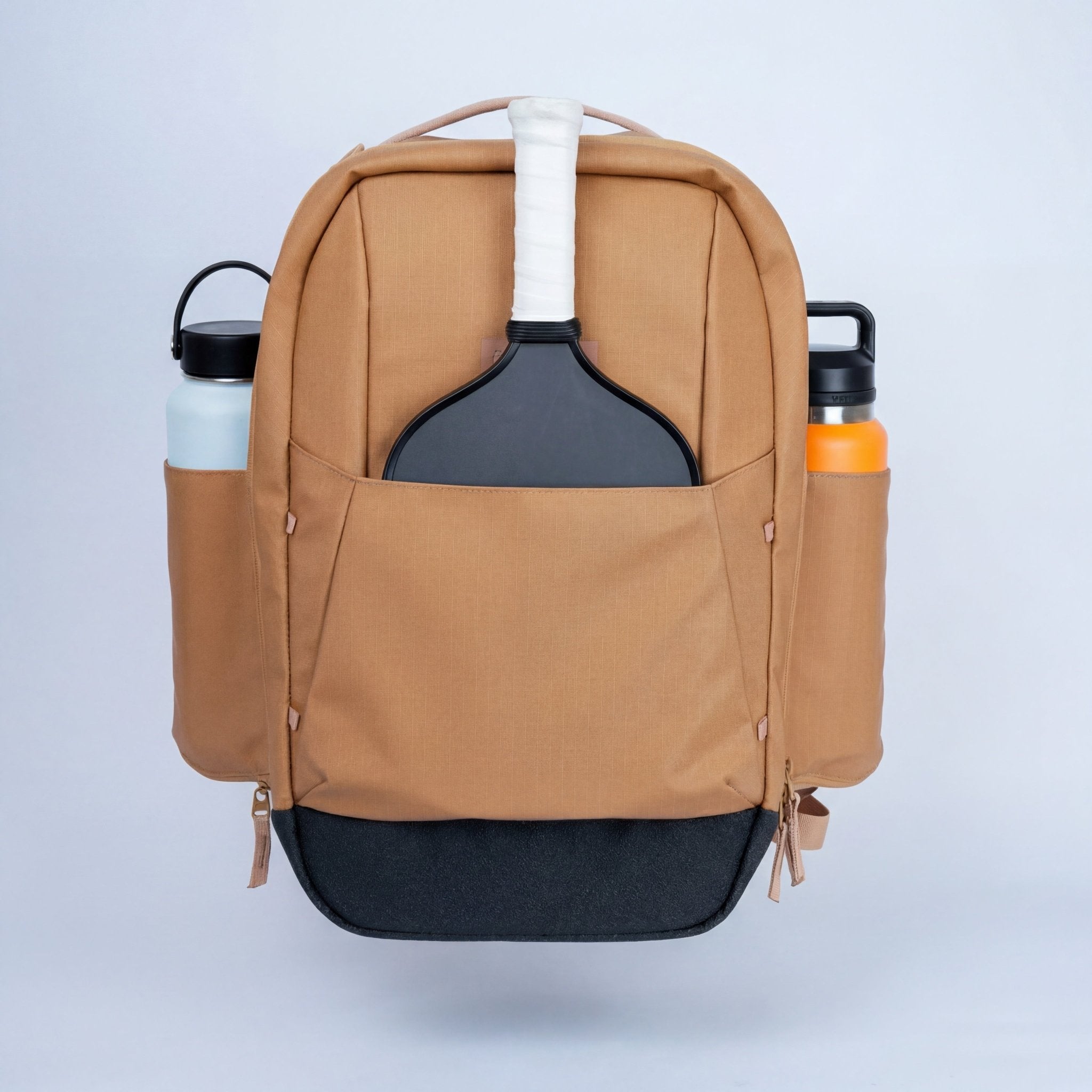
The FORWRD Court Ranger V2 ($195) is built around exactly this kind of everyday community use. It holds two paddles in a padded side sleeve, six balls in a separate ventilated ball pocket, a 16" laptop sleeve for post-court work sessions, and has room for a full change of clothes and shoes. YKK AquaGuard zippers throughout — it won't fail you in an outdoor game that turns wet.
The modular design means you're not hunting through one big compartment for your wallet when you're trying to settle up for court time. Everything has a place. For the player who shows up to open play three times a week and a league twice a week, that organization pays off every session.
For players who travel to tournaments or destination courts and need more capacity: the Court Caddy ($325) is the premium version — larger, with a 15" padded laptop sleeve, a reinforced base, and enough space to pack for a weekend tournament without checking a bag.
Frequently Asked Questions
How do I find pickleball players near me?
Start with Places2Play (places2play.org) and DUPR — both have searchable databases of courts and organized games. Then search "[Your City] Pickleball" on Facebook; local Facebook groups are where real-time game invitations and court updates happen. Pickleheads.com also shows active games you can join in advance.
What is open play in pickleball?
Open play is a drop-in session where players show up without a reservation, add their paddle to a rotation line (the "paddle stack"), and play when it's their turn. Games are typically first to 11, win by 2. When your game ends, you return to the end of the line. Most public courts and many clubs offer free or low-cost open play sessions daily or several times a week.
What is a DUPR rating and do I need one?
DUPR (Dynamic Universal Pickleball Rating) is a 2.0-8.0 numerical rating that measures your skill level based on match results. You don't need one to play casual open play, but you'll want one before entering leagues or tournaments — most structured play uses DUPR to seed skill divisions. Ratings are free to establish through the DUPR app by logging five or more matches.
How much does it cost to join a pickleball league?
Recreational leagues through city parks departments typically run $50-150 for a 6-10 week season. Private club leagues can range from $100-300+ per season. Many leagues include court fees, balls, and organization costs in the registration price. Some club leagues require a club membership on top of registration fees.
What's the difference between a pickleball club and a league?
A club is a membership organization that provides access to courts, organized play sessions, and a player community — typically on an ongoing annual basis. A league is a structured competitive season with scheduled matches and standings that runs for a defined period (usually 6-12 weeks). You can be in a club without joining a league, and many leagues are open to non-club members.
How do I find pickleball courts when I'm traveling?
Search Pickleheads or DUPR's court finder for your destination before you leave. Also search "[Destination City] Pickleball" on Facebook to find local groups — these are your best source for current open play schedules and court conditions. Most cities with any pickleball presence have at least one active Facebook group that welcomes visitors.
Can beginners play in open play sessions?
Yes, but look for sessions specifically labeled "beginner," "all levels," or with a rating range that includes your level (e.g., 2.5-3.5). Showing up to an advanced open play session as a beginner puts everyone in an uncomfortable position. When in doubt, message the organizer or Facebook group admin and ask what level the session runs. Most communities are welcoming to honest newcomers.
What is paddle stacking and how does it work?
Paddle stacking is the rotation system used at open play. When you arrive, you place your paddle at the end of a designated line or rack. As courts open up, the four paddles at the front of the stack form a game. When your game ends, your paddle goes back to the end of the line. The cardinal rule: never skip the rotation or play extended games with the same group when others are waiting.
How do I start a pickleball group in my neighborhood?
Post in a local Facebook group or NextDoor looking for players, reserve a local court, and show up with balls. A portable net gives you flexibility if your park doesn't have a permanent installation. Start with a fixed weekly time — same day, same place — and the group will build around the consistency. Four people is enough to start; you'll grow from there.
Is pickleball a good sport for kids?
Pickleball is one of the best multi-age sports available — kids can genuinely compete with adults once they develop basic skills. The court is smaller than tennis, the ball moves slower, and the rules are simple. USA Pickleball's Youth Pathway Program provides structured curriculum for ages 7-17. Many schools now include pickleball in PE programs, and summer camp programs have expanded dramatically since 2024.
Related Articles — The Complete Community Guide Cluster
- How to Find Pickleball Courts Near Me: 6 Best Tools (2026)
- Discover the Best Pickleball Courts Near You (2026)
- How to Find Pickleball Games Near You: Apps, Clubs & Open Play
- How to Join a Pickleball League or Social Club in 2026
- Pickleball Etiquette: The Unwritten Rules That Actually Matter
- Pickleball Court Etiquette: Unwritten Rules Beginners Need
- Pickleball Line Call Rules 2026: Handle Disagreements Right
- Summer Pickleball League 2026: How to Find, Join, and Thrive
- Summer Pickleball League Registration 2026: Find Your Fit
- Indoor Pickleball League Season Prep: The 2026-2027 Guide
- How to Find Pickleball Tournaments Near Me in 2026 (4 Ways)
- First Pickleball Tournament in 2026: The Honest Beginner's Guide
- Best Pickleball Vacation Destinations 2026: Where to Play
- Best Luxury Pickleball Resorts 2026: Where to Play & Stay
- Top Pickleball Vacations: Play, Relax, and Discover New Destinations (2026)
- Pickleball Home Court Setup: The Complete 2026 Guide
- Back-to-School Pickleball League for Kids: Parent's Guide 2026
The Bag for Players Who Play Everywhere
Parks, clubs, indoor courts, friends' driveways — the Court Ranger V2 goes to all of them. Two paddles, six balls, laptop sleeve, change of clothes. Organized. Built to last. Designed with feedback from 500+ real players.
Shop the Court Ranger V2 — $195
Leave a comment
This site is protected by hCaptcha and the hCaptcha Privacy Policy and Terms of Service apply.