

Last updated: September 2026
The shift from outdoor to indoor pickleball changes four variables at once: ball behavior, court surface, footwear requirements, and how you manage your gear across a league season. Most players show up to their first indoor session in the same shoes, with the same ball, gripping the same paddle as their last outdoor game. By game two something feels off — and it's not their game. This guide covers every adjustment that matters, in the order that matters, before your first 2026-2027 indoor league session.
Disclosure: This post contains affiliate links to Pickleball Central. If you purchase through our links, FORWRD earns a small commission at no extra cost to you. We only link to products we'd recommend regardless.
What Changes When You Move Indoors (Court Speed, Ball Type, Footwear)
Court Speed and Surface
The first thing you notice on an indoor hardwood court is that your feet feel different — and that's not your imagination. Smooth hardwood or synthetic sport court surfaces have significantly less friction underfoot than the textured concrete or asphalt of outdoor courts. Your split-step feels quicker. Your lateral slides are faster — sometimes faster than you intended. Players who are used to stopping themselves with friction from an outdoor surface sometimes overshoot their positioning on hardwood until they recalibrate.
The other major surface change is no wind. This sounds like an obvious advantage — and it mostly is — but it changes your reset game more than you expect. Dinks that you've been hitting with slight wind compensation land in the kitchen cleanly. Your serve has no tailwind or headwind to account for. The game plays straighter, more predictable. Give yourself two or three sessions to reset your mental model before worrying about your shot selection.
Ball bounce is lower on hardwood than on outdoor concrete. The harder, smoother surface compresses the ball slightly less, producing a flatter bounce that stays lower through the mid-court zone. Your transition-zone positioning — the space between the baseline and the kitchen — rewards a lower ready position indoors.
Ball Type: The 26-Hole Rule
Outdoor pickleball balls have 40 holes. Indoor balls have 26 holes — larger holes, softer construction, slower flight, and a slightly lower bounce profile. The difference is not cosmetic. A 40-hole outdoor ball on a gymnasium floor bounces unpredictably and flies too fast to create proper kitchen exchanges. A 26-hole indoor ball was designed specifically for the no-wind, hard-floor conditions of indoor courts.
If you show up with outdoor balls to an indoor league, the game feels broken. The ball skips, the exchanges collapse, and your reset shots don't land the same way. This is the first thing to fix before your first indoor session. Most leagues provide indoor balls, but it's worth confirming with the organizer and having your own set as backup.
Reliable indoor options include the Onix Fuse Indoor, Franklin X-26, and Gamma Photon — shop indoor pickleball balls at Pickleball Central. The Onix Fuse Indoor is the most widely used in organized indoor league play and is the ball many YMCA and rec center leagues stock by default.
Footwear: Non-Marking Soles Are Non-Negotiable
Nearly every gymnasium, YMCA, and rec center that hosts indoor pickleball requires non-marking shoe soles. This is a facility rule, not a recommendation. Show up in running shoes with standard rubber soles and you'll be turned away from the court. Non-marking soles use a specific rubber compound that doesn't leave scuff marks on hardwood or sport court flooring.
But the footwear change isn't just about the marking rule. Running shoes are dangerous for pickleball. They're designed for forward propulsion, not lateral stability. The midsole flex that helps runners strike efficiently creates torsional instability during the split-lateral movements that define pickleball play. On a smooth indoor surface, a split-step in a running shoe can result in rolled ankles or knee strain that a proper court shoe prevents by design.
Look for dedicated pickleball shoes or indoor court shoes (designed for tennis, racquetball, or badminton — they all share the lateral stability profile you need). The sole should be a gum rubber or non-marking court rubber, and the upper should have reinforced lateral sidewalls. Browse indoor-approved pickleball shoes at Pickleball Central.
Acoustics: The Gymnasium Adjustment Nobody Warns You About
Gymnasium acoustics change the social and communicative layer of the game dramatically. The plastic ball reverberating off hardwood, walls, and metal rafters is much louder than the same ball on an outdoor concrete court. Your partner's calls, line calls from adjacent courts, and general court chatter all amplify and overlap in a way outdoor play never prepares you for.
Experienced indoor players develop hand signal habits for kitchen communications, use more pre-point verbal agreements for serve rotation, and learn to tune out the ambient noise of adjacent courts. None of this takes long to adapt — usually two or three sessions — but knowing it's coming removes the disorientation from your first indoor league night.
---Gear Check: What to Adjust Before Your First Indoor Session
This checklist covers the six items worth verifying before your first indoor league session. Each takes under five minutes. Together, they're what separates players who feel ready on court one from players who spend the first hour problem-solving gear instead of playing.
Indoor Transition Checklist (2026-2027 Season)
- ☐ Switch to 26-hole indoor balls — confirm with league organizer what ball they use, carry your own as backup
- ☐ Confirm non-marking shoe soles — check the sole for "non-marking" label or call the facility before your first night
- ☐ Check paddle edge guard — run your finger around the full perimeter; any lifting, cracking, or exposed edge risks accelerating on hard floors
- ☐ Inspect grip tape or install fresh overgrip — indoor courts tend to be drier (climate-controlled); lower humidity changes how sweat absorbs into grip tape, and a worn grip slips more on smooth-surface indoor play
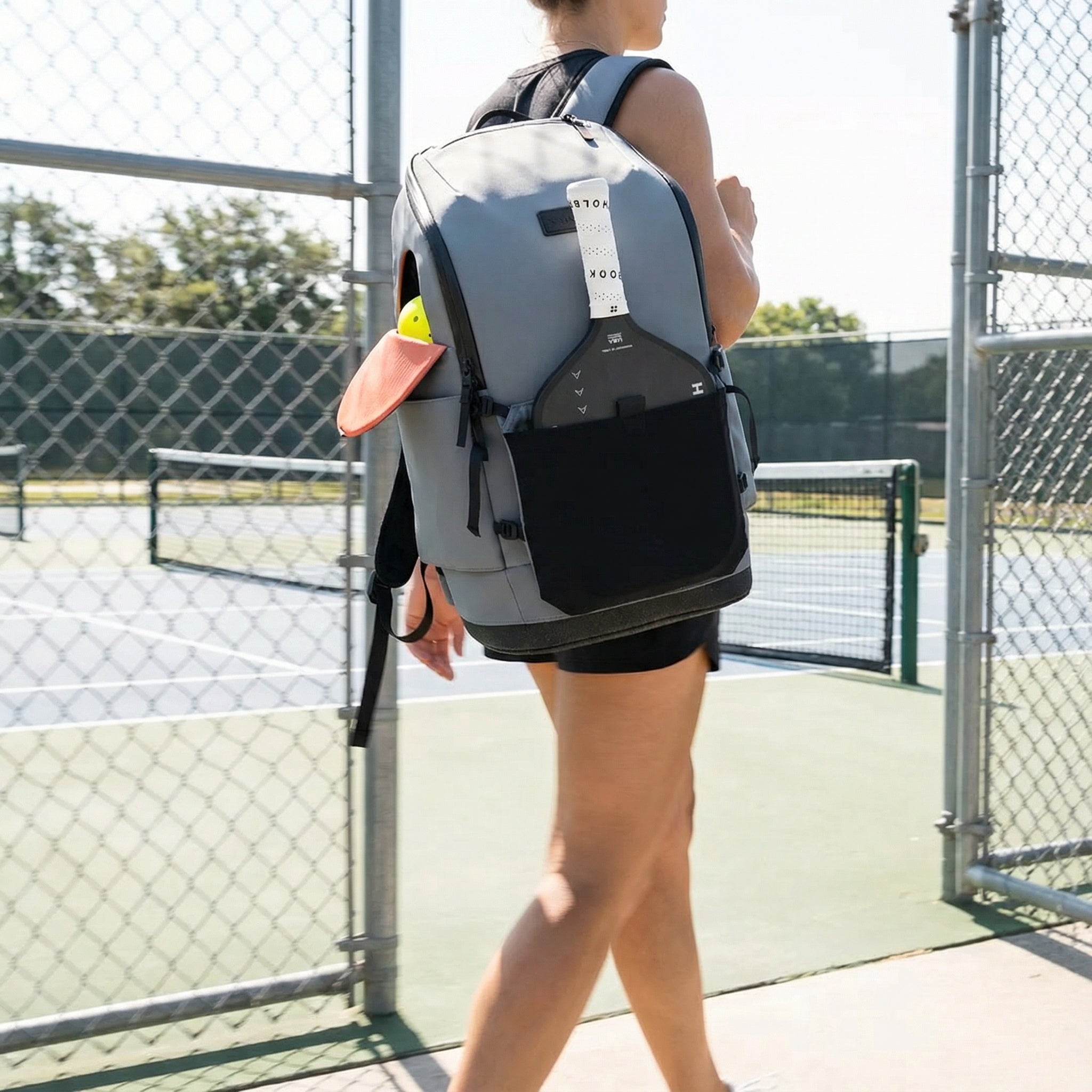
- ☐ Verify bag organization for indoor bag policies — many gyms require bags remain off the court and against the wall; reorganize your bag so your essentials (extra balls, grip tape, water) are accessible from a side pocket without digging
- ☐ Pack an overgrip roll — indoor heat and lower humidity means grip fade can happen mid-session without warning; being able to re-grip between games is a competitive advantage
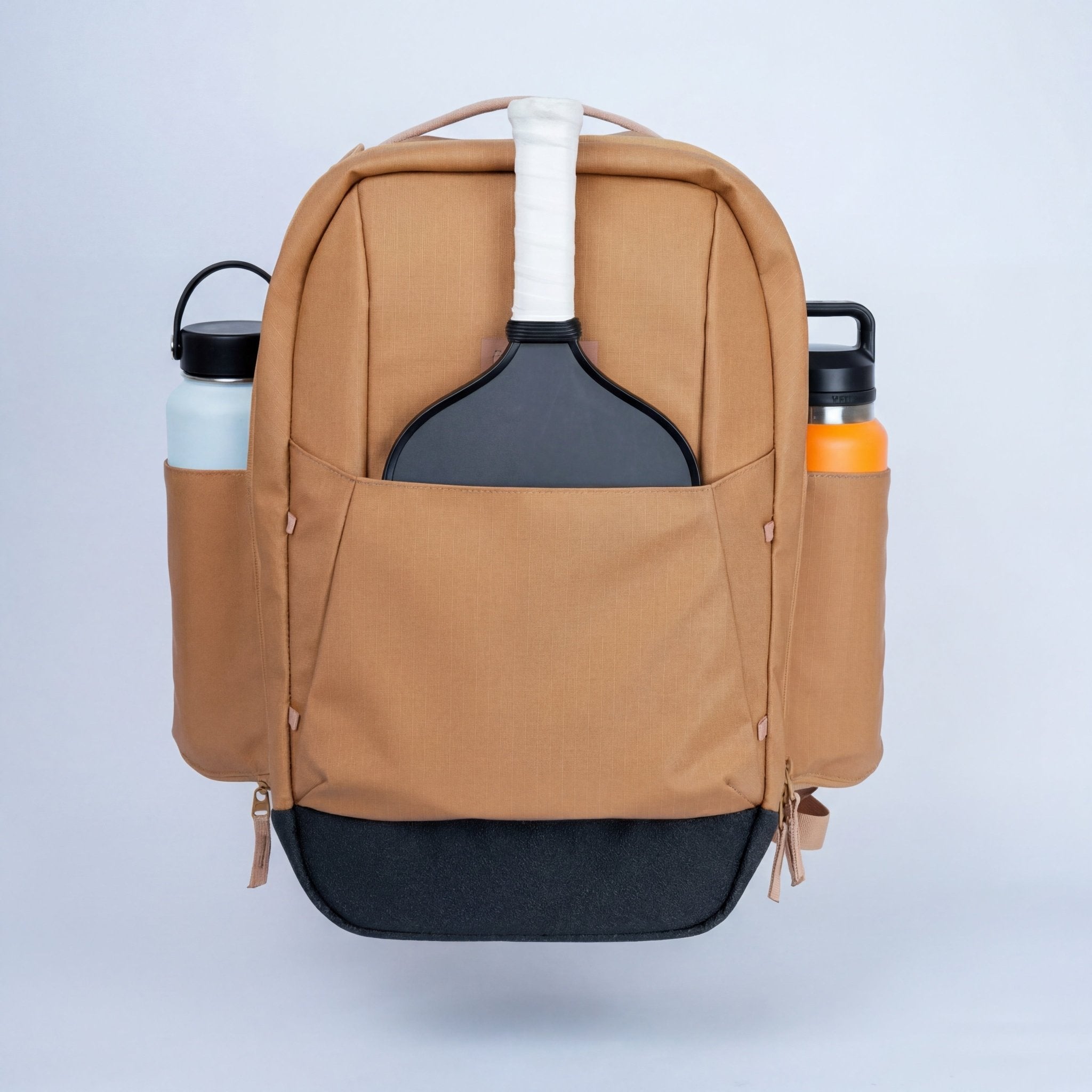
On the bag point: a bag that keeps your paddle sleeve fully enclosed matters more indoors, where court humidity and temperature swings between outdoor loading zones and the gymnasium floor affect paddle face texture and grip feel. Players who commute from the car park (cold) to the gymnasium (warm) notice condensation on paddle faces that an open-sleeve bag doesn't protect against.

The Court Ranger V2 ($195) was designed with the indoor-to-outdoor commuter in mind — fully enclosed 16" paddle sleeve, YKK AquaGuard zippers that manage condensation, and a main compartment that keeps court gear organized without spilling during the bag-off-the-court setup most indoor facilities require. At $195 it's FORWRD's entry point for players who want full construction quality in a slightly lighter format than the Court Caddy.
Paddle Care for Indoor Courts
Indoor courts create two distinct paddle care considerations that outdoor play doesn't: temperature and humidity transitions, and hard-surface drop risk.
Temperature and Humidity Transitions
The outdoor-to-indoor commute — especially in fall and winter — creates temperature swings that affect paddle materials. Carbon fiber and fiberglass paddle faces contract slightly in cold and expand in warmth. The practical impact: if you've been carrying a cold paddle in a cold car and you immediately start playing indoors in a warm gymnasium, the face temperature is catching up during your first few games. Give your paddle 5–10 minutes to acclimate to room temperature before your first warmup hit. This isn't critical for casual play, but if you're competing in league play where feel matters at the margin, acclimatization is worth the habit.
Grip tape is affected by humidity change more than the paddle face. Climate-controlled gymnasiums typically run at lower relative humidity than outdoor fall conditions. Lower humidity means grip tape absorbs sweat more slowly, which can make the grip feel stickier initially and then slip-prone once saturated. Carry at least one fresh overgrip roll in your bag every league night. A 5-minute re-grip between games has prevented more indoor performance problems than any equipment change.
For more on getting your grip right under changing court conditions, see our full guide to pickleball paddle grip styles and pressure — the grip pressure scale is especially relevant indoors, where many players unconsciously tighten up in gymnasium settings.
Hard-Surface Drop Risk
Gymnasium hardwood is unforgiving on paddle face technology. An outdoor court paddle drop on asphalt rarely causes surface damage. The same drop on smooth hardwood at the wrong angle can chip a carbon fiber face, crack a fiberglass edge, or accelerate delamination on a paddle that's already seen significant court time. Keep your paddle in its sleeve when not in play. This sounds elementary, but the fastest way to damage a $200+ paddle is leaning it against the baseline post "just for a second" on hardwood.
Finding and Joining Indoor Leagues (USAPA League Locator Angle)
The 2026-2027 indoor pickleball season runs roughly September through April in most North American markets, with the bulk of organized league play concentrated November through March. The options fall into three tiers:
USA Pickleball Affiliate Facilities
USA Pickleball maintains a searchable database of sanctioned facilities and affiliated club locations at usapickleball.org. Filtering by your zip code will return both clubs and facilities that run organized league and recreational play. Sanctioned facilities meet baseline court standards and often run structured leagues with rating-appropriate divisions — if you're a 3.5 or 4.0 player trying to find competitive indoor play, start here.
YMCA and Recreation Center Leagues
YMCAs, recreation centers, and community centers often run the most accessible indoor pickleball leagues — open registration, flexible skill sorting, and consistent scheduling. These are often the best entry points for players new to indoor league play because they prioritize consistent court time over competitive intensity. Call your nearest facility directly to ask about their fall/winter session schedule — registration typically opens 4–6 weeks before the season starts.
Club and App-Based Play
Apps like Pickleball Brackets and court-finder platforms have expanded significantly in 2025-2026. Many facilitate league creation and management independent of a facility's own systems, which means you can sometimes find organized indoor groups that aren't listed on any formal facility calendar. Searching "[your city] indoor pickleball league" on Facebook Groups and Meetup also surfaces grassroots sessions that don't make it onto official registration lists.
Once you've found your league, your first tournament experience may not be far behind. See our guide to your first pickleball tournament for how to prepare for structured competition once you've built your indoor league game.
And if you're building a training routine to complement league play, the pickleball weekly training schedule has templates built for different session frequencies — useful if your indoor league runs 1-2× per week and you want to make the most of the rest.
FAQ: Indoor League Season Prep
How do I prepare for indoor pickleball season?
Run through the 6-item indoor transition checklist before your first session: switch to 26-hole indoor balls, confirm non-marking shoe soles, check your paddle edge guard, inspect your grip tape, reorganize your bag for gym bag policies, and pack a fresh overgrip roll. These six items address the most common friction points players hit in the first two indoor sessions.
What's different about indoor vs outdoor pickleball?
Four things change: ball type (26-hole indoor vs 40-hole outdoor), court surface (smooth hardwood plays faster laterally, lower bounce), footwear requirements (non-marking soles mandatory at most facilities), and acoustics (gymnasiums are dramatically louder). The game is otherwise the same — no rule changes, same court dimensions, same net height.
What gear do I need for indoor pickleball?
Non-marking court shoes (not running shoes), 26-hole indoor balls, a fresh overgrip or grip tape in your bag, and a paddle with a clean edge guard. You don't need a separate indoor paddle — your outdoor paddle works indoors. The ball and shoe changes are the non-negotiables; everything else is optimization.
How do I maintain my paddle for indoor courts?
Let your paddle acclimate to room temperature before playing (5–10 minutes from a cold car to a warm gymnasium). Keep it in its sleeve when not in play — hardwood drops are more damaging to paddle faces than outdoor drops. Check edge guard adhesion at the start of each indoor season and re-adhere or replace any section that's lifting. Replace your grip tape at the start of the season and carry overgrip for mid-session changes.
Complete Your Indoor Setup
Got your shoes and balls sorted? Your bag is the last piece. The Court Ranger V2 ($195) keeps your paddle in a fully enclosed 16" sleeve — protected from the temperature swings and court condensation that indoor-to-outdoor commutes create. If you need a laptop sleeve for work-to-court days, the Court Caddy ($325) adds a 15" padded laptop compartment with the same YKK AquaGuard weatherproof zippers.

Leave a comment
This site is protected by hCaptcha and the hCaptcha Privacy Policy and Terms of Service apply.