

Last updated: May 2026
Disclosure: This post contains affiliate links to Pickleball Central. If you purchase through our links, FORWRD earns a small commission at no extra cost to you. We only link to products we'd recommend regardless.
There are more than 50,000 pickleball courts across the United States — and that number grows every month. The problem isn't access. It's knowing where to look and how to plug into a local community once you find a court.
This guide covers the six best tools for finding courts near you, what to expect at your first open play session, and how to connect with partners at your skill level. If you're brand new to the sport, the complete beginner guide covers everything else.
Key Facts: Finding Pickleball Courts
- 50,000+ courts: The US has more than 50,000 pickleball courts as of 2026, with an estimated 500+ new courts added each month nationwide.
- Pickleheads is the official finder: Pickleheads replaced Places2Play as USA Pickleball's official court and game finder — it's the most current directory available.
- 16,000+ locations: Pickleheads lists over 16,000 court locations in the US and Canada, crowdsourced by players who've actually been there.
- Open play cost: Public park courts are usually free. Recreation center open play runs $3–8 per session; indoor dedicated club play typically costs $10–20.
- DUPR is free: The Dynamic Universal Pickleball Rating app is free on iOS and Android and connects players to rated open play games — not just courts.
- Facebook groups work: Most cities with active pickleball communities have Facebook groups with 500–5,000+ members posting daily court availability, open play times, and game invites.
- Converted tennis courts: An estimated 60–70% of current pickleball courts started as tennis courts — any public tennis facility with a portable net is fair game.
The 6 Best Court-Finder Tools
Not all of these do the same thing. Here's how they compare before we break each one down:
| Tool | Courts Listed | Open Play Schedules | Partner Matching | Mobile App |
|---|---|---|---|---|
| Pickleheads | 16,000+ | Yes | Yes | iOS & Android |
| USA Pickleball Places to Play | 9,000+ | Limited | No | No |
| DUPR App | Via Pickleheads | Yes (rated games) | Yes (by rating) | iOS & Android |
| Google Maps | Varies | No | No | Yes |
| Facebook Groups | N/A | Yes (community-posted) | Yes | Yes |
| Parks & Rec Websites | Local only | Yes | No | No |
1. Pickleheads — Start Here
Pickleheads became the official court and game finder of USA Pickleball in 2024, replacing Places2Play. The database is crowdsourced — players who've actually visited a court add field notes on surface quality, lighting, net type, and whether the venue runs open play. That player-verified detail separates it from a basic map search.
Search by zip code, city, or current location. Filter by indoor/outdoor, number of courts, surface type, and open play availability. Most major metros return 20–50 venues within a 15-mile radius. The mobile app (iOS and Android) adds real-time game posting and schedule coordination.
2. USA Pickleball Places to Play
USA Pickleball's court finder lists facilities across all 50 states with addresses, contact info, and USAP affiliation status. The database is official but less granular than Pickleheads — open play schedules aren't always current. Use it as a secondary source, and call ahead before you go.
3. DUPR (Dynamic Universal Pickleball Rating)
DUPR tracks your wins and losses across all play — open, league, tournament — and generates a numeric rating from 1.0 to 8.0. That rating is your portable skill credential: players at any court in the country who use DUPR can match with you at an appropriate level.
The partner-matching and game-finding features work best once you have some games logged. For court discovery when you're new to an area, start with Pickleheads. Come back to DUPR when you're ready to find competitive-level play.
4. Google Maps
Search "pickleball courts near me" in Google Maps and you'll surface public parks, rec centers, and dedicated clubs that have verified hours. No open play schedules, no community info — but useful as a backup when the dedicated tools don't have your area well-mapped.
5. Facebook Groups
Search "[your city] pickleball" on Facebook. In any metro with an active pickleball community, you'll find a group with hundreds or thousands of members. These groups are where the real-time information lives: same-day court availability, wet court warnings, open play start times, partner requests, and clinic announcements. No app matches the freshness of a local community group.
6. Your City Parks and Recreation Website
Many city and county park systems added pickleball to their programming between 2022–2025. Google "[your city] parks and recreation pickleball" — these pages often list open play schedules, league registration, and a coordinator contact who can answer questions you won't find on any app.
Types of Venues: What to Expect
Court quality, player culture, and cost vary dramatically by venue type. Know what you're walking into.
Public parks (free outdoor): Usually converted tennis courts with portable nets. Surface quality and net condition vary. Informal paddle queue rotation, mixed skill levels, no guaranteed court availability — first come, first on. Best for casual play and meeting local players without committing to a membership.
Recreation centers ($3–8/session): Indoor or outdoor, city or county managed. Open play sessions are scheduled, courts often have permanent pickleball lines, and skill-level splits (beginner/intermediate hours) are increasingly common. Best for: consistent schedule, indoor option, beginner-friendly environment.
Dedicated pickleball clubs ($30–100+/month): Purpose-built facilities with permanent nets, proper lighting, smooth court surfaces, ball machines, and organized leagues. The fastest-growing venue type in the country. Membership fees plus per-session court fees. Best for players who play 3+ times a week and want consistent quality.
Converted tennis courts (free or paid): Any tennis court with a portable net becomes a pickleball court. Lines may be shared, which can get confusing. Bring your own portable net if your local parks are tennis-only with no dedicated pickleball setup.
What Open Play Means and How to Show Up
Open play is a drop-in format — no reservations, no assigned partners. Show up, place your paddle in the rotation queue, and wait for a court to open. When it does, the next four paddles in line take it.
Two rotation systems are common. Winner stays: losing team rotates off, winning team stays on, two new players come from the queue. All rotate: all four players leave after each game, four new players rotate in. Ask which system the court uses when you arrive. Getting it wrong creates friction immediately — it's a 10-second question worth asking.
Many sessions are skill-level sorted: beginner courts, intermediate, advanced. Check the session listing before you show up. Showing up to advanced open play as a brand-new player is awkward for everyone. Start lower and move up as your game develops.
For everything you need to know about conduct once you're on the court — line calls, score calling, what not to do — see our Pickleball Court Etiquette guide.
Finding Pickleball Partners and Communities
Courts get you on the court. Partners keep you coming back.
Facebook groups are the most reliable starting point. Post your location, availability, and approximate level ("beginner, been playing 3 months, looking for a regular hitting partner") and you'll have responses within hours in any active group.
Meetup.com hosts organized pickleball meetups in most cities — often beginner-friendly, with a coordinator managing rotation. Lower pressure than showing up solo at a public court for the first time.
Club leagues are the fastest way to build a consistent circle of players. Most dedicated clubs and rec centers run skill-split leagues ($20–60 per session series). Courts are pre-reserved, no paddle queue required, and you see the same group of players each week.
DUPR's partner-matching feature connects you with nearby players at your rating range. Search by location, availability, and rating to find competitive matches at your level. For more on all the apps worth using, see our Best Pickleball Apps 2026 roundup.
"Every player we talked to during the Court Ranger design process said the same thing: they found pickleball through a friend, a Facebook group, or a rec center open play session — almost never through an app. The community is the sport. Find a court and a regular group, and the game takes over."
— Topher Lake, FORWRD Co-founder
What to Bring to Your First Open Play Session
Arrive organized and you'll spend your energy on the game instead of logistics.
- Paddle: Any beginner-friendly paddle in the $50–150 range works to start. Most rec centers have loaners if you don't have one yet. Browse beginner paddles at Pickleball Central.
- Balls: Venues usually supply them. Bring 2–3 of your own for public park play where there's no host.
- Court shoes: Lateral support and a non-marking gum sole are what you need. Running shoes on a pickleball court are a turned ankle waiting to happen. Start with a dedicated court shoe — your knees and ankles will notice the difference.
- Water and a towel: Pickleball is deceptively athletic. An hour of outdoor open play in summer dehydrates faster than most people expect.
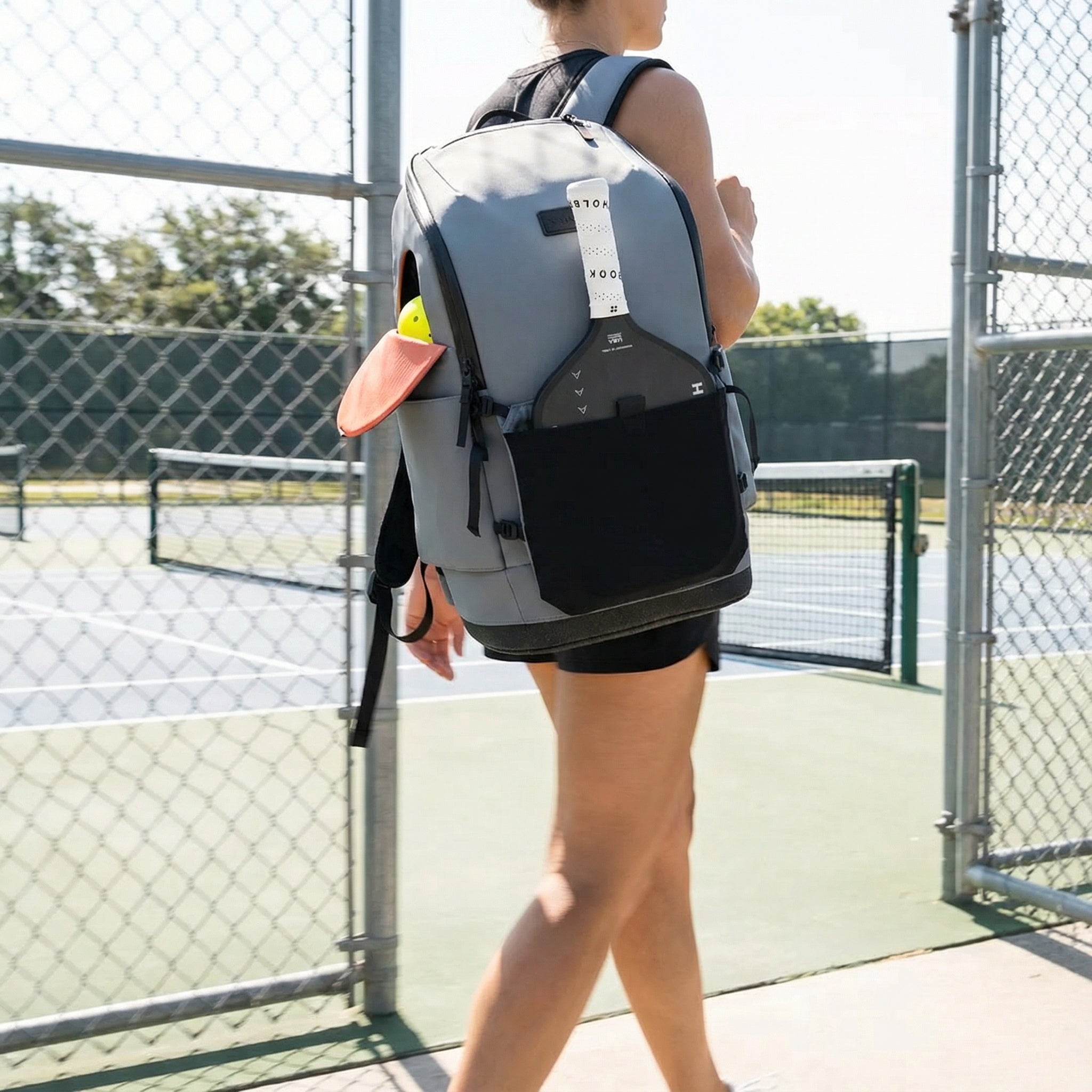
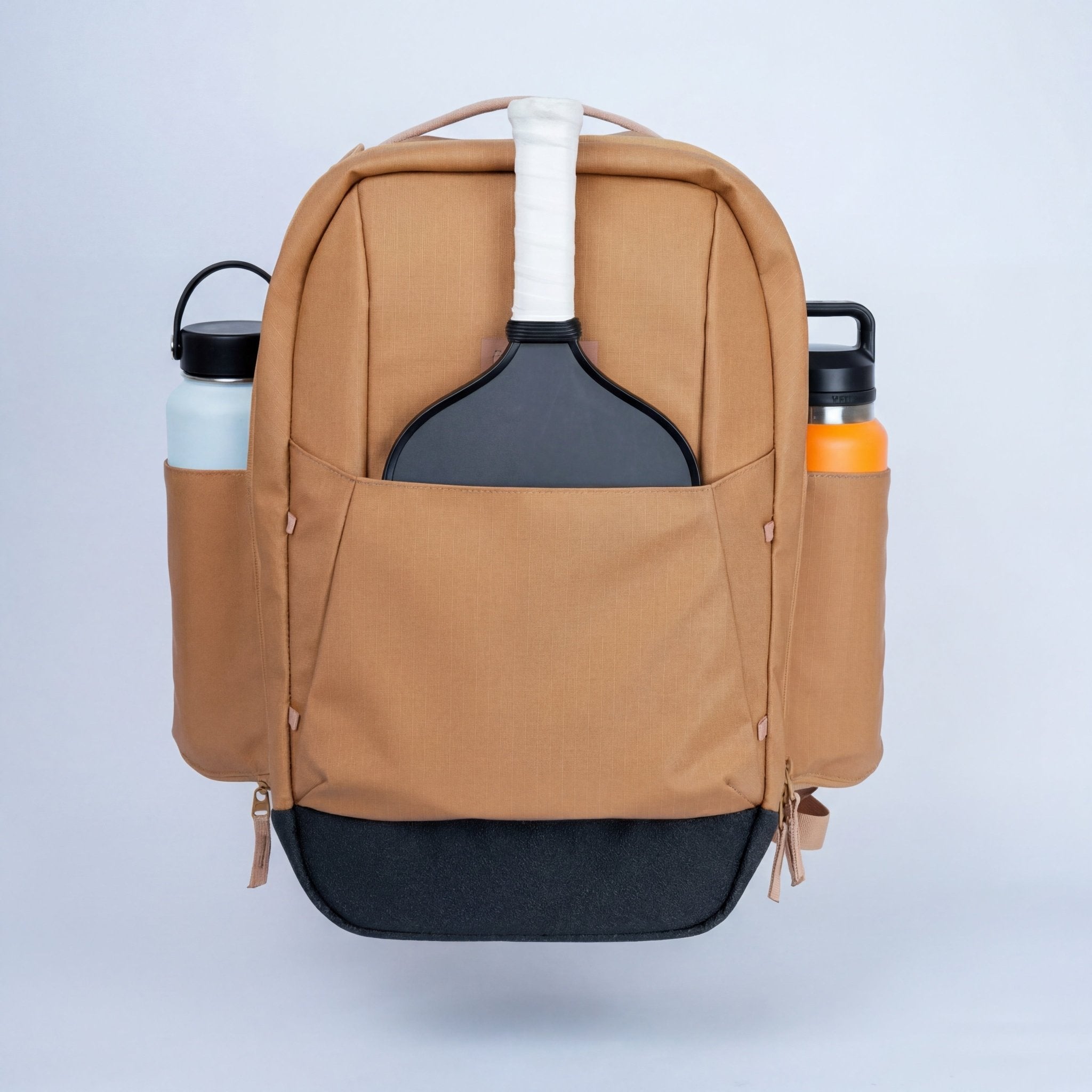
- A bag with actual organization: Show up with a paddle in one hand and loose gear in the other and you'll feel it during rotation. The FORWRD Court Ranger V2 ($195) was designed after conversations with 500+ real players about what they actually needed — modular paddle sleeve, 16" laptop compartment, dedicated water bottle pockets, and a shoe pocket that keeps your court shoes separate from everything else.
FAQ: Finding Pickleball Courts
How do I find a pickleball court in my city?
Start with Pickleheads (pickleheads.com) — the official court finder of USA Pickleball, with 16,000+ locations searchable by zip code. Also check the USA Pickleball Places to Play directory at usapickleball.org for additional listings. For same-day availability and open play times, join your city's Facebook pickleball group.
Are there free pickleball courts near me?
Most public parks with pickleball courts are free during regular hours. Search "[your city] parks pickleball" or use Google Maps and look for parks with pickleball listed in amenities. Recreation center open play typically runs $3–8 per session. Public tennis courts with portable nets are also a free option in most cities.
What is open play pickleball and how does it work?
Open play is a drop-in format where anyone can show up and join games without reservations or a partner. Place your paddle in the rotation queue, wait for a court to open, and play. Games are typically 11 points, win by 2. After your game, you rotate back to the end of the queue or leave the court depending on the venue's rotation system.
Can I play pickleball at a tennis court?
Yes — most outdoor tennis courts can be converted with portable nets. One standard tennis court fits two pickleball courts side by side. Many public parks have already added permanent pickleball lines on existing tennis courts. If not, a portable net and court tape get you set up in under 10 minutes.
How do I find pickleball partners?
Search "[your city] pickleball" on Facebook and join the local group — post your availability and skill level and you'll get responses quickly. Meetup.com hosts organized groups in most cities. The DUPR app matches players by rating. Local recreation center leagues are the best option for a consistent weekly group at your skill level.
For the complete beginner overview — rules, scoring, gear, and what to expect: Pickleball for Beginners: The Complete 2026 Guide.
Wondering what gear costs before you commit? How Much Does It Cost to Play Pickleball in 2026? has the real numbers.
Ready to show up organized? Shop the Court Ranger V2 — built for players who play regularly and need gear that keeps up.

Leave a comment
This site is protected by hCaptcha and the hCaptcha Privacy Policy and Terms of Service apply.