

Last updated: May 2026
The official rulebook covers serves, kitchen violations, and scoring. It doesn't cover what happens when someone cuts the paddle queue, offers unsolicited advice mid-game, or refuses the post-game tap. Those are the moments that determine whether pickleball stays a welcoming sport — or quietly earns a reputation problem.
Here's the full walkthrough, from the moment you walk onto a public court to the moment you leave.
Key Facts: Pickleball Etiquette
- Self-refereed: Recreational pickleball has no line judges — you call your own balls in or out, and your integrity is the only enforcement mechanism.
- USA Pickleball's line call rule: Any ball that cannot be clearly called out must be called in — this is written into the official rulebook, not just tradition.
- The paddle tap: Tapping paddles at net before and after every game is the universal pickleball handshake — refusing it is considered the most offensive thing you can do on a rec court.
- Score calling is required: The server must call the score before every serve. In doubles, that's three numbers: server score, receiver score, server number.
- Paddle queue: At open play, first in, first on — placing your paddle in arrival order is the system every facility uses, and jumping it is the most common source of court conflict.
- No unsolicited coaching: Offering game advice to a player you don't know — without being asked — is the most universally disliked behavior in open play pickleball.
Before the Game Starts
Walk in, find the paddle rack. At almost every open play session in the country, there's a designated spot — a fence slot, a board with hooks, a physical rack — where players line up their paddles to signal they're ready to play. Put yours at the end. Don't ask if it's okay. Just follow the order.
While you're waiting, introduce yourself. Pickleball's culture is social by design — first names immediately, no last names needed. If you're new, say so. "Hey, I'm still learning the rotation" is not embarrassing; it's the fastest way to get veterans to help you instead of quietly resenting you.
How the Paddle Queue Works
When a game ends, the next four paddles in line rotate onto the court. On some courts, losers leave and winners stay — that's "winner stays." On others, all four players rotate off together. Ask which format the court uses before you queue up. Getting it wrong stalls rotation for everyone behind you. Asking takes 10 seconds.
If you need to leave mid-session, remove your paddle from the queue. Leaving it in line when you're absent stalls rotation for everyone waiting.
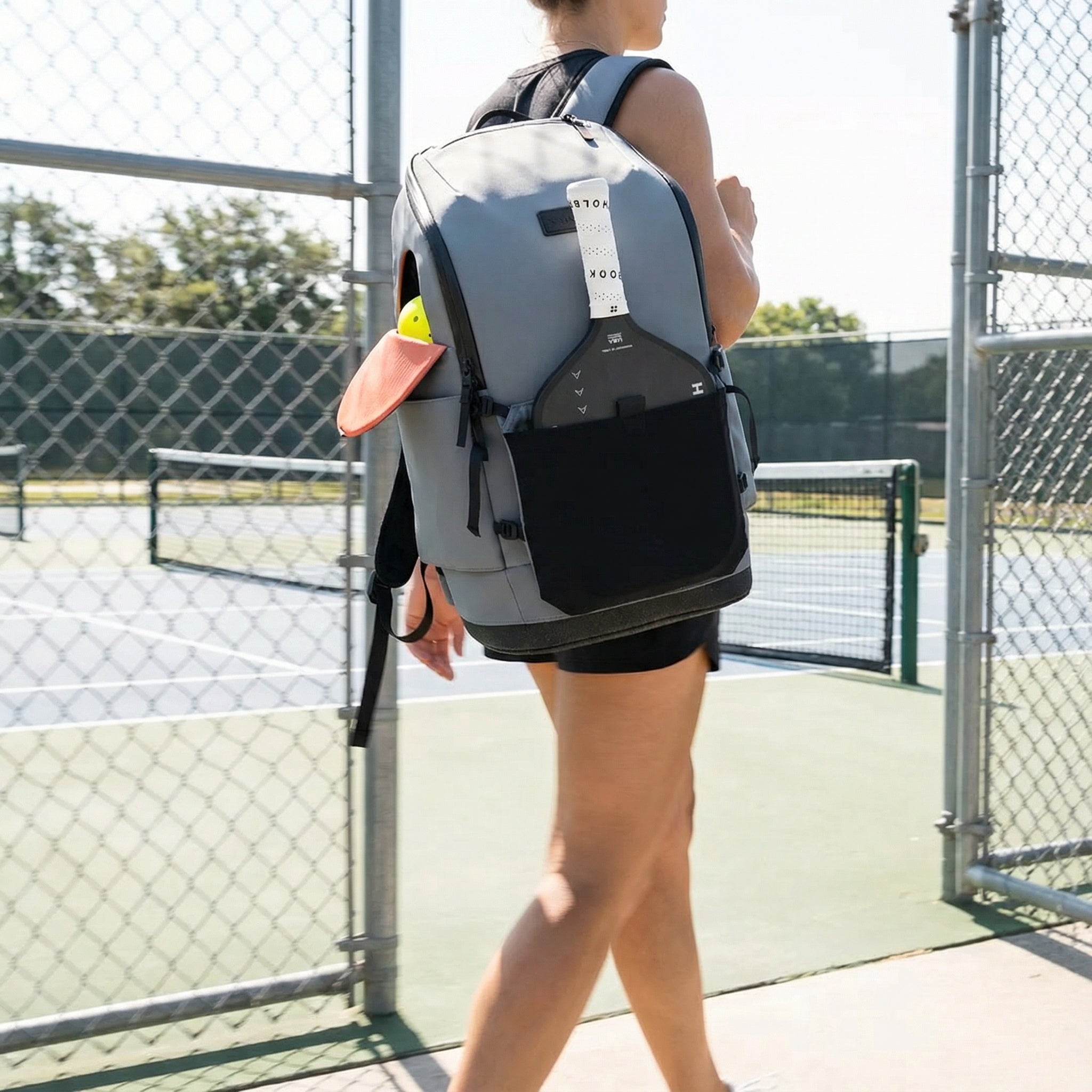
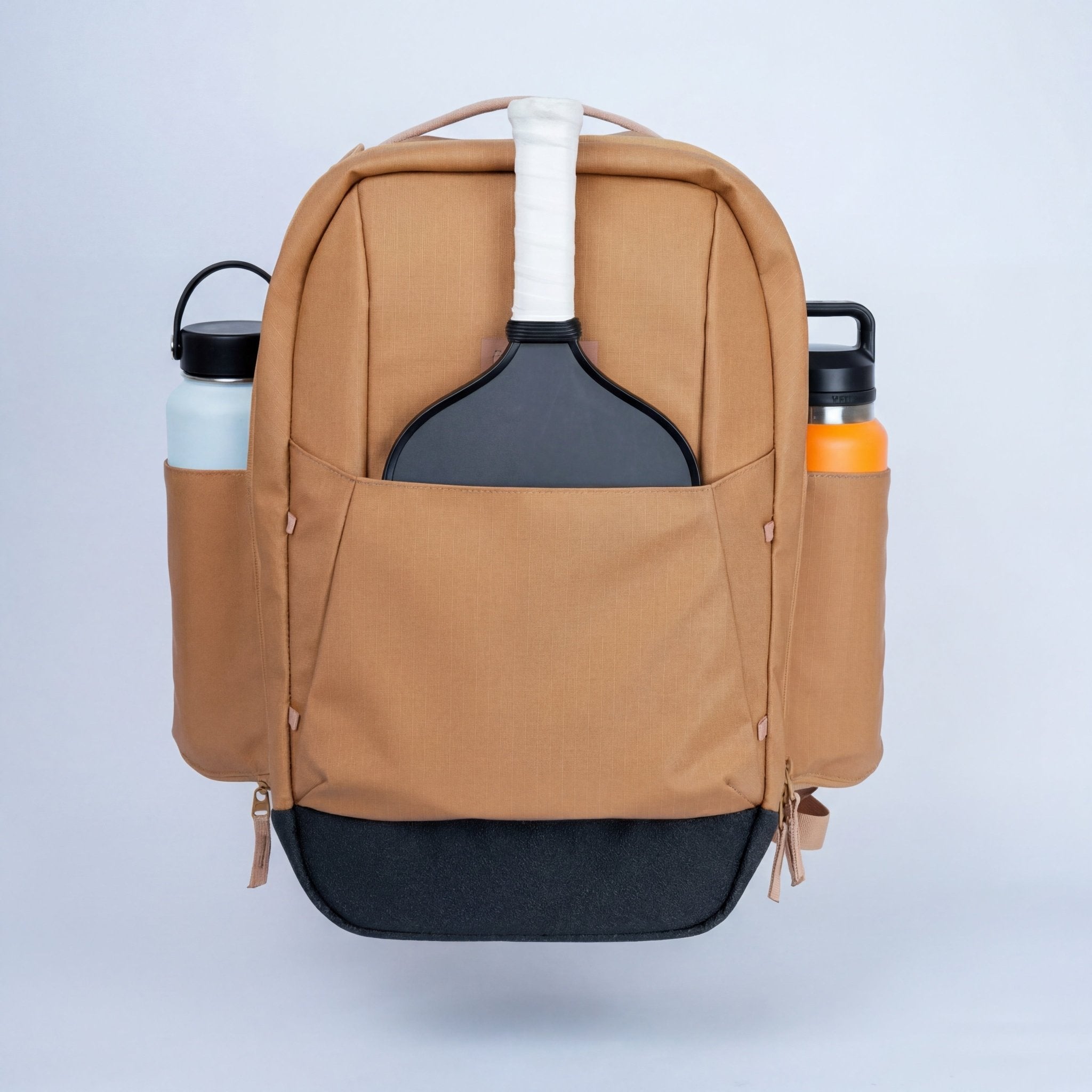
One thing that makes showing up easier: arriving organized. A bag where your paddle, extra balls, court shoes, and water all have a spot — so you're not rummaging around mid-rotation. The FORWRD Court Ranger V2 is designed for exactly this: modular paddle sleeve, separate shoe pocket, and enough room that you're ready the moment your name comes up.
During Play: The Rules You Referee Yourself
Recreational pickleball is self-refereed. No official, no line judge, no challenge system. Every call — in or out, fault or not — depends entirely on your honesty.
The only correct call for a ball you genuinely couldn't see clearly? It's in. Not "I think it might have been out." In. USA Pickleball's official rulebook is explicit: if you can't clearly call it out, call it in. This isn't about being nice; it's the rule.
Calling your own faults: If your foot touches the kitchen on a volley, call it on yourself. If you hit before the second bounce, say so. Your opponents may not have seen it. Call it anyway. The sport's reputation for sportsmanship is built on thousands of these small moments.
Score Calling — Every Single Serve
The server calls the score before every serve. In doubles: three numbers. Server score, receiver score, server number. "3-2-1" means you're serving with 3 points, opponents have 2, and you're server number 1. Call it loud enough for everyone to hear. If someone calls a wrong score, stop play and clarify before the serve. Not after.
At the Net and at Open Play
A ball from another court rolls onto yours mid-rally. Stop play immediately, hold up your hand, return the ball, and restart the point. This is safety and courtesy combined — non-negotiable.
Never walk behind or across an active court while a point is in progress. Wait at the edge, make eye contact with someone on that court, and cross on a break. Rushing through mid-rally — especially when you're in a hurry — is one of the least forgivable breaches of court culture.
The Coaching Problem
You see someone making a technical error. Their backswing is wrong. Their positioning at the kitchen is off. You know the fix. Keep it to yourself. Unsolicited coaching at open play is the single fastest way to make enemies. People who want coaching hire a pro, join a clinic, or ask their regular hitting partner. They didn't come to open play for a free lesson from a stranger.
One exception: safety. If someone's about to hurt themselves or another player, speak up. Everything else waits until they ask.
"The courts we built FORWRD around are the ones where everyone knows each other's first name within two sessions. That culture lives and dies on the little stuff — returning the ball cleanly, stepping back when it's someone else's game, not turning every open play into an unsolicited clinic. Get that part right and the sport takes care of the rest."
— Grub, FORWRD Co-founder
After the Game
Walk to the net. Tap paddles with all four players. Say "good game" — or something like it. That's the handshake, the sportsmanship signal, the one moment every player at every level expects without exception. It's not about the score. You can be furious about the last point and still tap paddles.
Don't linger. Grab your stuff, clear the court, and get your paddle back in rotation if you're staying. The next group is waiting.
Asking for Rematches
Want to play again with specific people? Ask them directly after the tap: "Want to get back out together next rotation?" Don't try to engineer the queue so you're always playing with your favorite four. That's how courts develop cliques that make newer players feel invisible.
What NOT to Do
The list of things that quietly earn a bad reputation is shorter than most people think. Most of it comes down to three behaviors:
1. Targeting the weakest player relentlessly. In competitive play, exploiting the weak link is strategy. In recreational open play, hammering the least experienced player every single point is a social capital destroyer. Win the point — don't make someone feel like they ruined the game.
2. Slamming balls in frustration. A hard slam after a missed shot isn't just rude — it's a safety issue. It sends balls onto adjacent courts, startles players mid-rally, and signals to everyone watching that you've lost composure. Take a breath. The next point starts in 10 seconds.
3. Arguing line calls. You can ask "did you get a look at that?" once. If they confirm the call, play on. You can offer a let if there's genuine disagreement — but a prolonged argument about a line call in recreational play makes courts hostile for everyone. Move on.
One newer one worth knowing: USA Pickleball tightened timeout communication rules in 2026. You now have to clearly signal a timeout — verbal "timeout" or the universal T hand signal — rather than walking off the court without explanation. Minor in practice, but important to know so you don't confuse your opponents.
FAQ: Pickleball Etiquette
What are the unwritten rules of pickleball?
The core unwritten rules: tap paddles at net before and after every game, call your own faults honestly, call the score before every serve, never offer unsolicited coaching, and clear the court promptly when your game ends. None of these appear in the official rulebook, but violating them gets noticed immediately.
Is it rude to smash the ball in pickleball?
Attacking high balls is correct strategy at any level. Slamming balls out of frustration — off the court, into the fence, or at an opponent — is rude and unsafe. In recreational open play, repeatedly targeting a less experienced player with hard drives isn't technically against the rules, but it's widely considered poor sportsmanship.
How does paddle queuing work at open play?
Place your paddle in the designated holder in arrival order. When a court opens, the next four paddles rotate on. Some facilities use winner stays (losing team rotates off, winning team stays); others rotate all four players after each game. Ask which system the court uses before you queue — getting it wrong creates friction for everyone.
What do you say at the start of a pickleball game?
Introduce yourself by first name if you don't know the other players. Before the first serve, call the starting score — in doubles, it's typically "0-0-2" to open. Then the server calls the score before every subsequent serve. A quick "good luck" or "have fun" is common but not required.
Do you have to play with everyone at open play?
At most open play sessions, yes — the paddle queue determines who plays with whom. Maneuvering to always play with the same group defeats the purpose of open play and frustrates players waiting in rotation. Reserved sessions and private courts are the option for people who want to control their partner selection.
What happens if someone calls a ball out that I thought was in?
The call belongs to the team on whose side the ball lands — that's the official rule. If you disagree, ask "did you have a clear look?" once. If they confirm it, play on. Mutual agreement on a let is always an option in casual play, but you can't overturn their call.
For the full beginner overview — rules, scoring, gear, and how to get started — see our Pickleball for Beginners: The Complete 2026 Guide.
Also worth reading: 10 Pickleball Mistakes Every Beginner Makes (And the Fix for Each One) — the technical errors that complement the etiquette ones.

Leave a comment
This site is protected by hCaptcha and the hCaptcha Privacy Policy and Terms of Service apply.