

Last Updated: September 2026
Disclosure: This post contains affiliate links to Pickleball Central. If you purchase through our links, FORWRD earns a small commission at no extra cost to you. We only link to products we'd recommend regardless.
The most common pickleball beginner mistakes are rushing the net before the two-bounce rule completes, standing in no-man's land (mid-court), and hitting every ball too hard. Most can be fixed in one or two sessions once you know what you're doing wrong. The dinking game — soft, controlled shots near the kitchen — is what separates beginners who improve from beginners who plateau.
Every sport has its beginner mistakes. Pickleball's are particularly consistent — the same patterns show up on rec courts from Arizona to New Hampshire because the sport's rules push new players toward the same errors. Here are the 10 we see constantly, and the specific adjustment for each.
Quick Reference: The Big 6 Things New Players Get Wrong
- Most common mistake: Trying to smash or drive every ball hard — the instinct that wrecks beginners and makes them easy to beat.
- Most impactful fix: Learning the dink. Players who develop their soft game improve faster than power players at the same level.
- Rules gap: The two-bounce rule surprises almost everyone in their first few games — leading directly to the most common fault (rushing the kitchen).
- Shoe problem: Running shoes on a court are a liability. Lateral ankle rolls are the #1 non-overuse injury in recreational pickleball, and most happen to players in running footwear.
- Paddle problem: Buying too expensive a paddle too early doesn't accelerate improvement — it just shifts the limitation from the player to the equipment sooner than it should.
- The kitchen rule: You can stand in the kitchen any time — you just can't volley (hit a ball in the air) while touching it. Most beginners avoid it entirely when they should be camping at the kitchen line.
Mistake 1: Rushing the Net Before the Two-Bounce Rule Completes
What happens: The server hits the ball, sprints to the kitchen, and gets caught in no-man's land — or worse, volleys illegally before the ball has bounced twice.
Why it happens: Tennis players instinctively approach the net after serving. In pickleball, the two-bounce rule says the return team must let the serve bounce, and the serving team must let the return bounce, before anyone can volley. Most beginners don't internalize this. They've watched enough YouTube to know the kitchen line is important, but they move toward it at the wrong time.
The fix: After serving, stay back. Wait for the return to bounce, then advance. The transition happens after shot 3 in the rally (the serving team's first drive or drop). Practice saying "bounce, bounce, go" as a mental trigger after your serve lands.
Mistake 2: Living in No-Man's Land
What happens: Player stands at the baseline or mid-court the entire rally, giving the opponent angle to drive balls at their feet or lob over their head.
Why it happens: Fear of the kitchen rule. New players avoid the non-volley zone so aggressively that they never advance to the kitchen line — which is where you want to be 90% of the time once the rally is established.
The fix: The kitchen line is your destination, not a hazard. Get there and stay there. The only time you drop back is when someone lobs over you. In established rallies, the team at the kitchen line wins — period. Practice approaching intentionally after every service return.
Mistake 3: Big Swings on Dinking Volleys
What happens: During a dinking exchange at the kitchen, player takes a full backswing and drives the ball into the net or pops it up for an easy put-away.
Why it happens: The dink is a new shot. It's not in tennis, not in badminton, not in any sport most beginners have played. The instinct is to generate power with the arm. Dinking requires the opposite — firm wrist, small paddle movement, using the legs to change trajectory instead of the arm.
The fix: Lock the wrist. The paddle moves 6–10 inches, max. Your arm motion is mostly tracking the ball's position, not generating swing. Practice dinking a ball into the kitchen with zero backswing until it feels unnatural to take one.
Mistake 4: Hitting Every Ball as Hard as Possible
What happens: Every shot is a drive. Every return is maximum pace. Player loses rallies by hitting out or giving up easy resets to more experienced opponents.
Why it happens: Power is satisfying and feels effective. In pickleball at the 2.5–3.0 level, it often is — against other beginners who can't handle pace. Against anyone with a soft game, uncontrolled drives are the easiest balls to attack. A good player at the kitchen line is going to redirect your drive right back at your feet, every time.
The fix: Hit 70% as hard as you think you should. The control gained is worth more than the pace lost. In time, learn to drive selectively — when you're on offense and your opponent is out of position, not as your default shot.
Mistake 5: Stepping Into the Kitchen on Follow-Through
What happens: Player volleys correctly but momentum carries them into the kitchen. Fault called. Easy point lost.
Why it happens: The kitchen fault applies not just to touching the line during a volley, but to entering the kitchen immediately after one — even after the ball has been hit. This trips up tennis players who are used to following through into the court on volleys.
The fix: Practice stopping your feet at the kitchen line. Think of your follow-through as stopping at the line, not continuing past it. Short volleys at the kitchen require a contained, punch-style stroke, not a full-extension swing that sends you forward.
Mistake 6: Not Calling the Score Before Serving
What happens: Server hits before calling the score. Opponent disputes it. Confusion, argument, awkward reset.
Why it happens: In casual tennis or badminton, you don't announce the score before every serve. In pickleball, it's mandatory and serves a real function — it's the last check before the serve, ensuring both teams agree on the count.
The fix: Call it every time, before your swing: "3-2-2" (your score, their score, server number). It becomes automatic within a week. It also protects you — if your opponent disputes the score post-rally, you have the announced count as the anchor.
Mistake 7: Using Running Shoes Instead of Court Shoes
What happens: Player slips on a gym floor, rolls an ankle on a lateral cut, or fatigues faster from their foot striking the court wrong.
Why it happens: Running shoes are what people have. Most new players don't think footwear matters for a "low-impact" sport like pickleball. But running shoe soles are curved for forward propulsion, not flat for lateral stability. On a gym floor, they're actually dangerous.
The fix: Get a real court shoe. You don't need the most expensive one. The K-Swiss Express Light ($115) is one of the lightest dedicated pickleball shoes in its price range — flat herringbone outsole, real lateral support. If you need more cushion for knee or joint concerns, the ASICS Gel-Resolution X ($129.95) adds GEL cushioning in the heel and forefoot. Either one reduces injury risk and improves your lateral footwork within two sessions. See our full pickleball shoe guide for more options.
Mistake 8: Buying Too Expensive a Paddle Too Early
What happens: New player buys a $250–$300 thermoformed carbon fiber paddle thinking equipment will accelerate improvement. It doesn't — not at 2.5–3.0 level.
Why it happens: Gear enthusiasm is real, and the pickleball paddle industry is excellent at marketing performance claims that are technically true but practically meaningless for beginners. Yes, a raw carbon fiber face generates more spin. No, a player who can't consistently dink won't feel that difference.
The fix: Spend $80–$130 on a quality graphite or standard carbon fiber paddle. Learn with it for 6–12 months. When your skills are genuinely limited by the equipment — when you're dinking consistently, driving selectively, and feeling that your spin generation or sweet-spot feedback is holding you back — then upgrade. Not before. Our intermediate paddle guide covers exactly when that transition makes sense.
Mistake 9: Not Watching the Opponent's Paddle Face
What happens: Player watches the ball and gets caught out of position when the opponent angles a shot they should have seen coming.
Why it happens: Ball-tracking is the natural instinct. It's right for the contact moment, but wrong in the pre-shot moment. Watching the opponent's paddle face angle tells you where the ball is going 0.3–0.5 seconds before the ball leaves the paddle. That's enough time to move.
The fix: Practice watching your opponent's paddle face as they wind up — not where their eyes are, not where the ball is, but the face angle of their paddle. If it's open (facing up), expect a lob or a soft shot. If it's closed (angled forward), expect a drive. This one habit, practiced consciously for two weeks, changes your defensive positioning permanently.
Mistake 10: Trying to Smash Every High Ball
What happens: A lobbed ball comes over. Player winds up for a full overhead smash. Ball goes into the net, or sails out, or — occasionally — hits the shot. Consistency is terrible.
Why it happens: The overhead smash is satisfying. It's the highlight-reel shot. But it requires precise timing, correct footwork (step back, let the ball drop to shoulder height), and a compact swing. Most beginners do none of these things and just swing hard at a moving target.
The fix: Two-thirds of high balls should be reset, not smashed. A controlled overhead put-away at 70% pace — placed to a corner, not hit as hard as possible — wins the point with 3× the reliability of a full-force smash. Save the big swing for when you're perfectly set up. Otherwise: reset, reset, reset.
"The players who get good fastest aren't the ones who hit hardest — they're the ones who stop making these mistakes first. The dink game, the positioning, the patience. It's boring to practice, but once it clicks, you beat everyone else at your level who's still just banging."
— Topher Lake, FORWRD Co-founder
For the complete beginner framework — rules, scoring, court positions, and the first 30 days — read the Pickleball for Beginners: Complete Guide. And once you're ready to add spin weapons to your serve, the topspin serve guide is the right next step.
Complete Your Setup
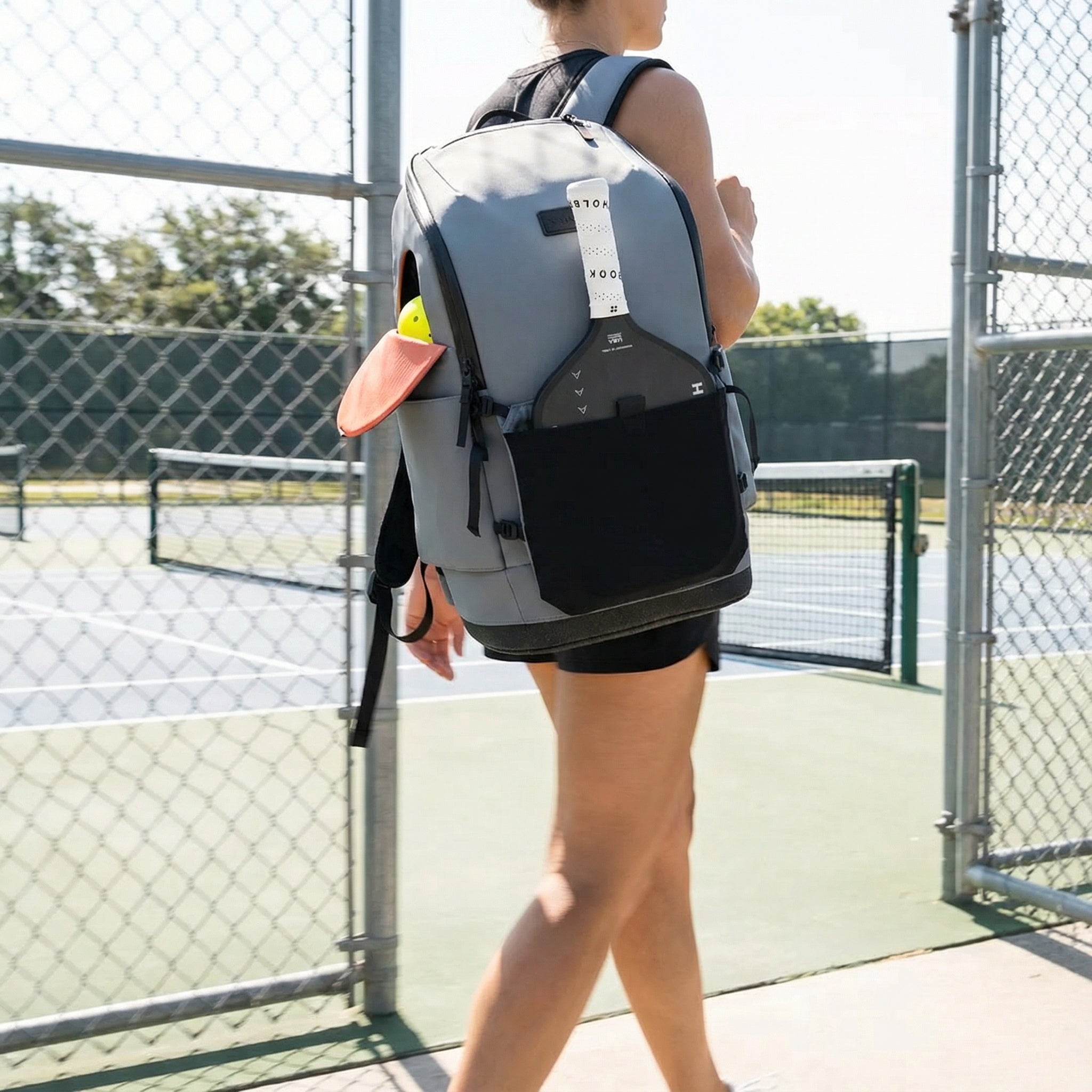
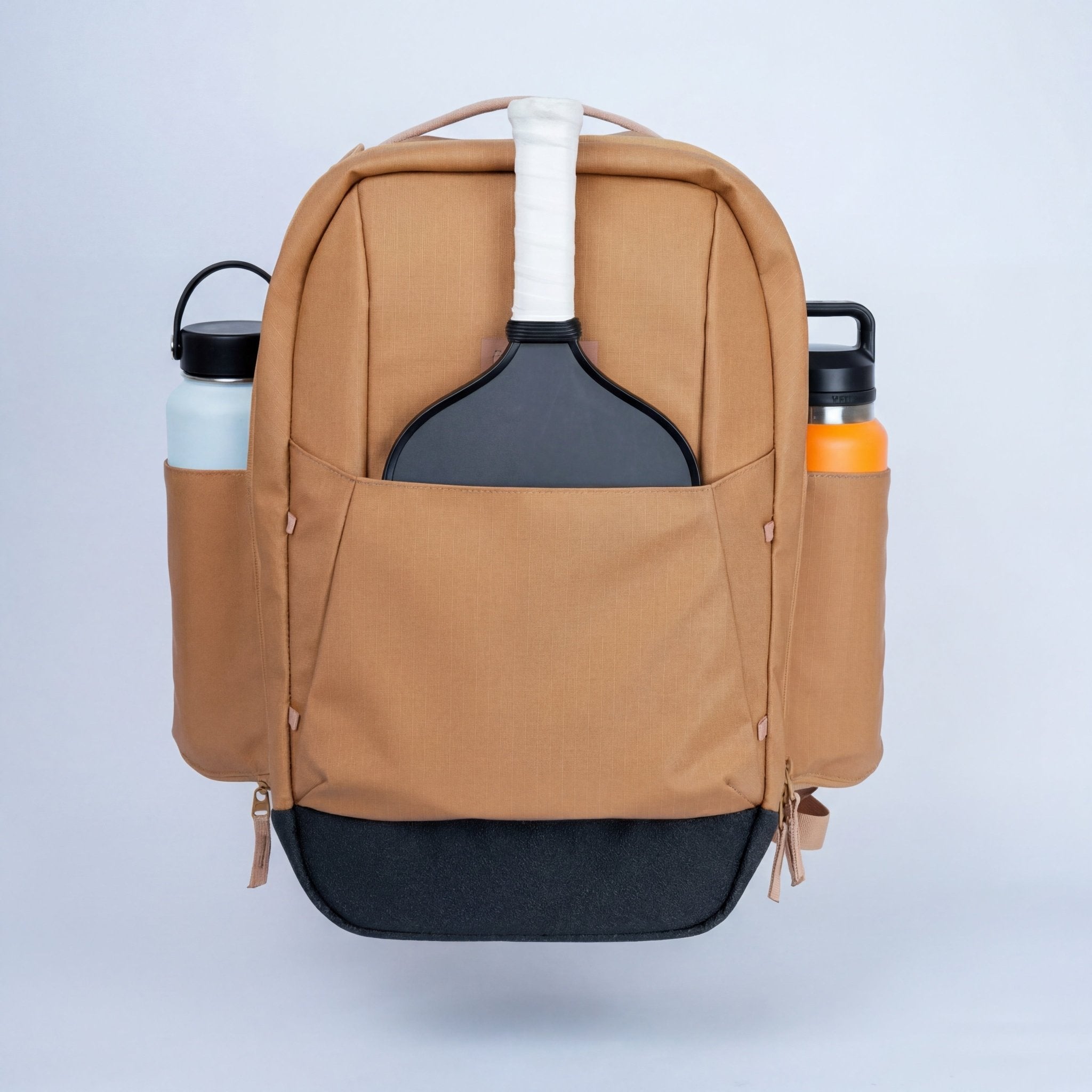
The right gear doesn't make you better overnight — but bad gear (running shoes, wrong paddle, no dedicated bag) adds unnecessary friction to every session. The FORWRD Court Caddy ($325) keeps paddles protected, balls separated, and a 15" laptop sleeve ready for days when you're coming from the office. Featured in The Dink and Pickleball Effect. Shop the Court Caddy →

FAQ
What is the most common mistake in pickleball?
The most common beginner mistake is trying to drive (hit hard) every ball instead of developing a soft game. At the recreational level, uncontrolled pace gives opponents easy balls to attack. Players who improve fastest are the ones who learn to dink early — the controlled, arcing soft shot that wins the kitchen-line battle most rec rallies are decided by.
Why do beginners keep hitting the ball into the net?
Usually two things: hitting from too low a contact point (letting the ball drop below net height before swinging), or using too much topspin without enough lift. Contact the ball at or above net height when possible, and think about the trajectory arc rather than just "hitting the ball over." Aim at a specific target spot in the opponent's court, not just clearing the net.
How do you stop popping the ball up in pickleball?
Popping up usually happens during dinking — an open paddle face and upward arm motion sends the ball high. The fix: keep the paddle face flat (not angled upward), use your legs to generate the lift for the arc, and keep the arm motion compact. Lock the wrist and think "punch" rather than "swing." Your paddle should move 6–10 inches maximum on a dink.
What is the hardest skill to learn in pickleball?
The third-shot drop — a softly arcing shot from the baseline that lands in the opponent's kitchen — is widely considered the hardest foundational skill. It requires generating a specific trajectory from a full-court distance while under pressure, with enough touch to land in a 14-foot-deep zone without popping up. Most players take 3–6 months of intentional practice to hit it reliably. Until then, a conservative drive or soft float achieves similar results.
Ready to upgrade? Shop the Court Caddy Pickleball Backpack — built with 500+ real players for the courts you actually play on.

Leave a comment
This site is protected by hCaptcha and the hCaptcha Privacy Policy and Terms of Service apply.