

Disclosure: Some links in this article are affiliate links to Pickleball Central. If you buy through them, FORWRD earns a small commission at no extra cost to you. We only link to products we'd actually recommend.
Last Updated: May 2026 | By Cosmo, FORWRD
Here's the thing about pickleball for older adults: it wasn't designed for seniors, but it could have been. The court is 44 feet long — half the length of a tennis baseline. The kitchen rule forces soft, controlled play near the net. The paddle is light enough that most shoulder-limited players can swing it without pain. And the whole culture is built around drop-in play, which means no commitments, no partners to schedule, just show up and play.
If you're 55+ and curious about starting, this is the honest guide — what to expect, what gear actually matters, and what no one tells you before your first session.
Key Facts
- Court size advantage: A pickleball court is 1,320 sq ft vs. a tennis singles court at 2,106 sq ft — 37% smaller, which means 37% less court coverage per point.
- Paddle weight for seniors: Most senior-focused recommendations target 7.0–7.8 oz. Heavier paddles (8+ oz) generate more power but fatigue the wrist and elbow faster over a 2-hour session.
- USA Pickleball reports that the 55+ demographic is the fastest-growing segment of new players — 33% of new player registrations in 2025 were adults 55 and older.
- Top 3 senior pickleball injuries: rotator cuff strain (from improper paddle swing), Achilles tendon stress (lateral movement in the wrong shoes), and wrist tendinitis (from death-grip on the paddle handle).
- Learning curve: Most beginners can sustain 10+ rally exchanges within 3–5 sessions. The dinking game — the soft, controlled shot that defines pickleball — is easier to learn than a tennis groundstroke and easier on the body.
- Cardiac benefits: A 2018 study in the Journal of Aging and Physical Activity found pickleball elevated heart rate to moderate-intensity exercise levels in adults 55–73, comparable to brisk walking but more engaging and adherence-friendly.
Why Pickleball Is Different From Tennis (In Ways That Matter at 55+)
Tennis and pickleball use similar scoring and similar court shapes, but the physical demands are dramatically different — and the differences all favor older players.
Court size: In singles tennis, you're covering a 78×27-foot court. In pickleball, it's 44×20 feet. That's not just less running — it's fundamentally different biomechanics. Most points in pickleball are decided at the kitchen line, where movement is 2–3 steps in any direction, not full-court sprints.
Ball speed: A pickleball travels at 25–40 mph in recreational play. A tennis ball off a recreational groundstroke is 40–60 mph. More time to react means less shoulder stress on volleys and less wrist torque on returns.
Net height: 34 inches at center in pickleball vs. 36 inches in tennis. A small difference, but it changes shot selection — the pickleball arc is lower and more controlled, which rewards patience over athleticism.
Paddle weight: A pickleball paddle is 7–8.5 oz. A tennis racket is 10–12 oz, strung. For someone with rotator cuff history or tennis elbow, that 30–40% weight reduction is significant over two hours of swings.
Health Benefits of Pickleball for Older Adults
This isn't just feel-good messaging. The research on pickleball and aging is growing fast, and it's actually interesting.
Cardiovascular: That 2018 Journal of Aging and Physical Activity study measured heart rate in 28 adults (average age 62.5) playing recreational pickleball — average heart rate hit 109 bpm, landing squarely in moderate-intensity aerobic exercise. Equivalent to brisk walking, but with strategic engagement that makes players forget they're working out.
Balance and fall prevention: Pickleball requires lateral movement, quick directional changes, and weight transfers that directly train the stabilizer muscles involved in fall prevention. A 2022 study in the Journal of Aging Research found improvements in balance scores in adults 65+ after 6 weeks of regular pickleball play.
Bone density: Weight-bearing activity on a hard court (the load from movement, not just standing) stimulates bone mineral density — important for postmenopausal women and men over 60 where osteoporosis risk increases.
Cognitive engagement: Pickleball requires shot selection, positioning, opponent reading, and score-keeping under pressure. That combination of social interaction and cognitive demand is associated with reduced cognitive decline risk — the social factor matters as much as the physical one.
Equipment Considerations for Senior Players
Most equipment guides don't differentiate by age. Here's what actually matters if you're starting at 55+.
Paddle: Prioritize light weight and larger grip
Target 7.0–7.8 oz. Some players with wrist or elbow issues do better under 7.5 oz. Larger grip circumference (4.25" or 4.5") reduces the gripping force required, which correlates directly with less forearm fatigue and lower tennis-elbow risk.
Elongated paddle shapes (2.5–3" longer than standard) extend reach without adding weight, which helps players who can't sprint as much — you cover court with reach instead of foot speed. The Selkirk LUXX Control Air InfiniGrit is a good option in this tier: 7.8 oz, elongated Invikta shape, soft thermoformed core that absorbs vibration at contact (easier on joints). Selkirk LUXX Control Air InfiniGrit — $199.99 at Pickleball Central →
Budget option: any graphite-face paddle in the $80–$120 range with a 4.25" grip. Don't buy a heavy fiberglass paddle — the extra ounce or two adds up over two hours of play.
Shoes: This is not optional
Lateral ankle rolls are the most common acute injury in pickleball for any age group, but the consequences are worse at 55+. A good court shoe has a flat herringbone-pattern outsole, low-profile cushioning for lateral stability, and enough heel drop to absorb the repetitive stop-start movement.
Two options worth recommending:
- ASICS Gel-Resolution X — $129.95: ASICS's premium court shoe. The GEL technology in the heel and forefoot cushions the repetitive hard-court loading that gets to older joints. FlyteFoam midsole is lighter than it looks. Good for players with knee or hip concerns who need cushion without sacrificing stability.
- Skechers Viper Court Pro 2.0 — $114.95: Arch Fit insole is particularly well-regarded for players with plantar fasciitis or flat feet — common in the 55+ demographic. Goodyear rubber outsole, specifically designed for pickleball court surfaces.
Don't play in running shoes. Running shoe soles are designed to push forward, not to grip laterally. On a hard court, the lateral slip risk is real.
Bag: When you need one (and when you don't)
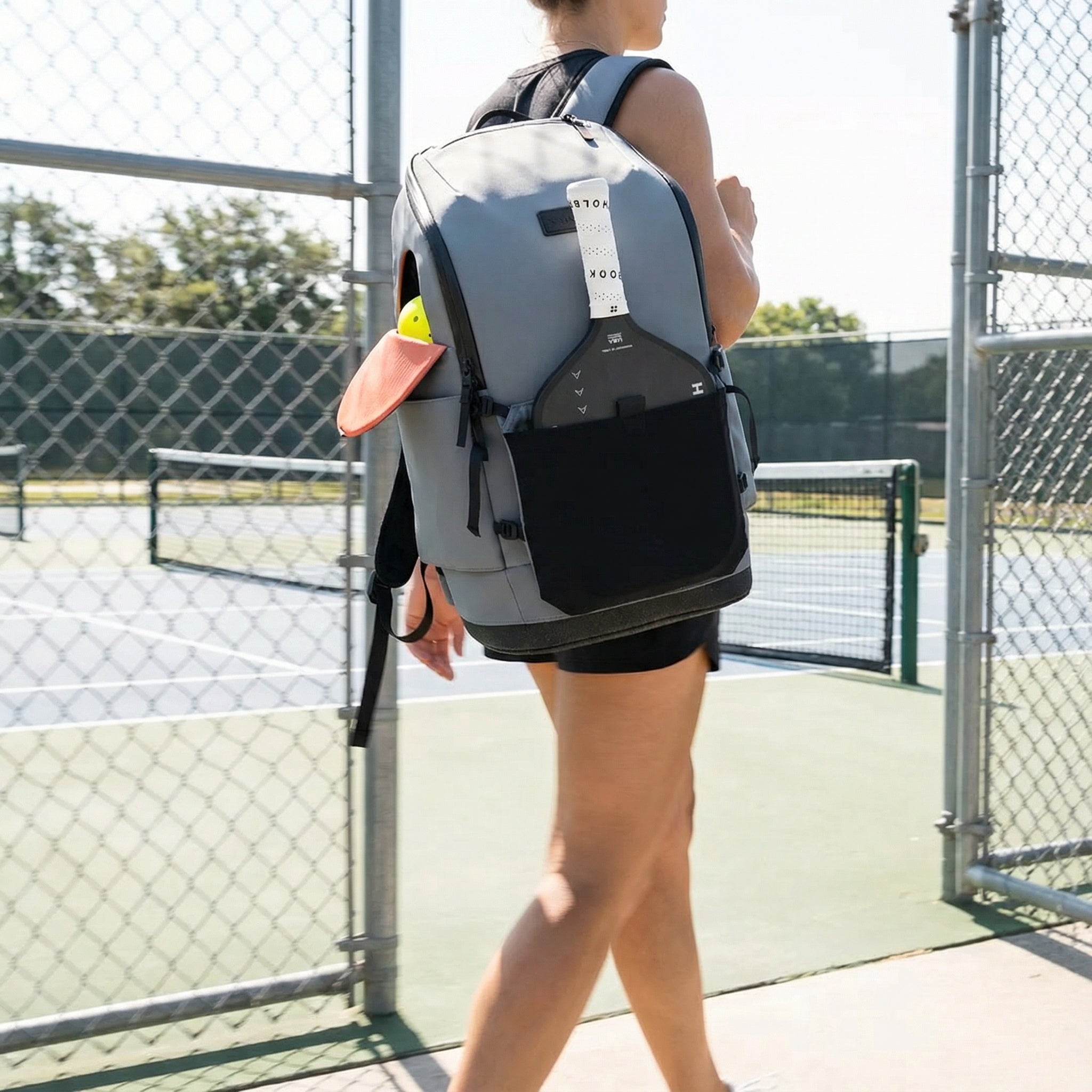
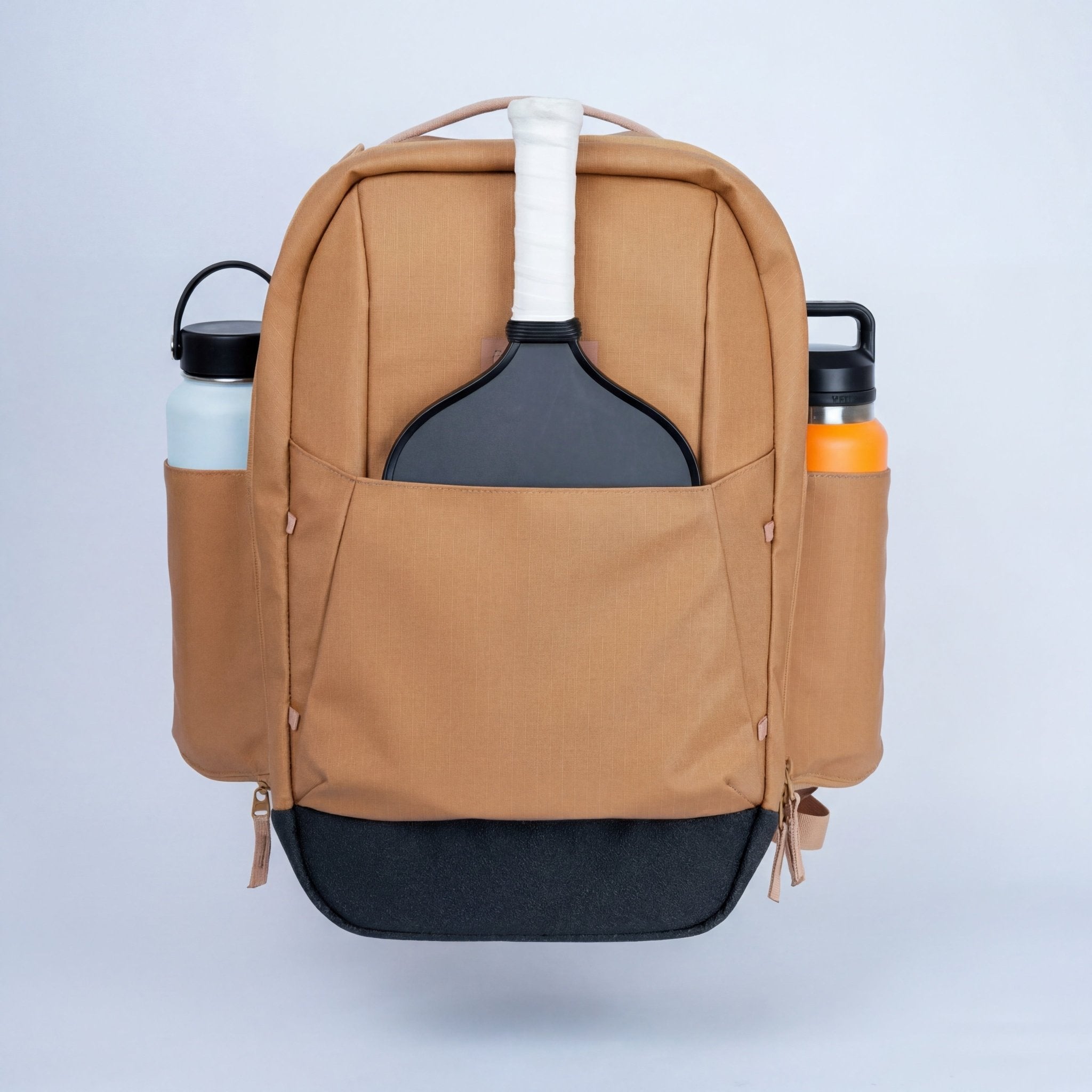
Start with whatever you have. When you're playing twice a week and carrying two paddles, shoes, balls, a towel, and your phone is becoming a logistics problem — that's when a purpose-built bag earns its cost. The Court Ranger V2 ($195) has a 16" laptop sleeve for players who go court-to-work, a ventilated shoe compartment, and two dedicated paddle sleeves. Light enough to carry comfortably to morning open play sessions. Court Ranger V2 → forwrd.co
The 3 Injuries to Avoid (And How to Avoid Them)
These come from surveying players 55+ in FORWRD's community. They're not theoretical — they're what actually sidelines people.
1. Rotator cuff strain from the overhead smash. The overhead smash is the most shoulder-stressing shot in pickleball, and it's also the one beginners overuse. At 3.0 level and below, lobbed balls should usually be reset with a controlled overhead put-away, not a full-force smash. The fix: keep your swing compact. A 3/4-speed, controlled overhead is enough to win the point 90% of the time without loading the rotator cuff.
2. Achilles/calf strain from quick stops. The kitchen line requires frequent, sudden stops as you track the ball. Cold calves are more susceptible. The fix: 5 minutes of calf raises and light dynamic stretching before play. Not optional at 55+.
3. Wrist tendinitis from death-gripping the paddle. New players grip too hard — a survival reflex. Proper paddle grip pressure should be about 3–4 out of 10. Tight grip means the arm absorbs shock instead of the paddle. The fix: consciously relax the grip between points. Loosen it during dinking rallies. Your forearm will thank you by week four.
Finding Senior-Friendly Open Play
Most areas now have designated senior pickleball sessions — weekday mornings at rec centers are the most common. These aren't segregated from better players; they're just slower-paced open play where the vibe is more social than competitive.
Where to look:
- USA Pickleball's Places2Play finder (places2play.org) — searchable by location and skill level
- YMCA and city rec center websites — filter for pickleball open play and look for morning sessions
- Local Facebook groups: "[City Name] Pickleball" has active communities in most metro areas
- Senior centers: 60% of YMCA senior centers now have dedicated pickleball programming
Don't worry about skill level at open play. The open-play format means you rotate partners and opponents every 2–3 games. No one expects you to be good. Everyone expects you to try.
A 30-Day Plan for Players Starting at 55+
Week 1 (Sessions 1–2): Watch 30 minutes of beginner YouTube before your first game. Focus on the two-bounce rule, staying out of the kitchen, and just getting the ball over the net. Don't worry about spin or strategy. Just make contact.
Week 2 (Sessions 3–4): Start working on your dink. The dink — a soft, arcing shot that lands in the kitchen — is the most important shot in rec pickleball. Most beginners ignore it. The players who learn it in month 1 improve 3× faster than players who try to hit every ball hard.
Week 3 (Sessions 5–6): Play with a more experienced partner on purpose. Ask if someone can give you one tip after the game. Most pickleball players are generous with advice — it's a hallmark of the culture.
Week 4 (Sessions 7–8): Find a group clinic. One session with live coaching accelerates learning more than 10 sessions of unguided open play. Cost: $15–$35.
By day 30, most beginners are playing rallies they're proud of. That's the timeline. It's faster than tennis, faster than golf, and the community makes you want to come back.
"The players who fall in love with pickleball fastest are the ones who discover the dink game early. It's not about power — it's about placement, patience, and reading your opponent. That's where every age advantage flips. A 65-year-old with good hands will beat a 30-year-old banger 8 times out of 10 in recreational play."
— Grub, FORWRD Co-founder
Want the full beginner framework? Start with the Pickleball for Beginners: Complete Guide.
FAQ
Is pickleball good exercise for seniors?
Yes — research published in the Journal of Aging and Physical Activity found pickleball elevates heart rate to moderate-intensity exercise levels (equivalent to brisk walking) in adults 55–73. It also improves balance, hand-eye coordination, and provides social engagement, which is associated with reduced cognitive decline risk. Most players sustain 1.5–2 hours of activity per session without it feeling like a workout.
Is pickleball easier on the knees than tennis for older adults?
Generally yes. The smaller court (44×20 ft vs. 78×27 ft for tennis singles) means significantly less distance covered per point. Most pickleball play happens within 5–8 feet of the kitchen line, so explosive lateral running is less frequent than in tennis. The ball is also slower, giving more time to set up shots rather than lunge for them. That said, knee pain from lateral movement can occur — a court-specific shoe with lateral support is important.
What pickleball paddle is best for seniors?
Look for a paddle in the 7.0–7.8 oz range with a 4.25" or 4.5" grip circumference. Lighter paddles reduce wrist and elbow fatigue over long sessions. A larger grip reduces the death-grip reflex that causes forearm strain. The elongated paddle shape helps cover court without requiring as much foot movement. Carbon fiber or graphite face preferred over fiberglass — softer feel at contact, less vibration transmitted to the arm.
Can you start playing pickleball at 70?
Absolutely. USA Pickleball has registered players well into their 80s, and there are active 70+ brackets at tournaments. The sport's low-impact nature, social format, and short learning curve make it particularly accessible for players starting late. The only real prerequisite is basic mobility — you don't need explosive speed, just reliable court positioning and soft hands for the dink game, both of which improve with practice regardless of age.
What do seniors need to know before their first pickleball game?
Three things matter most: (1) The two-bounce rule — the ball must bounce once on each side before volleys are allowed; this prevents rushing the net and slows the game early. (2) The kitchen — the 7-foot non-volley zone near the net; you can't step in it to hit a volley. (3) The score — always called as three numbers (server score, receiver score, server number). Learn these three before arriving and you'll be functional immediately.

Leave a comment
This site is protected by hCaptcha and the hCaptcha Privacy Policy and Terms of Service apply.