

Disclosure: Some links in this article are affiliate links to Pickleball Central. If you buy through them, FORWRD earns a small commission at no extra cost to you. We only link to products we'd actually recommend.
Last Updated: May 2026 | By Cosmo, FORWRD
Before your first game, someone's probably told you pickleball is "cheap to start." They're mostly right — but the real answer depends on what version of the sport you're playing. Casual twice-a-month rec player? You can get started for under $100. Three-times-a-week player who takes it seriously? Budget $300–$500 to do it right without regrets.
Here's the honest breakdown, cost by cost.
Key Facts
- Starter cost: A beginner setup (paddle + balls + shoes) runs $150–$350 depending on shoe choice.
- Paddle price range: $30 (Amazon junk) to $299.95 (JOOLA Perseus Pro V Ben Johns) — but the sweet spot for most players is $80–$130.
- Court fees: Most public parks charge nothing. Rec centers typically run $3–$10/session or $30–$80/month. Private clubs: $50–$200/month.
- Ball lifespan: A quality outdoor ball ($4–$5 each) typically lasts 15–40 games depending on court surface and temperature.
- vs. Tennis startup cost: Pickleball wins — smaller court means no expensive court rental in most markets, and a decent paddle costs less than a decent tennis racket.
- Biggest cost surprise: Shoes. Players who skip court shoes end up with knee or ankle pain faster, or they slip. Budget for them from day one.
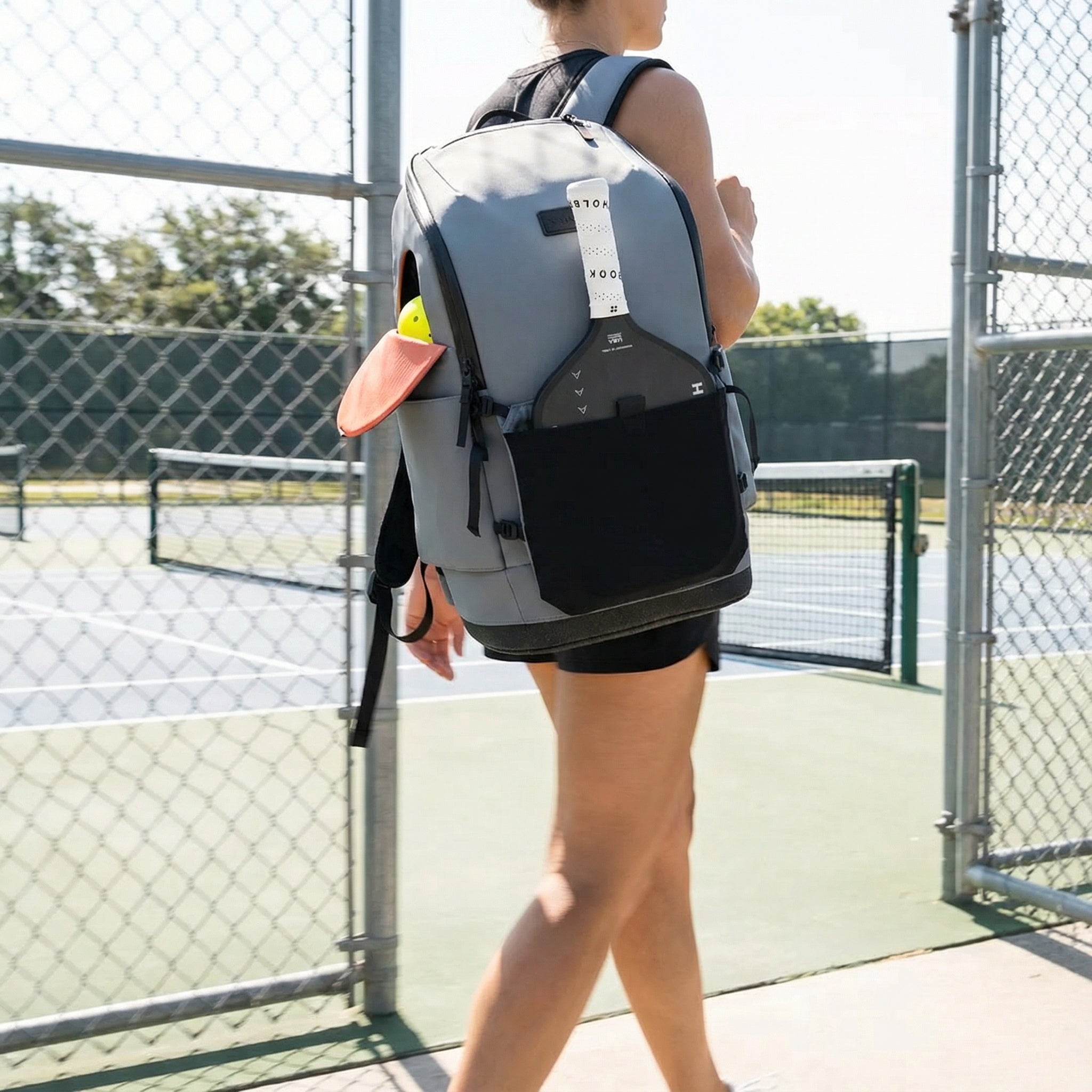
- Bag timing: You don't need a bag until you're playing 2+ times per week or need to carry 2+ paddles, balls, a towel, and a water bottle without a grocery bag situation.
Paddles: Budget vs. Mid-Range vs. Premium
This is where most new players either over-invest or under-invest. Here's what you actually get at each tier.
Budget ($30–$70): Just enough to learn
Wood or fiberglass face, heavier (8.5–9 oz), smaller sweet spot. Fine for your first three sessions. Not fine for six months in — the lack of control becomes the limitation, not your skills. If someone hands you a paddle for free at open play, use it. Don't buy one at this tier intentionally unless you're genuinely unsure if you'll stick with the sport.
These are widely available on Amazon. Not linked here — quality varies wildly and there's no good single recommendation at this price point on PBC.
Mid-Range ($80–$150): Where most rec players should start
Graphite or carbon fiber face, 7.5–8.2 oz, real spin and control. This is the sweet spot. You won't outgrow it for a year or two. Many players at the 3.5–4.0 level play at this price point permanently. Browse Pickleball Central's mid-range paddles →
Premium ($150–$300+): For players who know exactly what they want
Thermoformed construction, raw carbon fiber face, engineered core thickness (14mm or 16mm). The difference is real and measurable — but you have to be at a skill level where you'd notice it. Buying a pro-grade paddle at 3.0 is like buying racing tires for a driver who learned the road last month.
Two paddles worth knowing at this tier:
- Selkirk LUXX Control Air InfiniGrit Epic — $199.99: Their InfiniGrit surface texture generates noticeably more spin than standard carbon fiber. Best for kitchen-game players who dink a lot.
- JOOLA Perseus Pro V Ben Johns 16mm — $299.95: Ben Johns's actual paddle. 16mm core, thermoformed construction, made for two-handed backhand players. If you're at the 4.0+ level and know your game, this is it.
Bottom line on paddles: Start with $80–$130. Upgrade when your skills outrun your gear, not before.
Balls: Indoor vs. Outdoor, and How Long They Last
Balls are not a major expense — until you don't buy the right ones and they crack after five games.
Outdoor balls have 40 holes and are made harder to handle wind. Indoor balls have 26 holes and are softer for gym surfaces. Don't mix them — a soft indoor ball in 90°F heat on concrete cracks fast.
Expect to pay $4–$5 per outdoor ball in bulk. Franklin X-40s run $5 each and are the most-played outdoor ball in amateur play. A pack of 3 usually runs $12–$15. At two sessions per week, one ball lasts 4–8 weeks on average.
Monthly ball cost: $5–$15, depending on how often you play and whether your partners bring their own.
Court Shoes: Don't Skip This
This is the cost new players most often skip, and the one they most regret skipping. Running shoes have rounded soles designed for forward motion. Pickleball involves constant lateral cuts, quick stops, and pushing off sideways. Running shoes on a hard court = rolled ankles, knee strain, and slipping on dusty indoor gym floors.
You don't need the most expensive pair. You need a real court shoe with a flat, herringbone-pattern outsole.
Two options at different price points:
- K-Swiss Express Light — $115: Lightest court shoe in this price range. Good lateral support for players who value quick movement over maximum cushion.
- ASICS Gel-Resolution X — $129.95: ASICS's premium court shoe. Better cushion for players over 40 or anyone with knee concerns. Durable outsole holds up on outdoor hard courts for 6+ months of regular play.
Shoe cost: $80–$180, one-time. Replaces every 6–18 months depending on frequency and surface.
Bags: When You Actually Need One
Day one? Grab a reusable grocery bag. Seriously. No one needs a $200 bag on their first week.
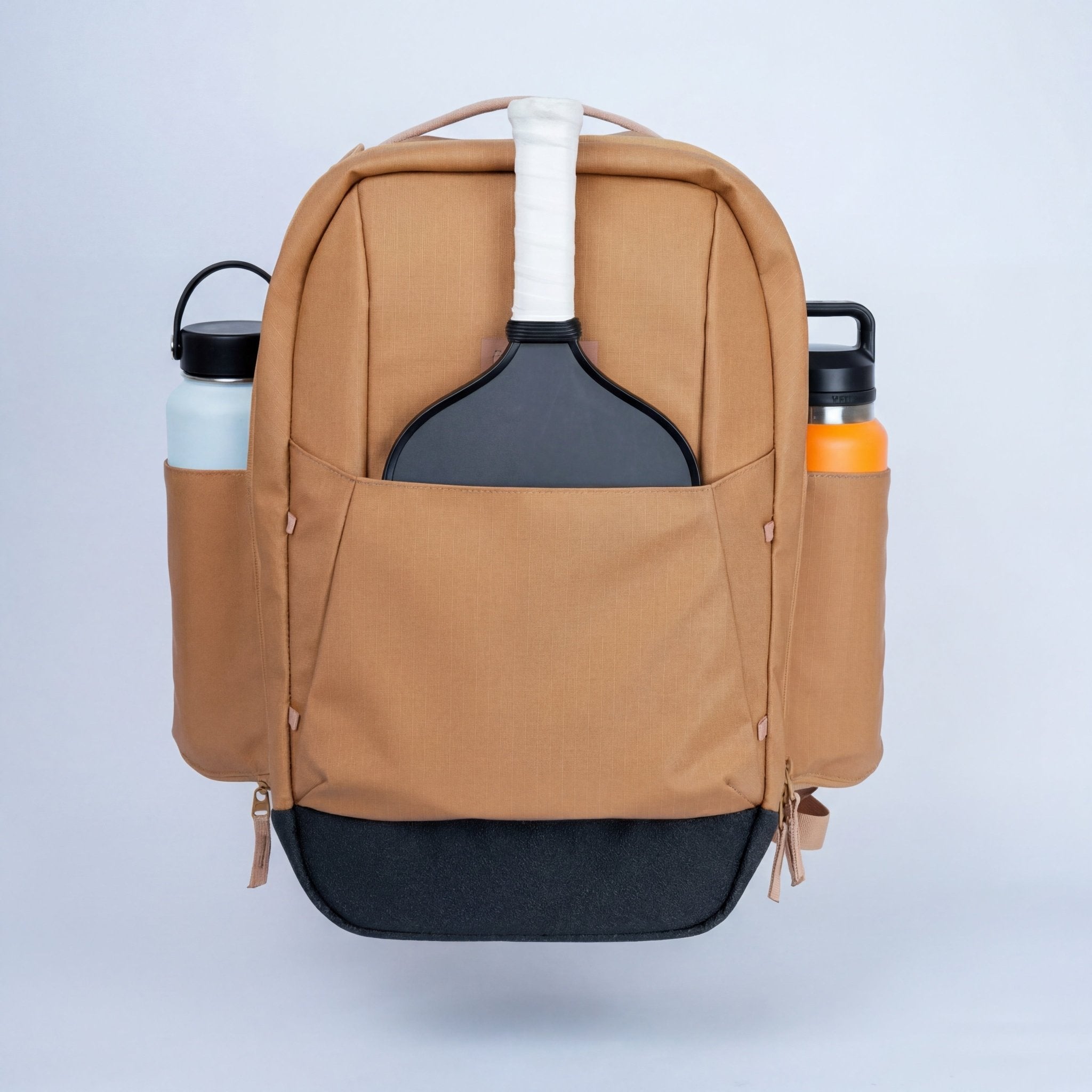
At two or more sessions per week, carrying two paddles, three balls, court shoes, a towel, water, and snacks in a grocery bag gets old fast. This is when a purpose-built bag earns its cost.
Our Court Ranger V2 ($195) was designed for exactly this: two dedicated paddle sleeves, a ventilated shoe compartment, a 16" laptop sleeve for players who commute from work to court, and YKK AquaGuard zippers that hold up in rain and humidity. It's the bag that replaces the grocery bag without making you look like you're going to a tennis tournament.
Court Ranger V2 — $195 → forwrd.co
If you want maximum protection and have more to carry (4 paddles, laptop, extra layers), the Court Caddy ($325) is the step up — it has a 15" padded laptop sleeve and a lifetime warranty.
Court Fees: The Big Variable
This is where pickleball's actual cost advantage over tennis shows up most clearly.
- Public parks: Free at most locations. USA Pickleball's court finder lists 10,000+ public courts. No reservation required at many.
- Rec center drop-in: $3–$10 per session, or $30–$80/month for unlimited access. Most YMCA and city rec center memberships include pickleball.
- Private pickleball clubs: $50–$200/month depending on market. Worth it if you want guaranteed court time, lessons, and a competitive community.
- Indoor dedicated facilities: $10–$20 per session, or $80–$150/month. Growing fast in cold-weather markets.
For context: a public tennis court with lighting runs $15–$25/hr in most cities. Pickleball courts at public parks are free. The sport's demographic growth is driven in part by this exact cost gap.
Lessons: YouTube vs. Clinics vs. Private Instruction
The cheapest way to improve is free — YouTube has legitimate teaching from 4.5+ and pro-level players. Channels from pros like Kyle Yates and Ben Johns's official content cover most beginner fundamentals. Budget: $0.
Group clinics ($15–$40 per session) give you live feedback and drills with 6–12 players. Worth doing once a month when you're in your first six months. Private instruction ($60–$120/hour) accelerates improvement dramatically but isn't necessary until you're competing seriously or hitting a specific ceiling.
Is Pickleball Cheaper Than Tennis?
For startup cost: yes, significantly. A playable pickleball setup costs $150–$350. A playable tennis setup (racket + strings + balls + shoes + court time) costs $250–$600 before you've hit your first ball in a real setting.
For ongoing cost: depends on your market. In cities with free public pickleball courts, pickleball is dramatically cheaper. In markets where dedicated facilities charge per session, the gap narrows. Balls are cheaper per unit in tennis (a can of 3 for $4–$5 vs. $4–$5 per pickleball), but pickleballs last longer than tennis balls.
The bigger gap is cultural: pickleball has a strong drop-in, open-play culture. You can show up solo and immediately find games. Tennis requires booking courts and coordinating partners. That time cost adds up.
"We built FORWRD around what players actually need at each stage of the game. A new player doesn't need a $300 bag — they need to know if they love the sport first. The bag comes naturally once you're hooked. We've talked to 500+ players and the ones who quit were usually the ones who over-invested too early and felt like they had to justify the spend."
— Topher Lake, FORWRD Co-founder
Total Cost by Player Type
| Player Type | Paddle | Shoes | Balls | Bag | Court Fees (monthly) | Total First Year |
|---|---|---|---|---|---|---|
| Try-it-once player | $0 (borrow) | $0 (running shoes) | $0 (venue provides) | $0 | $0 | $0–$50 |
| Casual (1–2×/month) | $60–$100 | $80–$130 | $20/yr | $0 | $0–$30 | $160–$280 |
| Regular (2–3×/week) | $100–$150 | $100–$160 | $50/yr | $195 | $30–$80 | $800–$1,400/yr |
| Competitive (tournaments) | $150–$300 | $130–$180 | $100/yr | $195–$325 | $80–$200 | $1,800–$3,500/yr |
New to the sport and want the full beginner roadmap? Read: Pickleball for Beginners: The Complete Guide.
FAQ
How much does a pickleball paddle cost for beginners?
A beginner paddle that won't frustrate you costs $60–$130. Under $60, you're getting heavy wood or low-grade fiberglass that makes learning harder. Over $130, you're buying performance benefits you can't use yet. The $80–$130 graphite/carbon fiber range is the sweet spot for players in their first 6–12 months.
Are pickleball courts free to use?
Most public park courts are free. The USA Pickleball court finder lists 10,000+ public courts, and the majority charge nothing. Rec centers typically charge $3–$10/session or offer monthly memberships that include court access. Private clubs run $50–$200/month. Many players never pay court fees at all.
Do I need to buy my own pickleball balls?
Not immediately. Open play sessions usually have balls. But once you're playing regularly, owning 3–6 balls is practical — they wear out, they get lost, and having your own means you're not dependent on whoever shows up. A quality 3-pack runs $12–$18. Budget $30–$60/year for balls once you're playing twice a week or more.
Is pickleball cheaper than tennis?
For startup cost, yes — a playable pickleball setup runs $150–$350 vs. $250–$600 for tennis. Court fees are the biggest difference: public pickleball courts are usually free, while tennis courts often charge $15–$25/hour. Ongoing costs are comparable at the recreational level, but pickleball's free-court culture makes it consistently cheaper in practice.
How much does it cost to build a pickleball court at home?
A basic home court (temporary lines on existing concrete or asphalt) costs $200–$500 — just paint, tape, and a portable net ($80–$150). A dedicated permanent court with proper surfacing, net posts, and fencing runs $15,000–$40,000 depending on size, location, and whether you're converting an existing space or building from scratch.
The Bottom Line
Pickleball is genuinely affordable to start — $150–$350 gets you everything you need for your first few months. The cost creep happens naturally as you upgrade gear when your game demands it. Don't skip the shoes. Don't over-buy the paddle. Get the bag when carrying your gear in a grocery bag starts to feel embarrassing.
Ready to dig deeper into gear? Read our full beginner's guide for recommendations on every equipment category.

Leave a comment
This site is protected by hCaptcha and the hCaptcha Privacy Policy and Terms of Service apply.