

Last updated: August 2026
Your line call only counts if your partner agrees. That's not a gentleman's agreement — it's rule 6.C.7 of the 2026 USA Pickleball official rulebook. If one partner calls a ball out and the other partner has any uncertainty, the ball is automatically in. No vote, no replay, no negotiation. In.
Most recreational players don't know this rule exists. That gap is where 90% of line call disputes actually begin — not from bad sportsmanship, but from not knowing what the rulebook actually says. This guide covers the 2026 USAPA rules on line calls, five real-court scenarios with the correct ruling for each, and the actual words to use when a dispute gets tense. No vague "call what you see" advice — specific answers to specific situations.
The Official Rule (What USA Pickleball Actually Says in 2026)
The core structure is simple: players are responsible for making line calls on their side of the net. Your opponents' shots land on your side — you call them. Everything else is downstream from that.
Three specific provisions from the USA Pickleball 2026 official rulebook every player needs to know:
1. Benefit of the doubt belongs to the hitter. If you're not certain a ball landed out, you call it in. Not replaying the point — in. The rulebook is unambiguous: a ball should only be called out when the player is fully certain. Doubt resolves in favor of the hitter. Always.
2. Calls must be immediate. A line call has to happen before you return the shot — or before the ball bounces twice on your side, whichever comes first. Call it out after the rally ends? That call doesn't count. Once you've played the ball back, you've accepted it as in.
3. Spectators can't make calls. Even if someone on the next court has a perfect angle and can see the ball clearly landed out — it doesn't matter. In non-officiated play, only the players on the court make line calls. Only a referee can change that.
These rules aren't new, but the 2026 rulebook provides cleaner language around timing and authority than earlier editions — which is why disputes still happen. Most players picked up line call habits informally. The rulebook learned from years of recreational friction. If you've ever wondered why understanding the official rulebook matters even in casual play, this is exactly why.
5 Real-Life Scenarios and the Right Call for Each
Here are five situations that come up constantly at recreational and club play — each with the exact correct answer per the 2026 USAPA rules.
Scenario 1: The close ball you're 70% sure was out
A ball lands near your baseline. Your gut says out — but you're not completely certain. You pause for a beat, then call "out."
The right call: In. Two things went wrong here. Uncertainty means in, full stop — that's the benefit-of-the-doubt rule. And the hesitation before calling raises the question of whether the call was truly immediate. Close balls that aren't certain are in, every time, without exception.
Scenario 2: You call out, your partner says "I'm not sure"
A ball drifts near the sideline. You call it out clearly. Your partner turns to you and says "I don't know, it seemed close to me."
The right call: In. The moment your partner expresses any doubt, your out call is void. This is the 2026 partner disagreement rule: both partners must agree on an out call for it to stand. One uncertain partner cancels the entire call. There's no majority vote between the two of you.
Scenario 3: The ball lands out, but you play it anyway — then try to call it out
A short return floats wide. You can see it's going to be out, but you swing at it anyway. Then you try to call it out after the point continues.
The right call: In. You returned the shot. That action accepted the ball as in. You can't un-play a ball and retroactively call it out. The line call window closes the moment you make contact.
Scenario 4: A spectator shouts "out!" on a ball nobody called
A ball travels toward your side. Before you or your partner can react, a spectator on the sideline — or a player on the adjacent court — shouts "out!" You stop playing, expecting the point to be over.
The right call: No call was made. Spectators have zero authority over line calls. If your team didn't call out before the ball bounced twice or before you played it, the ball is in. Don't stop for sideline noise.
Scenario 5: You're confident about your call, but opponents won't accept it
A ball lands four inches outside your sideline — clearly out. You call it. Your opponents are convinced it was good and keep arguing.
The right call: Your call stands. In non-officiated play, you have authority over line calls on your side of the net. Opponents can disagree — that's within the bounds of reasonable play — but they can't override a call on your side. If the dispute genuinely can't be resolved, offering to replay the point is the gracious option. But you're not required to.
When Your Partner Disagrees With You (The 2026 Partner Rule Explained)
This is the rule that trips up more intermediate players than anything else in the line-call section of the rulebook.
The logic behind it is clean. In doubles, you're a team — if one partner sees the ball land out and calls it, but the other partner isn't sure, those two facts can't simultaneously be true. Since doubt resolves in favor of the hitter, internal team disagreement means the ball is in.
What this looks like in practice: your partner shouts "out!" You're already moving toward the ball and you're genuinely not sure where it landed. Don't argue about it — say "I'm not certain," and the ball is automatically in. You haven't overruled your partner. You've applied the rule correctly.
"I've watched two 4.5 players argue for three minutes over a call that had a completely clear rulebook answer — one partner called it out, the other wasn't certain, so by the rules it was automatically in. Neither of them knew the partner disagreement rule existed. That's three minutes of court tension for a preventable situation."
— Grub, FORWRD co-founder
Where players go wrong: treating a partner's out call as final and untouchable, even when the other partner has genuine uncertainty. Some players get territorial — "I'm the one who saw it, trust me." The rulebook doesn't support that position. Your partner's doubt voids the call, full stop.
The fix is learning this rule before you're in the middle of a match, not during. It's also worth sharing it with your regular doubles partners before your next session — a 30-second conversation in the parking lot eliminates most partner-call disputes before they happen. Check our guide to the double bounce rule for a similar example of a rulebook provision most players learn wrong.
How to Dispute a Line Call Without Being That Person
At some point, your opponents will make a call you genuinely believe is wrong. Here's how to handle it without becoming the player everyone dreads sharing a court with.
Start with a direct question, not an accusation. "Hey, could you double-check that one?" lands very differently than "That was clearly in." You're asking for an honest reconsideration. Most good-faith players will revisit a call if asked calmly — and if they hold the call after genuinely reconsidering, you can accept it and move on.
Acknowledge that close calls are hard. "Those sideline balls are genuinely tricky" validates the difficulty without conceding the point. It opens the door to replaying the point without either team feeling like they "lost." Only use this if you mean it — if the ball was a foot outside the line, don't pretend it was close.
Offer the replay. "Want to just replay it?" is a gracious resolution for both teams. You don't lose the argument by suggesting it — you signal that you'd rather play good pickleball than win a point through a dispute. Most recreational players will take the replay.
What not to say: "That's always how you call it." "Everyone else could see it was in." "I'll remember that for next time." None of those phrases resolve anything — they escalate. The goal is to keep playing, not to be right.
One honest note: recreational pickleball has no referees. The honor system depends on everyone making their best-faith call and accepting the outcome. Players who game that system usually find their reputation on local courts takes the hit, not their win-loss record. The game is better when everyone's playing it straight.
Gear for Players Who Play It Right
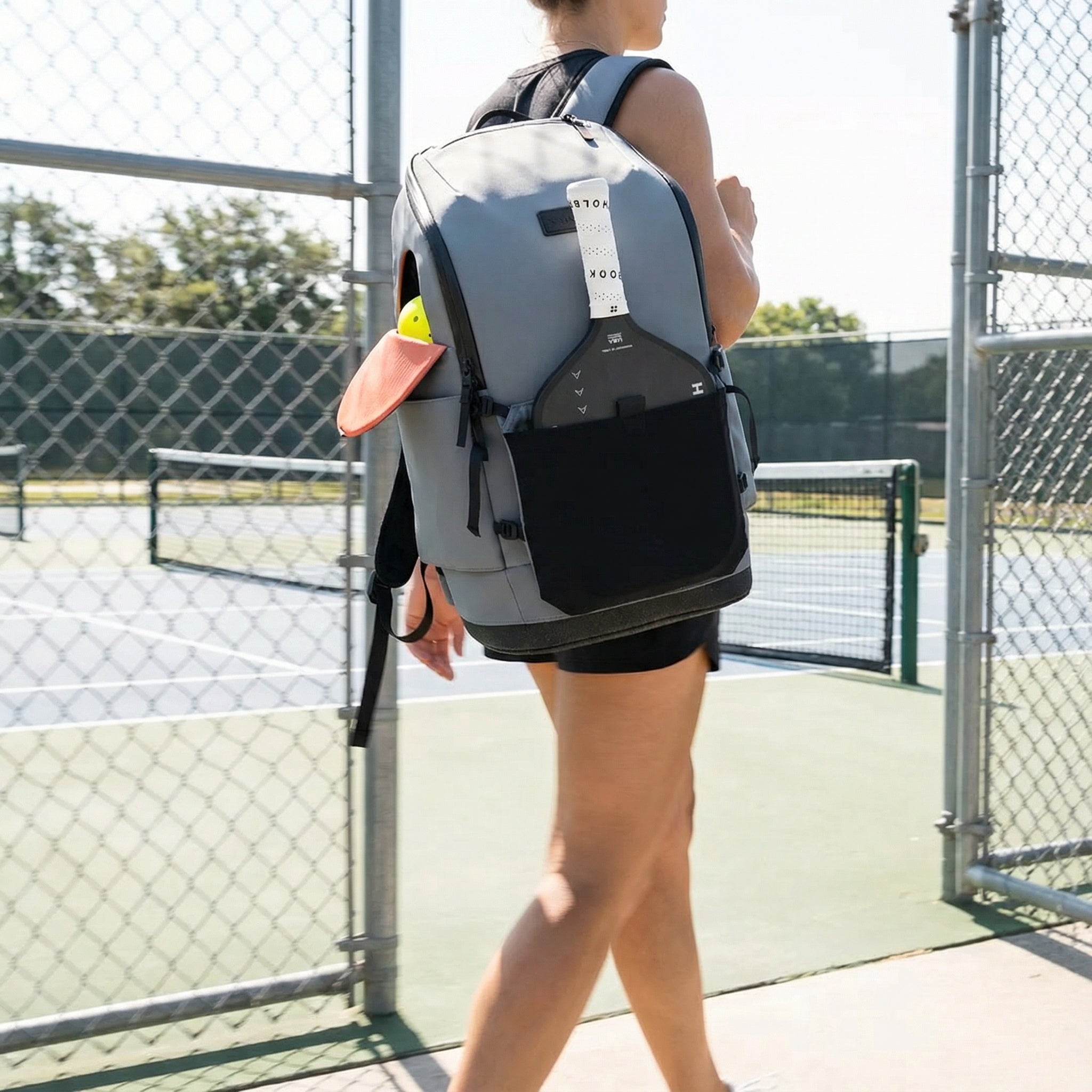
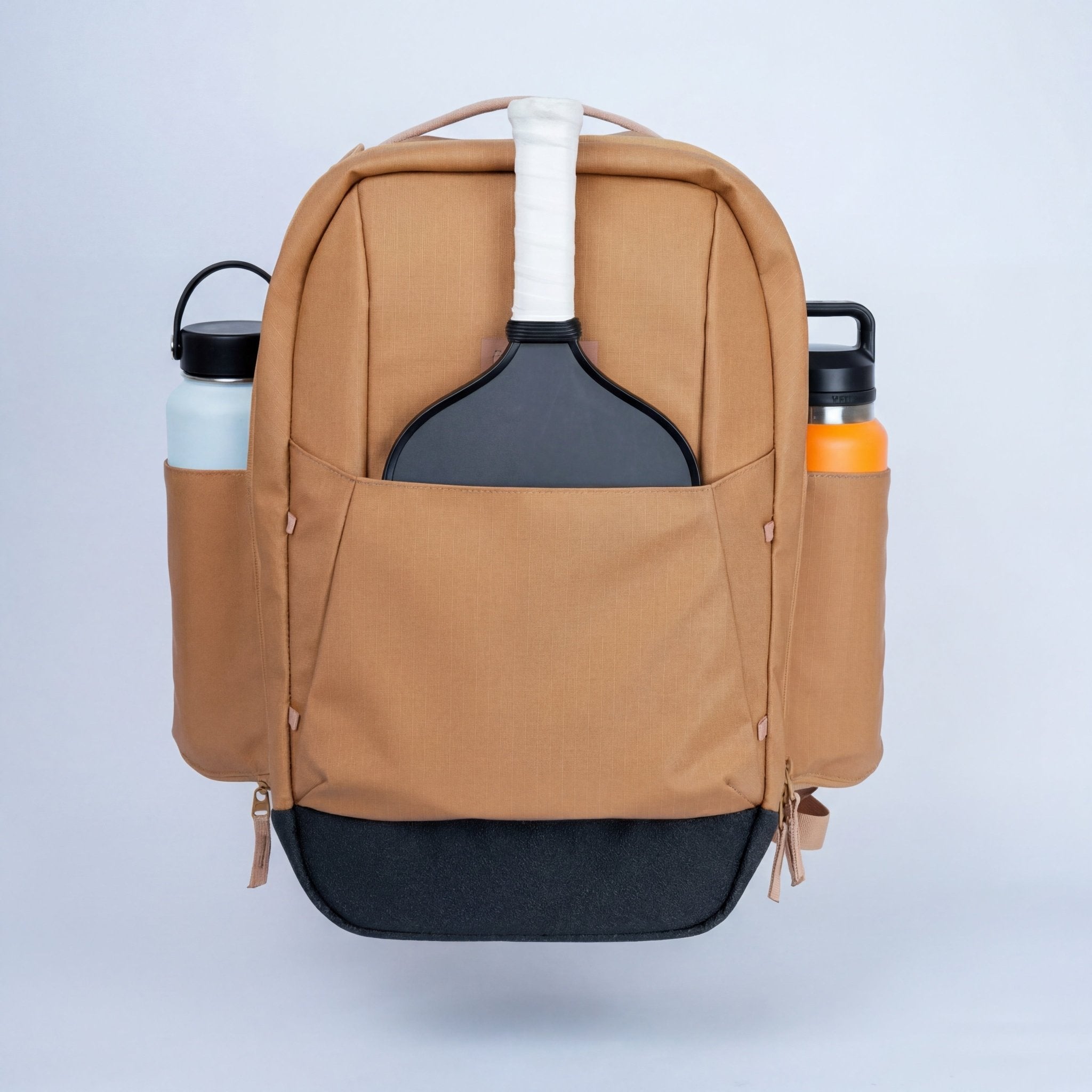
If you're the player who actually knows rule 6.C.7, you're probably also the player who shows up with organized gear, fresh balls, and a bag that doesn't dump everything on the court bench. The Court Caddy ($325) was built for exactly that player — modular paddle sleeve, 15" laptop compartment, YKK AquaGuard zippers. Featured in The Dink and designed with 500+ real players.
Our Pick: FORWRD Court Caddy — $325
Modular paddle sleeve holds 4 paddles protected. 15" padded laptop compartment. YKK AquaGuard zippers built for outdoor courts. Designed with 500+ real players. Also available: the Court Ranger V2 ($195) — same build quality, slightly smaller.
FAQ: Pickleball Line Call Etiquette 2026
What are the official pickleball rules for line calls?
Players call lines on their own side of the net. Calls must be immediate — before returning the ball or before it bounces twice. When in doubt, the ball is in. Spectators cannot make calls in non-officiated play. The 2026 USA Pickleball official rulebook documents all of these provisions.
What do you do when you disagree with a line call in pickleball?
In non-officiated play, the team making the call on their side has final authority. You can calmly ask them to reconsider, or offer to replay the point. What you can't do is override their call on their side of the net — even if you're certain the ball was in.
Can your partner overrule your line call in pickleball?
Yes — if your partner expresses any doubt about your out call, that doubt automatically makes the ball in. The 2026 rulebook requires both partners to agree on an out call for it to stand. One uncertain partner voids the call. This isn't overruling — it's how the rule is designed to work.
What happens when partners disagree on a line call in pickleball?
The ball is in. The 2026 USA Pickleball rulebook is explicit: if any partner of the calling team is not certain the ball was out, the ball is considered in. Benefit of the doubt always goes to the hitter. There is no mechanism for a partial or split call in doubles.
What are the 2026 rule changes for line calls in pickleball?
The 2026 USAPA rulebook provides clarified language on three areas: the partner disagreement rule (both partners must agree for an out call to stand), the timing requirement (calls must be made immediately, before returning the ball), and spectator authority (spectators cannot make line calls in recreational play).
If you're playing seriously enough to care about getting these calls right, the gear that keeps pace with that commitment matters too. The Court Ranger V2 ($195) is built for players who show up prepared — 16" laptop sleeve, YKK AquaGuard zippers, and a shoe compartment that doesn't leak onto your other gear.

Leave a comment
This site is protected by hCaptcha and the hCaptcha Privacy Policy and Terms of Service apply.