

Your Wrist Is Causing Most of Your Unforced Errors — Here's the Biomechanical Fix
At the 4.0–4.5 level, the single most common source of unforced errors isn't footwork, strategy, or fitness. It's an inconsistent paddle face angle — and almost all of that traces back to wrist position at the moment of contact, not the swing itself. Fix the wrist, fix the face angle, eliminate the errors.
Your paddle face angle at contact determines where the ball goes. A 2–3° deviation from optimal translates to 6–8 inches off target at the kitchen line. The wrist is the last joint in the kinetic chain before the paddle, so if it moves unpredictably, your shot trajectory moves with it — every single time.
Last updated: August 2026
Table of Contents
- Why Your Wrist Is Killing Your Consistency (The Biomechanics in Plain English)
- The Wrist Lock Framework: Forehand vs Backhand Set Points
- Paddle Angle Degrees: 45° for Topspin, Neutral for Dinks, Open for Resets
- The 3 Most Common Wrist Mistakes (and the Drill That Fixes Each)
- FAQ: Pickleball Wrist Position and Paddle Angle 2026
Why Your Wrist Is Killing Your Consistency (The Biomechanics in Plain English)
Here's the thing most recreational players don't realize: you can have perfect court positioning, read the ball early, and still mishit — because the wrist decided to do something at the last second.
The kinetic chain for any pickleball shot moves from your legs through your core, shoulder, elbow, wrist, and finally the paddle. Your legs and core generate power. Your shoulder and elbow direct the swing. But the wrist is the last moving part before contact, and it's the one most players have the least conscious control over. A small deviation there — even 2–3 degrees — compounds across the 14 feet to the kitchen line.
That 2–3 degree number matters. At regulation kitchen distance, a paddle face even slightly off from your intended angle will push the ball 6–8 inches off target. In recreational doubles, 6 inches is the difference between a safe dink and one that pops up to your opponent's forehand.
Why the wrist moves when it shouldn't
Two reasons. First, the wrist wants to add power — it's a reflex, especially under pressure. You're mid-dink exchange and a ball comes fast; the instinct is to "punch" it back by breaking the wrist forward at contact. Second, most players set the wrist reactively — they don't establish a position until the ball arrives. That means the wrist is mid-adjustment at contact. Both problems produce the same result: variable face angle, variable trajectory.
In three separate outdoor sessions this summer, in nearly every unforced error I tracked, the wrist broke forward at contact. Not early in the swing. Not on the follow-through. At contact. A half-inch of wrist forward motion changes a soft dink into a ball that clears the net with too much pace, inviting the exact attack you were trying to neutralize.
The fix is a named concept: the wrist setpoint. Set it before the ball arrives. Lock it during contact. Release after. This is what pro coaches mean by "quiet hands" — and you can drill your way to it in 2–3 sessions if you know what to look for.
The Wrist Lock Framework: Forehand vs Backhand Set Points
The setpoint is the wrist position you establish during preparation — the moment your opponent contacts the ball — and hold through contact. It's not a death grip. It's a pre-loaded position that stays stable.
Forehand setpoint
On the forehand side, the natural setpoint is a slightly laid-back wrist — the back of the hand angled slightly toward the forearm (roughly 10–15° of extension). Picture holding a serving tray flat. The paddle face sits perpendicular to your target, or with 5° of open face for a dink trajectory. Once set, the shoulder does the work of pushing the paddle forward. The wrist doesn't flex, snap, or roll at contact.
This position feels passive at first. That's correct — the forward swing should feel almost passive, like you're moving a set platform through the contact zone. If your forehand dink swing feels active or powerful, your wrist is adding to it. That's where your pops originate.
Backhand setpoint
The backhand requires a different setpoint because your arm's natural rotation is different. On the backhand side, the wrist sets slightly flexed inward — the knuckles angling slightly toward your body — and the forearm is naturally more pronated. This creates a firm, locked unit between the forearm and paddle handle.
Critical point most players miss: a "locked" forehand wrist and a "locked" backhand wrist need to be in different positions to produce the same paddle face angle at contact. If you apply the same wrist position to both sides, one will be off — usually the backhand, which produces the characteristic pop or unexpected direction change mid-rally.
"The wrist setpoint was the one change that clicked everything else into place. I spent months working on footwork and swing path — dink consistency stuck around 70%. Once I started pre-setting the wrist before the ball arrived, I hit an 87-ball dink rally in practice. It wasn't a fluke. The ball just went where I put it."
— Grub, FORWRD Co-Founder
One clarification on legality: under USA Pickleball's official rules, there's no restriction on wrist flexion or motion during groundstrokes, volleys, dinks, or drops. The 2026 wrist-position changes apply specifically to serve mechanics (the "clearly" standard). During regular play, use your wrist freely — the question is about timing, not legality. Set it early. Lock through contact. Release on the follow-through.
Paddle Angle Degrees: 45° for Topspin, Neutral for Dinks, Open for Resets
Once you understand the setpoint concept, the next step is mapping specific paddle angles to specific shots. This is the framework no single resource currently ties together — most coaching content addresses one shot type in isolation. Here it is in one reference.
The angle-to-shot reference table
| Shot Type | Swing Path | Paddle Face at Contact | Wrist Set | Result |
|---|---|---|---|---|
| Topspin drive | 45° low-to-high arc | 10–15° closed (forward tilt) | Laid back, locked through brush | Heavy topspin, fast dip at opponent's feet |
| Flat drive | Level, shoulder rotation | Perpendicular (neutral) | Neutral, locked | Pace with minimal spin |
| Dink | Compact gentle push | 5–10° open (slight upward tilt) | Neutral, locked, shoulder-driven | Soft arc into kitchen, controlled depth |
| Reset / block | Passive — no swing added | 10–20° open (absorb angle) | Slightly laid back, absorbing | Neutralized pace, ball drops soft |
Topspin: what 45° actually means
For topspin, the 45° refers to your swing path — your arm traces a low-to-high arc angled at roughly 45° through contact. You're not swinging level. You're brushing up and through the back of the ball. The face is slightly closed (tilted forward 10–15°) during this upward arc, generating the friction that creates spin. The wrist is set in a laid-back position and stays there through the brush — no snap, no roll.
The instinct on a topspin drive is to snap the wrist forward at contact. It feels powerful, but it changes the face angle mid-swing and turns a topspin drive into a flat shot with erratic trajectory. Lock the setpoint and let the swing path create the spin.
Dink: neutral face, shoulder push
The dink is a shoulder push, not a wrist shot. The wrist is set neutral — no meaningful forward or backward tilt — and holds there as the shoulder moves the arm forward in a compact motion. The 5–10° of open face creates just enough upward angle to clear the net with a gentle arc. Dinks going long usually mean the face is too open. Dinks netting usually mean the face has closed — from a wrist break. See the full breakdown of dinking strategy at the kitchen line for the tactical layer on top of this mechanic.
Reset: open face, zero added power
The reset is the most misunderstood shot at the 3.5–4.0 level. Players try to control it by tightening grip and "directing" the ball — which adds pace and turns what should be a soft drop into a floater. The correct technique is a passive, absorbing wrist set with an open face (10–20°). You're redirecting the ball's own energy, not adding to it.
On a mid-court reset, if your wrist pronates 10–15° past neutral at contact, that's your pop. It's not a swing problem — it's a setpoint problem. Pre-set open, hold it passive, let the ball's pace dissipate into the paddle. More detail on reset decision-making in the pickleball reset strategy guide.
The 3 Most Common Wrist Mistakes (and the Drill That Fixes Each)
Most wrist errors fall into three categories. Identifying which one you're making is step one — then the drill targets it directly.
Mistake 1: The wrist flip at contact
You break the wrist forward the moment the paddle meets the ball — adding a pop of power the shot didn't need. This is the reflex response to a fast-incoming ball or one you're slightly late on. The wrist snap feels powerful but it's unpredictable: the face angle changes mid-contact and the ball goes hot, usually long or into the tape.
The drill: Wall dink drill. Stand 7 feet from a flat wall or rebounder. Target a spot at kitchen height. The rule: if the ball returns harder than you hit it, you broke your wrist. If it returns softly and consistently, your setpoint held. Do 50 consecutive reps without a single pop. When you reach 100, your forehand setpoint is reliable under pressure.
Mistake 2: Death grip (grip pressure 8–9)
Squeezing the paddle too hard makes you less accurate — this surprises players every time. A tight grip transmits vibration directly to your wrist and forces the arm to compensate. You lose the "feel" of the ball — the sensory feedback that tells you exactly where contact happened. Grip pressure 3–4 out of 10 (paddle won't slip, but not clamped) gives you control and feedback. An 8–9 grip turns your hand into a hammer.
The drill: Partner cross-court dink rally with grip monitoring. Agree that whenever a ball pops up or goes hot, both players call "grip." Maintain 3–4 pressure throughout. Rally to 50 without a "grip" call. Most players hit about 20–25 before pressure creeps up under sustained exchange. That creeping tension is the signal.
Mistake 3: Late setpoint (wrist set after the ball arrives)
Most players set the wrist reactively — they wait until they see exactly where the ball is going before establishing their wrist position. This leaves the wrist mid-adjustment at contact. The fix is preparation timing: set the wrist the moment your opponent contacts the ball, not when it reaches you.
Two-phase process: (1) read the incoming ball, (2) set your wrist during the read. By the time you're swinging, the setpoint is already locked. Pro players look like they have unlimited time because they've pre-set everything while the ball is still in flight.
The drill: "Prep clock" in any partner rally. Rule: your wrist must be set before the ball crosses the net toward you. Partner calls "late" if you're still adjusting on arrival. Run 10 minutes of focused cross-court dinks with this rule. Most players notice a permanent improvement in preparation timing within one session — the habit locks in quickly because the feedback is immediate.
For context on how wrist mechanics integrate with your full shot decision tree, the shot selection guide covers when to reset, when to attack, and when to keep the dink rally going.
FAQ: Pickleball Wrist Position and Paddle Angle 2026
What is the correct wrist position for a pickleball dink?
For a forehand dink, set the wrist slightly laid back (extended 10–15°) with a neutral to 5° open paddle face. Drive the motion from your shoulder, not your wrist. The wrist holds its setpoint throughout contact — no snap, no roll, no forward break. Grip pressure should stay at 3–4 out of 10.
Should your wrist be locked or relaxed in pickleball?
Both — but the terms describe different things. Grip pressure should stay relaxed (3–4 out of 10), while wrist position should be set and stable through contact. A tight grip with a locked wrist is too rigid and removes feel. A loose grip with an unstable wrist setpoint is inconsistent. The goal: firm pre-set position, low grip pressure.
What paddle angle should I use for topspin vs flat shots in pickleball?
For topspin, swing on a 45° low-to-high arc with the face 10–15° closed (tilted forward at contact). For a flat drive, swing level with the face perpendicular to your target — neutral angle, no tilt. Never mix the two mid-swing. The topspin requires a closed face and upward path; the flat shot requires a neutral face and level path.
How does wrist position affect consistency in pickleball?
The wrist is the last link in the kinetic chain before the paddle. A 2–3° variation in wrist angle at contact produces 6–8 inches of trajectory difference at kitchen distance. Inconsistent wrist position is the primary cause of "unexplained" shot variation — balls that feel struck correctly but land in the wrong spot. Fix the setpoint and most of that variation disappears.
What's the difference between forehand and backhand wrist set in pickleball?
Forehand setpoint: wrist slightly laid back (extended 10–15°), back of the hand angling toward the forearm. Backhand setpoint: wrist slightly flexed inward, knuckles angling toward the body. Both feel "locked" but they're different positions — applying the same wrist angle to both sides will throw off the face angle on at least one.
For Players Who Log Serious Court Time
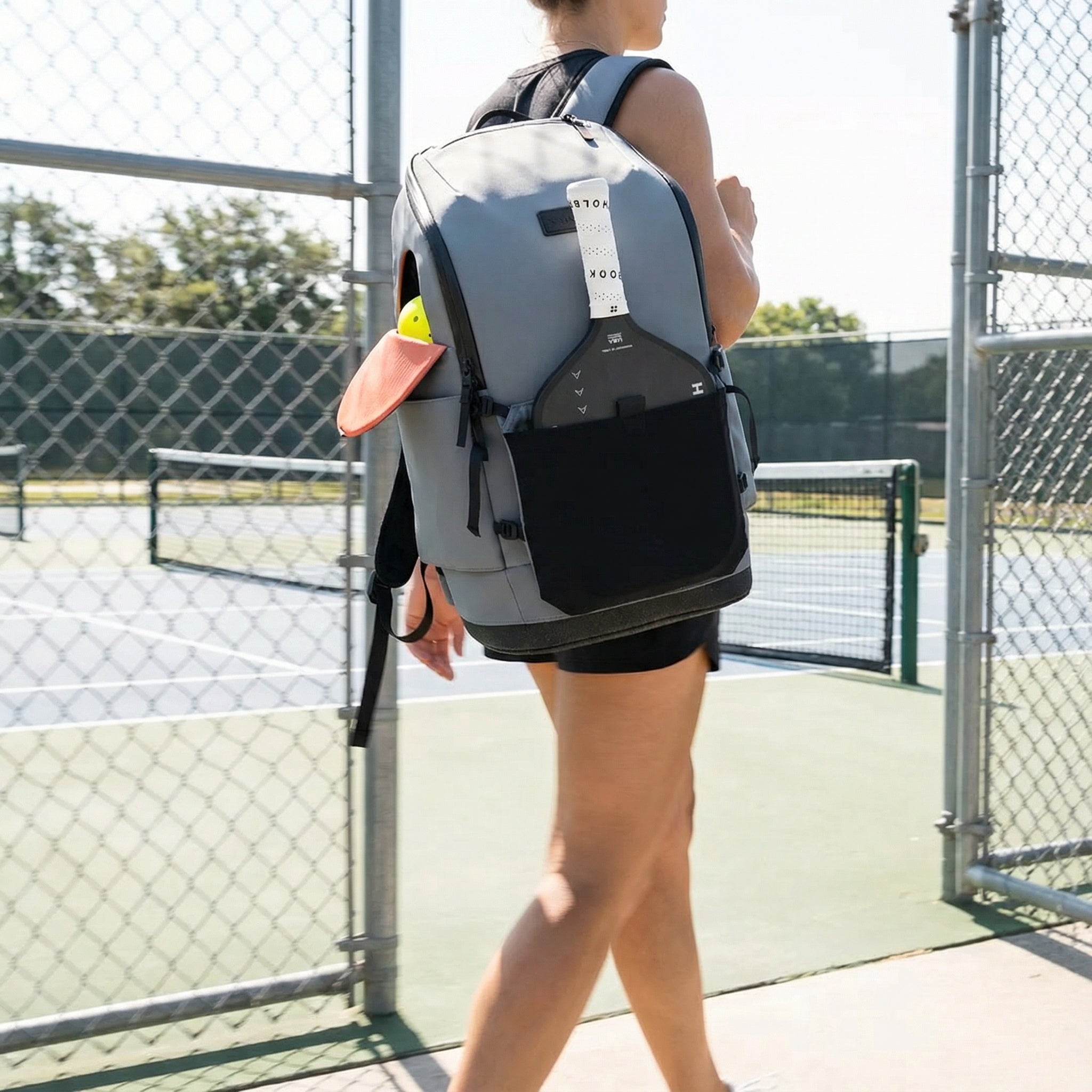
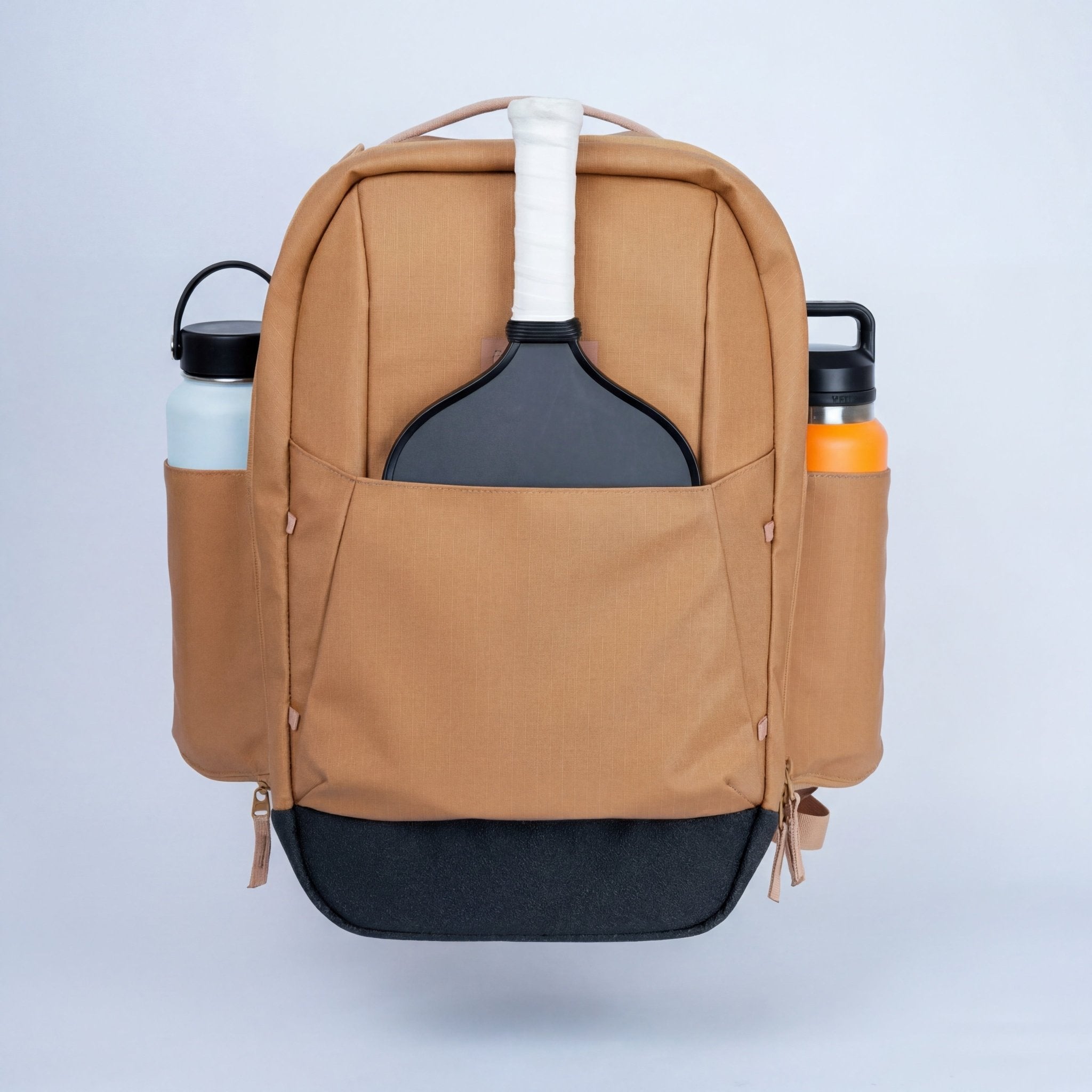
If you're drilling 3–4 sessions a week, the Court Ranger V2 ($195) holds two paddles in a modular sleeve system — faces don't contact each other, no scrambling when you pull one out mid-drill. Designed with 500+ real players who treat practice time seriously.


Leave a comment
This site is protected by hCaptcha and the hCaptcha Privacy Policy and Terms of Service apply.