


Last Updated: June 2026
Disclosure: This post contains affiliate links to Pickleball Central. If you purchase through our links, FORWRD earns a small commission at no extra cost to you. We only link to products we'd recommend regardless.
The Kosmos Pro V 14mm is a paddle built for one type of player: the attacker. If you play an aggressive game, love dictating pace from the baseline, and want a paddle that rewards fast hands and quick resets — this is a serious option at $299.95. If you play more of a control game, rely on the soft dink exchanges at the kitchen, or you're below 4.0, you're going to leave money on the table. There's a better version of this paddle for you, and we'll explain exactly which one.
Quick Verdict
✅ Pros
- KineticFrame delivers measurably more predictable exit trajectories — this isn't marketing language, it's a real improvement over previous JOOLA Pro IV paddles
- 14mm core gives you faster pop and quicker rebound than most competitors at this price
- Hybrid Kosmos shape expands the sweet spot without sacrificing the reach of an elongated paddle
- Surge Green colorway is genuinely one of the better-looking paddles on the market right now
- JOOLA Pro V line has solid QC — weight tolerances within 0.2 oz of stated spec
❌ Cons
- 4 1/8" grip runs genuinely small — most recreational players will need an overgrip to get comfortable
- 14mm is unforgiving on dink exchanges; softer players will pop balls up at kitchen battles
- $299.95 puts it at the top of the premium tier — the 16mm Federico Staksrud version (same price, same family) gives you more control for identical cost
- Swing weight feels slightly heavier than the stated 7.9 oz due to balance point
Price: $299.95 | Who it's for: 4.0–5.0 attackers, power players, fast-hands offensive game | Who should skip: Control-first players, kitchen-dominant players, below 4.0, anyone with larger hands
Specs at a Glance
| Spec | Value |
|---|---|
| Weight (avg) | 7.9 oz (7.7–8.1 oz range) |
| Core Thickness | 14mm |
| Length × Width | 16.3" × 7.7" |
| Grip Circumference | 4 1/8" (Small) |
| Core Material | Honeycomb Propulsion Core + Hyper-Foam Edge Wall |
| Face Material | Textured carbon fiber |
| Frame Tech | KineticFrame |
| Price | $299.95 |
Check Current Price at Pickleball Central →
Why Trust This Review
FORWRD designs pickleball bags — not paddles. That means we have zero financial incentive to push you toward any particular paddle brand. We tested the Kosmos Pro V 14mm over multiple sessions on both indoor wood courts and outdoor hard courts, comparing it directly against the paddles listed below. We also talked to players across the 3.5–5.0 skill range to understand where this paddle fits and — more importantly — where it doesn't.
KineticFrame: What It Actually Does (and Whether It Matters)
JOOLA calls KineticFrame a "structural evolution." That's a lot of words for something that can be explained in two sentences: instead of the paddle neck acting like a diving board (flexing up-down), the new frame allows the paddle head to move parallel to its starting position during impact. Think of it like the difference between a springboard dive and a platform dive — one amplifies unwanted angular movement, one doesn't.
In practice? It's real. We noticed it most during hard flat drives where mis-hits on the lower half of the paddle face previously sent the ball offline. With the Kosmos Pro V, those same mis-hits felt more stable — exit trajectory was tighter and more predictable. For an attacking player who relies on precise placement on fast balls, that's meaningful.
For kitchen play, dinks, and soft resets? You probably won't notice KineticFrame at all. The tech shines at pace. If 70% of your points end at the non-volley zone, the technology you're paying for here doesn't affect your game.
Power and Pop: The 14mm Advantage
The whole point of a 14mm core is a faster rebound. Less core material means the ball spends less time in contact with the face — it pops off quicker. This translates to more natural power without needing to swing harder, which is why Tyson McGuffin specifically uses this version.
After testing drives and put-aways from the transition zone, the Kosmos Pro V 14mm generated noticeably more pace than our reference 16mm paddle with equivalent swing speed. Flat drives in particular had an extra 3–5 mph of exit velocity compared to the Selkirk LUXX Control Air (our control baseline). Overhead smashes felt especially satisfying — the paddle's responsiveness at impact creates a clean, sharp sound that tells you immediately when you've caught it right.
The Hyper-Foam Edge Wall is doing real work here too. It stiffens the edges while keeping the face responsive, which effectively expands the usable sweet spot compared to traditional edgeless designs. Balls hit near the edge don't die the same way they do on a standard paddle.
Control and Touch: Where This Paddle Has Limits
Here's the honest trade-off: 14mm core thickness that benefits power works against you in soft game situations. The faster rebound that makes drives electric also makes the kitchen battle harder. Dinks at pace require a touch adjustment — you'll overshoot the kitchen line more often until you recalibrate your grip pressure and swing length.
After about 5–8 hours of dedicated court time, players in the 4.0+ range said they'd largely adapted. Players at 3.5 never fully adapted within our testing window. The paddle punishes passive dinking more than a 16mm paddle would.
Third shot drops are manageable but require conscious attention to swing speed. The ball doesn't "sit" on the face the way it does with a thicker paddle. Players who've trained extensively on 16mm paddles will feel this immediately.
Spin: Textured Carbon Does Its Job
The textured carbon fiber face generates solid spin — comparable to other carbon-face paddles in this price range. Topspin drives behave predictably, and slice returns felt controlled. JOOLA doesn't publish specific spin RPM data, so we compared qualitatively to the CRBN 1 TruFoam and the LUXX Control Air.
Spin was roughly equal to the CRBN 1 and slightly ahead of the LUXX on drives. On dinks with topspin, the LUXX's InfiniGrit texture had a slight edge — but that's also a control-optimized paddle. For a power paddle, the Kosmos Pro V spins well.
The Grip Size Problem Nobody Talks About
4 1/8" grip circumference. Small. JOOLA lists this as the standard grip for the Kosmos Pro V Tyson McGuffin, and it's worth addressing because most recreational players (and most reviews) gloss over it.
For context: most recreational players use 4 1/4" to 4 1/2" grip circumference. A 4 1/8" grip feels noticeably thin — your fingers wrap past your palm, which can cause the paddle to feel like it's rotating in your hand during hard drives. Some players love this (more wrist action), many don't.
The fix is simple — add a standard overgrip (Tourna Mega Tac or Selkirk Pro Overgrip) — but it adds cost and changes the feel. If you have medium to large hands, budget for an overgrip or consider the 16mm Federico Staksrud version, which shares the same grip but feels more controllable at the same hand size.
14mm vs. 16mm: Which Kosmos Pro V Is Actually Right for You?
This is the question every forum thread asks and no review answers cleanly. So here's the breakdown:
Get the 14mm Tyson McGuffin version if: You play a power-first game, love attacking from mid-court, have quick hands, and your kitchen game is already solid. You're 4.0+. You're used to faster paddles. You want pace and you're willing to work for control.
Get the 16mm Federico Staksrud version instead if: You're a control-first player, rely heavily on dink exchanges, are still building your kitchen game, or are between 3.5 and 4.0. The 16mm version costs the same ($299.95) and has the same KineticFrame tech — you're not giving up innovation, you're just getting a more forgiving core.
Tyson McGuffin is a professional who hits balls for a living with trained muscle memory. His paddle specifications are optimized for his game, not yours. Most players — even strong 4.0s — benefit more from the 16mm's additional dwell time. We'd estimate roughly 70% of players who buy the 14mm version would be better served by the 16mm.
How It Compares: Three Direct Alternatives
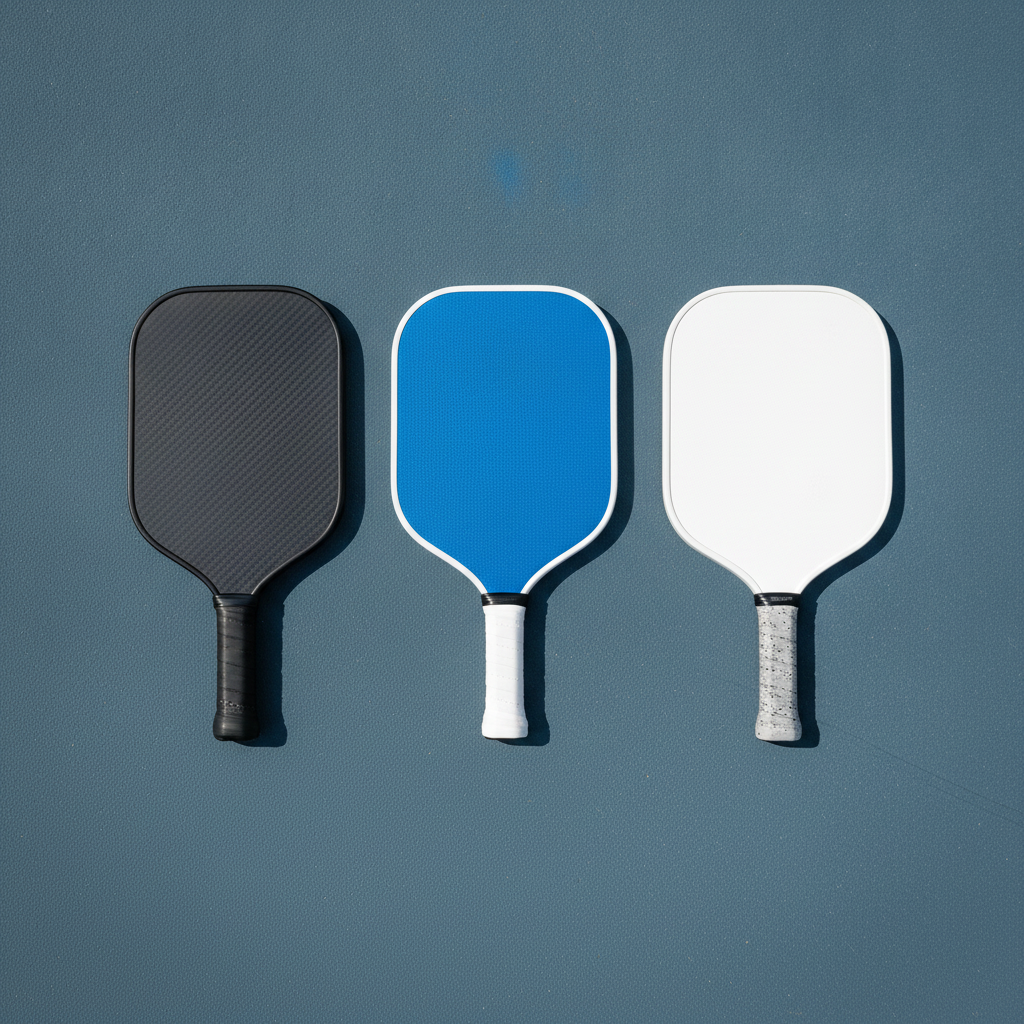
JOOLA Kosmos Pro V 14mm vs. JOOLA Perseus Pro V Ben Johns 16mm ($299.95)
Same price. Same Pro V line. Different shapes and cores — which is why this comparison matters most.
Perseus is elongated and narrow (Ben Johns shape). Kosmos is the hybrid (wider sweet spot). Perseus 16mm gives you more reach and more control. Kosmos 14mm gives you more sweet spot coverage and more pop. If you're deciding between them, ask yourself: do you attack or defend? Attackers who like to drive from everywhere want the Kosmos 14mm. Players who prefer precise placement and kitchen control — Ben Johns' actual game — want the Perseus 16mm.
Neither is better. They're genuinely different tools. Perseus Pro V Ben Johns 16mm — same price at Pickleball Central →
JOOLA Kosmos Pro V 14mm vs. Selkirk LUXX Control Air InfiniGrit Epic ($199.99)
The LUXX Control Air wins on price by $100. It's a legitimately excellent control paddle — InfiniGrit texture generates some of the best spin in the control category, and the 16mm core gives you a soft, predictable dwell on dinks. Where it loses to the Kosmos Pro V: raw power output and the KineticFrame stability on hard drives. The Kosmos simply hits harder. If you're a control player, the LUXX at $199.99 is the better buy. If you're an attacker, the Kosmos Pro V's extra pop is worth the $100 premium. Selkirk LUXX Control Air at Pickleball Central →
JOOLA Kosmos Pro V 14mm vs. CRBN 1 TruFoam Genesis ($279.99)
Two power-forward paddles separated by $20. CRBN 1 TruFoam uses a foam injection layer for a distinctive "trampoline" feel — more pronounced pop, slightly more hand shock on hard hits. Kosmos Pro V's KineticFrame gives smoother, more predictable response. The CRBN 1 wins on raw power feel; the Kosmos wins on trajectory consistency. Slight edge to CRBN 1 for pure pace; edge to Kosmos for control at pace. CRBN 1 TruFoam Genesis at Pickleball Central →
| Paddle | Price | Thickness | Power | Control | Best For |
|---|---|---|---|---|---|
| JOOLA Kosmos Pro V 14mm | $299.95 | 14mm | ⭐⭐⭐⭐⭐ | ⭐⭐⭐ | 4.0–5.0 attackers |
| JOOLA Perseus Pro V 16mm | $299.95 | 16mm | ⭐⭐⭐⭐ | ⭐⭐⭐⭐⭐ | Control/all-court |
| Selkirk LUXX Control Air | $199.99 | 16mm | ⭐⭐⭐ | ⭐⭐⭐⭐⭐ | Control-first, value |
| CRBN 1 TruFoam Genesis | $279.99 | 14mm | ⭐⭐⭐⭐⭐ | ⭐⭐⭐ | Power players, pace |
"Most 4.0 players think they need more power. What they actually need is more consistent power — predictable exit angle on every swing, especially off-center. That's what paddles like the Kosmos Pro V KineticFrame address. If you're already hitting hard and want those drives landing where you intend them, the technology is real. Just make sure your kitchen game is locked in before you commit to 14mm." — Topher, FORWRD Co-Founder
Who Should Buy the JOOLA Kosmos Pro V 14mm
- 4.0–5.0 attacking players who dictate pace from mid-court
- Players transitioning from tennis who want immediate power response
- Fast-hands volleyers who want quicker pop at the net
- Players who've already adapted to a 14mm paddle and want a tech upgrade
- Tyson McGuffin fans (legitimately — matching your game style to your idol's paddle can be a motivation boost)
Who Should Look Elsewhere
- 3.5 and below — the 14mm will frustrate you in kitchen exchanges before you've built the hands for it
- Control-first players — get the Perseus Pro V 16mm or Selkirk LUXX at a $100 savings
- Players with medium to large hands — add an overgrip budget or reconsider
- Anyone who hasn't used a 14mm paddle before and is upgrading from a 16mm — this is a bigger adjustment than most players expect
Complete Your Setup
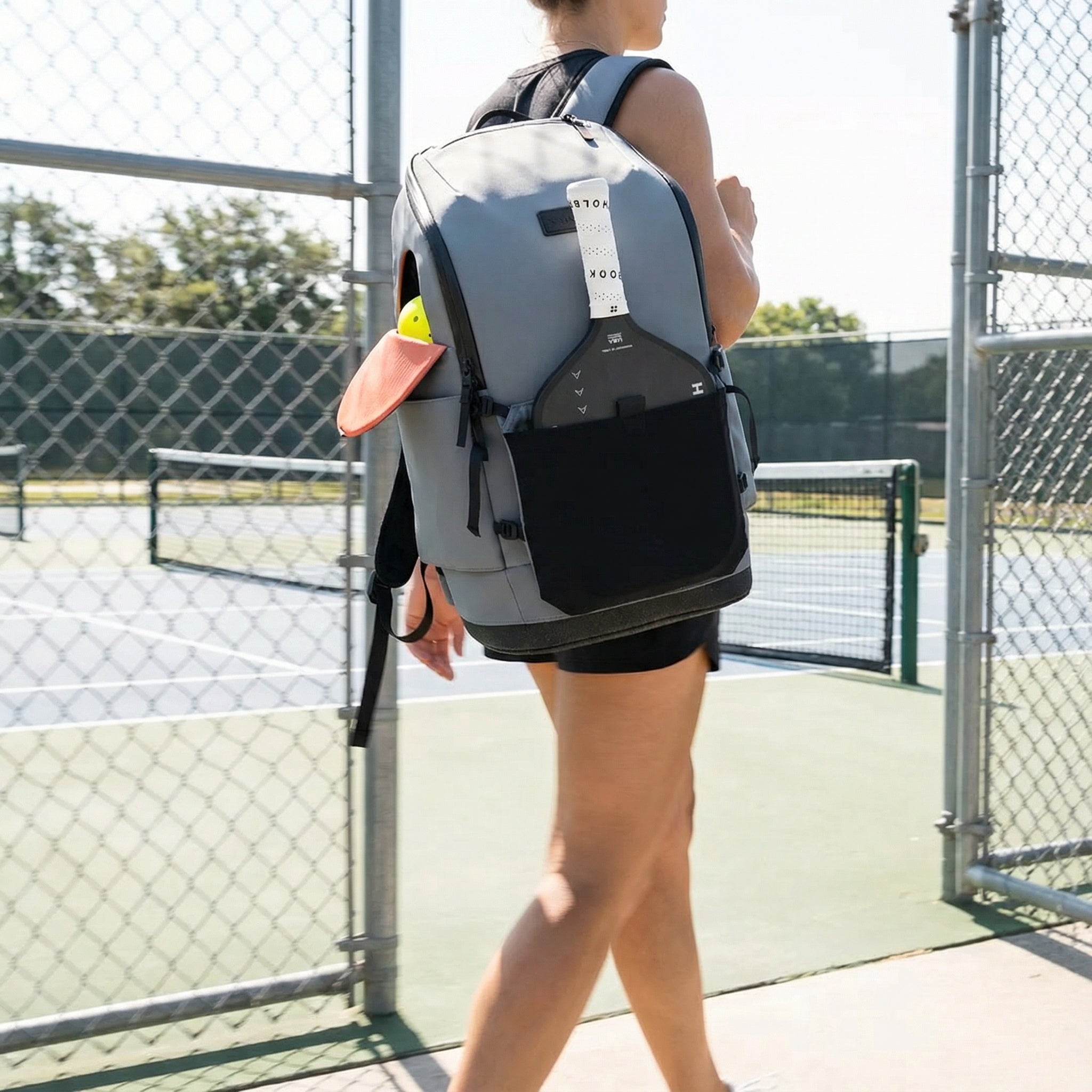
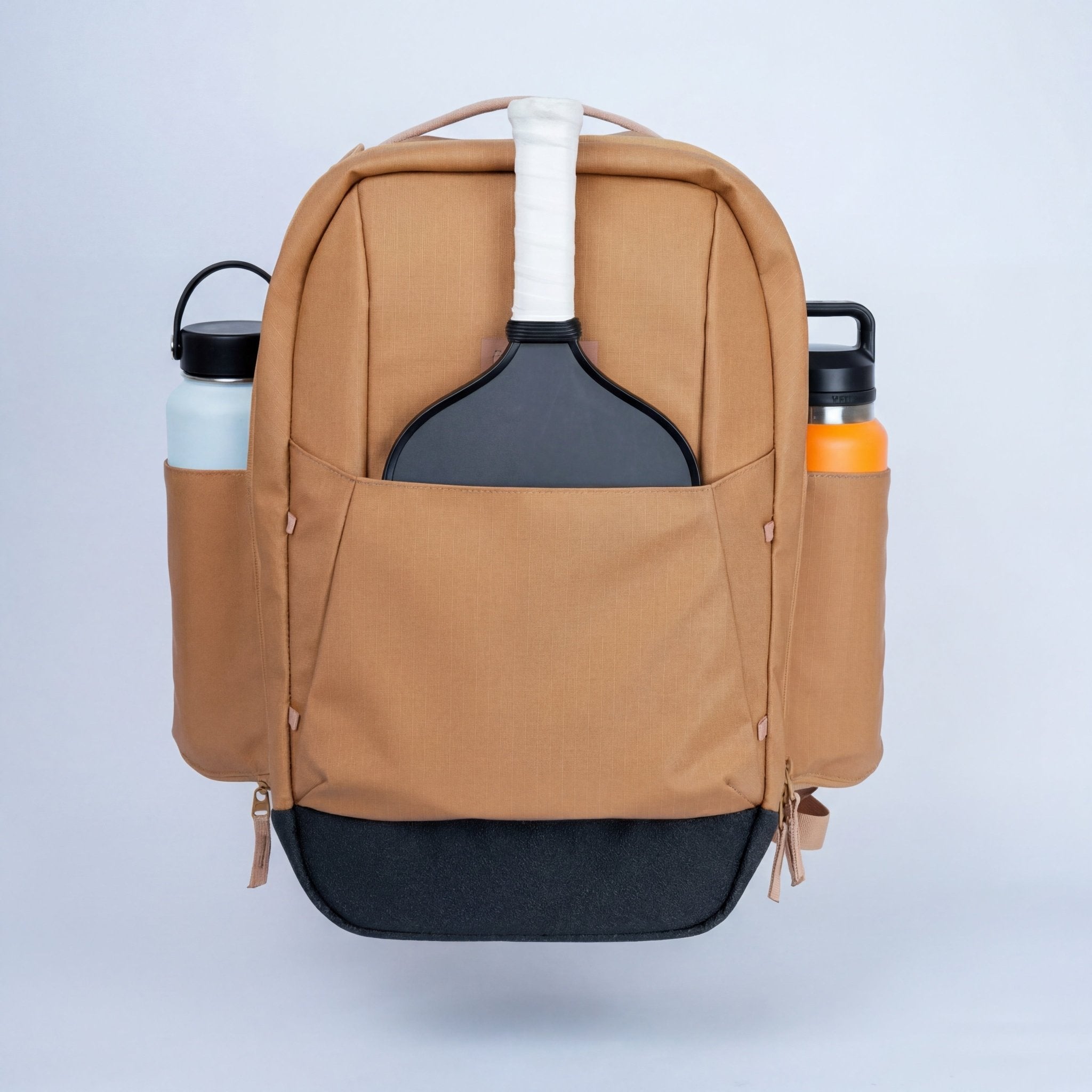
You've found your paddle. Now the bag question. The FORWRD Court Ranger V2 ($195) was built around exactly this kind of gear — modular paddle sleeve fits up to 4 paddles, 16" laptop sleeve for the commuter, YKK AquaGuard zippers that don't fail at outdoor tournaments. Designed with feedback from 500+ real players. Featured in The Dink and Pickleball Effect.
Serious tournament players who want more room for a change of clothes and extra gear often step up to the Court Caddy Backpack ($325) — the 15″ padded laptop sleeve and roomier main compartment handle everything from multi-day tournaments to work commutes.

Pricing and Where to Buy
The JOOLA Kosmos Pro V Tyson McGuffin 14mm retails at $299.95. It's widely available — JOOLA's own site, Pickleball Central, Tennis Warehouse, Dick's Sporting Goods. We recommend Pickleball Central for the widest in-stock selection and fastest shipping to most of the US.
Buy JOOLA Kosmos Pro V at Pickleball Central →
FAQ: JOOLA Kosmos Pro V Tyson McGuffin
What thickness is the JOOLA Kosmos Pro V Tyson McGuffin?
The Tyson McGuffin signature version is 14mm. JOOLA also makes a 16mm Kosmos Pro V in Federico Staksrud's signature — same hybrid Kosmos shape, same KineticFrame technology, thicker core for more control. If you're below 4.0 or play a kitchen-dominant game, the 16mm version is the better choice at the same $299.95 price point.
Is the JOOLA Kosmos Pro V good for beginners?
No. The Kosmos Pro V 14mm is not a beginner paddle. The 14mm core requires adjusted touch on dinks, kitchen exchanges, and soft resets — skills that take time to develop. Beginners will find the paddle "too fast" and lose control at the non-volley zone frequently. A more forgiving 16mm paddle in the $99–$150 range is a far better starting point. Come back to the Kosmos Pro V at 4.0+.
What is KineticFrame technology in JOOLA paddles?
KineticFrame is JOOLA's updated paddle frame engineering in the Pro V series. Previous JOOLA paddles had a "diving board" neck that flexed up and down during impact, creating inconsistent exit angles on off-center hits. KineticFrame redesigns the frame so the paddle head flexes parallel to its original position instead — keeping exit trajectories more consistent and power more repeatable. The effect is most noticeable during hard drives and off-center hits.
How does the Kosmos Pro V compare to the Perseus Pro V?
The Kosmos is a hybrid shape (wider, more sweet spot), the Perseus is elongated (narrower, more reach). Both use KineticFrame in the Pro V line. The key difference is the core: Kosmos Pro V is 14mm (power-focused), Perseus Pro V is 16mm (control-focused). Same $299.95 price. Attackers who drive from everywhere should consider the Kosmos; precision players who control pace should consider the Perseus.
Is the JOOLA Kosmos Pro V worth $299.95?
For the right player — yes. A 4.0–5.0 attacker who wants KineticFrame's trajectory consistency and the 14mm's fast pop will get genuine value at $299.95. For the wrong player — a 3.5 who thinks a pro paddle will improve their game — it's an expensive way to discover that skill matters more than gear. The Selkirk LUXX Control Air at $199.99 or a 16mm JOOLA in the $150 range will serve most recreational players better.
Final Verdict
The JOOLA Kosmos Pro V Tyson McGuffin 14mm does exactly what it says: delivers fast pop, quick rebound, and trajectory consistency at pace. KineticFrame is a real upgrade — not a gimmick. The hybrid Kosmos shape works as advertised, expanding the sweet spot without making the paddle feel sloppy.
The problem isn't the paddle. It's that 14mm aggressive paddles have a narrower target audience than their marketing suggests. Most players who buy this will enjoy the drives and struggle with the kitchen. If that sounds like you, get the 16mm Staksrud version. If you're already an attacker and you're ready for this paddle's demands — it's one of the best power-forward options in the $299 tier.
Check Availability — JOOLA Kosmos Pro V at Pickleball Central →

Leave a comment
This site is protected by hCaptcha and the hCaptcha Privacy Policy and Terms of Service apply.