

Last Updated: September 2026 | By Benjamin Carper
FORWRD may earn a commission on purchases made through links to Pickleball Central. We only link to products we'd recommend regardless.
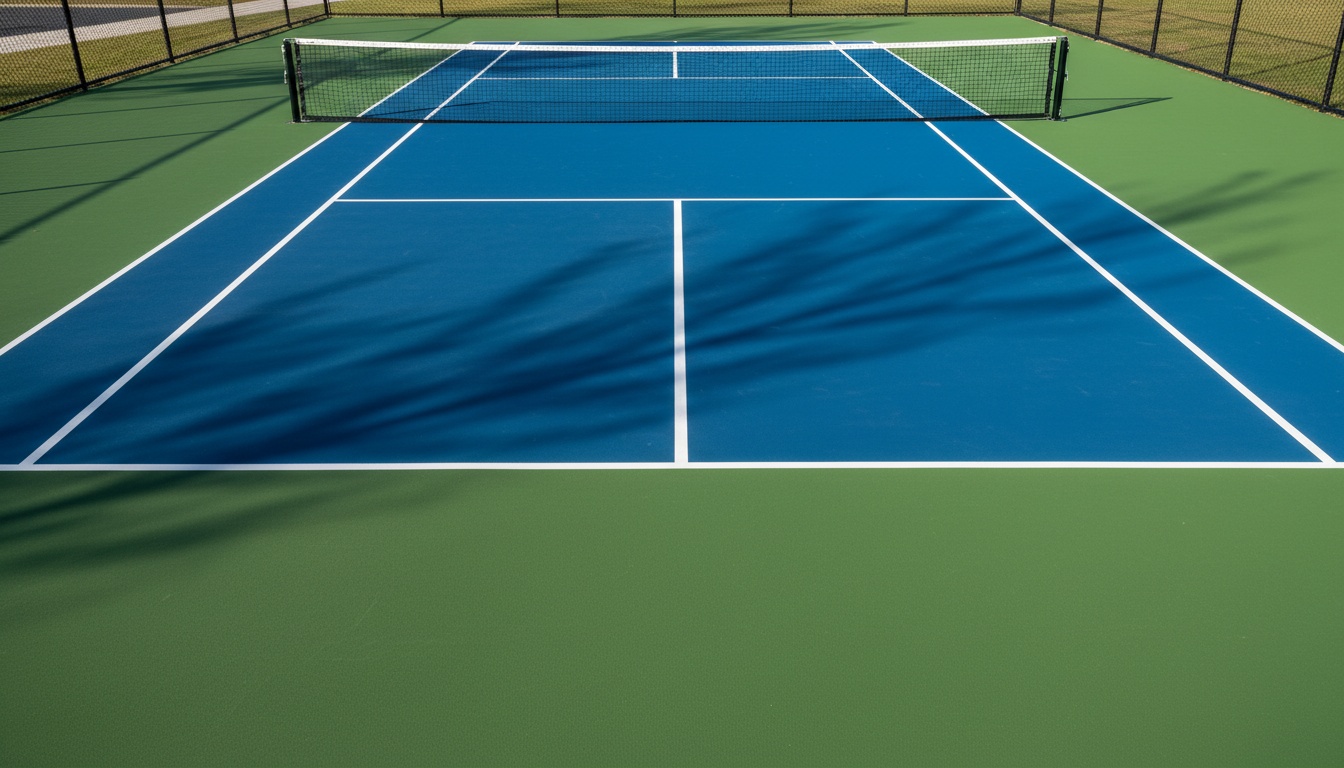
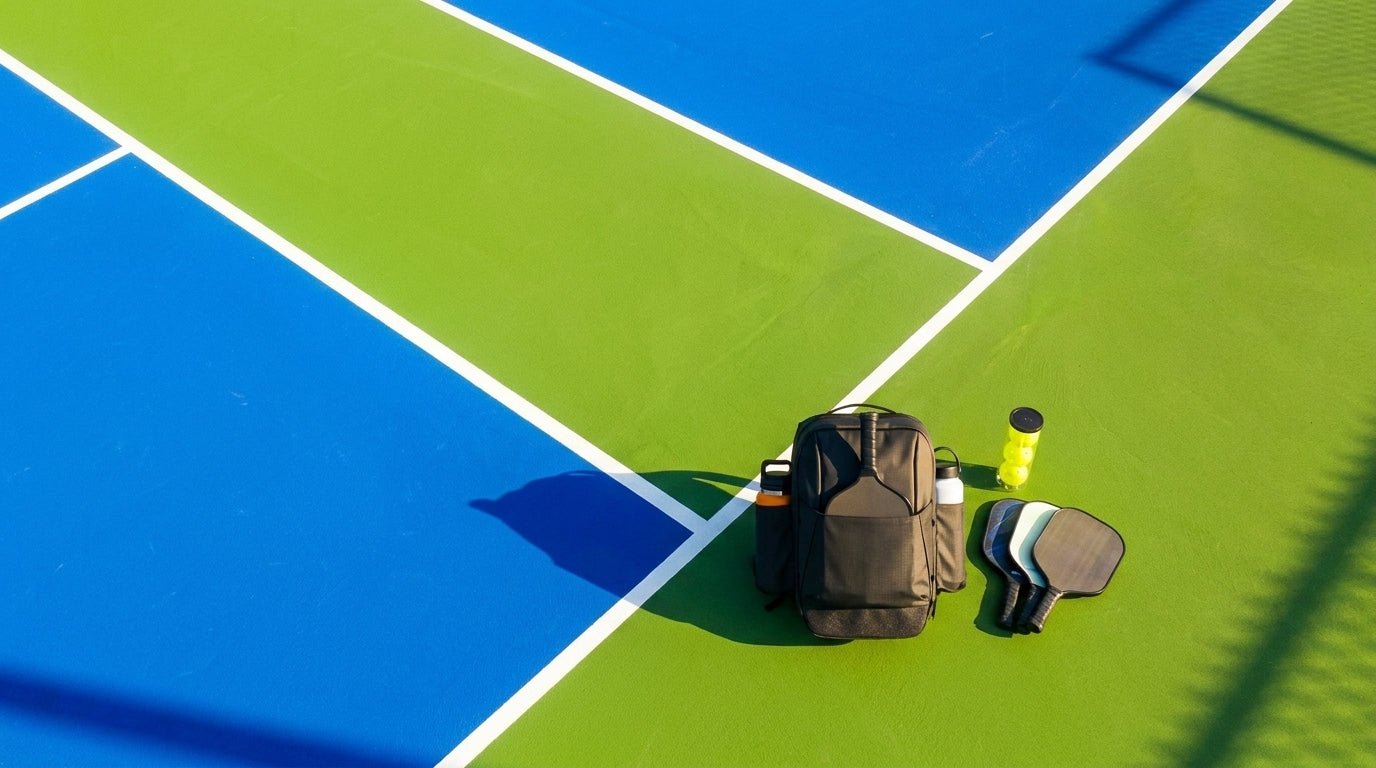
Standard pickleball courts use blue for the non-volley zone (kitchen), green for the main playing areas, and white for boundary lines. That color scheme isn't decoration — it serves a functional purpose, helping players orient themselves at a glance during fast exchanges. USAPA doesn't mandate these specific colors, but blue/green/white has become the near-universal standard because it works better than almost anything else on the market.
Here's what most players don't realize: every color decision on a pickleball court has a functional reason behind it. Getting it wrong has real consequences — reduced ball visibility, dangerous surface temperatures in summer, and line glare that makes outdoor evening play legitimately miserable. We've tracked these issues across dozens of court installs and talked with contractors who've built hundreds. Here's what the data says.
The Standard Color Scheme: Blue Kitchen, Green Playing Area, White Lines (and Why)
The blue/green/white palette traces back to the mid-2010s, when pickleball started building dedicated facilities rather than borrowing converted tennis courts. Court surfacing contractors — most with backgrounds in tennis court work — defaulted to contrasting colors that matched established USTA and ITF visibility standards. Blue and green had the most developed supply chain for sport-specific acrylic coatings, and the combination happened to be excellent for the game. It stuck.
Here's why each color does what it does:
- Blue kitchen (NVZ): Signals the no-volley zone boundary before your brain consciously registers it. When you're engaged in a rapid dinking sequence, peripheral vision catches the blue and your feet process the zone boundary automatically. Players who've trained extensively on blue/green courts develop this visual cue instinctively — show up to a gray gym floor court with tape lines and it feels genuinely disorienting until you adjust.
- Green playing area: High contrast against both yellow/neon-green balls and white boundary lines. Green also reflects more heat than darker surface alternatives — critical on outdoor courts in summer months. The lightness matters as much as the hue.
- White lines: Maximum visibility against any background color. USAPA requires lines to be at least 2 inches wide. White-on-color remains readable across all lighting conditions: direct noon sun, cloud cover, dusk, LED floodlights. No other line color beats it across that range.
The blue/green/white combination became dominant because it's functionally superior — nobody mandated it. The industry settled on it through trial and error and it's now the benchmark everything else gets compared against.
Color Psychology for Visibility: Why Contrast Matters More Than Aesthetics
The ball is the critical variable. USAPA-approved outdoor pickleballs come in yellow (most common by far), orange, and white. Indoor balls are typically white or yellow. Your court colors need to maximize contrast against whichever ball your facility uses most.
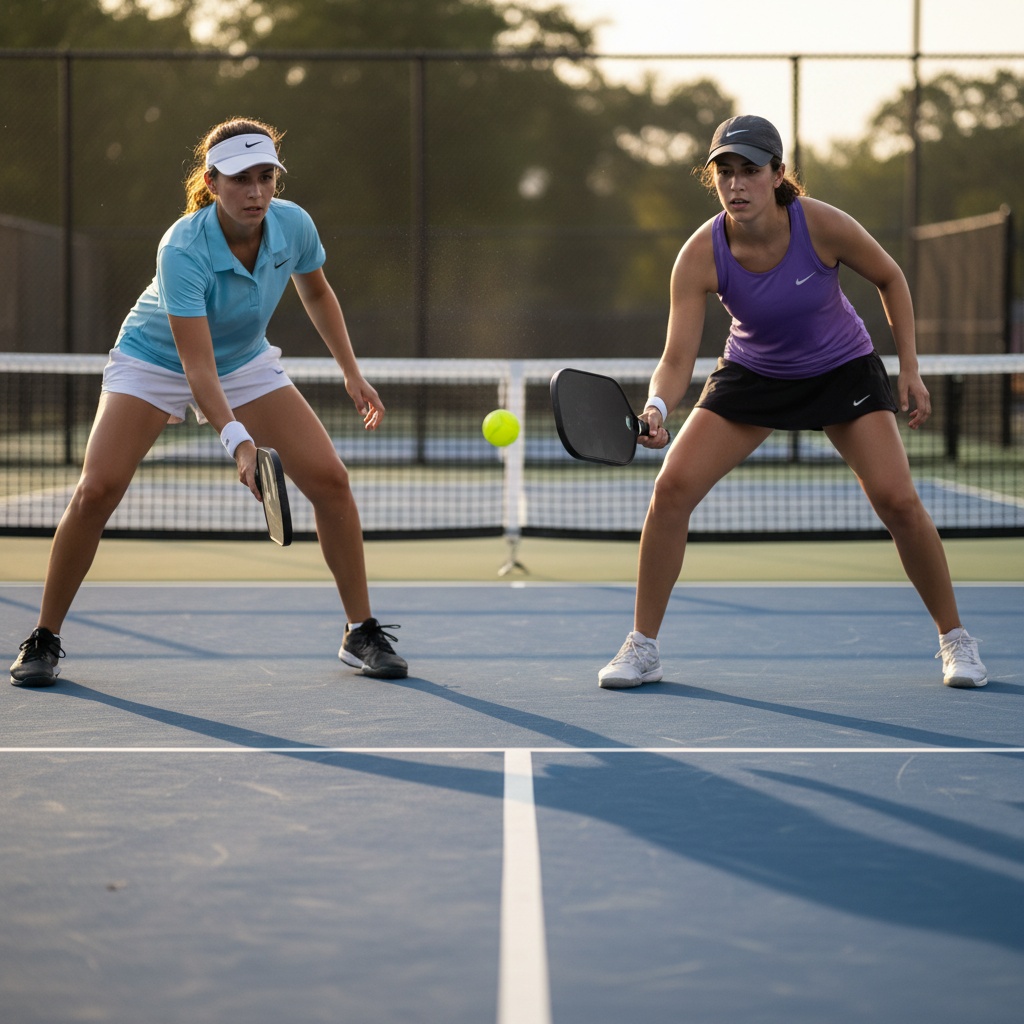
On a standard blue/green court with yellow balls, visibility is excellent across all zones — the ball pops against both the kitchen blue and the court green. On a single-color surface (say, a gray gym floor) with a white ball, the tracking problem at 30+ feet becomes real. The ball blends into the background at the exact moment you need to read its trajectory.
There's also a spatial awareness dimension. A clearly-delineated blue kitchen creates a subconscious reference point that helps players maintain kitchen discipline. A player who can see they're standing in the blue zone has a spatial anchor that doesn't exist when the whole court is one color with only tape lines. Players who've trained on both consistently notice the difference — especially under pressure, when quick movements near the NVZ can get sloppy.
USAPA Color Requirements: What's Mandated vs. What's Preferred
This surprises most players: USAPA does not mandate specific court colors. The official USA Pickleball court specifications require:
- Court dimensions: 20×44 feet (standard), with 10-foot minimum buffer zones recommended on each end
- Net height: 36 inches at the sidelines, 34 inches at center — see our pickleball net height guide for setup details
- Lines: at least 2 inches wide, clearly visible
- Non-volley zone: 7 feet from each side of the net on both ends
Court surface color? Not specified. The kitchen doesn't technically need to be a different color — it just needs to be bounded by visible lines. The blue/green convention is preference and industry best practice, not a rule. This is why you'll find meaningful variation across tournament venues, and why your local YMCA can legally have a gray gym floor with tape lines and call it a sanctioned court.
For tournament play, host facilities must meet USA Pickleball facility standards for lighting, surface condition, and line visibility — but the color palette stays at the facility's discretion.
Tournament Court Color Schemes: What the Pros Actually Play On
Color choices across the major venues reveal what actually performs at the highest level of the game:
| Venue | Kitchen Color | Court Color | Visibility Rating |
|---|---|---|---|
| US Open (Naples, FL) | Blue | Green | Excellent — industry benchmark |
| Dreamland (Georgetown, TX) | Blue | Dark Blue | Good — ball contrast reduced in blue zones |
| Various APP Tour Venues | Blue | Light Green | Excellent — optimized for broadcast color balance |
| Red Kitchen Variant (some indoor pro venues) | Red | Blue | Good contrast — red kitchen is highly distinctive |
| Municipal Multi-Use Gym (typical) | None (tape only) | Gray/Black hardwood | Poor — low ball contrast, no zone cue |
The US Open format — blue kitchen, green court — has effectively become the professional standard. It holds up under broadcast lighting, works across ball colors, and has survived scrutiny from the best players in the world without complaints about visibility. The darker variants (blue on blue, or dark navy court) get used less as facilities learn that same-family color contrast causes tracking problems at distance.
Sun Reflection and Surface Temperature: Why Dark Colors Are Problematic Outdoors
I played on a dark navy blue outdoor court in Phoenix during a July afternoon clinic. The surface temperature measured — with a handheld infrared thermometer — 15-20°F hotter than an adjacent standard green/blue court, both exposed to the same direct sunlight. Dark surfaces absorb solar radiation. On a 105°F ambient day, a dark navy court can reach 140°F+ underfoot.
Three reasons this matters beyond player comfort:
- Player safety: Radiant heat from dark surface courts adds meaningful thermal load to the physical stress of competitive play. Extended sessions in summer on dark courts become a health concern faster than most players expect.
- Ball bounce behavior: Pickleball bounce height is temperature-dependent. A hot dark surface produces a noticeably livelier bounce — which alters game feel in ways that affect shot planning, especially for drop shots and resets.
- Durability: Dark surface courts in direct sun degrade faster. UV exposure and thermal cycling accelerate paint fading and surface cracking. A dark navy and a standard green court, both installed the same year with identical maintenance, will look markedly different at the two-year mark.
The practical guideline: for outdoor courts in warm climates — anything that regularly sees summer highs above 90°F — stick to surface colors with higher reflectance. Standard court green and medium court blue both land in the safe range. Dark navy, forest green, and black all fail it.
How to Choose Colors for a New Install: The 3-Factor Guide
Three questions settle most color decisions:
Factor 1: What ball color is most commonly used?
Yellow/neon balls: blue/green combination maximizes contrast throughout the court. Orange balls: they disappear against blue faster than yellow does — consider warmer green tones for the playing area. White balls (common in indoor gym setups): blue/green still works, but a warmer mid-tone green outperforms cooler greens for white-ball tracking.
Factor 2: What's the climate?
Hot outdoor locations with regular summer highs above 90°F: prioritize lighter surface colors with reflectance values above 40%. Standard court green and medium court blue qualify comfortably. Cooler climates with significant cloud cover: heat is less of a concern, so contrast optimization takes priority over reflectance.
Factor 3: Do you have broadcast or media requirements?
Tournament facilities destined for video: the US Open blue/green scheme photographs best and is calibrated for broadcast white balance. Recreational clubs without media commitments have more flexibility — red kitchens, slate blue, and other variations are fine. Just keep contrast central to the decision, and aesthetics secondary.
Repainting Existing Courts: Cost and Process
Most outdoor pickleball court surfaces are latex acrylic over concrete or asphalt. A full color repaint involves four stages:
- Surface prep: Crack repair, pressure washing, oil stain removal. Often the most expensive step on neglected surfaces. Budget $500–$2,000 just for prep if the court has deferred maintenance.
- Base coat: 1–2 coats of acrylic resurfacer to fill texture inconsistencies and improve paint adhesion. $1,000–$3,000 per court depending on surface condition.
- Color coats: 2 coats of pigmented acrylic court paint in your chosen kitchen and playing area colors. Single-court professional job: $2,000–$5,000.
- Line striping: White lines, typically 2–3 coats for durability. $300–$800 depending on contractor and court complexity.
Full professional color repaint for one court in reasonable condition: $3,500–$8,000 total. DIY line refresh only (keeping existing surface colors, just restoring the boundary markings): $150–$400 in materials using court-line tape and acrylic striping paint.
One thing most players don't know: you can change the kitchen color independently without redoing the entire court. A contractor masks off the NVZ boundary lines and applies new color coats to just the kitchen zones. This approach typically costs 30–40% less than a full resurface — useful if your court is otherwise in good shape but the kitchen color is wrong.
For full court construction context and official dimension standards, read our Complete Pickleball Court Knowledge Guide (2026).
Ready to Hit the Court?
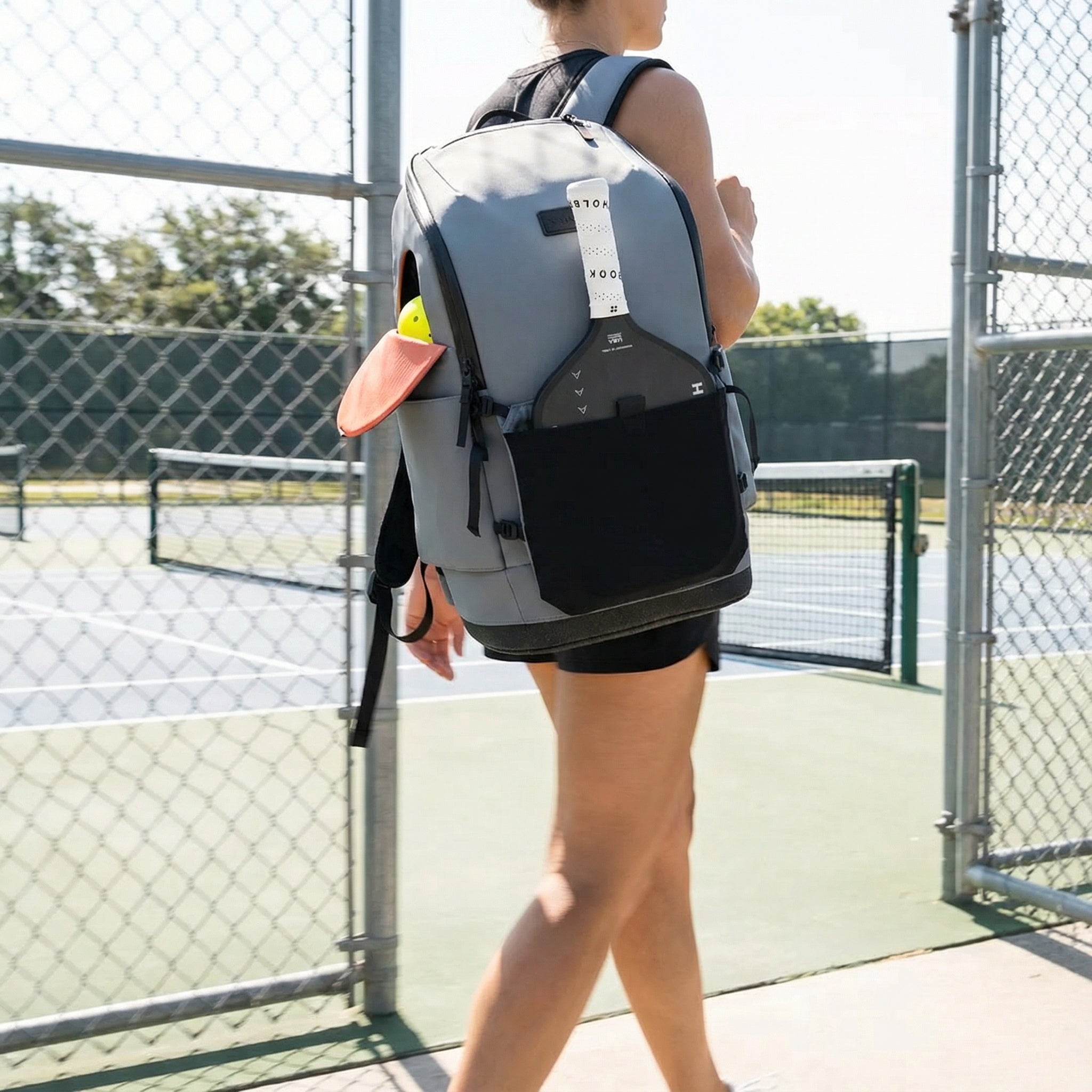
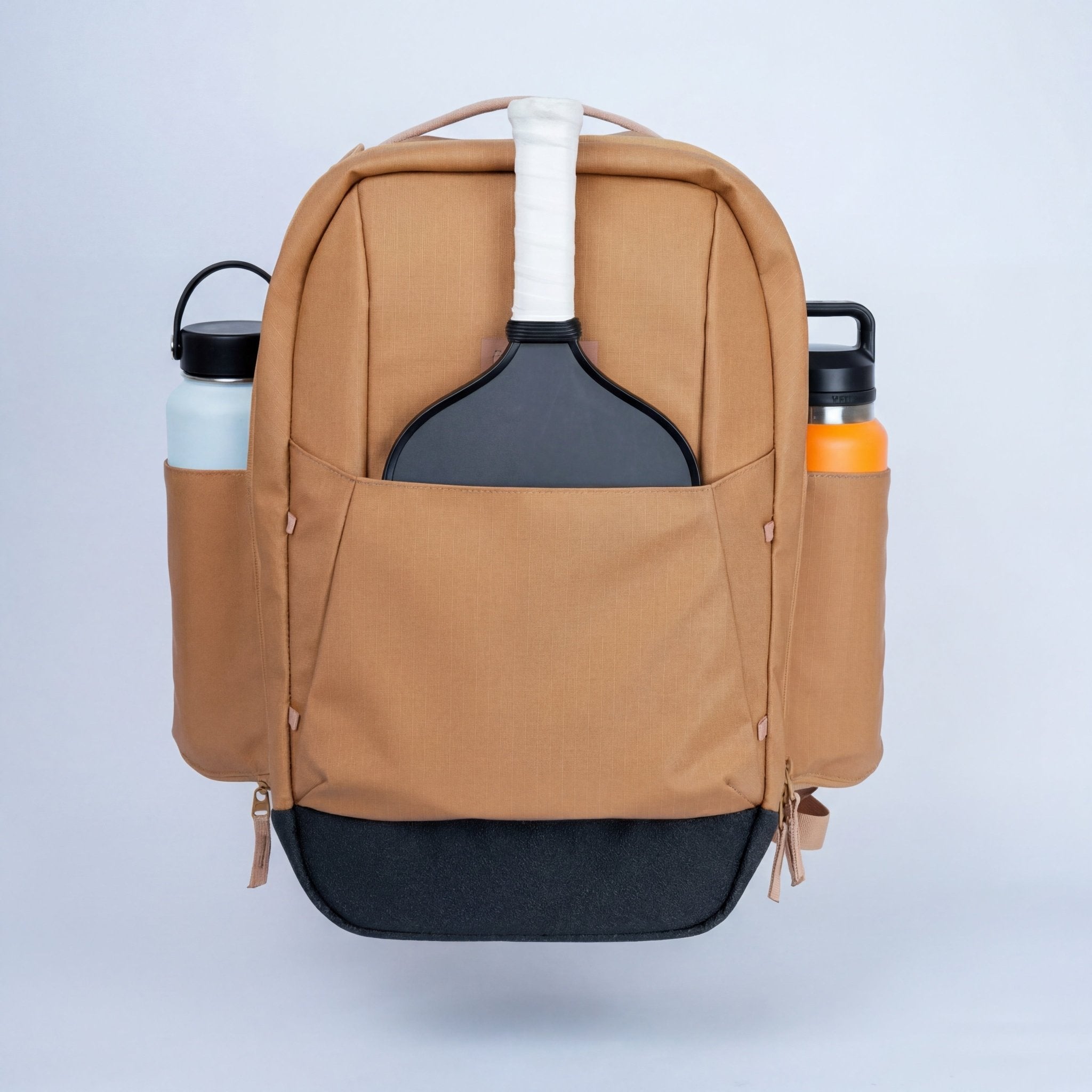
Once your court colors are dialed in — or you've just found your local facility — the next priority is showing up organized. The right bag makes a real difference between scrambling through a stuffed gym bag at courtside and being set up in under a minute. If you're playing multiple sessions per week, the Court Ranger V2 ($195) handles the daily carry: 16" laptop sleeve, modular paddle slot, YKK AquaGuard zippers. For tournament days with more gear, the Court Caddy steps up.
Our Pick for Court Organization: Court Caddy Pickleball Bag
15" padded laptop sleeve, modular paddle sleeve with YKK AquaGuard zippers — built with feedback from 500+ real players. Featured in The Dink and Pickleball Effect.
For net setup on your backyard or driveway court, our roundup of the best portable pickleball nets covers the top options tested on real courts.
FAQ: Common Questions About Pickleball Court Colors
What colors are used on a pickleball court?
The standard scheme is blue for the non-volley zone (kitchen), green for the main playing areas, and white for boundary lines. This is industry convention — not a USA Pickleball rule requirement. It became the default because the contrast between blue, green, and white optimizes ball visibility and surface heat management better than most alternatives.
What color is the kitchen in pickleball?
Blue is the most common kitchen color, but red and other strongly contrasting colors are also used. There's no rule specifying a particular hue — the requirement is contrast against the playing area, and reliable line visibility. Any color that clearly distinguishes the NVZ from the rest of the court meets the functional standard.
What is the standard color for a pickleball court?
Blue NVZ, green playing surface, white lines — colloquially called the blue/green/white scheme. USA Pickleball doesn't mandate these specific colors in its rulebook, but the combination has become the accepted industry standard developed organically over a decade of dedicated court construction. The US Open uses it; most major APP Tour venues use it.
How do you choose colors for a new pickleball court?
Three factors: ball color most commonly used at your facility (yellow/orange/white each have optimal contrast pairings), climate (hot outdoor locations need lighter, more reflective surfaces to manage heat and surface temp), and whether you have broadcast or media requirements (televised venues should use US Open-calibrated blue/green). For most recreational installs, standard blue/green/white is the right default.
What color should pickleball court lines be?
White is standard and optimal. USA Pickleball requires lines to be clearly visible and at minimum 2 inches wide. White achieves maximum contrast against any background — blue kitchen, green playing area, gray gym floor — across all lighting conditions from noon sun to evening LED floodlights. Yellow lines are used in some specialty contexts but don't outperform white across the full range of surfaces and lighting.
Does USAPA require specific court colors?
No. USA Pickleball's official court specifications cover dimensions, net height, and line visibility — but not surface color. The blue/green convention is industry best practice, not a regulatory requirement. Sanctioned tournament facilities have full latitude to choose their color scheme as long as the lines meet visibility standards and the court meets dimension and condition requirements.

Leave a comment
This site is protected by hCaptcha and the hCaptcha Privacy Policy and Terms of Service apply.