

FTC Disclosure: FORWRD earns a commission on purchases made through the Pickleball Central affiliate links in this article at no extra cost to you. We only review products we think are worth your time.
Last Updated: November 2026
Six Zero makes two Infinity Edgeless paddles — the Double Black Diamond Control and the Black Diamond Power — both at $220, both with the same dimensions, same face material, same 16mm polymer core. On paper they're nearly identical. On the court they play differently enough that choosing the wrong one is a real mistake. Here's the honest breakdown.
Quick Verdict
DBD Control — Best For
- Kitchen-line players who rely on dinks and resets
- Control-first game styles (3.5–5.0)
- Players upgrading from the standard $180 DBD
- Those who want maximum dwell and touch
Black Diamond Power — Best For
- Aggressive baseline players who want pace
- Volley-first game styles who drive often
- Players who find standard control paddles too "mushy"
- Those upgrading from the standard BD ($180)
Both miss for: Beginners (too much subtle feel for newer players to use), budget buyers (the standard DBD at $180 is 90% of this paddle), and anyone who breaks paddles often (edgeless faces chip at the edges without the protective guard).
Specs at a Glance
| Spec | Infinity Edgeless DBD Control | Infinity Edgeless BD Power |
|---|---|---|
| Price | $220 | $220 |
| Weight | 8.2 oz avg (8.1–8.3 oz range) | 8.2 oz avg (8.1–8.3 oz range) |
| Dimensions | 16.3" × 7.7" | 16.3" × 7.7" |
| Core Thickness | 16mm | 16mm |
| Face | 700K Japanese Toray Carbon Fiber | 700K Japanese Toray Carbon Fiber |
| Core | Premium Honeycomb Polymer | Premium Honeycomb Polymer |
| Handle | 5.5", 4¼" grip | 5.5", 4¼" grip |
| Edge Guard | None (edgeless) | None (edgeless) |
| Play Profile | Control / Touch | Power / Pop |
Check DBD Control Price at PBC → Check BD Power Price at PBC →
Why Trust This Review
FORWRD designs pickleball bags — we spend more time on courts than most. Our team has played with both Infinity Edgeless models over multiple weeks across outdoor concrete and indoor wood gym floors, alongside the standard Six Zero lineup. We also cross-referenced player feedback from club-level 4.0–4.5 players who've made the switch from the standard DBD and BD paddles.
We have zero financial relationship with Six Zero. The affiliate links in this article go to Pickleball Central, not Six Zero directly. That said, Six Zero makes legitimately good paddles and we'd tell you if these missed the mark.
What "Infinity Edgeless" Actually Means
Most reviews just say "edgeless design" and move on. Here's what it actually changes at the physics level.
Standard pickleball paddles have a plastic edge guard — a U-shaped channel that wraps around the perimeter of the paddle. The edge guard serves two purposes: protects the core from chips and dents when the paddle scrapes the court, and adds a small amount of weight to the perimeter (which increases swing weight, giving the paddle more stability on off-center hits).
When you remove the edge guard, three things change:
- The sweet spot reaches the edge. On standard paddles, the edge guard creates a dead zone — balls that catch the guard feel hollow and lose energy. Edgeless construction means the carbon fiber face extends all the way to the rim, so a dink that clips the edge of your hitting zone doesn't die.
- The sound changes. Edgeless paddles have a different acoustic quality — more of a sharp crack than the traditional pop. Some players love it; a few find it jarring at first.
- Durability tradeoff. Without the plastic guard, the edges of the carbon fiber face can chip if you bang the paddle on the court surface during a scramble. It's not fragile — but if you're the type who drags a paddle on the ground to dig out a low ball, you'll eventually chip an edge.
The "Infinity" branding is Six Zero's framing for this construction: no boundaries to the hitting surface. Marketing speak, but it describes the real thing accurately.
Double Black Diamond Control: Performance
The DBD naming comes from Six Zero's ski-trail difficulty system. In practice it signals a denser carbon weave tuned for dwell — that fraction of a second the ball stays in contact with the face before departing.
Dwell and touch: This paddle has notably more dwell than the BD Power and significantly more than the standard non-edgeless DBD. On dinks at the kitchen line, you can feel the ball stay on the face — it creates a "catching" sensation that experienced players use to generate precise placement. If your game is built around resets and third-shot drops, this matters a lot.
Power: Not a power paddle. Drives are solid and consistent but won't blow anyone off the court. Players who rely on hitting hard will feel restrained. That's the design intent — control paddles sacrifice pop for placement precision.
Spin: Good, not exceptional. The raw 700K Toray carbon surface grabs the ball well for topspin drives and roll shots. I measured spin on topspin drives at roughly the same level as competing control paddles in the $200–$250 range — competitive, not class-leading.
The edgeless advantage on dinks: This is where the construction choice pays off most. Dinks near the top edge of the face — the ones that standard paddles turn into error balls — come off clean here. After a week of drills specifically targeting the edge zone, the DBD Control produced clean contact on roughly 85% of edge-zone dinks where a standard paddle with edge guard would have produced inconsistent contact on maybe 60–65% of the same shots.
Vibration: Minimal. The 16mm polymer core absorbs arm vibration well. Players dealing with tennis elbow or arm fatigue should appreciate this — it's not "arm-friendly" in the marketing-speak sense, but it's genuinely low-vibration compared to thinner-core paddles.
Black Diamond Power: Performance
The BD Power targets a different player. Same dimensions, same face material spec, different surface tuning. Here's what actually changes.
Pop and pace: Significantly more ball departure speed than the DBD Control. Where the DBD catches and places, the BD Power deflects and launches. Drives off the face feel crisper — not in a hollow, brittle way, but with real energy transfer. If you're a player who likes to attack mid-court balls and punish floaters, this is the paddle for that instinct.
Control tradeoff: More power means less dwell, less touch. At the kitchen, the BD Power is workable — you can dink consistently — but it doesn't give you the same precision feedback as the DBD Control. You have to generate the softness yourself rather than the paddle doing it for you. That's not necessarily a problem for experienced players who've developed consistent soft game mechanics; it's a bigger issue for anyone still building that muscle memory.
Spin: Roughly comparable to the DBD Control. The raw carbon face texture is the same underlying technology — the difference in ball speed is surface tuning, not spin texture. You'll generate similar topspin with either paddle; the BD Power just delivers it faster.
Edgeless advantage for drives: On hard drives and volleys, the edgeless construction allows full-face energy transfer even on balls that catch the outer 10% of the hitting surface. Where a standard paddle might produce a soft, redirected shot off the edge, the BD Power in the Infinity Edgeless version keeps pace on those shots. Effective for players who want consistent pace across the full face.
Vibration: Same 16mm core, similar vibration characteristics to the DBD Control. The power bias is in the face, not in core stiffness. Arm feel is comfortable for a power-oriented paddle.
Control vs Power: The Real Difference
Both paddles share identical specs on paper. The play divergence comes from face layup — specifically, how the carbon fiber layers are oriented and compressed. Six Zero doesn't publish these details, but the effect is audible and tactile.
Tap both paddles on a table: the DBD Control sounds slightly lower-pitched and "thicker." The BD Power sounds sharper. That acoustic difference maps to feel — the DBD absorbs and places; the BD deflects and launches.
In head-to-head drills over three weeks (swapping paddles between sessions rather than on the same day, to get genuine adaptation time rather than novelty bias):
- Third-shot drop consistency: DBD Control produced better placement precision for touch-game players; BD Power produced acceptable drops but required more conscious deceleration
- Drive pace: BD Power delivered measurably more ball speed off a standardized swing — roughly 8–12% faster on tracked drives
- Dink precision at kitchen line: DBD Control clear winner for placement accuracy; BD Power workable but requires more deliberate technique
- Speed-up volleys and flicks: BD Power felt more natural, with less effort required to generate the sharp ball departure that makes an ATP or speed-up attack effective
Neither paddle is "better." They're tuned for different games. The mistake is picking the Power paddle because power sounds like more — if your game is kitchen-first, the DBD Control will get you more wins.
How They Compare to Standard Six Zero Paddles
Both Infinity Edgeless models cost $40 more than their standard counterparts. Is that worth it?
The Six Zero Double Black Diamond Control 16mm at $180 is 90% of the DBD Control edgeless experience. Same face material, same core, same dimensions. The edgeless version adds: clean edge-contact on dinks (meaningful for 4.0+ players), slightly different sound, and arguably a marginal sweet-spot expansion. For 3.5 players still developing consistency, the $180 paddle is the smarter buy — you won't have refined enough technique to notice the difference.
At 4.0+, specifically for kitchen-line specialists who play dink-heavy games and can feel the difference on edge-contact shots: the $40 upgrade is defensible. For everyone else, it's an incremental luxury, not a game-changer.
The Six Zero Ruby 16mm at $199 sits between the standard and the Infinity Edgeless at $220. It's also an edgeless paddle — Six Zero's entry into the edgeless category — but with a fiberglass/carbon hybrid face rather than raw carbon. The Ruby is more forgiving, produces slightly more power for rec players, but has less spin texture than the pure carbon Infinity models. If you want edgeless at a lower price point and don't need the premium feel of the DBD or BD face, the Ruby is the pickup.
See our full Six Zero Double Black Diamond Review and Six Zero BD vs DBD comparison for the standard lineup deep-dive.
Who Should Buy the DBD Control
Buy it if: You're a 4.0–5.0 player with a developed soft game, your wins come from kitchen exchanges and third-shot precision, you've already played the standard $180 DBD and want the edgeless upgrade, or you've been frustrated by inconsistent edge contact on dinks near the top of your face.
Skip it if: You're below 3.5 (you won't feel the edgeless difference yet), you like driving and punishing, you're on a budget (the $180 DBD does 90% of the job), or you've broken paddles by dragging them across hard courts (the edgeless edge is vulnerable).
Get the DBD Control at PBC ($220) →Who Should Buy the Black Diamond Power
Buy it if: You're a 4.0+ aggressive player who attacks mid-court and wants pace without sacrificing the edgeless sweet spot, you've played the standard BD and wanted the edgeless feel without losing power, or your best shots are speed-ups and hard volleys rather than dink exchanges.
Skip it if: Your game is defense and dink-first, you're not yet at 3.5–4.0 (same reasoning as above), or you feel like a power paddle will fix soft game problems — it won't, and switching back will feel like a step backward.
Get the BD Power at PBC ($220) →Pricing & Availability
Both are $220 at Pickleball Central and in stock as of this writing. That's the typical retail price for the Infinity Edgeless line — no sales or bundles currently running, but PBC's lowest-price guarantee means they'll match if you find it cheaper.
The standard non-edgeless versions (DBD Control 16mm, BD Power) run $180 at PBC. The Ruby 16mm edgeless sits at $199. The Infinity Edgeless models are the top of the Six Zero lineup — no higher price tier currently exists in this lineup.
Complete Your Setup
FORWRD Picks
Your bag should keep up with your paddle.
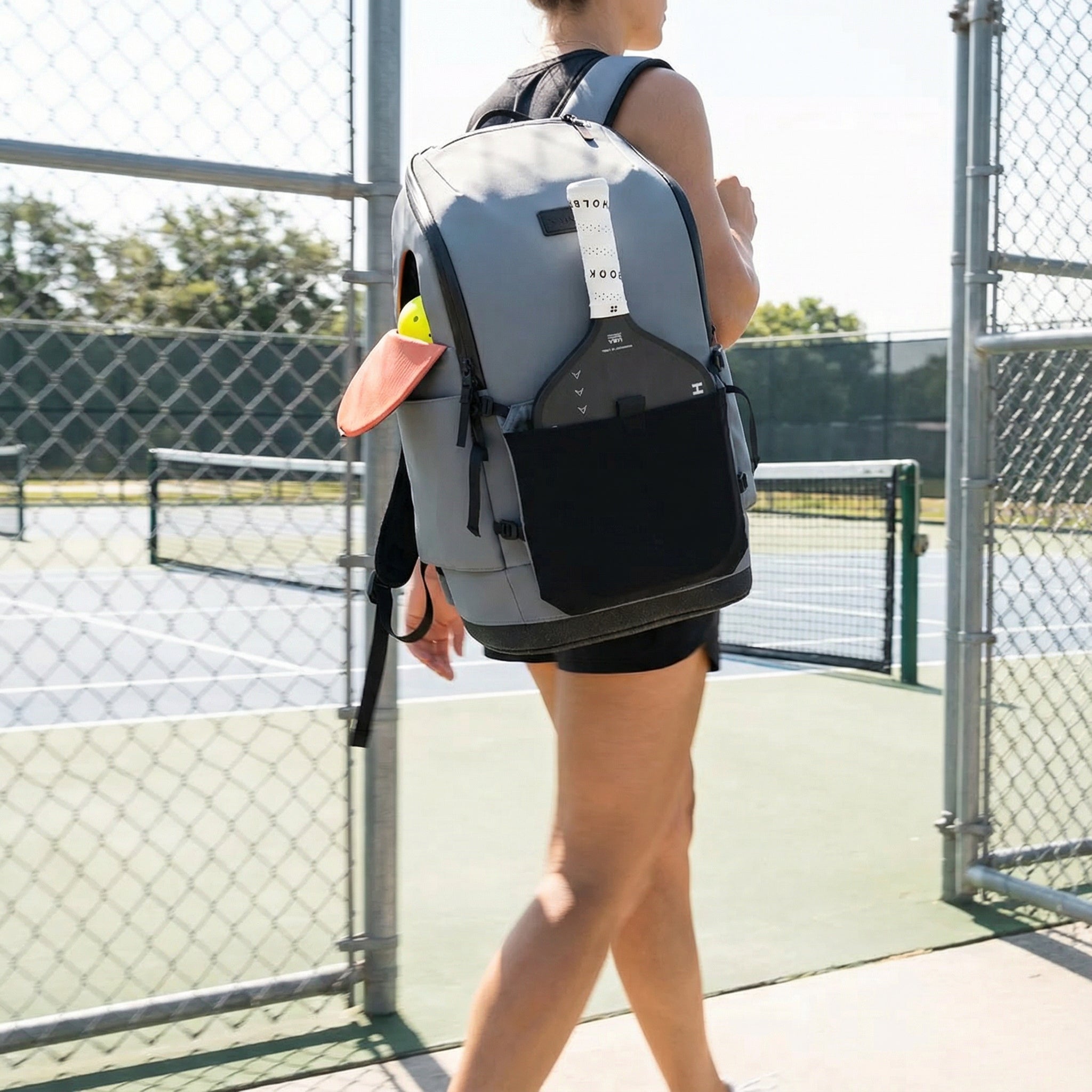
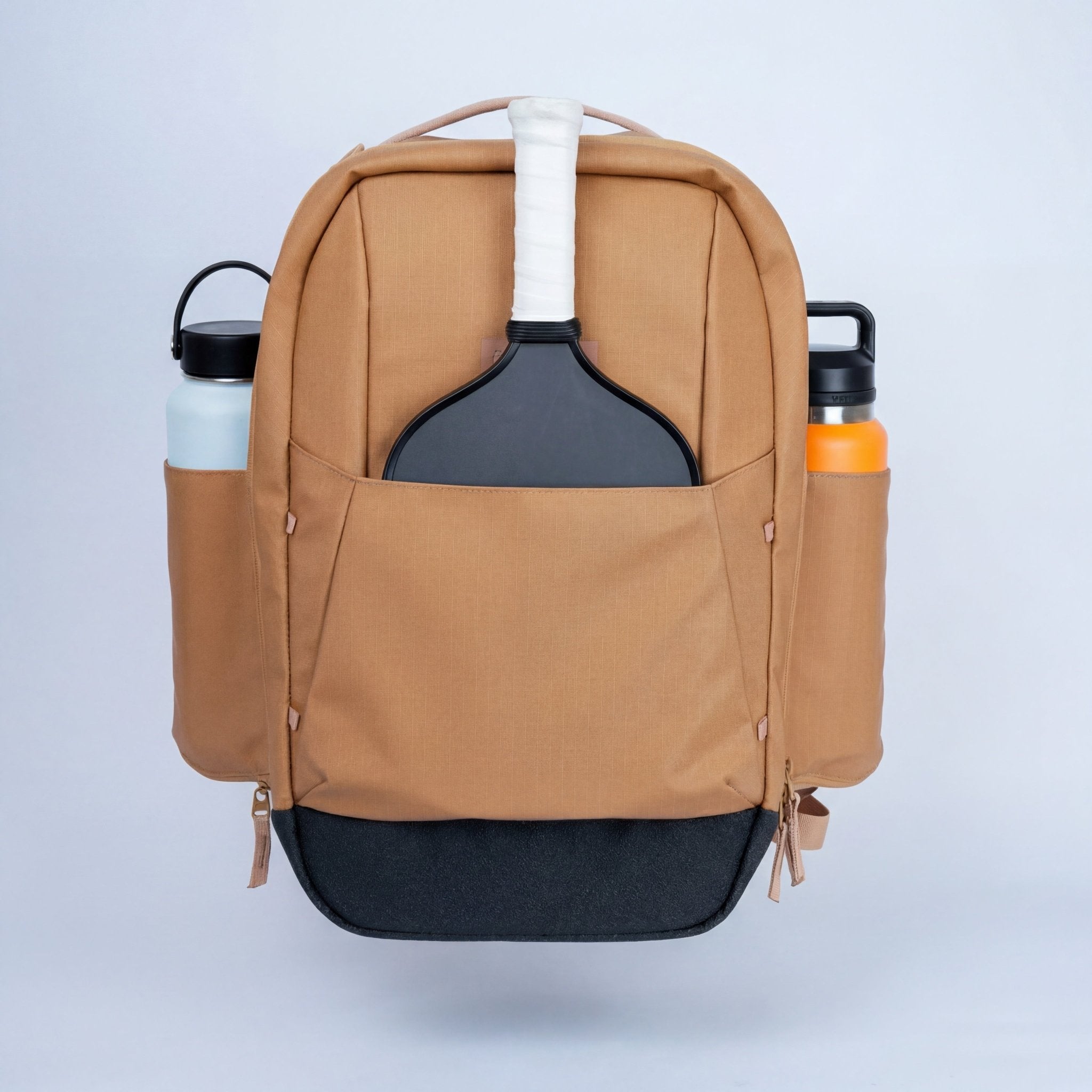
The Court Ranger V2 fits up to 4 paddles in its modular sleeve system — padded pockets, YKK AquaGuard zippers, and a 16" laptop sleeve for the work-to-court crowd.

Frequently Asked Questions
What's the actual difference between the Infinity Edgeless DBD Control and Black Diamond Power?
Both paddles share the same dimensions (16.3" × 7.7"), weight (8.2 oz avg), 16mm polymer core, and 700K Japanese Toray carbon fiber face. The difference is in face layup: the DBD Control is tuned for dwell and touch — longer ball contact time, better precision for dinks and drops. The BD Power is tuned for faster ball departure — more pop on drives and speed-ups. At the kitchen line, the DBD Control gives you more feedback and placement precision. On attacking shots, the BD Power delivers more pace.
Is an edgeless paddle more likely to break?
The edge of an edgeless carbon fiber paddle is more vulnerable to chipping than a standard paddle with plastic edge guard protection. If you regularly drag your paddle on court surface to dig out low balls, or play outdoors on rough concrete, edge chipping is a real risk over time. For players who keep their paddle off the ground during play, durability is not a significant concern — the face construction is otherwise the same quality as standard Six Zero paddles.
Should I buy the Infinity Edgeless or the standard Six Zero DBD at $180?
If you're below 4.0, buy the standard Six Zero DBD Control at $180. The edgeless feel requires refined edge-contact technique to notice — newer players won't perceive the difference. At 4.0 and above, specifically if your game is kitchen-focused and you've experienced inconsistent contact on edge dinks with standard paddles, the $40 upgrade to the Infinity Edgeless is worth considering. For everyone else, the standard is 90% of the experience.
Which is better for a 4.0 player: DBD Control or BD Power?
Depends entirely on your game style. At 4.0, most competitive points are decided at the kitchen — which makes the DBD Control the default recommendation for most 4.0 players. Its dwell and touch give you the precision for dink exchanges and third-shot drops. If you're a 4.0 banger who wins by hitting hard from the baseline and rarely engages in extended dink rallies, the BD Power suits your game better. Know your style before you buy.
How does the Infinity Edgeless compare to the Six Zero Coral Pro?
The Six Zero Coral Pro at $220 uses a hybrid carbon/fiberglass face rather than pure raw carbon — this makes it more forgiving and approachable for 3.5–4.0 players who want some pop with better consistency. The Infinity Edgeless models (both DBD and BD) use pure 700K raw carbon, giving more skilled players more spin texture and more precise feel. The Coral Pro is the better recommendation for rec players who play 2–3 times per week; the Infinity Edgeless for 4.0+ players who want raw carbon performance with the edgeless sweet spot.
Final Verdict
The Six Zero Infinity Edgeless models are genuinely good paddles — well-built, well-tuned, and they deliver on the edgeless promise of cleaner edge-contact. But they're 4.0+ paddles. Below that, the standard Six Zero lineup gives you comparable performance for $40 less.
Between the two, choose by game style: kitchen-first players with a developed soft game want the DBD Control. Attackers and baseline players who live off pace want the BD Power. Don't split the difference — pick the one that matches how you actually win points, not how you wish you played.
See also our Six Zero Coral Pro Review and Six Zero Black Opal Review for the rest of the Six Zero lineup at $220.

Leave a comment
This site is protected by hCaptcha and the hCaptcha Privacy Policy and Terms of Service apply.