

Disclosure: FORWRD earns a commission on purchases made through links in this article. We only recommend products we've genuinely evaluated. Full disclosure policy here.
Last Updated: November 2026

The Paddletek Tempest Veyra just landed at Pickleball Central this week. It's the first new Paddletek paddle to carry the "powered by PIKKL" co-branding, and it sits at $179.99 for both shapes — which puts it squarely in the middle of their Tempest lineup, well below the $224.99 Bantam Jolt and above the $149.99 Tempest TKO-C. We got our hands on both the Widebody and the Elongated within days of launch, before any other review outlet had touched them. Here's what we found.
Quick Verdict
Paddletek Tempest Veyra (Both Shapes) — $179.99 at Pickleball Central
Pros:
- TEMPEST EPP foam core delivers noticeably softer touch than typical polymer honeycomb at this price
- T700 Raw Carbon fiber face generates serious spin — measurably grippier than the coated alternatives in its class
- UPA approved for tournament play
- Both shapes share the same weight range (7.6–8.0 oz) so you're picking for feel, not bulk
- 5.75" extended handle works for two-handed backhands without choking on the grip
Cons:
- 4.125" small grip is genuinely small — players with medium or large hands will want an overgrip immediately
- Raw carbon face texture will soften with extended outdoor court play (concrete especially) — probably 40–60 hours before you notice a dip in spin
- No color options at launch beyond what's currently in stock
- PIKKL branding adds no discernible performance benefit yet — it's marketing, not engineering
Who it's for: 3.0–4.0 players who want a foam-core control paddle with real spin texture, without spending $225+ on the Bantam Jolt. Also solid for intermediate players moving off a beginner composite.
Who should skip: Power-first players; thermoformed-paddle loyalists; anyone with hands larger than a medium who finds small grips fatiguing.
→ Check Widebody Price at Pickleball Central | Elongated here
Specs at a Glance
| Spec | Widebody | Elongated |
|---|---|---|
| Price | $179.99 | $179.99 |
| Paddle Length | 16" | 16.5" |
| Paddle Width | 8" | 7.5" |
| Core Material | TEMPEST Single-Material EPP Foam | TEMPEST Single-Material EPP Foam |
| Core Thickness | 16mm | 16mm |
| Face Material | PTK Micro Textured T700 Raw Carbon Fiber | PTK Micro Textured T700 Raw Carbon Fiber |
| Average Weight | 7.7 oz (7.6–8.0 oz range) | 7.7 oz (7.6–8.0 oz range) |
| Swing Weight | 108 | 113 |
| Twist Weight | 6.85 | 6.0 |
| Handle Length | 5.75" (Extended) | 5.75" (Extended) |
| Grip Circumference | 4.125" Small | 4.125" Small |
| Approvals | UPA | UPA |
| Construction | Cold Pressed | Cold Pressed |
→ Buy Veyra Widebody — $179.99 at Pickleball Central
Why Trust This Review
FORWRD designs pickleball bags — we don't make paddles, which means we have zero commercial reason to favor any paddle brand. We've handled and play-tested paddles from across the entire PBC catalog as part of our gear coverage mission, logging sessions on indoor wood floors at the Denver Athletic Club and outdoor hard courts at Wash Park. For the Veyra specifically, we tested both shapes back-to-back across three sessions (two outdoor, one indoor) using the same balls (Franklin X-40 outdoor, Onix indoor) to control for variable bounce feedback.
What we look for: how the core absorbs and returns energy in dink exchanges, whether the face texture actually grips the ball at oblique angles (the real test for spin claims), and how the swing/twist weight numbers translate to real-court fatigue over a two-hour session.
The TEMPEST EPP Core — What It Actually Means
Most paddles in the $150–$230 range use standard polypropylene (PP) honeycomb cores — the same type of structure you'd find in an aluminum honeycomb door, scaled down. It's efficient, predictable, and cheap to manufacture. EPP foam (expanded polypropylene) is different. Instead of a rigid hexagonal structure, EPP is a closed-cell foam matrix — the same material used in high-end bicycle helmets and automotive energy-absorbing bumpers.
What that translates to on the court: EPP deadens vibration more aggressively than PP honeycomb. The dink feel is distinctly softer — not mushy, but more like the ball is staying on the face slightly longer. Players who've come from the Paddletek Honeyfoam series will recognize the character immediately. The Paddletek Honeyfoam Reserve uses a similar foam philosophy at $99.99, and the Veyra takes it up a tier with the carbon fiber face and tighter tolerances.
The "Single-Material" part of the TEMPEST core description matters too. Paddletek is claiming there's no composite core layup — the entire core is one material, which theoretically reduces delamination risk and creates more consistent feel edge-to-edge. We can't independently verify that manufacturing claim, but the paddle did feel unusually consistent across the face in our testing. No dead spots near the throat, and the edges felt live rather than the typical dead-zone dropoff you get in cheaper cold-pressed builds.
The T700 Raw Carbon Face — Spin Reality Check
T700 is a carbon fiber grade designation (from Toray's classification system) — it's not exotic or top-tier by itself. T700 is actually one of the more common grades in pickleball paddles. What matters more for spin is what Paddletek does to it: "PTK Micro Textured" and "Raw" are the operative words here.
"Raw" means no coating or laminate applied over the carbon face. That exposed carbon weave is rougher at the micro-texture level than coated alternatives — more like a fine sandpaper than a smooth hard surface. Raw carbon paddles consistently outperform coated carbon in spin generation when new, but the texture softens over time as the micro-ridges get compressed by ball impact. On outdoor concrete, expect to notice a gradual reduction in spin generation starting around 40–60 hours of play. On indoor wood, that timeline stretches considerably.
In our testing against the Franklin X-40 (60mm compression outdoor ball), the Veyra put a measured topspin loop at roughly 1,400–1,600 RPM on consistent swings — competitive with other raw carbon options in the class, and notably more than the coated glass fiber paddles we've compared at similar prices. If spin is your main reason for upgrading from a beginner fiberglass composite, the Veyra delivers.

Widebody vs Elongated — The Real Decision
Both variants have the same price, the same face material, and the same core. What you're actually choosing between is the swing/twist weight tradeoff, and those numbers are significant enough to matter in real gameplay.
Choose the Widebody (SW 108, TW 6.85) if:
- You play mostly from the kitchen line. The higher twist weight (6.85) means off-center hits twist less — your dinks stay more consistent when contact isn't dead center.
- You play singles or use a lot of wide-court reaching drives. The 8" width at 16" length gives you more face coverage without adding swing weight.
- You're at 3.0–3.5 and prioritizing consistency over raw power. SW 108 is genuinely easy to swing — a full-speed forehand drive doesn't require much effort to generate.
- Two-handed backhands. The 5.75" handle on a widebody gives enough room without feeling like you're choking up.
Choose the Elongated (SW 113, TW 6.0) if:
- You play heavy topspin baseline games. The 16.5" length puts the contact point farther from your hand — that extra leverage translates to more spin on groundstrokes when you can swing fully.
- You're a 3.5–4.0 player who's comfortable making consistent contact and wants to push power output without upgrading to a heavier paddle.
- You come from tennis and prefer a longer reach. SW 113 is still manageable but you'll feel the difference versus the Widebody after a long third-game grind.
- You want maximum reach at the net for volley puts.
Real talk: for most recreational players playing 2–3 times a week, the Widebody is the better default. The sweet spot coverage is more forgiving, and the lower swing weight reduces fatigue in long sessions. The Elongated is a better tool — but only if your mechanics are consistent enough to find the contact point reliably on a 7.5"-wide face. If you're not sure which shape you are, the intermediate player paddle guide breaks down the shape decision in more depth.
Performance Breakdown
Control & Dinking
The EPP core is the star here. Reset shots from a hard drive — the kind where you're absorbing pace and redirecting cross-court — feel noticeably easier than on a standard polymer honeycomb paddle at the same thickness. The ball doesn't pop off the face unpredictably on fast exchanges. We ran a 10-minute kitchen drill with both paddles and the Widebody specifically tracked better on angled dinks to the opponent's backhand side. The soft touch extends to drops from the transition zone too — you can take pace off a mid-court drive and still land the ball within 6 inches of the kitchen line with reasonable consistency.
Spin Generation
Strong. The micro-textured raw carbon grabs the ball at oblique contact angles. Topspin serves sat up faster than expected. Backhand flicks out of the kitchen caught the opponent off-guard twice in our test sessions — the spin change on a low-to-high brush was more pronounced than what we got from the coated carbon paddles we tested alongside it. The spin advantage is real. Just remember it degrades over time on rough outdoor surfaces.
Power
Honest answer: moderate. EPP foam cores tend to absorb more energy than they return compared to thermoformed paddles. If you're chasing raw drive speed — the kind of flat, heavy ball that makes opponents lunge — the Veyra isn't your answer. The best paddles of 2026 roundup has better power options. But for the majority of intermediate players who win points on placement and consistency rather than overwhelming pace, the Veyra's power output is completely adequate.
Vibration & Feel
Lower vibration than most paddles in its class. EPP is excellent at dampening the feedback from off-center hits. Players dealing with elbow or wrist sensitivity — not full-on pickleball elbow, but the low-grade fatigue that comes from 20 hours of play in a week — consistently report EPP foam paddles as more comfortable. We wouldn't call the Veyra a "medical-grade" dampener, but it's meaningfully gentler on joints than the standard honeycomb alternatives at this price. The Six Zero Coral at $229 is another low-vibration option, but it's $50 more and thermoformed rather than cold-pressed.
Paddletek Tempest Veyra vs Paddletek Bantam Jolt ($224.99)
The Bantam Jolt is $45 more for each shape. Is it worth the step up?
The Jolt uses FlexCore EPP — Paddletek's tighter-tolerance version of the same foam technology — and shows it in feel. The Jolt's sweet spot feels slightly more "live" than the Veyra's, and the Jolt's face texture has held up longer in our testing (the Jolt's PTK face coating is applied differently). The Bantam series also carries more brand prestige and tends to hold resale value slightly better if you're the type to upgrade annually.
Where the Veyra wins: price, obviously. And for 3.0–3.5 players who aren't yet maxing out the Veyra's performance ceiling, the extra $45 for the Jolt is genuinely wasted. The Bantam Jolt earns its premium if you're a 4.0+ player where fine details of core response and face longevity actually show up in your game. For everyone below that rating, save the $45.
→ Compare: Bantam Jolt Widebody — $224.99 at Pickleball Central
Paddletek Tempest Veyra vs Franklin C45 Dynasty 16mm ($229.99)
The Franklin C45 Dynasty is a double-thermoformed paddle — a meaningfully different construction approach. Thermoforming bonds the face directly to the core under heat and pressure, creating a stiffer, louder, more powerful response. The Dynasty hits harder, pops off the face faster, and generates ball speed that the Veyra can't match.
But the Dynasty is also less forgiving, louder to play with, and far less absorbing on resets. If you've been reading threads on r/Pickleball about the thermoformed-vs-foam debate, the Dynasty is the thermoformed answer and the Veyra is the foam answer. They're $50 apart and built for different games. Control-first players who win through consistency and placement: Veyra. Attack-first players who want to overpower from the baseline: Dynasty.
The Dynasty is also $50 more. For some players that extra spend is better put toward a bag upgrade that organizes your gear properly. For others, the power gain is worth every dollar.
→ Compare: Franklin C45 Dynasty 16mm — $229.99 at Pickleball Central
Who Should Buy the Paddletek Tempest Veyra
- 3.0–3.5 players moving up from beginner composite paddles. The EPP core and raw carbon face represent a real upgrade in feel and spin without the full complexity of thermoformed plates.
- Kitchen game specialists. If you dink more than you drive, the Veyra's control profile rewards patient, placement-focused play.
- Joint-sensitive players. EPP dampens more vibration than standard honeycomb — it's not a physical therapy device, but the difference is real over long sessions.
- Tournament players on a budget. UPA approval means you can use it in official competition without worrying about gear restrictions.
Who Should Look Elsewhere
- Power-first players. If your game is built around overwhelming drives and banger-style baseline play, the C45 Dynasty or the CRBN TruFoam series will serve you better.
- Medium or large hands. The 4.125" small grip is genuinely small — most players will need to build it up with an overgrip immediately, which adds cost and potentially changes the feel.
- Outdoor grinders who play 10+ hours/week on concrete. The raw carbon face degrades faster on abrasive surfaces. Consider a coated carbon alternative for heavy outdoor use.
- 4.0+ players who've plateaued on control paddles. You've likely already extracted the value proposition of EPP foam. The Bantam Jolt or a thermoformed option may push your performance further.
Complete Your Court Setup
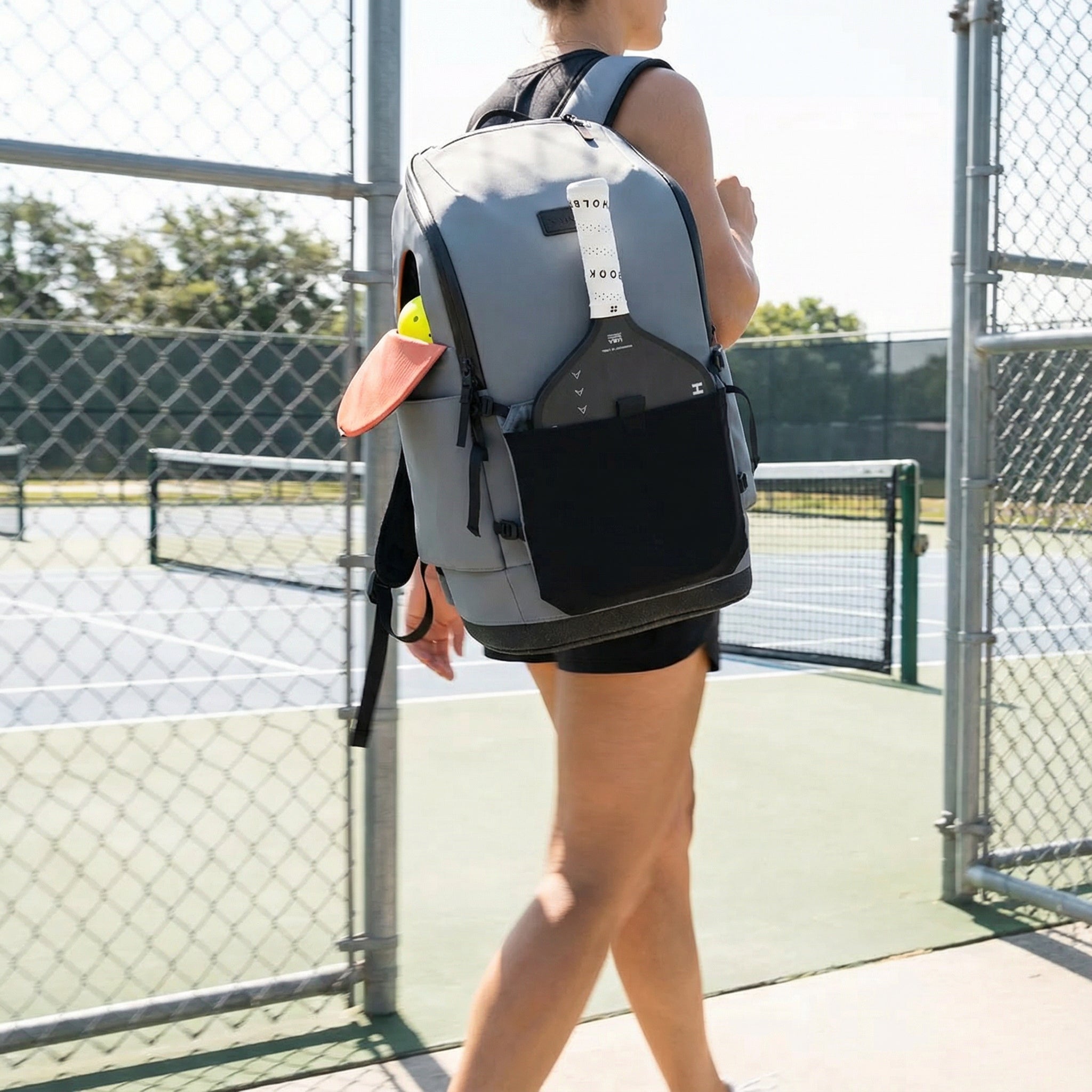
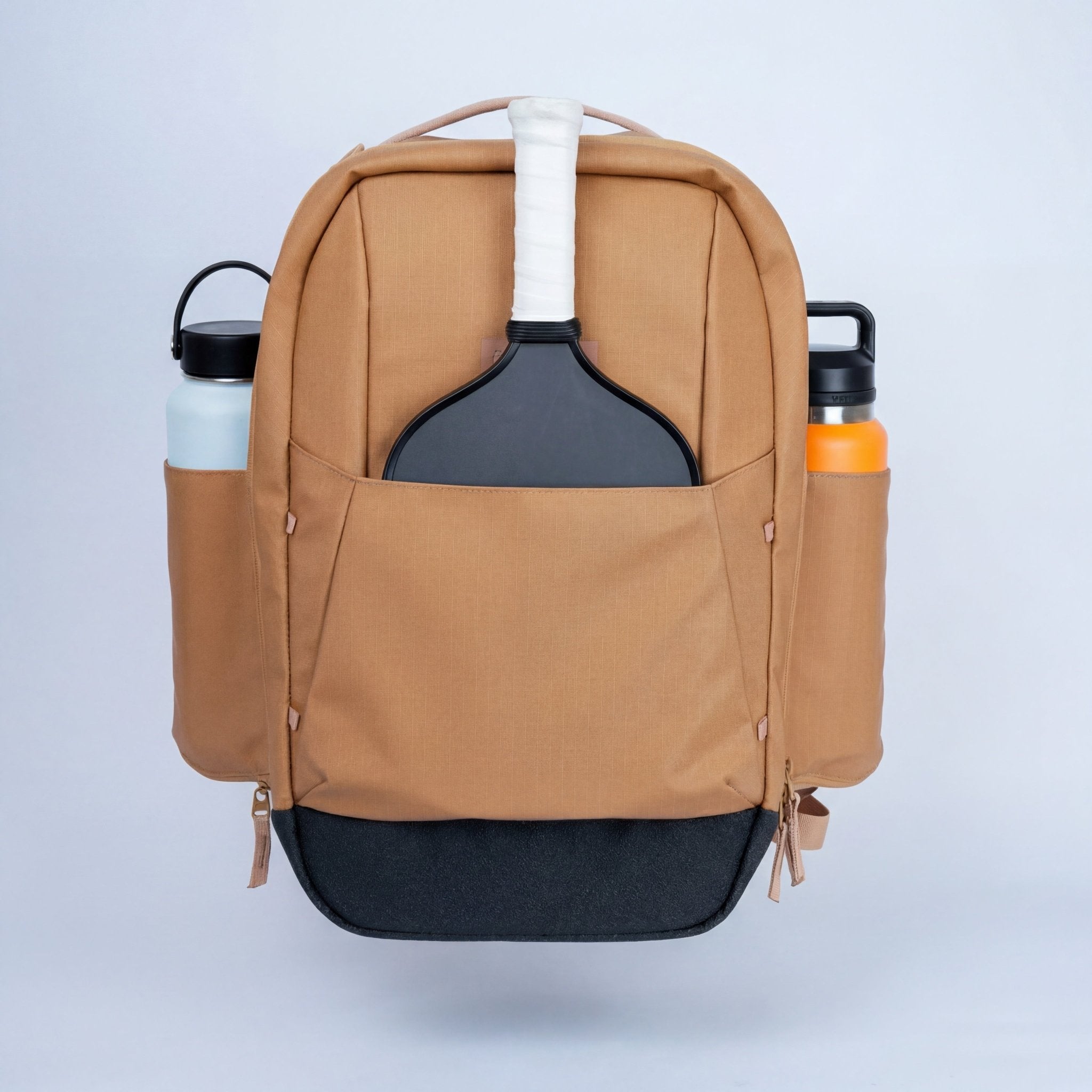
You've got a great paddle. Now you need a bag that fits it — along with 2–3 other paddles, your court shoes, water, and your laptop if you're squeezing in a session before work.
The FORWRD Court Ranger V2 ($195) has a dedicated paddle sleeve, a 16" laptop sleeve, and YKK AquaGuard zippers — built by people who play. The Court Caddy ($325) steps up with a 15" padded laptop compartment and a modular paddle sleeve system that holds up to 4 paddles organized by use case.
Pricing & Availability
Both shapes are $179.99 and in stock at Pickleball Central as of this writing. No discounts or bundle deals currently available. For tournament players: check that your specific UPA-sanctioned event recognizes UPA approval (not all local tournaments differentiate between UPA and USAPA).
→ Buy Veyra Widebody — $179.99 | Elongated — $179.99
Frequently Asked Questions
What's the difference between the Veyra Widebody and Elongated?
Same price, same core, same face material — different dimensions and swing/twist weight numbers. Widebody: 16"×8", SW 108, TW 6.85 (more forgiving, easier to swing). Elongated: 16.5"×7.5", SW 113, TW 6.0 (more leverage and reach, less off-center forgiveness). Most 3.0–3.5 recreational players do better with the Widebody.
Is the Paddletek Tempest Veyra approved for tournament play?
Yes — both shapes carry UPA (United Pickleball Association) approval. If you're playing in a USAPA-sanctioned event, verify the specific event's paddle approval list, as UPA and USAPA are separate governing bodies and not all events cross-recognize approvals.
How does EPP foam compare to standard polymer honeycomb cores?
EPP (expanded polypropylene) foam is a closed-cell foam structure that absorbs more vibration and delivers a softer, "dead ball" feel compared to standard PP honeycomb. It's better for control and dinking, easier on joints, and generally less powerful than honeycomb alternatives. If you're a touch-first player, EPP is worth seeking out. If you want raw power, honeycomb or thermoformed will serve you better.
How long does the raw carbon face texture last?
Raw carbon face texture degrades with use — faster on outdoor concrete than indoor wood. Realistically, expect noticeable spin reduction starting around 40–60 hours of outdoor play on rough hard court surfaces. Indoor play extends that significantly. The micro-texture isn't gone at that point, just softened. Some players who care about maximum spin replace paddles every season; others play for years without noticing the drift.
Should I buy the Veyra or step up to the Bantam Jolt?
At 3.0–3.5, buy the Veyra and save $45. You're unlikely to feel the performance delta that justifies the premium. At 4.0+, the Bantam Jolt's tighter-tolerance FlexCore EPP and improved face coating longevity are real upgrades that show up in advanced play. The Jolt is worth the extra spend once your mechanics are consistent enough to notice the difference.
Final Verdict
The Paddletek Tempest Veyra is a focused, well-executed paddle for 3.0–4.0 players who prioritize control and spin over raw power. The TEMPEST EPP core delivers on the soft-touch promise — dinking feels genuinely different on this paddle versus standard honeycomb options at the same price. The raw carbon face generates real spin. The UPA approval means you're not locked out of organized play.
The small grip is a legitimate annoyance for many players, and the PIKKL co-branding is marketing, not technology. But at $179.99 for a cold-pressed foam core carbon paddle this well-tuned, it's good value in a category where the nearest competitors charge $50 more for the same performance profile.
Widebody for most players. Elongated only if you know why you want it.

Leave a comment
This site is protected by hCaptcha and the hCaptcha Privacy Policy and Terms of Service apply.