

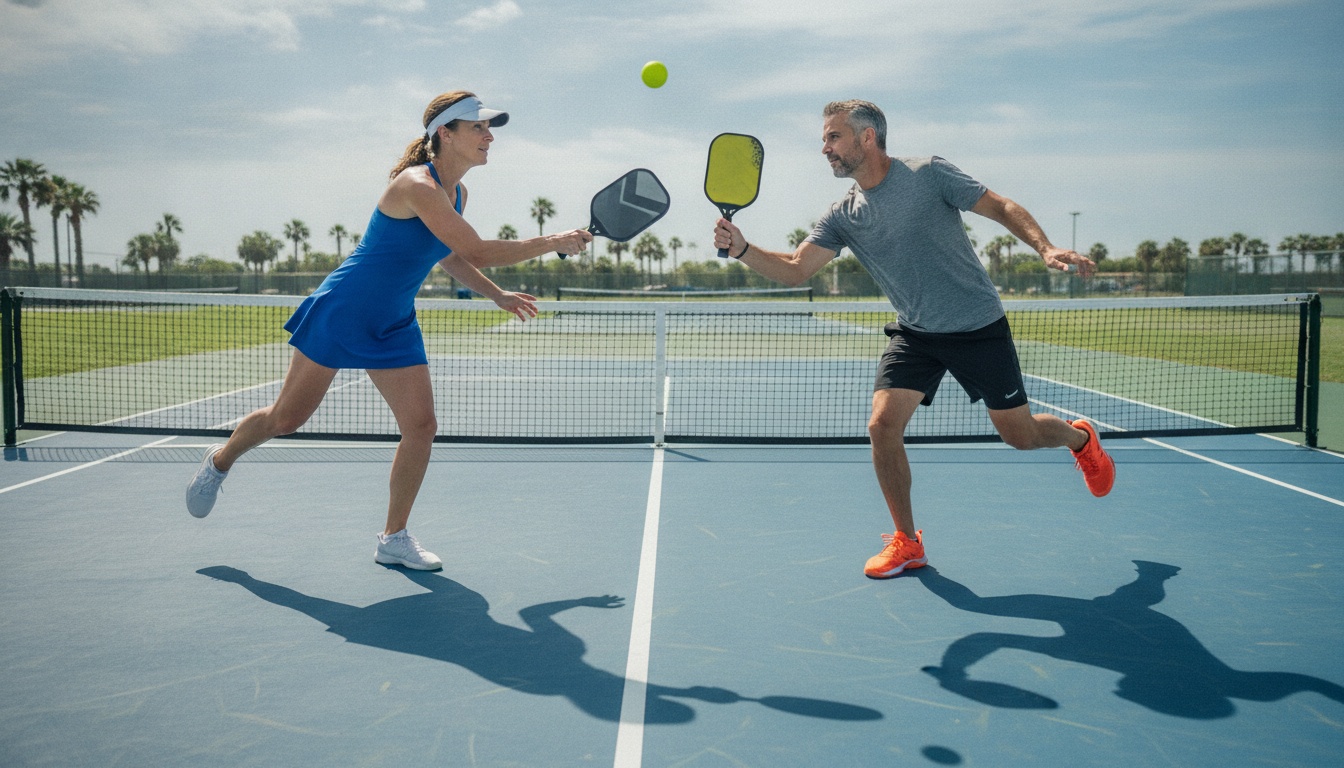
A 170-pound recreational doubles player burns roughly 462 calories per hour. Competitive singles? That same player hits 693 calories per hour — and the math is more interesting than just "play harder, burn more."
Last updated: July 2026
Below you'll find calorie estimates by format and body weight (using MET data from peer-reviewed exercise science research), a simple self-calculator, heart rate zone data from a 2022 study on pickleball intensity, and one finding most players don't see coming: the better you get at pickleball, the fewer calories you burn at the same perceived effort.
Quick answer for the skimmers: most recreational players burn 350–620 calories per hour depending on body weight, format, and intensity. Read on for the exact numbers that apply to you.
→ The Complete Pickleball Health & Fitness Guide 2026
Table of Contents
- Calorie Burn by Format
- How Body Weight Changes the Numbers
- The Self-Calculator
- Doubles vs. Singles: What the Research Shows
- How Pickleball Compares to Other Workouts
- Why Better Players Burn Fewer Calories
- Is Pickleball Good for Weight Loss?
- FAQ
Calorie Burn by Pickleball Format
These estimates use the standard MET (Metabolic Equivalent of Task) formula: MET × body weight in kg = calories per hour. MET values for pickleball are drawn from the Compendium of Physical Activities and a 2022 peer-reviewed study measuring heart rate intensity and step counts in recreational adult players.
Here's the MET value for each format:
- Recreational doubles: MET 6.0 — typical 3.0–3.5 level casual play
- Competitive doubles: MET 8.0 — organized league or tournament doubles
- Recreational singles: MET 7.5 — casual singles, open play format
- Competitive singles: MET 9.0 — organized or tournament-level singles
For reference: anything above MET 6.0 is classified as vigorous physical activity by the American College of Sports Medicine (ACSM). Even recreational doubles clears that bar.
How Body Weight Changes the Numbers
Body weight is the biggest single variable in calorie burn — bigger than format for most players, bigger than intensity at the recreational level. Here's the full table across all four formats for a one-hour session:
| Body Weight | Rec Doubles | Comp Doubles | Rec Singles | Comp Singles |
|---|---|---|---|---|
| 130 lbs (59 kg) | 354 cal/hr | 472 cal/hr | 443 cal/hr | 531 cal/hr |
| 150 lbs (68 kg) | 408 cal/hr | 544 cal/hr | 510 cal/hr | 612 cal/hr |
| 170 lbs (77 kg) | 462 cal/hr | 616 cal/hr | 578 cal/hr | 693 cal/hr |
| 190 lbs (86 kg) | 516 cal/hr | 688 cal/hr | 645 cal/hr | 774 cal/hr |
| 210 lbs (95 kg) | 570 cal/hr | 760 cal/hr | 713 cal/hr | 855 cal/hr |
| 220 lbs (100 kg) | 600 cal/hr | 800 cal/hr | 750 cal/hr | 900 cal/hr |
The range from lightest recreational doubles (354 cal/hr at 130 lbs) to heaviest competitive singles (900 cal/hr at 220 lbs) is enormous — 2.5x. Don't use a single average number you read somewhere; use your actual weight against the format you actually play.
Calculate Your Personal Calorie Burn
Enter your details for a quick estimate using the same MET formula the table above is based on:
Pickleball Calorie Calculator
Doubles vs. Singles: What the Research Actually Shows
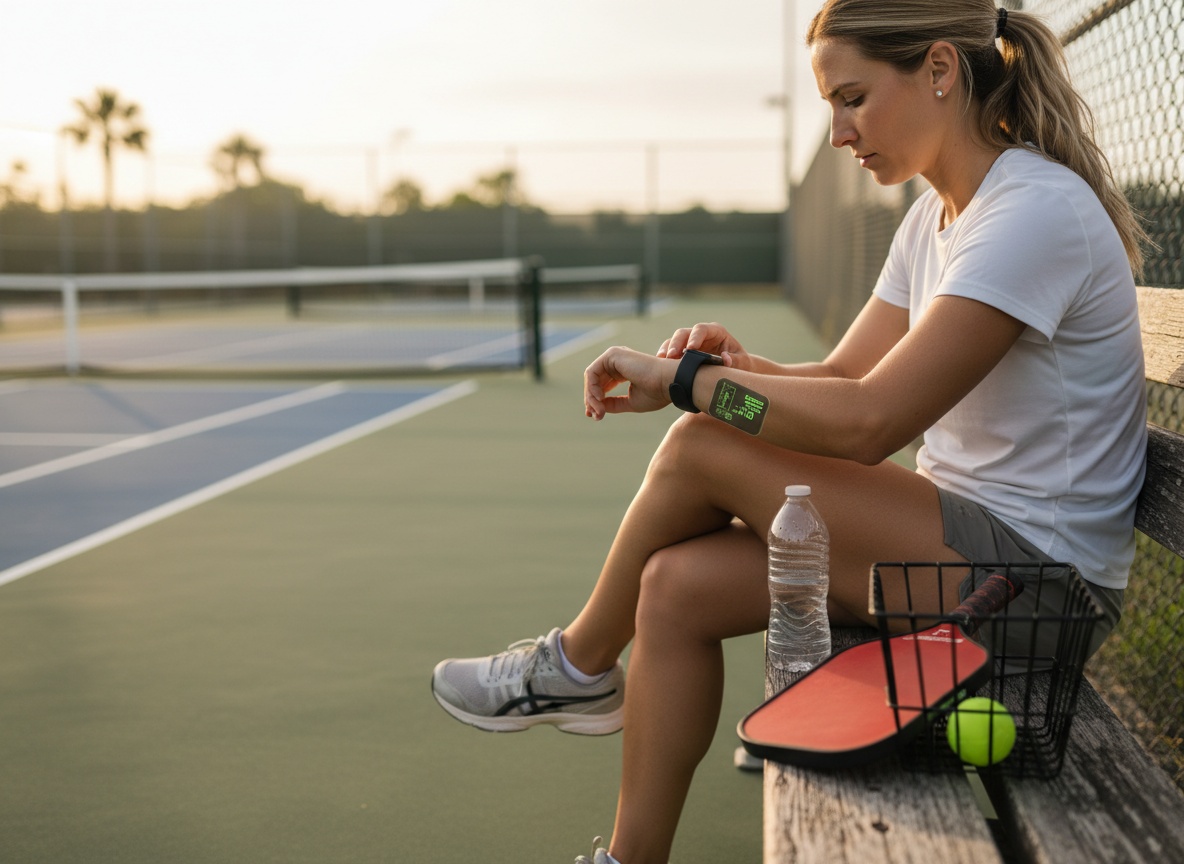
A 2022 study published in the Journal of Aging and Physical Activity put heart rate monitors and accelerometers on recreational players during both formats. The headline numbers:
- Mean heart rate in singles: 111.6 bpm (~70.3% of max HR)
- Mean heart rate in doubles: 111.5 bpm (~71.2% of max HR)
- Steps per hour — singles: 3,322
- Steps per hour — doubles: 2,791
The heart rates are nearly identical. What's different is court coverage — 19% more steps in singles, which translates to 30–40% more calories burned per session compared to recreational doubles at the same perceived intensity.
More than 70% of time in both formats was classified in the moderate-to-vigorous heart rate zone. That's the zone associated with cardiovascular adaptation — not light activity. The reputation pickleball has as a "gentle sport" is not supported by the data.
One nuance the study flagged: the intensity varies significantly based on rally structure. During the slow dinking exchanges the sport is known for, heart rate drops. During transition zone battles and speed-up exchanges, it spikes. Singles has fewer dinking pauses — which is why total movement volume is higher even though average heart rate is almost identical.
How Pickleball Compares to Other Workouts
Using ACSM MET values across common fitness activities, here's how pickleball stacks up for a 170-pound person:
| Activity | MET | Cal/hr (170 lbs) | Notes |
|---|---|---|---|
| Walking (3.5 mph) | 4.3 | 331 | Moderate, low impact |
| Recreational doubles pickleball | 6.0 | 462 | Most common format |
| Swimming (moderate) | 7.0 | 539 | Zero-impact |
| Recreational singles pickleball | 7.5 | 578 | |
| Competitive doubles pickleball | 8.0 | 616 | Tournament play |
| Cycling (12–14 mph) | 8.0 | 616 | Stationary or road |
| Tennis singles | 8.0 | 616 | Larger court = more running |
| Competitive singles pickleball | 9.0 | 693 | Tournament singles |
| Running (6 mph) | 10.0 | 770 | High impact |
Recreational doubles burns 40% more than walking and sits in the same vigorous zone as swimming. Competitive pickleball matches moderate cycling and tennis singles calorie-for-calorie. The only activities on this list that clearly outburn pickleball are competitive running — and they come with substantially higher injury rates.
Pickleball's compact court puts a natural ceiling on maximum calorie burn in doubles formats compared to tennis (which uses a court four times larger). That's a real tradeoff — but the lower joint impact is the flip side of that ceiling, which is exactly why the 50+ demographic has adopted pickleball at the rate they have.
Why Better Players Burn Fewer Calories (And What to Do About It)
Here's the finding that surprises people: as you improve at pickleball, you burn fewer calories at the same perceived effort. It's not a myth. It's movement efficiency doing its job.
Better players:
- Read the ball earlier. A 4.0+ player positions themselves before the ball arrives. A 3.0 player reacts after. Fewer scramble steps = fewer calories per rally.
- Control court position strategically. Good players use shot placement to move opponents — not to chase shots themselves. They move less. Their opponents move more.
- Hit fewer unforced errors. Every error resets the rally. Longer consistent rallies burn more calories — but skilled players win points efficiently rather than grinding through long exchanges at the rec level.
- Recover deliberately in the dinking phase. Skilled players use kitchen battles to control pace and recover physically. Less reactive movement during dinking = lower average calorie burn.
If you've been playing 2+ years and your fitness gains have plateaued, this is almost certainly what's happening — not that pickleball stopped working. You got better. Your body adapted.
"We hear this constantly from players who've been around 2–3 years: 'I don't feel as tired anymore.' That's skill efficiency kicking in. The fix isn't to play more — it's to play differently. Add singles, find tougher opponents, drill with intention."
— Grub, FORWRD Co-Founder
Three ways to push the calorie burn back up:
- Play singles more often. Owning the whole court adds 200+ calories per hour immediately — no skill regression required. Start with skinny singles drills if you want a structured approach.
- Play up a skill level. Opponents who are 0.5 levels above you force faster decisions, longer rallies, and more reactive positioning. Playing "comfortable" is comfortable for a reason — and that reason is low output.
- Structure your drilling. Cross-court dinking under pressure, transition zone work, and ATP defense patterns are more aerobically demanding than casual play because you repeat high-intensity movements without the natural rest between points. See our Health & Fitness Guide for a full off-court + on-court training framework.
Is Pickleball Good for Weight Loss?
Yes — with one important condition: you have to keep showing up.
The Apple Heart and Movement Study (2023) tracked Apple Watch data across 250,000 users and confirmed pickleball generates sustained moderate-to-vigorous activity in regular players. For a 170-pound player burning 462 calories per hour of recreational doubles, playing four times per week adds up to roughly 1,850 calories burned per week from pickleball alone. That's a meaningful contribution to a caloric deficit if diet is managed.
The real weight loss advantage isn't calories-per-hour — it's adherence. Research consistently shows players stick with pickleball far longer than running programs, gym memberships, or cycling routines. A 462-cal/hr workout you actually do four times a week beats a 770-cal/hr workout you quit after six weeks.
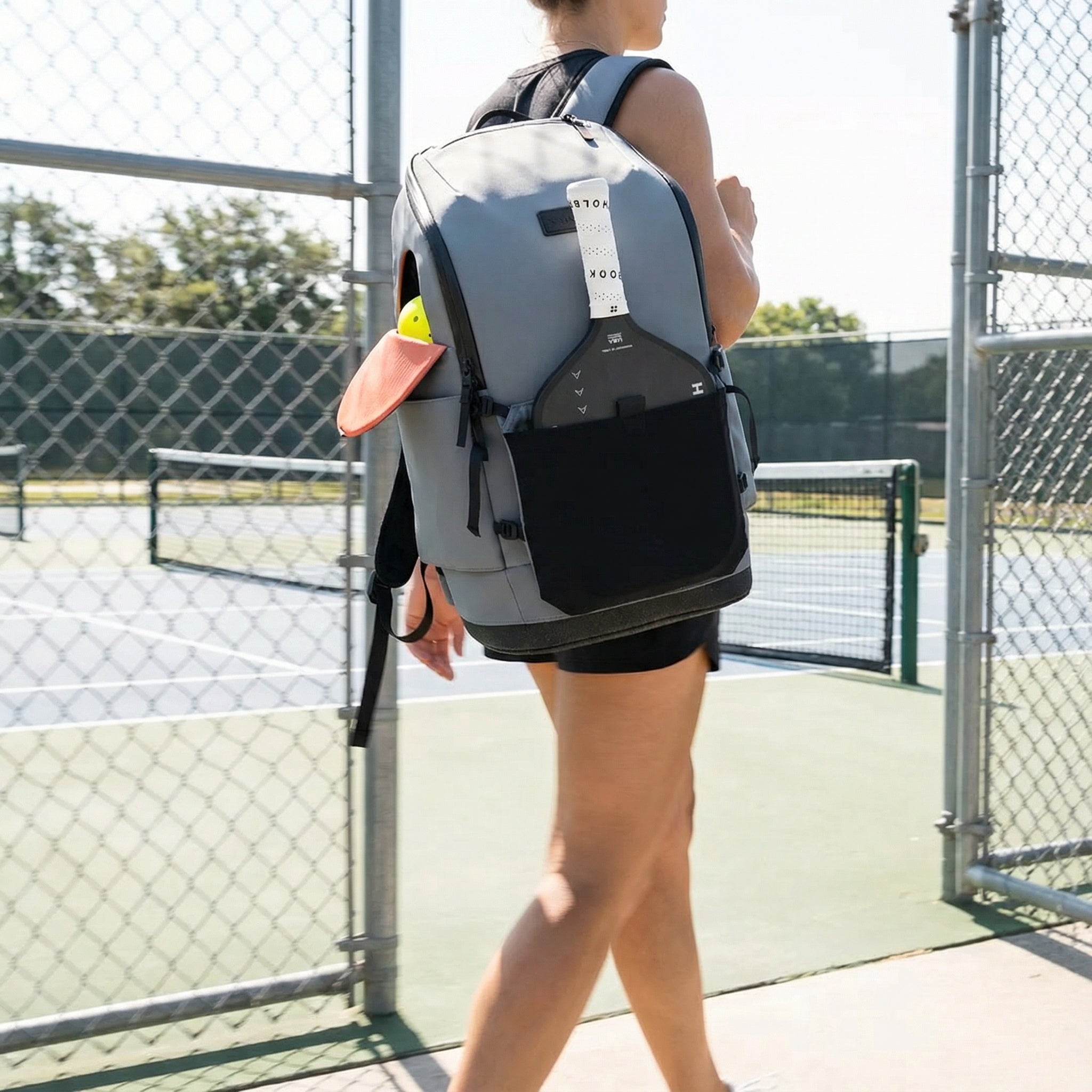
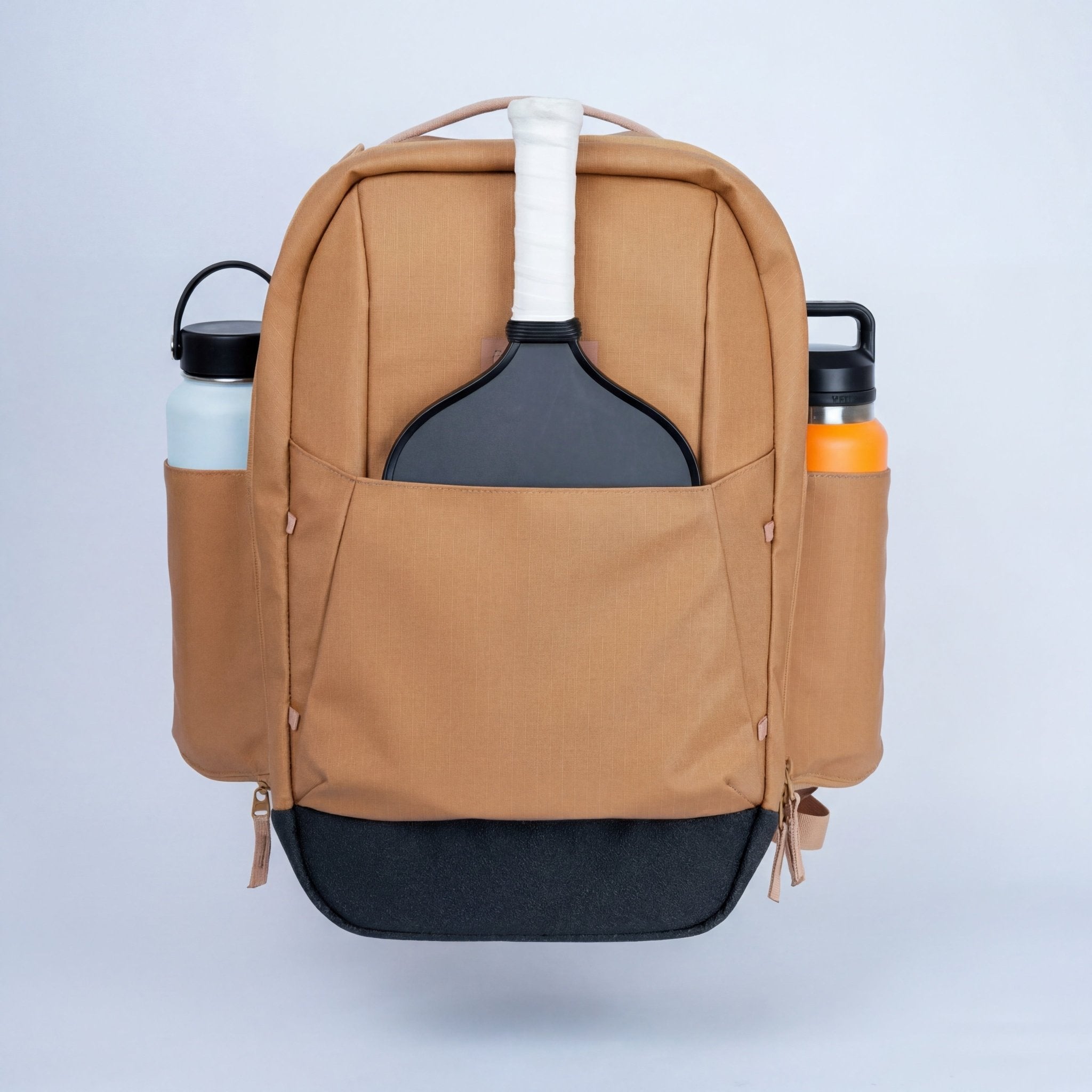
One practical note on consistency: the players who maintain the highest weekly volume are the ones who remove friction from showing up. Gear that's always organized, always ready, always in the car. The Court Ranger V2 ($195) was built around that player — organized for daily carry, packed in under two minutes, built with YKK AquaGuard zippers that hold up to the 4x-per-week schedule.

FAQ: Pickleball Calories Burned
How many calories does pickleball burn in 30 minutes?
A 170-pound player burns roughly 231 calories in 30 minutes of recreational doubles, and 308 calories in 30 minutes of competitive doubles. Use the calculator above or divide any hourly figure by two for a 30-minute estimate.
Is pickleball good for weight loss?
Yes, particularly for long-term adherence. At 350–900 calories per hour depending on weight and format, playing 3–4 times per week creates a real weekly deficit. More importantly: players actually stick with pickleball, which is the variable that matters most for sustained weight loss results.
Does pickleball burn more calories than walking?
Yes — about 40% more for the same duration. Walking at 3.5 mph has a MET of 4.3; recreational doubles pickleball is MET 6.0. A 170-pound person burns 331 calories/hr walking versus 462 calories/hr playing pickleball.
Does singles pickleball burn more calories than doubles?
Yes, 30–40% more. Singles requires full court coverage solo, resulting in 19% more steps per hour in published research. Average heart rates are nearly identical — but total movement volume is significantly higher, which drives the calorie difference.
What heart rate zone does pickleball keep you in?
More than 70% of pickleball playing time — in both singles and doubles — falls in the moderate-to-vigorous zone (70–85% of maximum heart rate). Published studies show mean heart rates of 111–113 bpm during recreational play, or roughly 71% of predicted max HR for adult players.
Why do better pickleball players burn fewer calories?
Movement efficiency. Skilled players read the ball earlier, control court position through shot placement, and use the dinking phase to recover — meaning they move fewer steps per point at the same skill level. To counteract this: play singles, play up a level, or structure your drilling to maintain intensity.

Leave a comment
This site is protected by hCaptcha and the hCaptcha Privacy Policy and Terms of Service apply.