

Most "pickleball for seniors" guides treat players over 50 as a single group that needs careful handling. That framing is both wrong and condescending. A 54-year-old tournament competitor and a 74-year-old starting her first sport since high school have almost nothing in common — giving them the same advice fails both of them.
Here's what the research actually shows: a 6-week pickleball program lowered resting blood pressure and improved VO2 max in adults over 50. A Leisure Sciences study found older pickleball players reported significantly lower depression rates than non-playing peers. Weight-bearing court movement stimulates osteoblast activity — the bone-building cells that slow after menopause and in men over 60. Real findings, not marketing claims.
Most guides stop at "it's great for seniors!" without telling you which benefits apply to your situation, which conditions require modifications, or how to start without wrecking yourself in week two. That's what this guide covers.
Why Pickleball Is Uniquely Built for Adults Over 50
This isn't a case of "any sport beats nothing." Pickleball has structural advantages that matter specifically for older bodies.
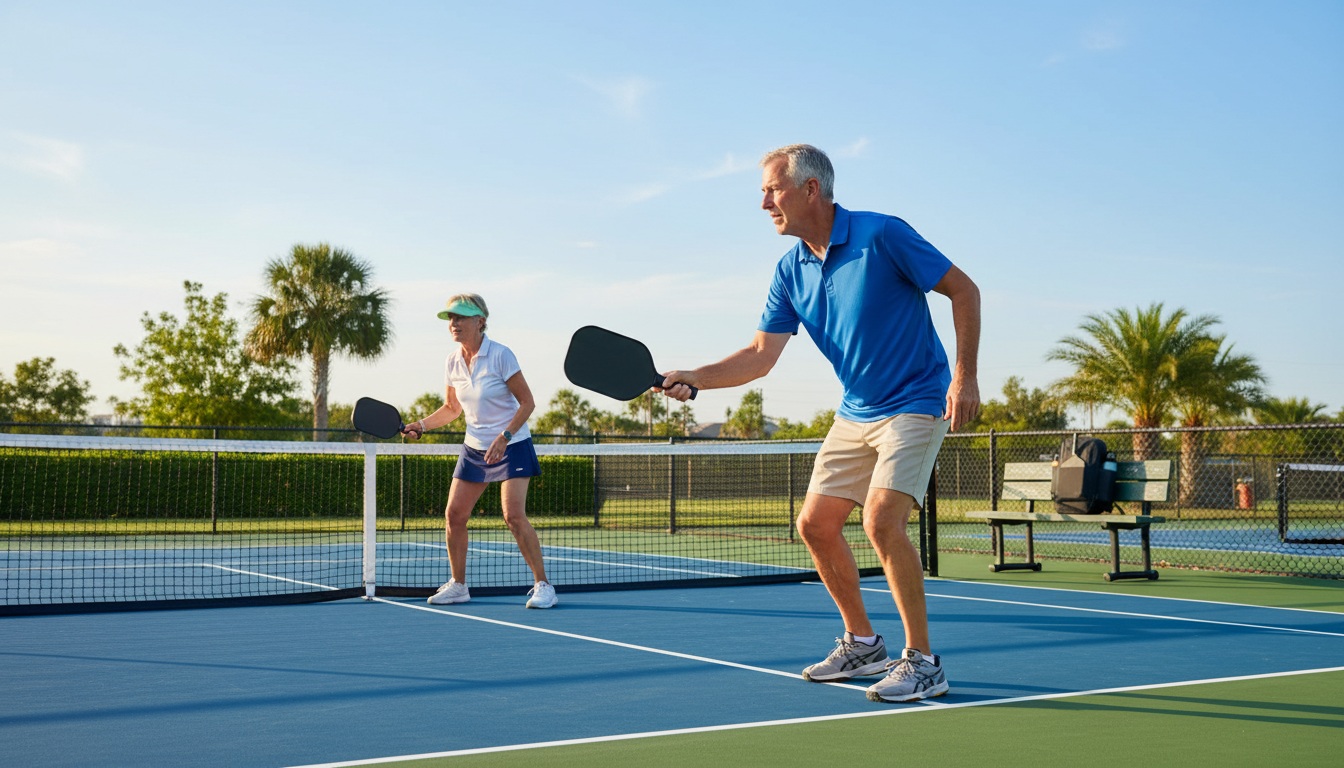
The court is 44 feet long and 20 feet wide — roughly a third of a tennis court. Smaller court means shorter sprints means lower peak force on joints during direction changes. Tennis asks you to sprint 25+ feet and stop hard. Pickleball rarely requires more than 10-12 feet of lateral movement per play. Your knees and hips feel that difference by the end of a session.
The non-volley zone forces a dink-heavy style at the net, creating natural rest intervals mid-rally. Stop-and-start cardiovascular demand is significantly more manageable for older players than sustained aerobic load — and it more closely mirrors the intensity profile cardiologists recommend for people over 50 entering or re-entering physical activity.
The doubles format matters too. Almost everyone over 50 starts in recreational doubles: four players on a small court, rotating partners in open play. That creates a built-in social structure that solo gym routines and singles sports don't have. More on why that has concrete health consequences below.
And pickleball is actually accessible to beginners. A new player can have a consistent rally within a few sessions — which isn't true of tennis, squash, or most racket sports. Early success drives continued participation. Continued participation drives the sustained health benefits that only appear after months of consistent play. The forgiving learning curve is, counterintuitively, one of pickleball's most important health features.
Bone Density and Balance: The Specific Data
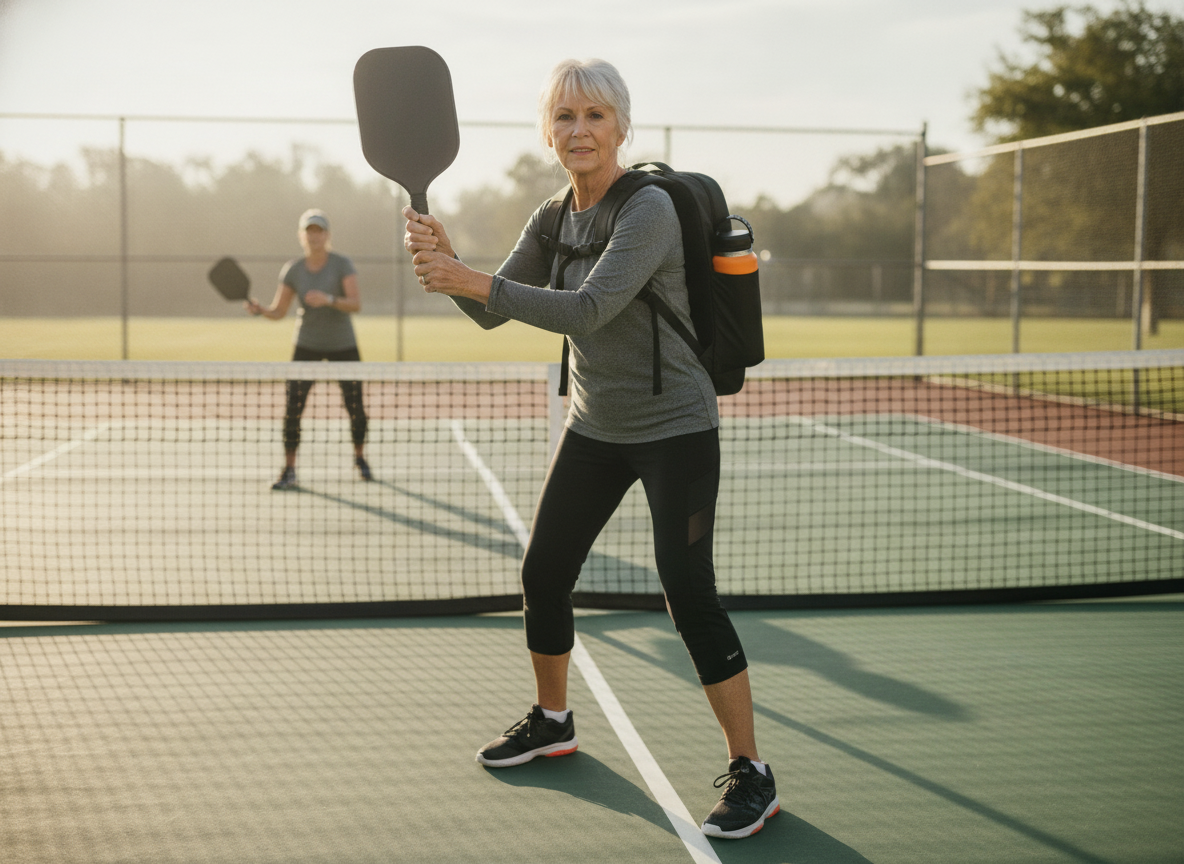
Bone density loss accelerates after 50, particularly for post-menopausal women. The mechanism is well-understood: osteoclast activity (bone breakdown) outpaces osteoblast activity (bone building) without adequate mechanical stimulus. Weight-bearing physical activity is one of the strongest known stimuli for osteoblast function. Swimming and cycling don't provide it. Pickleball does.
Every lateral shuffle, split-step, and directional push-off loads your feet, ankles, knees, and hips — the bones most vulnerable to density loss. It's not high-impact like running, so it doesn't carry the joint-wear risk. It's not zero-impact like swimming, so it doesn't miss the bone-loading stimulus. Pickleball sits in a useful middle ground most recreational sports don't occupy.
Balance is the other piece. Falls are the leading cause of injury-related death in adults over 65. Pickleball demands constant balance challenges — weight shifts during dinks, recovery steps after overhead attempts, rotational movement during drives — that train the proprioceptive system in ways walking and cycling simply don't replicate.
A 2021 study of adults aged 50-75 found that regular pickleball play improved cardiovascular markers, muscle function, and self-reported pain levels. Sample size was small, but the findings align with broader research on racket sports and aging populations. The bottom line: two to three sessions per week over three to six months produces measurable changes in balance and lower-body strength. One session a week is better than nothing, but probably not enough for meaningful physical adaptation.
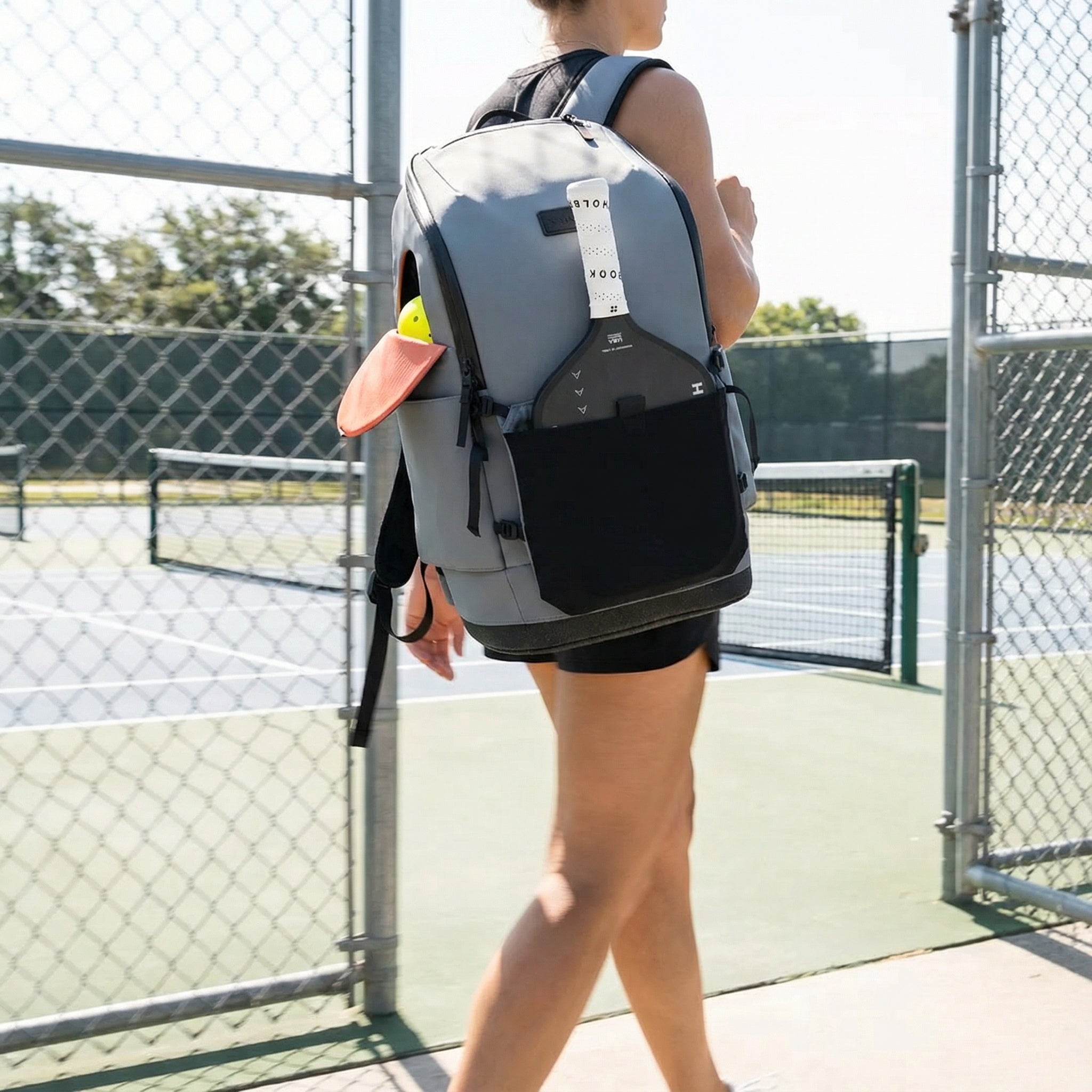
"We kept hearing from players in their 60s and 70s who were playing four times a week but carrying gear in bags designed for tennis — wrong pocket layout, wrong weight distribution, straps that dug in after an hour. That's what drove a lot of the Court Ranger V2 design."
— Grub, FORWRD Co-founder
Modifications for Common Senior Health Conditions
Most guides skip this entirely. "Low-impact sport" is not a blanket answer for every health condition. Here's how to think about the most common ones:
Osteoarthritis (Knee and Hip)
OA doesn't mean stop moving. Inactivity accelerates joint deterioration faster than carefully managed activity — your cartilage needs joint fluid circulation that only movement provides. The modifications that matter:
- Shallow your retrieval position. Deep knee bends for short balls load arthritic knees badly. Let balls bounce higher before contact, or position closer to the kitchen line where balls arrive at a manageable height.
- Court surface matters. Asphalt absorbs minimal impact. Prioritize indoor sport court or cushioned outdoor surfaces.
- Cap session length initially. OA flares often appear 12-24 hours post-play, not during. Start at 40-45 minutes maximum and extend only when next-day soreness stays absent.
Modify for Players Over 65
Reaction speed slows — that's physiology, not a character flaw. Don't try to maintain the net-rush aggression of younger players. Your advantage is consistency, positioning, and shot placement. Play to those strengths.
Shoulder Impingement History
Overhead shots load the rotator cuff in a specific pattern that can aggravate shoulder impingement. If you have a history of shoulder problems:
- Skip the overhead smash until you've completed 8 weeks of shoulder stabilization work — our shoulder mobility guide for pickleball players has the full assessment and protocol.
- The dink game is safe. Overhead shots are not your starting point.
- Use a lighter paddle (7.0-7.8 oz). Every extra ounce amplifies shoulder torque on contact.
Cardiovascular Conditions and Blood Pressure Medication
Pickleball produces real cardiovascular load — that's part of why it's beneficial, with research showing measurable blood pressure reductions in older players. But if you're on beta-blockers, your heart rate response to exertion is pharmacologically altered, making standard heart rate targets inaccurate. Talk to your cardiologist before starting. Practical exertion check: if you can hold a short conversation between points, you're at appropriate intensity. Too breathless to speak — dial back.
The Mental Health Case
Social isolation is a recognized health risk in aging populations — not a soft concern to mention after the "real" benefits. Research consistently links chronic isolation to accelerated cognitive decline, elevated inflammation markers, and significantly increased mortality risk, independent of other health factors. Pickleball's open-play format directly counteracts this.
Typical open play: you show up, get put on a court with whoever's there, play for 15-20 minutes, rotate. You'll see the same people regularly without the pressure of deep social reciprocity. Researchers call this "peripheral social engagement" — regular, low-stakes contact with a consistent community. Evidence suggests it delivers real mental health benefits distinct from close friendships or family relationships.
The Leisure Sciences depression study finding isn't surprising when you think about what pickleball provides: moderate-intensity physical activity, a social structure built into the format, real skill development over time, and accessibility to beginners. Most common senior exercise options hit two of these four. Pickleball hits all of them — which is why it outperforms walking, cycling, and gym routines on senior mental health metrics.
For the complete picture on health and fitness for pickleball players, see our Pickleball Health and Fitness Guide, which covers strength training, training schedules, and the full injury prevention framework.
6-Week Graduated Entry Program for Players Over 50
Most guides say "start slow" and stop there. Here's what that actually means:
Weeks 1–2: Foundation (Don't Skip This Phase)
- Format: 2 sessions per week, 30-45 minutes. Skills clinic or beginner lesson — not open play yet.
- Technical focus: Dink mechanics and third-shot drop. These are the foundational shots that protect your joints long-term.
- Recovery rule: Minimum 2 full days between sessions. Tendons adapt slower than cardiovascular fitness — you'll feel ready to play daily before your tendons are. This is how overuse injuries happen in week two.
A single 60-minute intro clinic with a USA Pickleball-certified instructor prevents months of fighting bad habits. Overgripping causes tennis elbow. Swinging too hard at soft balls causes shoulder strain. Get the mechanics right first.
Weeks 3–4: Open Play Introduction
- Format: 2 structured sessions + 1 open play session, 45-60 minutes each. Doubles only.
- Technical focus: Kitchen line positioning. Most beginners stand too far back — more movement, more joint load.
- Recovery rule: Monitor for joint soreness 24 hours post-play. If it shows up, hold your current volume for another two weeks before adding a session. Playing through early tendon soreness leads directly to the 6-week injury layoff that derails new players.
Weeks 5–6: Building Your Rhythm
- Format: 3 sessions per week, 60-75 minutes each — 1 drilling, 2 open or match play.
- Technical focus: Speed-up shots and reset dinks — the game within the game.
- Overhead shots: Add only if shoulders are completely pain-free. If there's any shoulder history, keep skipping them.
After week 6: most players can sustain 3 sessions per week indefinitely. Research on older athletic populations consistently identifies 3x/week as the frequency with the best long-term adherence — full recovery between sessions, measurable progress, no accumulated fatigue that makes the sport feel like work.

If You're Playing at Multiple Venues
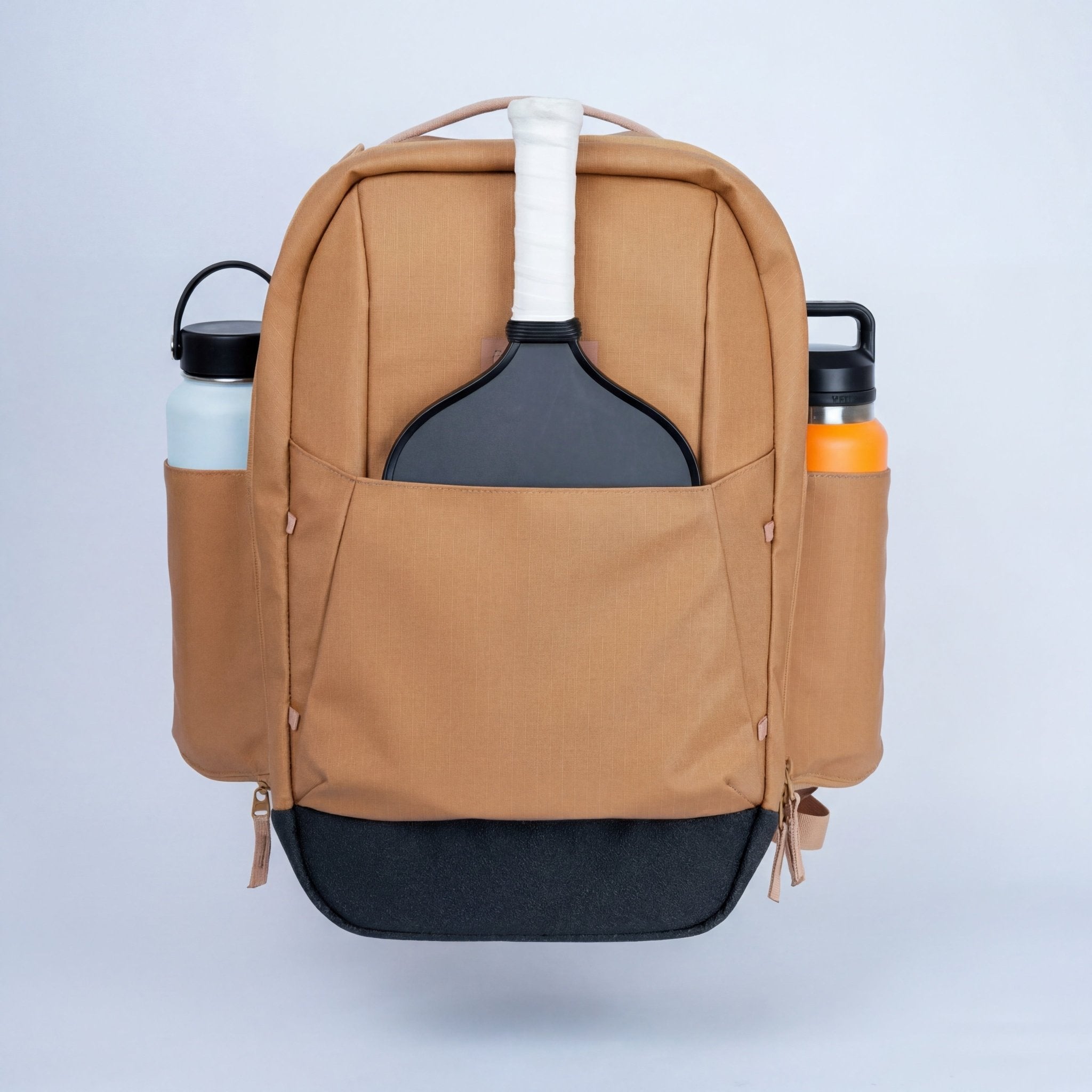
The Court Ranger V2 ($195) has a 16" padded laptop sleeve and modular paddle organization — built for players who carry gear between courts, community centers, and wherever else the day takes them. YKK AquaGuard zippers, lifetime warranty.
Safety Rules Seniors Should Never Skip
Dynamic warm-up, not static stretching before play. Static stretching before activity reduces power output and doesn't prevent acute injuries the way most people assume. Spend 8 minutes on leg swings, arm circles, lateral shuffles, and light groundstrokes. Save the hamstring and hip flexor stretches for after, when muscles are warm.
Wear actual court shoes. Not tennis shoes, not running shoes. Running shoes have elevated heels and forward-flex geometry built for linear movement — rolling an ankle during a lateral split-step in running shoes is genuinely common. Pickleball or multi-court shoes provide the lateral support geometry the sport requires.
Hydrate before you're thirsty. The thirst mechanism degrades measurably with age — older adults frequently reach a meaningful dehydration level before perceiving thirst. On a warm court: 6-8 oz every 20-25 minutes, regardless of how you feel.
Know which ego plays injure seniors most often: sprinting for an unreachable ball at full stretch, playing through joint pain that appeared during the session (versus normal muscle fatigue), and competing at a skill level beyond your current fitness base.
One thing worth stating plainly: pickleball communities are among the most welcoming in recreational sports. The social norm at open play is helpfulness, not judgment. If you're 68 and starting for the first time, you won't be the oldest beginner anyone has seen. The barrier to entry is lower than you expect.
FAQ: Pickleball for Seniors and Players Over 50
Is pickleball safe for seniors?
Yes, with appropriate modifications. The smaller court and natural rest intervals make it lower-impact than tennis or racquetball. Players with osteoarthritis, cardiovascular conditions, or shoulder history should follow the condition-specific modifications above. The biggest risk is advancing intensity faster than your body has adapted.
What age is too old to start pickleball?
There's no upper limit in the evidence. Players in their 80s compete at open play events nationwide. The 6-week graduated program above works at any age — the adjustment is that recovery intervals need to lengthen as players get older. A 75-year-old needs 2 full rest days between sessions versus the 1 day that works for most 55-year-olds.
Is pickleball good for arthritis?
For osteoarthritis: carefully managed pickleball is generally beneficial. Inactivity worsens OA faster than controlled low-impact movement, because cartilage needs joint fluid circulation that only movement provides. Key modifications: shallower knee bends, softer court surfaces, and session caps at 45 minutes initially to avoid the delayed inflammatory response that appears 12-24 hours later.
How many times a week should seniors play pickleball?
For the first 6 weeks: 2 sessions per week with mandatory rest days between. After the foundational phase: 3 sessions per week is consistently the sweet spot — enough stimulus for adaptation, enough recovery for tendons and joints to keep up. Playing 4+ times per week is possible but requires intentional recovery management and periodic deload weeks.
Is pickleball good for bone density?
Yes. Pickleball is weight-bearing activity that loads bones through lateral and directional movement, stimulating osteoblast activity that maintains bone density. This is particularly relevant for post-menopausal women at elevated osteoporosis risk. Swimming and cycling don't provide this bone-loading stimulus; pickleball does.
Can pickleball help with depression in older adults?
Research says yes. A Leisure Sciences study found older pickleball players reported lower depression rates than non-playing peers. Among common recreational sports, pickleball uniquely combines all four factors linked to mood benefits in aging populations: moderate intensity, built-in social structure, real skill development, and a low barrier to entry.

Leave a comment
This site is protected by hCaptcha and the hCaptcha Privacy Policy and Terms of Service apply.