



Last updated: July 2026
In my second week of open play, I called a double-bounce fault on my opponent. Turned out I'd confused two completely different rules — and I was wrong on both counts. What I thought was a "double bounce fault" on my opponent's side was actually the two-bounce rule working correctly on my side. It happens all the time with new players, and honestly, it still trips up recreational players who've been playing for years. This guide clears it up once and for all: the two-bounce rule and the double-bounce fault are completely different rules that share confusingly similar names, and understanding both will save you from awkward mid-match debates.
Table of Contents
- "Double Bounce Rule" vs "Double Bounce Fault": Two Completely Different Things
- The Two-Bounce Rule: What It Means and Why It Exists
- The Double Bounce Fault: When the Ball Bouncing Twice Is Your Problem
- Scenarios: Exactly When Each Rule Applies
- FAQ: Pickleball Bounce Rule Questions
"Double Bounce Rule" vs "Double Bounce Fault": Two Completely Different Things
The confusion starts with the names. Both involve the word "bounce." Both involve a ball hitting the ground. But they refer to opposite situations and opposite players.
| Rule Name | What It Means | When It Applies | Who It Affects |
|---|---|---|---|
| Two-Bounce Rule (formerly "Double Bounce Rule") | The ball MUST bounce once on each side after the serve before anyone can volley | First two shots of every point (serve + return) | Both teams — must let the ball bounce once before they hit it |
| Double Bounce Fault | The ball bounced TWICE on the same side — a fault against the player who failed to return it | Any shot during a rally (not just the serve) | The team that let it bounce twice on their side |
One important note on naming: USA Pickleball officially renamed the "double bounce rule" to the "two-bounce rule" in 2018, specifically to reduce confusion with the double bounce fault. But plenty of players and coaches still use "double bounce rule" colloquially — so both names are still floating around and causing the exact confusion the rename was meant to prevent.
The simplest way to keep them straight: The two-bounce rule is a requirement (you HAVE to let it bounce). The double bounce fault is a violation (you FAILED to return it before it bounced twice).
The Two-Bounce Rule: What It Means and Why It Exists
After the serve, the ball must bounce once on the receiving team's side before they can return it. Then, after the return, the ball must bounce once more on the serving team's side before they can hit it. After those two bounces — one per side — both teams are free to volley the ball out of the air for the rest of the rally.
That's it. Two bounces total, one per side, only for the first two shots. After that, the rule doesn't apply anymore.
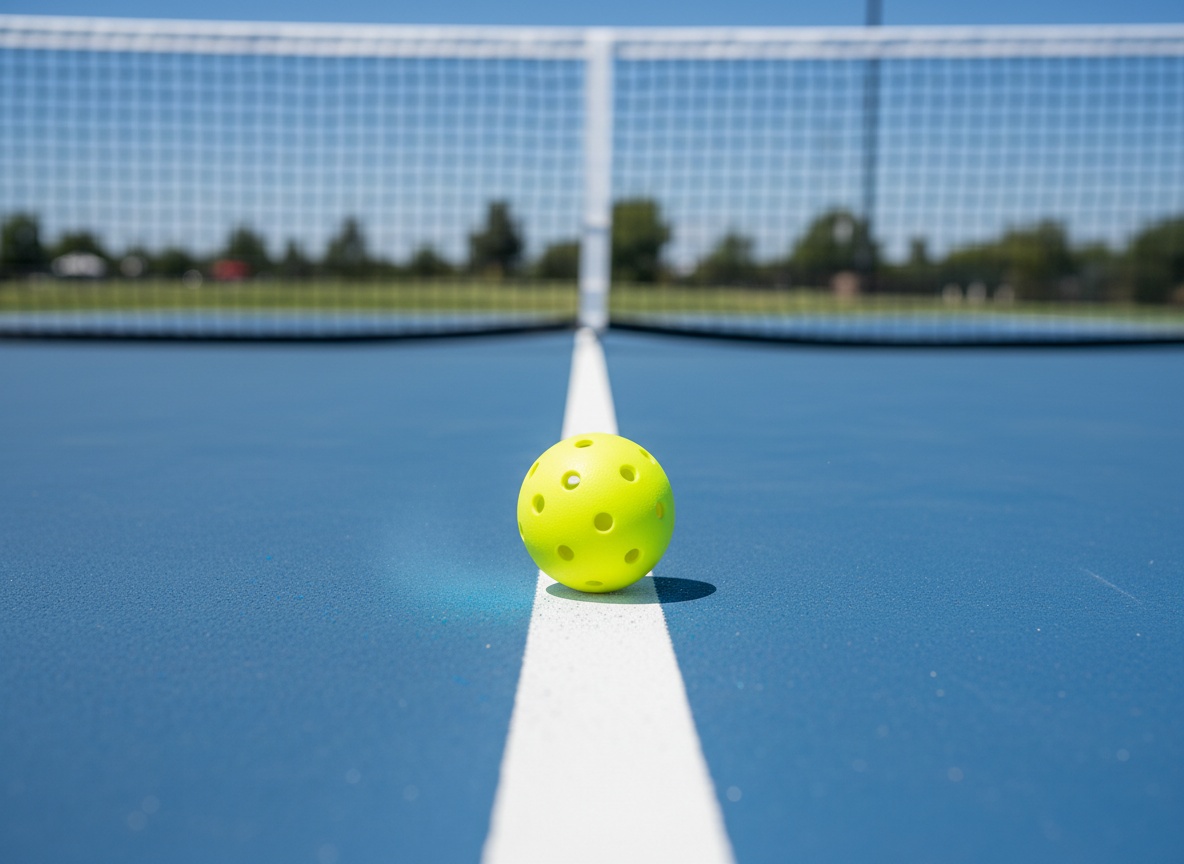
Why does the rule exist? It prevents the serving team from rushing the net and volleying the return before it bounces — which would give them an overwhelming, almost unavoidable advantage. By requiring both teams to let the ball bounce once after the serve, the rule creates a brief period where both teams are at roughly equal footing before the net battle begins.
In practical terms: the receiving team can't volley the serve (obviously — they have to let it bounce and return it). The serving team then can't volley that return — they have to let it bounce too. Once that second bounce happens on the serving team's side, both teams can now volley freely.
The two-bounce rule applies in both singles and doubles. It applies on every point, every serve, every time. There are no exceptions.
The Double Bounce Fault: When the Ball Bouncing Twice Is Your Problem
A double bounce fault is when the ball bounces twice on your side of the court before you return it. One bounce is fine. Two bounces means you didn't get to it in time — and it's a fault called against your team.
This is completely independent of the two-bounce rule. It can happen on any shot in the rally, including on the serve (if the receiver somehow lets it bounce twice before returning it). It can happen on the tenth shot of a rally. It has nothing to do with which shot number you're on.
The key distinction: in a double bounce fault, you made the error. The ball was on your side. You failed to return it. The two-bounce rule is about when the other team hits the ball (specifically, whether they hit it before the required first bounce or after).
One thing that confuses newer players: a double bounce fault is a dead ball the moment the second bounce occurs — but play often continues because both teams are moving and it can be hard to see. If the ball clearly bounces twice before a return, stop play and call the fault. Don't wait until after the point to raise it.
Scenarios: Exactly When Each Rule Applies
Working through specific scenarios is the fastest way to internalize both rules.
Scenario 1: The Serve
Two-bounce rule in action. You serve the ball. It lands in the service box on your opponent's side. They MUST let it bounce before returning it — they cannot volley a serve. If they try to volley it (hit it out of the air before it bounces), that's a fault on them for violating the two-bounce rule.
Double bounce fault in action. If your serve bounces once, then your opponent doesn't reach it and it bounces a second time — that's a double bounce fault on your opponent. Your point.
Scenario 2: The Return of Serve
Two-bounce rule in action. Your opponent returns the serve. The ball is now coming toward you on the serving team's side. You MUST let it bounce before hitting it. If you step forward and volley it out of the air before it bounces, that's a fault on you for violating the two-bounce rule.
Double bounce fault in action. If the return bounces once on your side and then bounces again before you reach it — double bounce fault, point to your opponents.
Scenario 3: Any Shot After the First Two
Two-bounce rule: No longer applies. Both teams can volley freely at this point.
Double bounce fault: Still very much applies. If any shot during a rally bounces twice on your side before you return it, it's a dead ball and a fault against your team.
Scenario 4: The Ball Lands Near the Kitchen
This is where double bounce faults happen most in recreational play. A well-placed soft shot or a dink lands near the kitchen line. You hesitate, the ball lands, you lean in — and it bounces a second time before your paddle arrives. Fault. Opponent's point. This is especially common at 3.0 and below, where reflexes and court coverage are still developing.
FAQ: Pickleball Bounce Rule Questions
What is the two-bounce rule in pickleball?
The two-bounce rule requires the ball to bounce once on each side of the court after the serve before either team can volley. The receiving team must let the serve bounce before returning it, and the serving team must let the return bounce before hitting it. After those two bounces, volleys are allowed for the rest of the rally.
What is a double bounce fault in pickleball?
A double bounce fault happens when the ball bounces twice on the same side of the court before the defending team returns it. It's a fault against the team that let it bounce twice — they failed to return the ball in time. It can happen on any shot in a rally, not just the serve. Play stops the moment the second bounce occurs.
Can you volley before the ball bounces in pickleball?
Yes — but only after the two-bounce rule requirement is satisfied. Once the serve has bounced on the receiver's side and the return has bounced on the server's side, both teams can volley freely. You cannot volley the serve or the return of serve; those must bounce first. You also cannot volley from inside the non-volley zone (the kitchen).
When can you start volleying after the serve?
After the serve has bounced once (on the receiving side) AND the return has bounced once (on the serving side). That's two total bounces — one per side — after which both teams can volley. There's no countdown or signal; it happens naturally as the rally develops after those first two shots.
Is it a fault if the ball bounces twice on my side?
Yes. The moment the ball bounces a second time on your side before you return it, it's a dead ball and a fault called against your team. This applies to any shot in the rally — including the serve if you're receiving. One bounce to return it is required; two bounces means you didn't make it in time.
Does the two-bounce rule apply in singles and doubles?
Yes. The two-bounce rule applies in both singles and doubles pickleball. Every point, every serve, the ball must bounce once on each side before either team or player can volley. There are no format exceptions to this rule — it's universal across all official pickleball formats under USA Pickleball rules.
For more on pickleball rules that trip up newer players, see our complete pickleball rules guide for beginners or our breakdown of how pickleball scoring works. For the official rulebook, check USA Pickleball's official rules page.

Leave a comment
This site is protected by hCaptcha and the hCaptcha Privacy Policy and Terms of Service apply.