

Last updated: July 2026
Disclosure: This post contains affiliate links to Pickleball Central. If you purchase through our links, FORWRD earns a small commission at no extra cost to you. We only link to products we'd recommend regardless.
Generic tournament prep advice will get you through a Tuesday night DUPR match. It won't get you through a 3-day Labor Day weekend bracket — where you might play 5 to 8 matches across 3 days, drive 3 hours to get there, sleep in a hotel, and compete in 95°F heat on outdoor courts that bounce different from anything you practice on. That's a completely different animal. This guide is built for that specific scenario.
Table of Contents
- The Labor Day Pickleball Weekend Mindset: This Is Different From Open Play
- What to Pack (The Tournament Bag Checklist)
- The Week Before: Practice Cadence, Rest, and Mental Prep
- Tournament Day Morning Routine: Warm-Up, Hydration, and Arrival Timing
- Multi-Day Format Strategy: How to Manage Energy Across 2–3 Days
- FAQ: Labor Day Tournament Questions
The Labor Day Pickleball Weekend Mindset: This Is Different From Open Play
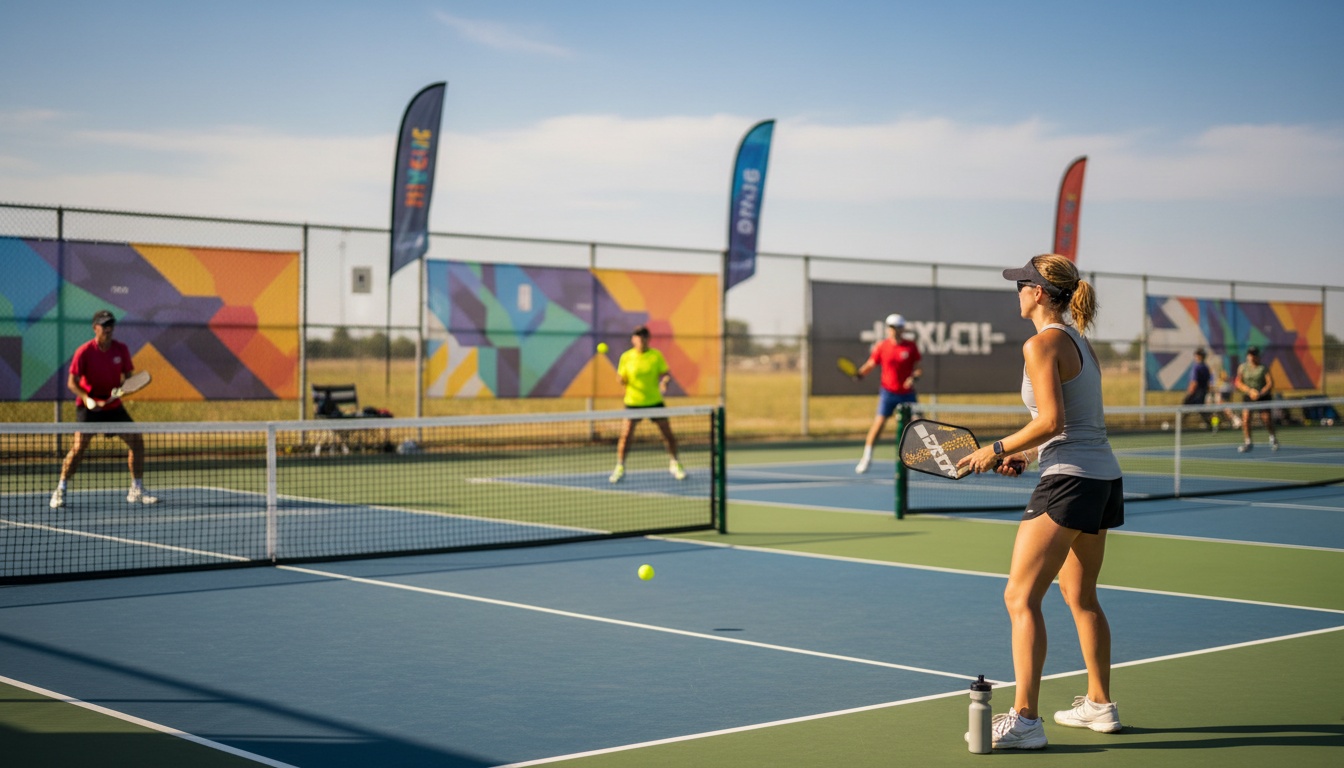
The mistake most recreational players make is treating a 3-day holiday tournament like a long open play session. It's not. Here's what's actually different about Labor Day weekend pickleball:
- Volume: 5–8 competitive matches over 3 days, often with 30–90 minute gaps between matches. Your body doesn't get a day to recover the way it does between your Monday session and your Wednesday session.
- Heat: Labor Day falls in early September in most of the US, which means outdoor courts in high-sun, high-humidity conditions. Courts bake differently at noon on day 2 than they do during your 7 AM Tuesday warmup.
- Travel: If you're staying away — hotel, Airbnb, friend's couch — your routine is disrupted. Sleep is lighter. Food is different. You won't have your normal warm-up space.
- Stakes: Even recreational brackets have a scoreboard. The mindset shift from "I'll just see how it goes" to "I prepared for this" is measurable in performance.
None of this is meant to be intimidating. Labor Day tournaments are some of the most fun pickleball you'll play all year — big energy, good competition, usually well-run. But they reward preparation that open play doesn't require. Everything below is what that preparation looks like.
What to Pack (The Tournament Bag Checklist)
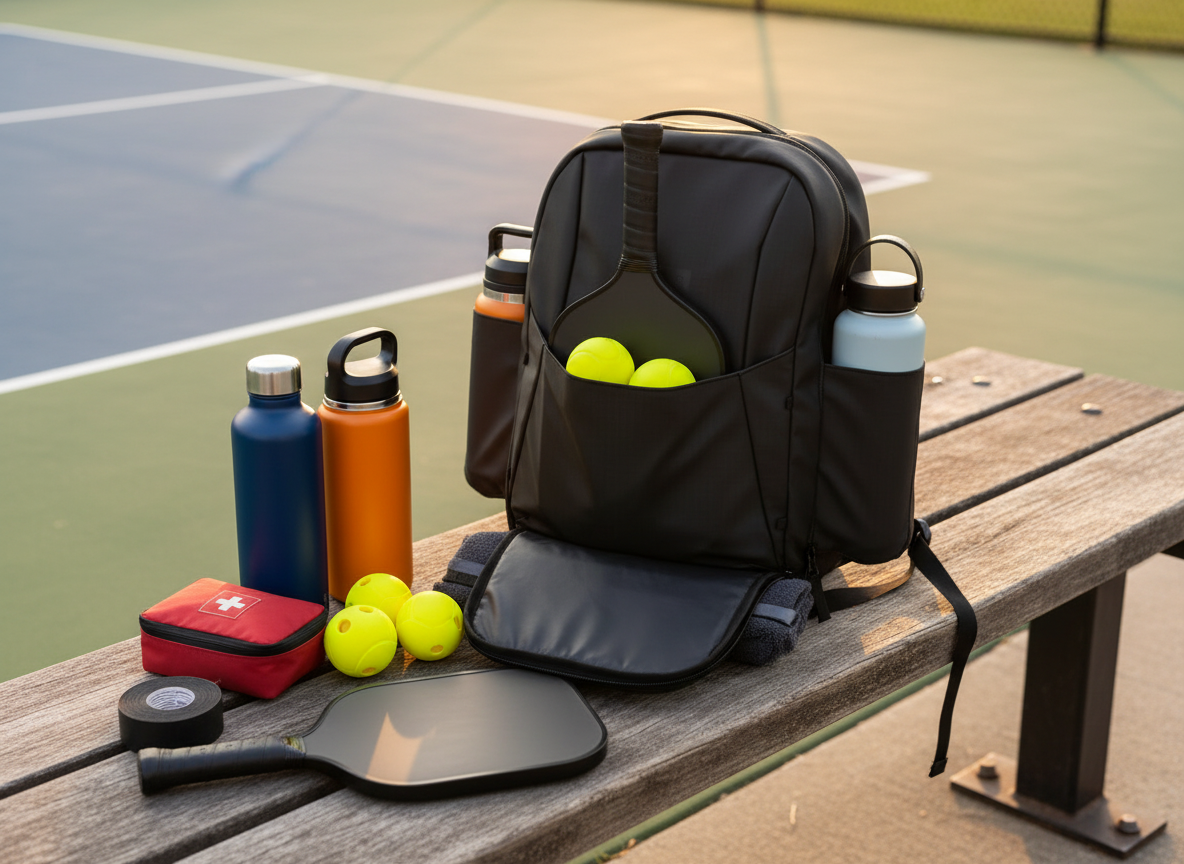
This is not a generic "bring water and extra balls" list. This is what a 2–3 day away tournament actually demands, organized by why each item matters.
Paddles (Non-Negotiable)
Bring 2 paddles, minimum. Not one. Your edge guard cracks during warmups on day 1, you don't want to scramble. Your primary paddle should be broken in — don't debut a brand-new paddle at a tournament. The second paddle should be the same weight class so there's no adjustment if you have to switch.
Balls
Most outdoor tournaments use the Franklin X-40 or equivalent. Check your tournament's ball spec in advance. Bring 3–4 of the official ball — you may be asked to provide them for your matches depending on the format.
Overgrips (The Thing Everyone Forgets)
"The single thing players forget most — and regret most — is overgrips. Your grip slips in heat in ways you don't feel during your regular morning sessions. At a 3-day tournament in August heat, you need 2–3 fresh overgrips, not zero." — Grub, FORWRD Co-founder
Pack at least 4–5 overgrips for a 3-day event. Sweat degrades grip faster than regular play — what takes a month of open play to wear out can happen in 3 days of tournament intensity in summer heat. See our overgrip buying guide for which tacky or dry grip works best in heat.
Hydration and Fuel
A 40 oz insulated water bottle. An electrolyte mix — not just water, because you'll lose more salt than you think across 3 days of outdoor play. Two to three snacks per match day that digest fast: banana, energy chews, rice cakes. Don't rely on whatever vendor is at the venue.
Recovery Basics
Compression sleeve or brace for any joint that gives you trouble. Ibuprofen. Biofreeze or equivalent topical. These aren't for hypochondriacs — they're for playing day 3 with the same focus you had day 1.
The Bag That Actually Organizes This
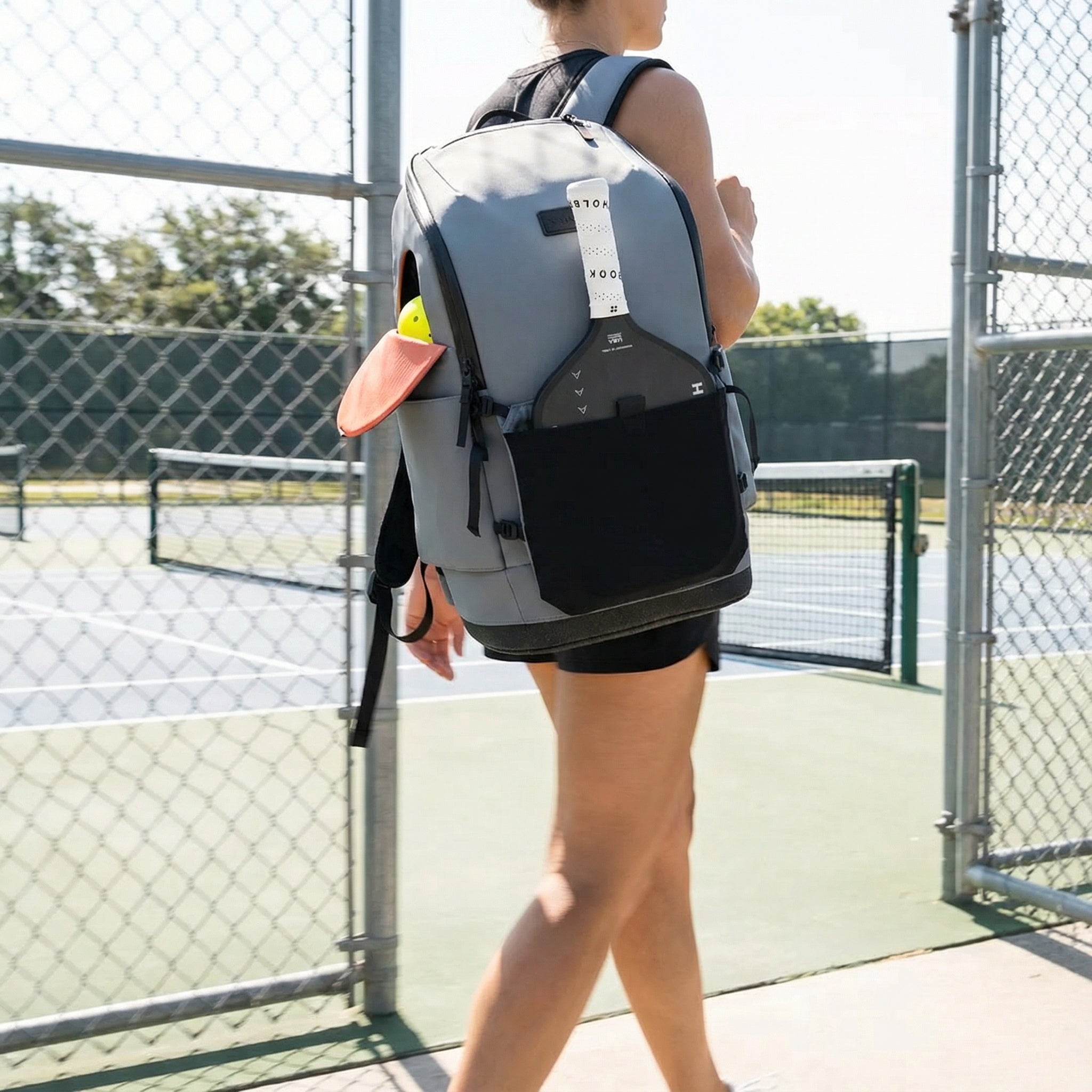
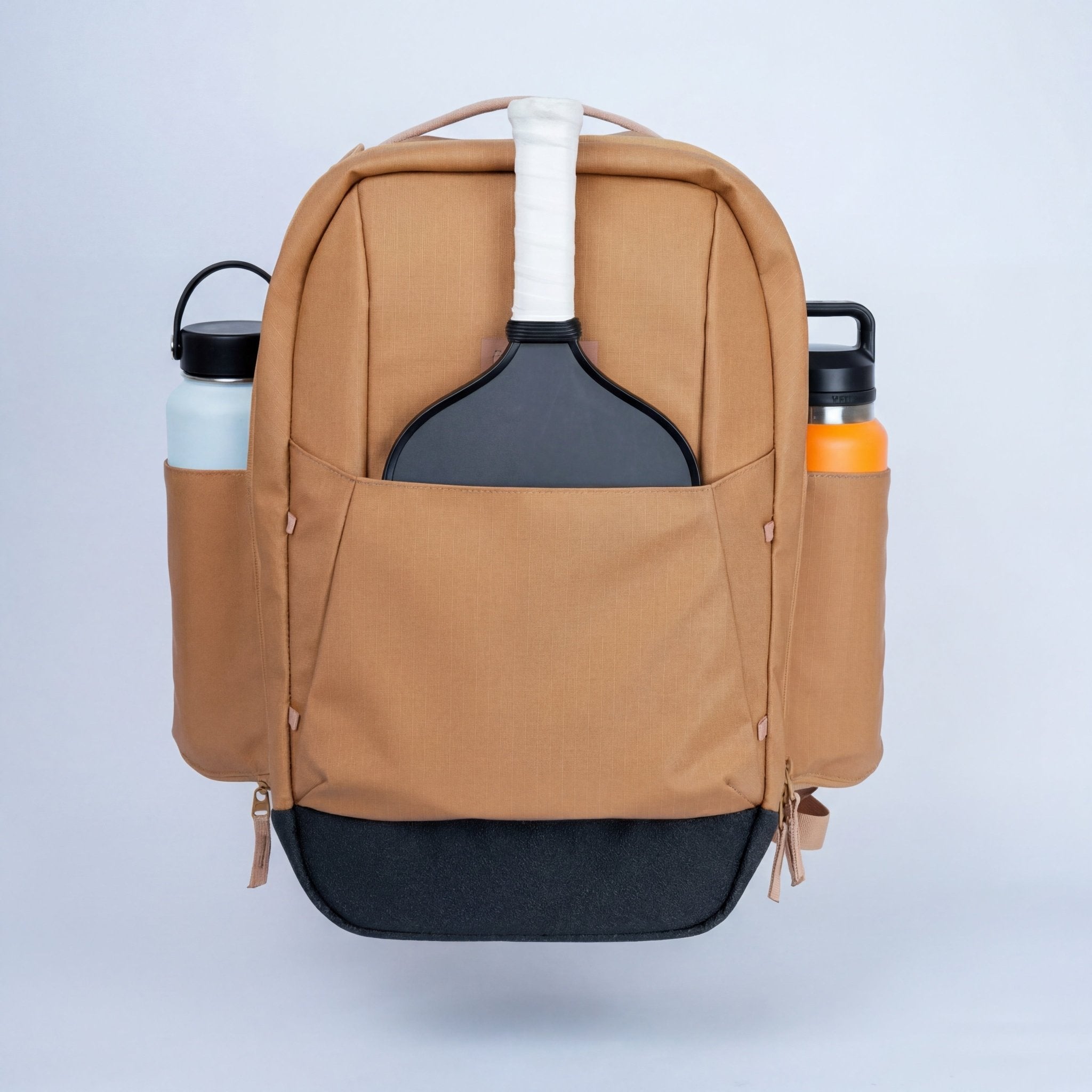
Everything above needs to be findable in 90 seconds during a changeover. That means a bag with dedicated compartments — not a gym duffel where everything ends up at the bottom. The Court Caddy Backpack ($325) was specifically designed for multi-day tournament play: modular paddle sleeve (holds 2–4 paddles), 15" padded laptop compartment for travel work and bracket coordination, side pockets for bottles, and YKK AquaGuard zippers that don't fail when you're packing wet gear into a hotel room. For players who want a lighter option, the Court Ranger V2 ($195) covers the essentials.

The Week Before: Practice Cadence, Rest, and Mental Prep
The week before Labor Day is when most players make the mistake of over-practicing. You're not going to get meaningfully better in 7 days. What you can do is show up sharp — or show up fatigued. These are very different outcomes.
Practice Cadence
Days 7–4 before the tournament: Normal volume, sharp intention. Focus on the shots that win points at your skill level — not on fixing fundamentals. If your third-shot drop is inconsistent, this week is for drilling what you already know, not rebuilding from scratch.
Days 3–2 before: Cut volume by half. Your muscles need glycogen. Your joints need rest. A 45-minute focused session is better than a 2-hour grind that leaves you stiff on day 1.
Day before: Light hitting only — 20 minutes max. Confirm your bracket schedule, pack your bag the night before (don't leave it for the morning), and review the match strategy principles you want to execute.
Mental Prep
Pick 2–3 tactical focal points for the weekend. Not 10. Two or three specific things you're going to do: serve deep cross-court, reset every fast ball you can, stay at the kitchen against bangers. Having clear intentions reduces the mental noise during matches better than general "play your game" advice.
Tournament Day Morning Routine: Warm-Up, Hydration, and Arrival Timing
Arrive 45 minutes before your first match, not 10. Here's why that matters and how to use the time:
15 minutes out from arrival: Eat something light — not a full meal, not nothing. 200–300 calories of something you can digest fast. This is the window where most players either forget to eat (crash by match 3) or eat too much (sluggish for the first match).
30 minutes before match time: Physical warm-up. This isn't dinking immediately. Start with 5 minutes of movement — jogging the perimeter, arm circles, hip openers. Then move to groundstrokes, work up to speed, get to the kitchen and hit 20–30 dinks before you hit a single hard ball. Cold muscles hitting hard balls produce pulled muscles. Summer heat doesn't eliminate this risk — it changes where the muscle fatigue accumulates.
10 minutes before match time: Confirm the court, confirm your partner's mindset (in doubles), confirm the score format. Know if you're playing rally or side-out scoring before the first serve, not during the first point.
Hydration: Start drinking 2 hours before your first match — not during the warmup. By the time you feel thirsty on an outdoor court in Labor Day heat, you're already behind. An electrolyte tab or packet in your first bottle of the day makes a real difference by match 2.
Multi-Day Format Strategy: How to Manage Energy Across 2–3 Days
Most recreational tournament players are great on day 1, acceptable on day 2, and running on fumes by day 3. Here's what separates the players who finish strong:
Post-match recovery matters more than pre-match warmup. After your last match each day, 10 minutes of light movement and stretching does more for day 2 than any amount of pre-match prep. Most players pack up and drive straight to dinner. The ones who do a short cooldown are the ones who show up mobile on day 2.
Sleep is not optional. 7+ hours. Hotel rooms are hard for this — bring earplugs, set the room cold, put your phone across the room. One night of 5-hour sleep is recoverable. Two nights compounds badly.
The day 2 trap: Day 2 adrenaline often makes players play at a level they can't sustain through day 3. If you're in a bracket that runs through Sunday into Monday, playing at 95% on Saturday to win a match you would've won at 80% is a real energy management error. Read the bracket. Know when it matters to push.
Food across the weekend: This is not a dietary lecture. The practical reality: you need more carbs than you think, and you need them earlier in the day than feels natural. A big lunch hits after your midday matches. A tournament player eats breakfast like they're going to work hard — because they are.
FAQ: Labor Day Tournament Questions
How do you prepare for a pickleball tournament?
Start the week before: maintain normal practice volume through day 4, cut to half by day 2, go light the day before. Pack your bag the night before the tournament. Arrive 45 minutes early for physical warmup. For a multi-day event, recovery between match days matters as much as pre-match prep.
What should I pack in my pickleball bag for a tournament?
Two paddles minimum, 3–4 official balls, 4–5 overgrips (heat degrades grip faster than regular play), 40 oz insulated water bottle, electrolytes, fast-digesting snacks, and a recovery kit (compression, topical pain relief). For a 2–3 day away event, add a laptop if you need to coordinate travel, bracket updates, or work between matches.
How many days before a tournament should you stop playing hard?
Cut volume by 50% starting 3 days out. Do a light 20-minute session the day before — enough to stay loose, not enough to accumulate fatigue. You won't improve meaningfully in the final 7 days; your goal is to arrive fresh, not to squeeze in one more hard practice.
What's the best warm-up routine before a tournament match?
5 minutes of movement (jogging, arm circles, hip openers), then 10–15 minutes of progressive hitting: groundstrokes at 60%, build to 80%, then dinks, then speed-ups at the kitchen. Arrive 30 minutes before your match time for this warmup. Never start a tournament match cold — summer heat makes it feel like you don't need warmup, but muscle strain risk is just as real.
What does a tournament format look like for recreational players?
Most Labor Day tournaments run pool play on day 1 (typically 3–4 round-robin matches to seed brackets), then single or double elimination on days 2–3. Match formats vary: some use best 2-of-3 to 11, some use a single game to 15 or 21. Confirm the format before you arrive — it changes your energy management and mental approach significantly.
Complete Your Setup
Got your tournament prep dialed? The bag is the last piece most players underprepare. The Court Caddy Backpack fits 2–4 paddles in its modular sleeve system, has a 15" padded laptop compartment for travel coordination, and YKK AquaGuard zippers that hold up through weekend weather. Court Ranger V2 if you want something lighter for day-trip formats at $195.

Leave a comment
This site is protected by hCaptcha and the hCaptcha Privacy Policy and Terms of Service apply.