

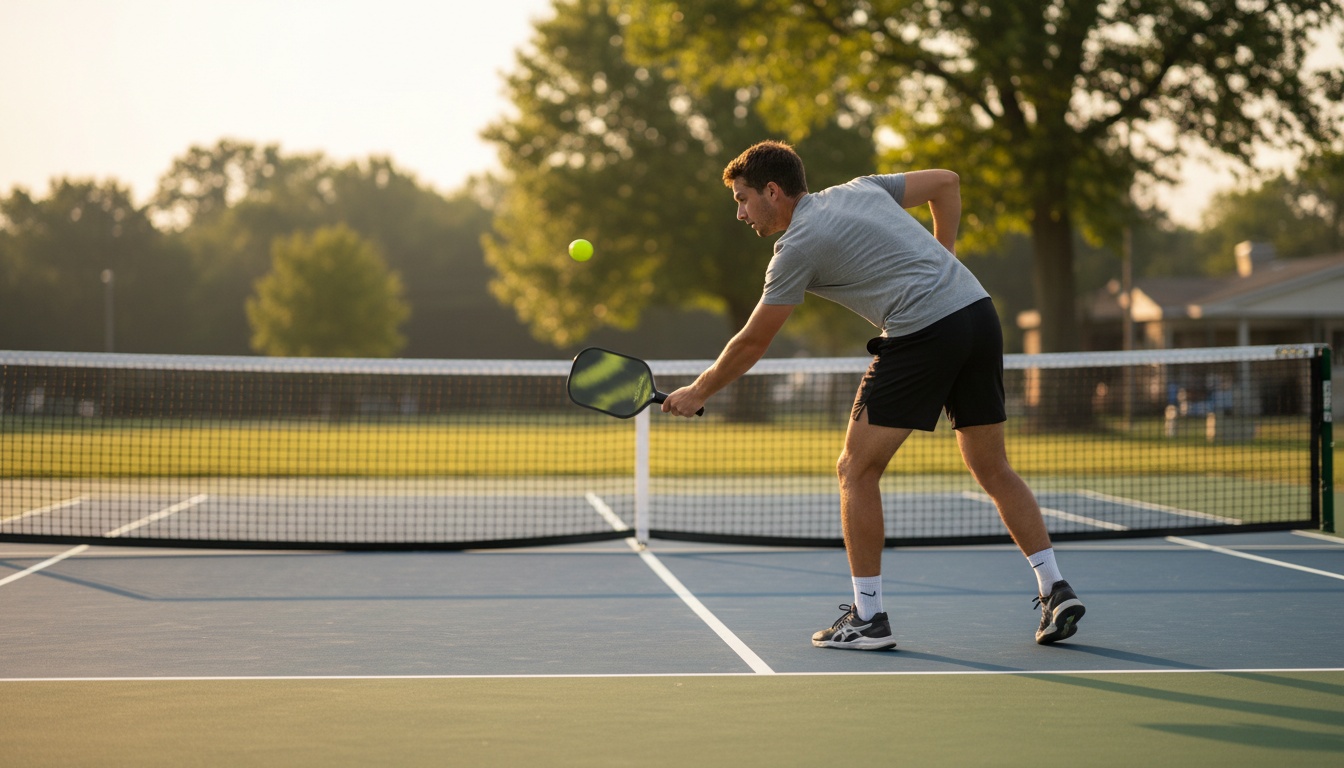
Adding topspin to your pickleball serve forces receivers to pick up a ball that looks flat and then kicks — buying you a full half-second of hesitation at the baseline. With the right mechanics, a topspin serve clears the net with more margin, bounces with upward kick that jams the receiver's strike zone, and makes your serve a weapon instead of just a formality to start the point. Here's the 4-week progression that takes you from flat to consistent topspin without blowing up your fault rate while you rebuild.
Last updated: September 2026
Table of Contents
- Why Topspin Beats Flat Serving (and When It Doesn't)
- The Grip Foundation: Continental vs Semi-Western
- The Brush Mechanic: How Paddle Face Angle Creates Topspin
- 4-Week Progression Protocol
- Common Topspin Serve Mistakes and How to Fix Them
- Paddles That Make Topspin Easier
- FAQ: Pickleball Topspin Serve Questions
Why Topspin Beats Flat Serving (and When It Doesn't)
Flat serves are easy to groove. You know exactly how the ball leaves the paddle and where it's going. The problem is, so does your opponent. A flat serve that lands consistently in-court is fine. Against a receiver who's played 200 hours of pickleball, it's essentially a free warm-up ball.
A topspin serve does three things a flat serve can't. First, it drops faster — the forward spin creates downward pressure on the ball, so you can serve higher over the net with less risk of going long. Second, it bounces with upward kick on the other side, pushing the contact point from the receiver's comfortable strike zone into their knees or shins. Third, it forces receivers to take the ball later, which compresses their reaction window at exactly the moment they need it most.
The honest trade-off: topspin serves are harder to control until they're grooved. A flat serve that's already in-court 9/10 times will temporarily become 5/10 while you rebuild mechanics. That's a fault rate that costs real points. The 4-week progression below addresses this directly — you build spin mechanics before adding pace, so you're not sacrificing competitive performance while you're developing the shot.
When topspin doesn't make sense: against players who stand three feet behind the baseline, the kick matters less because they have time to adjust. Against hard-swinging 4.0+ players who love a high ball to their forehand, a lifting topspin serve can actually create an easier attack. Read the receiver before automating topspin every single point.
The Grip Foundation: Continental vs Semi-Western for Topspin
The grip debate in pickleball topspin circles is continental vs semi-western — and both work, but for different reasons and different player types.
Continental grip (bevel 2, knuckle on the top flat edge of the handle): This is the versatile baseline grip for most pickleball players. You can generate topspin with continental using low-to-high swing path mechanics, but the paddle face doesn't naturally assist the brush. To get spin with continental, you're relying almost entirely on swing path and forearm rotation. Most 3.0–3.5 players who struggle with topspin are using continental and compensating with more arm speed instead of fixing the face angle — which just produces inconsistent contact and faults.
Semi-Western grip (bevel 3–4, rotating the hand more toward the bottom of the handle): This closes the paddle face slightly at contact. A closed face plus a low-to-high swing path means the paddle naturally brushes upward across the back of the ball without requiring a wrist adjustment. Topspin comes more easily. The downside: semi-western makes dink exchanges and reset shots slightly less natural, so there's a transition cost if you use this grip exclusively throughout a rally.
Since you're serving from a stationary position with no grip-switching pressure, semi-western is the recommended starting point for building your topspin serve. You can serve in semi-western, then re-grip for the point. Most recreational players never think about the grip they use specifically for the serve — which means this is an easy mechanical upgrade with no competitive penalty.
Once you can hit 7/10 topspin serves in-court consistently, you'll know whether you can maintain the mechanics from a more neutral grip or whether semi-western is worth committing to for all serve situations.
The Brush Mechanic: How the Paddle Face Creates Topspin (Not Power)
Here's what most topspin instruction skips: topspin is not about swing speed. It's about swing direction relative to the ball at the moment of contact.
"Brush up on the ball" is the standard advice — which is correct but doesn't tell you what's actually happening physically. Here's the breakdown:
Flat serve: paddle face is perpendicular to the ball's intended travel path at contact. All energy from the swing goes directly into forward ball velocity. Zero spin imparted.
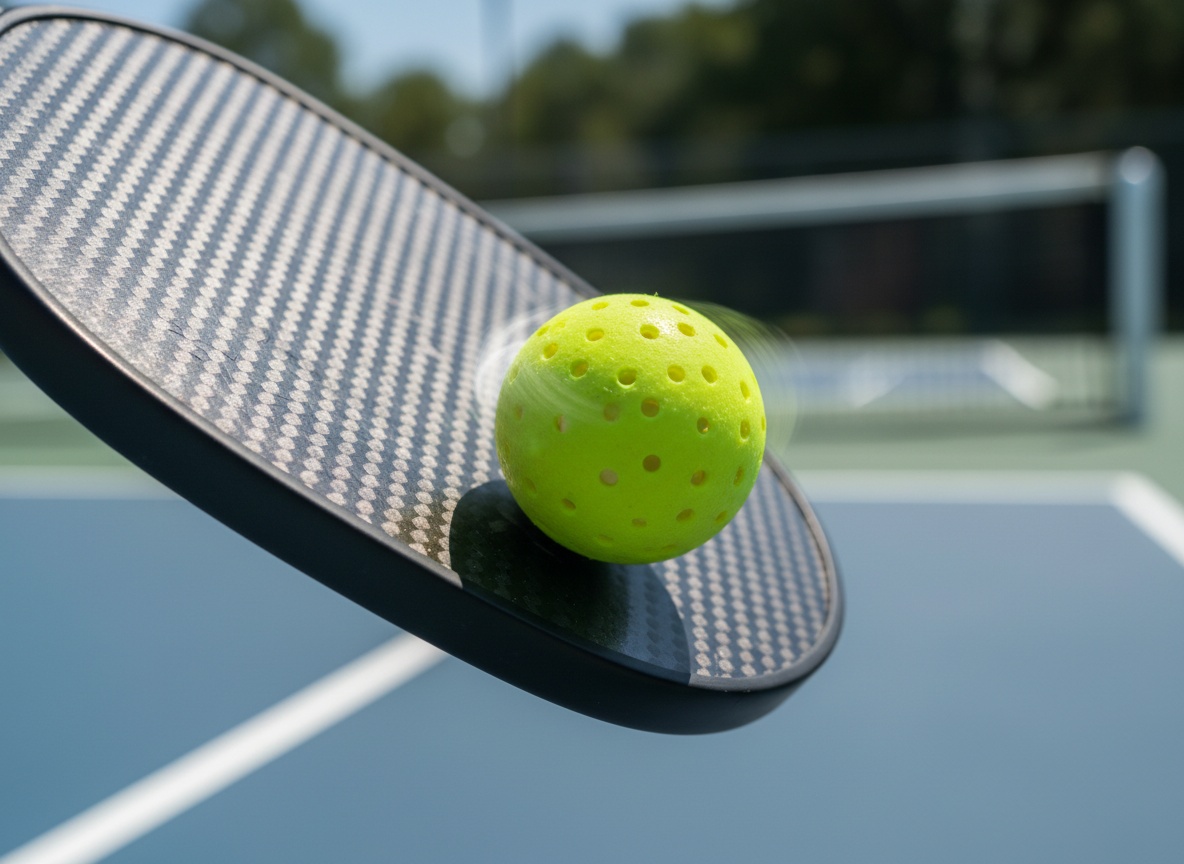
Topspin serve: paddle face travels upward at roughly 30–40 degrees from horizontal at the contact point. Instead of pushing the ball forward, the paddle skims across the bottom half of the ball's surface. Some energy creates forward velocity; the rest imparts rotational spin. The ball rotates forward on its axis as it travels, which causes it to dip faster and bounce high on the other side.
The part that matters most: the spin comes from where the paddle face is traveling when it contacts the ball — not from where the swing started. You can start the swing from the same position for both flat and topspin serves and produce completely different results based solely on what the face is doing at contact. Many players try to generate topspin by starting the swing lower. That's not it. Get the contact angle right first.
Practice cue: at contact, imagine brushing the bottom half of the ball upward toward the sky — not swinging through it toward the opposite court. The follow-through finishes near your shoulder or ear, with the paddle face pointing upward. If your paddle finishes horizontal and pointing across the net, you hit flat. If it finishes high, you got spin. Simple check, every serve.
"The serve isn't about surprising them with pace — it's about the bounce. A well-executed topspin serve looks completely hittable until it kicks off the court. By the time the receiver adjusts their contact point, they've already lost their offensive position at the NVZ." — Grub, FORWRD co-founder
4-Week Progression Protocol: From Flat to Topspin Serve
The biggest mistake recreational players make when adding topspin: trying to serve at full match pace while also learning spin mechanics. You end up with neither. This 4-week protocol builds one variable at a time and gives you a concrete benchmark for each week so you know when you're ready to advance — not just when you feel like it.
Week 1: Grip + Swing Path Only — No Pace
Goal: feel the brush. Don't try to make the serve land deep. Don't add pace. Don't worry about where the ball goes. Just make the paddle travel upward through contact and finish high.
Drill: Stand at the non-volley zone line and serve short into the empty service box. Slow swing, semi-western grip, full focus on finishing near your ear. Ask yourself after each attempt: did I see the ball rotate? (You can observe spin from the side — it's visible at slow speed.) Target: visible spin on 5/10 attempts. Pace is completely irrelevant in Week 1. Shut that voice off.
Week 2: Brush + Depth, Still No Power
Goal: take the Week 1 mechanics and now serve from the baseline with enough depth to land in the opponent's service box — still without adding power.
Drill: Move to the baseline. Soft speed, same brush mechanic. Watch the ball's trajectory: a topspin serve should arc slightly — rising a bit over the net, then dipping as the spin kicks in. A flat ball travels in a relatively straight line. Target: 6/10 in-court with visible arc. If you're at 4/10, stay in Week 2. Patience here is the differentiator between players who get topspin and players who give up on it.
Week 3: Power Integration
Adding pace before arc is consistent is the most common topspin failure point. Week 3 only starts when Week 2's benchmark is cleared.
Drill: Increase swing speed incrementally — add 20% more shoulder rotation and leg drive per session, not all at once. The brush angle stays the same; only the speed of the brush changes. Target: 7/10 in-court, with bounce kick visible. If you have a drill partner, ask them to watch the bounce from behind the baseline. The ball should kick up into their chest or higher — that's real topspin, not just a serve with arc.
Week 4: Match Integration
Use the topspin serve in a practice match — 50% of your serves, not all of them. Track: are receivers giving you softer returns? Are they making contact below the waist? Are you seeing shorter returns that land at mid-court? That's your data.
Important rule for weeks 1–3: keep your topspin development in drills only. Your competitive match serve stays flat or whatever you normally hit. You don't need to rebuild two things simultaneously. The competitive serve stays clean; the practice serve rebuilds.
| Week | Focus | Drill Setup | Benchmark to Advance |
|---|---|---|---|
| 1 | Grip + swing path | NVZ line, slow serves | 5/10 with visible spin |
| 2 | Depth without pace | Baseline, soft speed | 6/10 in-court with visible arc |
| 3 | Add pace | Baseline, increasing speed | 7/10 in-court + visible bounce kick |
| 4 | Match integration | Practice match, 50% usage | Softer/shorter returns from receiver |
Common Topspin Serve Mistakes and How to Fix Them
These are the five failure modes that kill topspin development. Most players hit at least two of them — often without realizing it.
Adding pace before spin is consistent
Symptom: serves fly long, past the baseline. The paddle face is brushing but you're trying to hit hard before the angle is grooved, so any small variance sends the ball long. Fix: drop power by 40%, re-establish the brush mechanic, then add pace back in 10% increments per session. Power comes last.
Flat contact at a steep swing angle
Symptom: lots of swing effort, no spin on the ball. You're traveling upward but the paddle face is square at contact — meaning the swing path is correct but the face angle isn't. You're lifting the ball, not brushing it. Fix: rotate grip slightly toward semi-western, or consciously close the paddle face 10 degrees at the start of the swing and maintain it through contact.
Generating spin from the wrist instead of the forearm/shoulder
Symptom: inconsistent spin — sometimes it works, often it's flat. Wrist timing varies serve to serve; a wrist-generated brush is inherently unreliable. Fix: freeze the wrist joint during the swing. Generate all upward brush from forearm rotation and shoulder elevation. When the wrist is locked, the contact angle stays consistent.
Follow-through finishing sideways instead of upward
Symptom: ball has sidespin instead of topspin. You're brushing across the ball laterally, not upward. Fix: drill with a conscious upward finish — paddle pointing toward the sky at follow-through, not pointing across the net. Film yourself or ask a partner to watch your finish position.
Changing too many variables per session
Symptom: confused mechanics after a week of practice. You can't tell what's working. Fix: change one mechanical variable per session. Grip one day. Contact angle the next. Follow-through position the day after. Isolation is the only way to know what's actually causing what.
Paddles That Make Topspin Easier
Not all paddles are created equal when it comes to spin generation. The face material matters — a lot.
Raw carbon fiber faces create more friction at the moment of contact than polished graphite, which directly translates to more bite on topspin brushes. Players who switch from a graphite face to raw carbon often notice their spin output jump within the first session. If you're serious about adding topspin to your serve, your paddle choice either helps or fights you.
A few worth looking at: JOOLA Perseus Pro V (14mm) — Ben Johns plays this one for a reason; the raw carbon face generates serious spin and the 14mm core keeps the swing weight low for serve-motion work. For players who want more pop with their topspin, the CRBN-3 X-Series is a heavier option that rewards the brush mechanic with extra pace. Both are available at Pickleball Central.
Disclosure: This post contains affiliate links to Pickleball Central. If you purchase through our links, FORWRD earns a small commission at no extra cost to you. We only link to products we'd recommend regardless.
Once you're working on the topspin serve consistently in practice, you'll also want to review our 10 beginner pickleball mistakes guide — a lot of the serve-focused lessons overlap with the broader mechanical errors new players make at the kitchen line. And if you're investing in your serve, it's worth pairing it with a paddle upgrade for intermediate players when your current one stops keeping up.
Complete Your Setup
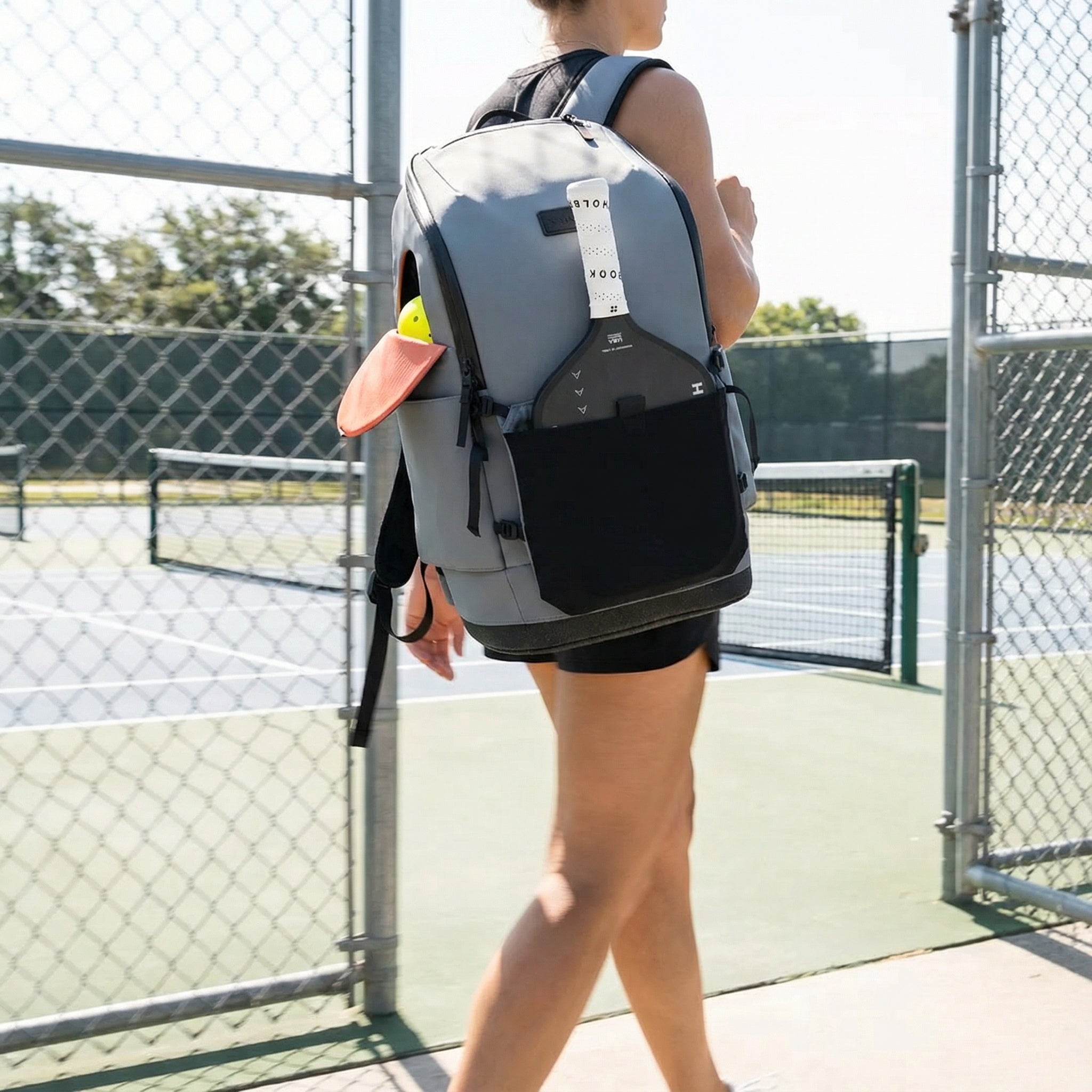
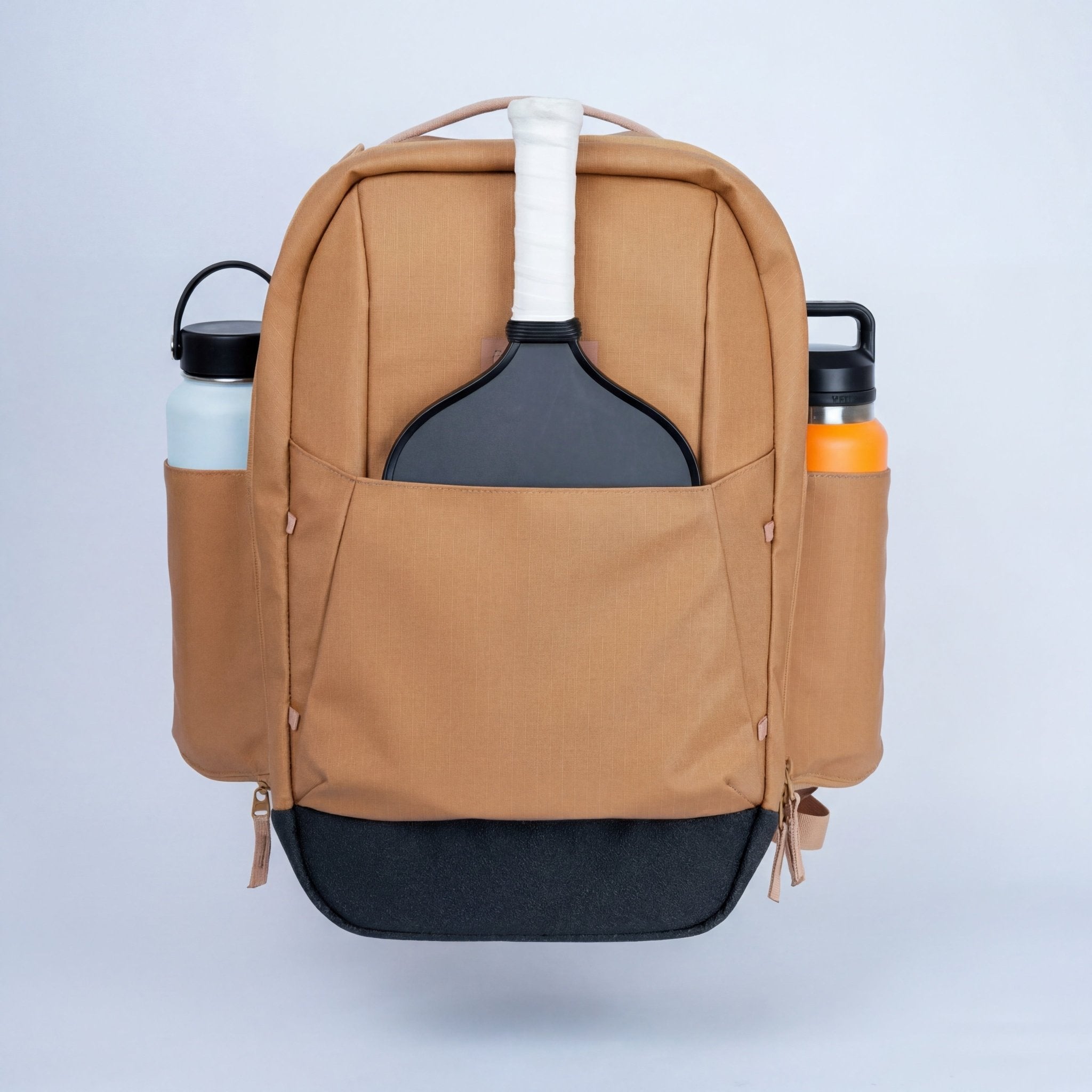
A serious serve deserves organized gear. The FORWRD Court Ranger V2 ($195) fits your paddle, extra balls, a change of clothes, and a 16" laptop without the bulk — so your drill sessions start faster and end with zero fumbling. Same YKK AquaGuard zippers. Designed with input from 500+ players. Shop the Court Ranger V2 →

FAQ: Pickleball Topspin Serve Questions
How do I add topspin to my pickleball serve?
Start with a semi-western grip, swing upward through contact at roughly 30–40 degrees from horizontal, and finish with the paddle near your ear rather than pointing across the net. Spin comes from the brush angle at contact — not swing speed. Drill it slowly and without pace before adding power.
What's the best grip for a topspin serve?
Semi-western for learning — it closes the paddle face naturally and makes the brush mechanic easier to groove. Once your spin mechanics are consistent (7/10 in-court), you can migrate slightly toward continental if you want fewer grip adjustments during a point.
How long does it take to master a topspin serve?
Four weeks to achieve consistent topspin in practice conditions. Eight to twelve weeks to use it comfortably in competitive play without increasing your fault rate. Most players underestimate this timeline because they try to add power before the mechanics are grooved.
Should beginners learn topspin serving?
Not first. Build a flat serve that lands in-court 85%+ of the time before adding spin. Topspin is a serve upgrade — it makes a solid serve into a weapon. Trying to learn topspin before a reliable baseline serve creates compounding errors and extends the learning curve significantly.
Can you generate pace with a topspin serve?
Yes — and Week 3 of the progression above is specifically for this. Add pace after the spin mechanics are grooved, not simultaneously. Increase shoulder rotation and leg drive incrementally while maintaining the brush angle at contact. The spin stays; the velocity increases.
What's the difference between a topspin and flat serve in pickleball?
A flat serve has the paddle face perpendicular to the ball path at contact — all swing energy becomes forward velocity. A topspin serve has the paddle traveling upward at contact, imparting spin that causes the ball to dip faster in flight and bounce with forward kick. The key difference isn't where the serve goes — it's what happens on the bounce.
Ready to upgrade your game? Shop the Court Ranger V2 — the bag built for players who train with intention.

Leave a comment
This site is protected by hCaptcha and the hCaptcha Privacy Policy and Terms of Service apply.