

Most grip replacements fail within the first week. Not because the new grip is bad — because the old adhesive residue never got cleaned off the handle. Skip that one prep step and your fresh wrap starts lifting from the bottom within days. I've replaced grips on more than two dozen paddles across several playing partners, and that single detail separates a grip that lasts six months from one that unravels before your next drill session.
Last updated: July 2026
This guide covers the full process: how to choose between an overgrip and a full replacement, when to make that call, the step-by-step installation (including the part everyone skips), and the three failure modes you'll run into if something goes wrong. No filler — just the actual technique.
Disclosure: This post contains affiliate links to Pickleball Central. If you purchase through our links, FORWRD earns a small commission at no extra cost to you. We only link to products we'd recommend regardless.
Table of Contents
- Overgrip vs. Replacement Grip: Which Do You Actually Need?
- How to Tell It's Time to Replace Your Grip
- Step-by-Step: How to Replace a Pickleball Paddle Grip
- Common Grip Problems and How to Fix Them
- Durability Math: How Long Your Grip Should Last
- FAQ: Pickleball Grip Questions
Overgrip vs. Replacement Grip: Which Do You Actually Need?
These are two different products that solve two different problems. Confusing them costs money and leads to bad grip jobs.
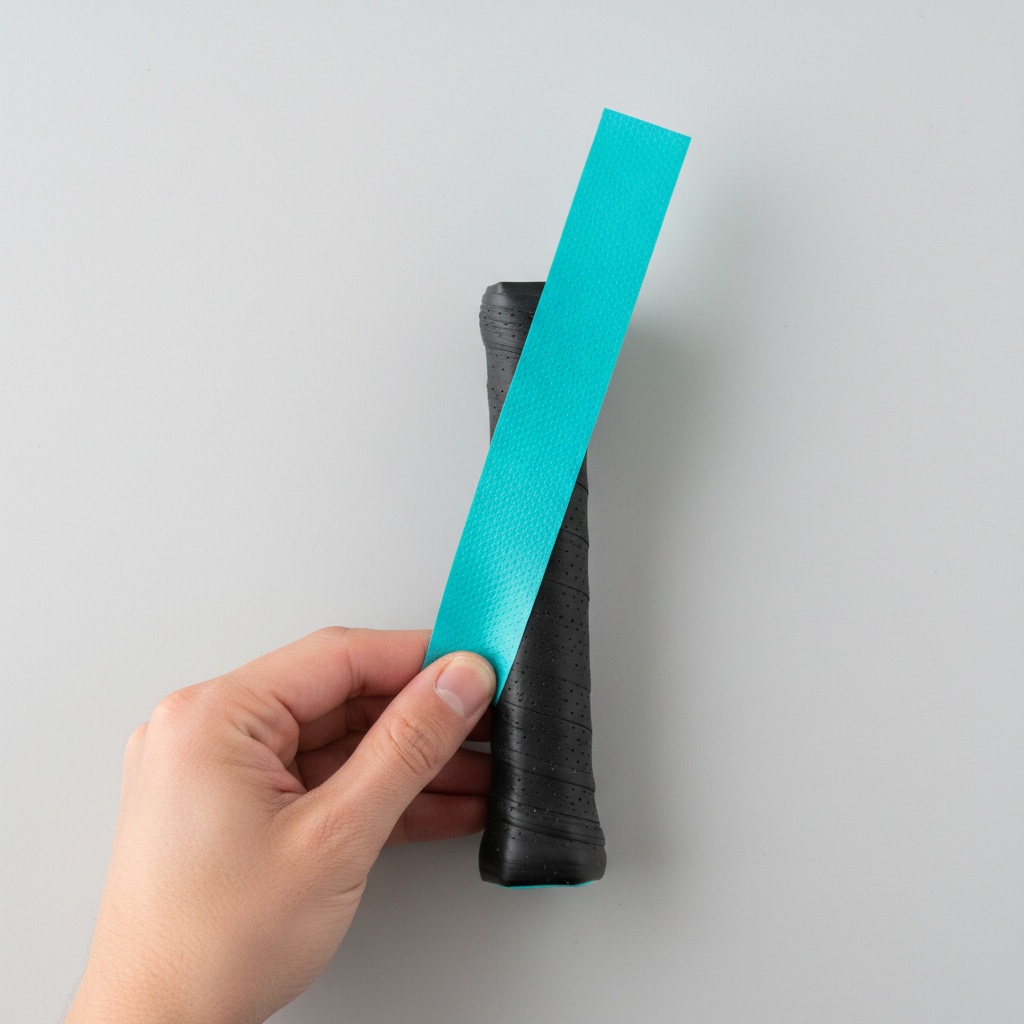
A replacement grip is thick — typically 1.5 to 2mm — and goes directly onto the bare paddle handle. It's the base layer your paddle ships with from the factory. When it wears through (hardened, cracked, or compacted), you pull it off entirely and start fresh. Gamma Honeycomb and HEAD HydroSorb Pro are two reliable options for a base replacement.
An overgrip is thin — 0.5 to 0.7mm — and wraps over the replacement grip. Its job is surface tack and sweat absorption. It's designed to be swapped frequently, sometimes every few sessions for players who sweat a lot. FORWRD Premium Overgrips are built for exactly this: keep a few in your bag, pull a fresh one out when the tackiness drops. Overgrips don't go on bare handles — they need a base layer underneath.
The decision is straightforward:
- Grip feels slick during play but looks structurally intact? → Swap the overgrip.
- Grip feels thin, stiff, or has visible cracks? → Full replacement grip.
- Grip is uneven or bulging under your palm? → The base layer failed. Replace it first, then add a fresh overgrip.
For more detail on which overgrip works best for your sweat level and play style, the overgrip buying guide covers the full comparison.
How to Tell It's Time to Replace Your Grip (Not Just Add an Overgrip)
The squeeze test: grip your paddle the same way you hold it on court and squeeze firmly. A fresh replacement grip has a little give and springs back. A worn one feels dense, compacted, or hollow — sometimes with a faint crinkle sound. That's the cushioning breaking down.
Replace the base replacement grip when:
- You feel the hard handle edges through the grip during rallies
- The surface has hardened to a glossy or plastic-feeling texture
- There are cracks, tears, or visible separation at the seams
- A fresh overgrip doesn't fix the feel — the underlying cushion is gone
If your factory grip is intact and just feels slightly slick, you don't need a full replacement yet. An overgrip buys you months. Save the full replacement job for when the base layer genuinely fails — doing it too early wastes both money and a perfectly good grip.
Step-by-Step: How to Replace a Pickleball Paddle Grip
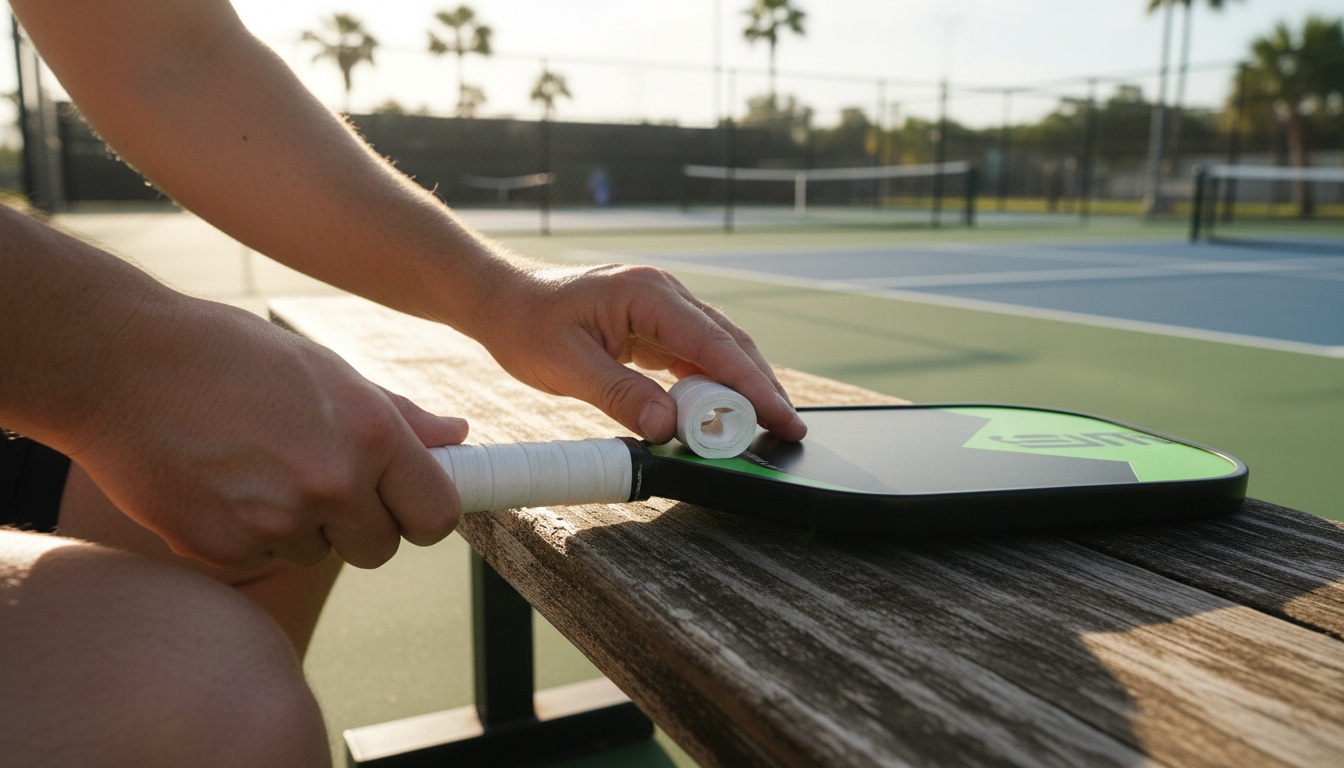
What you need: the new replacement grip, finishing tape (usually included), scissors, and a damp cloth. The whole process takes about 10 minutes the first time, less once you've done it a few times.
Step 1 — Remove the old grip completely. Peel off the finishing tape at the top, then unwind the grip toward the butt cap. Take your time here — pulling too fast tears pieces off and leaves more adhesive behind to clean up.
Step 2 — Clean the handle. Don't skip this. With the old grip off, you'll see adhesive residue on the handle. Run a slightly damp cloth over the entire handle surface and let it dry for 2–3 minutes. Leftover adhesive is the #1 cause of new grips peeling within a week — it prevents the new adhesive from bonding to the handle directly.
Step 3 — Start at the butt cap, 45-degree angle. Most replacement grips have a tapered starting end. Peel back about 6 inches of the protective film, position that tapered end at the very base of the handle at roughly 45 degrees, and press firmly. This angle controls whether your wrap lines run true up the handle or spiral off-center. Get the start right and the rest follows naturally.
Step 4 — Wrap upward with consistent 3–5mm overlap. Pull the grip slightly taut as you wrap — not stretched, just enough to eliminate slack. Keep the overlap consistent throughout. Rushing this creates ridge lines under your palm that become noticeable (and annoying) mid-match.
Step 5 — Trim and finish. When you reach the top of the handle, trim the excess at a clean angle so the cut edge runs flush. Apply the finishing tape over the top edge with firm thumb pressure all the way around. If the tape has any wrinkles, peel it and re-apply flat — this is where most finishing bubbles start.
Final squeeze test. Grip the paddle normally and feel end-to-end. It should feel consistent with no lumps or thin spots. If you feel a ridge, there's a wrapping angle issue — see below.
Common Grip Problems and How to Fix Them
Three things go wrong most often. Here's the cause and fix for each:
Problem 1: Grip slips or peels within the first week
Cause: Adhesive residue left on the handle. New adhesive doesn't bond to old adhesive — it sits on top of it and eventually slides.
Fix: Peel the grip back carefully if it's still salvageable. Clean the handle thoroughly, let it dry completely, and rewrap.
Prevention: Always wipe the handle between replacements. Two minutes of cleaning saves a wasted grip.
Problem 2: Uneven ridge or bump under the palm
Cause: Starting angle was too steep (over 45 degrees) or the overlap wasn't consistent. The ridge is where grip layers piled up.
Fix: Remove and rewrap. There's no shortcut — the ridge won't compress over time. Use your thumb as a spacing guide to maintain identical overlap from bottom to top.
Prevention: Go slowly on the first 4 inches. The starting angle locks in everything that follows. If it looks slightly off after the first wrap, peel it back and restart before you're committed.
Problem 3: Finishing tape bubbles or peels within a day
Cause: The cut edge at the top was uneven, or the finishing tape was applied under tension instead of laid flat.
Fix: Pull off the finishing tape only, recut the grip edge cleanly if needed, then re-apply the tape slowly with continuous thumb pressure as you go.
Prevention: Press as you lay it — not after. Finishing tape doesn't self-heal once it's placed wrinkled.
Durability Math: How Long Your Grip Should Last
There's no single answer, but these ranges hold across most playing conditions:
- Daily player (10+ hours/week): Replace your overgrip every 6–8 weeks. Replace the base replacement grip every 6–12 months. Outdoor concrete courts are harder on grips than indoor hardwood — adjust toward the shorter end if you play outside in heat.
- Regular rec player (3–5 hours/week): Overgrip every 3–4 months. Replacement grip every 12–18 months.
- Occasional player (1–3 hours/week): Overgrip once a year or when tackiness drops. Replacement grip can last 2–3 years if it's not cracking.
Sweaty hands accelerate all of this. If you play in heat or your hands are naturally damp, cut those numbers roughly in half. The overgrip takes the abuse so the base layer lasts longer — that's the entire design logic of the two-layer system.
A slipping grip costs you more than you think. Losing even a small amount of hand contact during a dink or a third shot drop changes the ball's trajectory. Players who replace grips on schedule consistently report better shot consistency — not because their technique improved, but because they stopped fighting the paddle.
"We talk about paddle specs all day long — face texture, core thickness, weight. But I've watched 3.5-level players drop two skill grades mid-session because their grip got slick in the second game and they couldn't feel the paddle face anymore. Replace your overgrip. It's the cheapest performance upgrade in pickleball." — Grub, FORWRD

Our Pick: FORWRD Premium Overgrips
Purpose-built for rotation — tacky enough to feel like a new grip, thin enough to keep your handle size consistent. Comes in a pack of 3 so you're never hunting for one between sessions.
Once your paddle setup is dialed in — fresh grip, the right spec for your game — check out the beginner paddle guide if you're still deciding on the paddle itself, or the power vs. control breakdown if you're ready to trade up.
FAQ: Pickleball Grip Questions
When should you replace a pickleball paddle grip?
Replace the base replacement grip when it feels hard, shows visible cracks, or no longer cushions the handle edges through play. Use the squeeze test: a worn grip feels stiff and compacted rather than slightly giving. Overgrips should be replaced when surface tackiness drops — typically every 4–8 weeks for active players, longer for casual ones.
What's the difference between overgrip and replacement grip?
A replacement grip (1.5–2mm thick) goes directly on the bare handle and is the base layer. An overgrip (0.5–0.7mm) wraps over the replacement grip to add tack and absorb sweat. They're not interchangeable — an overgrip on bare wood will feel wrong and won't last. Overgrips are swapped frequently; replacement grips are a heavier-duty, less frequent change.
How often do you replace a pickleball grip?
For active players (3x+ per week): overgrip every 4–8 weeks, base replacement grip every 6–18 months. For casual players: overgrip once or twice a year or when it loses tackiness, base grip every 2–3 years. Heat, outdoor courts, and sweaty hands all accelerate wear — adjust toward the shorter end for those conditions.
How do you stop a slipping pickleball grip?
If a freshly installed grip slips within days, residual adhesive on the handle is almost always the cause. Remove the grip, wipe the handle with a damp cloth, let it dry, and rewrap. If the grip slips during play after extended use (not right after installation), the overgrip has worn out — swap it for a fresh one rather than replacing the base layer.
How tight should a pickleball grip be wrapped?
Taut enough to remove slack without stretching the material. Wrapping too tightly causes ridge lines and the grip wears faster; too loosely leaves gaps and an inconsistent feel. A useful check: after wrapping, you should be able to slide one finger under the grip with noticeable resistance. If it slides freely, it's too loose.
Can you put an overgrip over a worn replacement grip?
Short-term, yes — an overgrip restores surface tack and adds light cushion. But it won't fix a hardened or compacted base layer. If you can still feel the hard handle edges through an overgrip during play, the replacement grip has failed and needs a full swap. No number of overgrips stacked on top will solve that underlying issue.

Leave a comment
This site is protected by hCaptcha and the hCaptcha Privacy Policy and Terms of Service apply.