

Last updated: July 2026
Drop the ball. Let it bounce. Hit it. That's the drop serve — and under USAPA Rule 4.A.6, it's been legal in pickleball since 2022. What it gives you is freedom from every restriction that applies to the volley serve: the below-the-waist contact rule, the upward-arc requirement, the paddle-angle constraints at contact. All of them disappear the moment the ball bounces.
For players who've been fighting a flaky volley serve, the drop serve isn't a hack. It's a legitimate technical choice — one that happens to be easier on the wrist, friendlier for tennis converts, and more forgiving under pressure. Whether it's the right choice for you depends on factors most guides don't actually address. That's what this one is for.
Disclosure: This post contains affiliate links to Pickleball Central. If you purchase through our links, FORWRD earns a small commission at no extra cost to you. We only link to products we'd recommend regardless.
What the Drop Serve Is (And Why It Was Added to the Rules)
USA Pickleball introduced the drop serve as a provisional rule in 2021, then made it permanent in 2022. The reasoning was practical: the volley serve's contact requirements — waist height, upward paddle arc, specific arm position — were creating endless gray-area fault calls at recreational levels and inconsistency in officiating at higher levels.
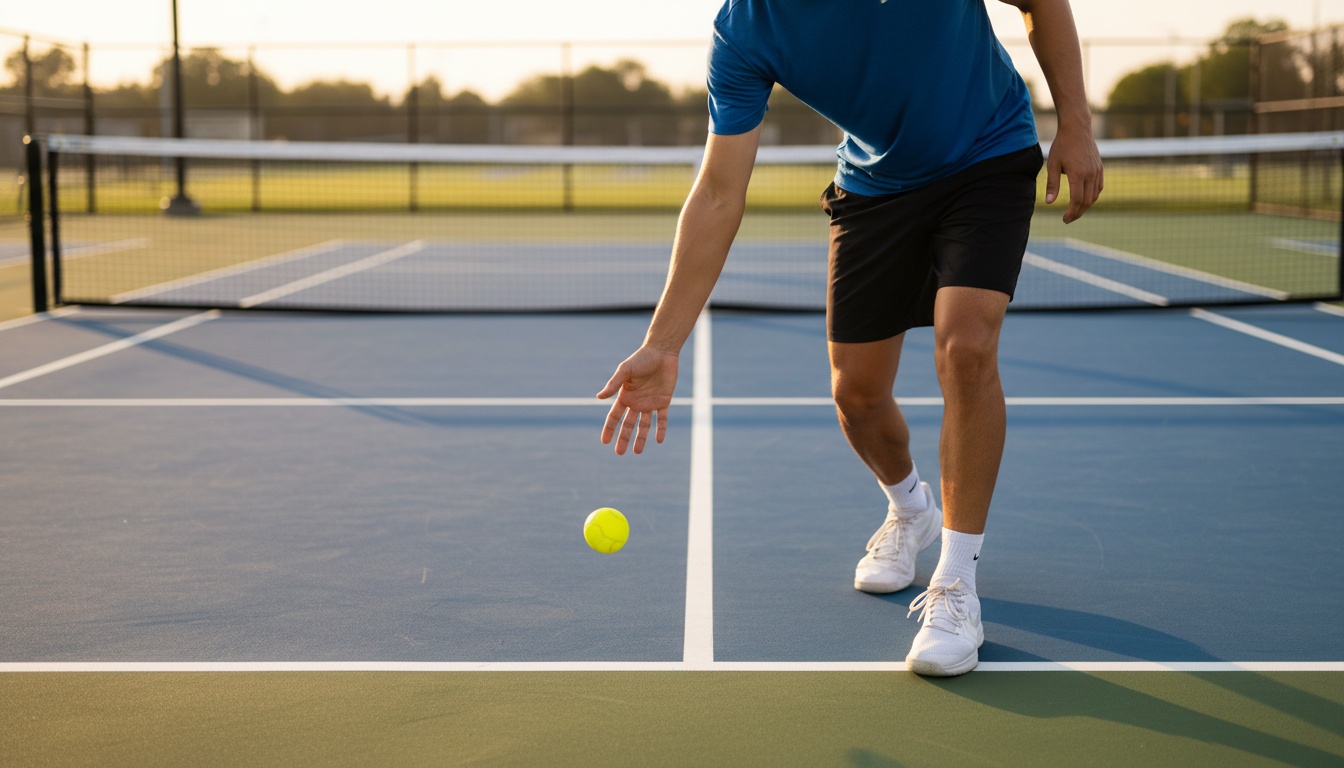
The drop serve doesn't have any of those requirements. You release the ball from any natural height, let gravity pull it down, and strike it after it bounces. You can release from above your shoulder. You can release from waist height. You can vary that height deliberately to change your bounce point — and therefore your contact zone. The only constraint is that the release must be passive. You can't throw, spin, or push the ball before it hits the ground.
What doesn't apply once the ball has bounced: the below-the-waist contact rule, the upward-arc swing requirement, the paddle-above-wrist restriction. Fault categories that eliminate a lot of volley serves don't exist for the drop serve. The foot fault rules still apply — one foot behind the baseline at contact, neither foot touching the court inside the baseline — but that's the same for both serve types.
One nuance that trips up players early: you can release the ball from above your shoulder legally. What you cannot do is add force. Drop it, don't throw it.
Who Should Use the Drop Serve (And Who Probably Shouldn't)
The drop serve isn't a universal upgrade, even though it gets treated that way. It trades one set of constraints for a different set of timing demands. Whether the trade is worth it depends on your specific situation.
Use the drop serve if you match any of these:
- Wrist flexibility is limited. The volley serve's pronation mechanics and contact-height requirements are genuinely hard on stiff or injured wrists. The drop serve removes those demands entirely.
- You have a racquet sports background. Tennis, racquetball, squash players — the bounce-hit timing is already in your muscle memory. The drop serve feels natural immediately in a way it doesn't for players with no racquet history.
- You're double-faulting regularly. Serve inconsistency usually comes from trying to manage too many mechanical requirements simultaneously. The drop serve cuts that number roughly in half.
- You want more spin options. Topspin, sidespin, slice — they're all easier to generate reliably off a bounced ball, where your contact point is stable and predictable.
Stick with the volley serve if:
- Your serve is already consistent. If you're hitting 90%+ first serves in without drama, don't change it. The adjustment period alone costs you weeks of serve reliability.
- Power is your primary weapon. The volley serve generates more raw pace. A flat, deep power serve is harder to execute off a drop — the bounce timing costs you a fraction of your leverage.
- You need immediate results. Expect 2-3 weeks before a drop serve feels automatic. That's not long, but it's real — and if you're mid-season, it's worth noting.
"At 3.0, the drop serve is a security blanket — players use it because the volley serve feels unstable. At 3.5 and above, you're using it intentionally, building spin and depth by design. The switch matters most at that transition."
Step-by-Step Drop Serve Technique: The 4-Point Checklist
I switched from the volley serve after a wrist sprain made the standard mechanics painful. Honestly? My spin variety improved after switching, because I wasn't fighting the wrist restriction anymore. Here's the exact sequence:
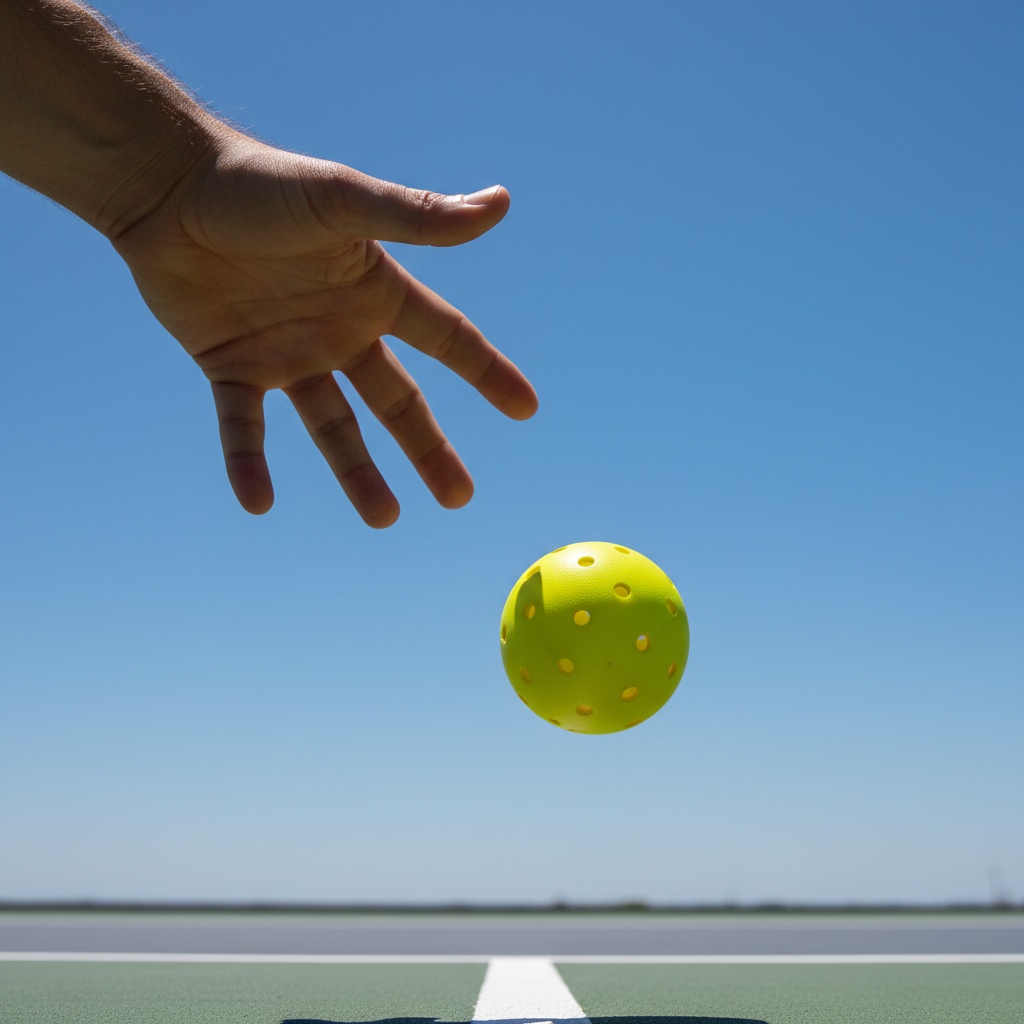
1. The release. Hold the ball at hip-to-waist height to start. Open your fingers — don't push, don't flick, just open them. If the ball is moving sideways or the release feels active, you're adding force. A legal release feels passive, like the ball simply fell. Once you're comfortable with the basic timing, experiment with higher release points — above shoulder height gives you a chest-high bounce and more time to set your swing.
2. Drop height and what it changes. A hip-height release creates a mid-thigh bounce — the easiest timing window for most players. Higher releases give you more time between bounce and contact, which helps with consistency. Lower releases compress the timing and generally hurt accuracy until you've built the reflex. Start consistent at one height before you add variety.
3. The contact window. Hit the ball as it rises off the bounce, at or just after its apex. This is the same timing you'd use on a mid-bounce tennis groundstroke. A verbal cue that actually works in practice: say "bounce" internally when the ball hits the ground, then "hit" at your contact point. It locks the rhythm in faster than any other drill approach I've tried.
4. Follow-through toward your target. Drive forward, not up. The most common new drop server error is scooping — swing path goes up instead of through. If you're ballooning serves long, this is why. Point your follow-through toward where you want the ball to land. The target zone: 2-4 feet from the baseline, deep. Shallow serves at mid-court are easy put-aways.
For more on serve mechanics beyond the drop serve — what to do with your stance, weight transfer, and how to build a second serve you can trust under pressure — see our How to Improve Your Pickleball Serve: 2026 Complete Guide.
Drop Serve vs. Volley Serve: The Real Performance Difference
Here's the decision table. Six factors, honest comparison — if 3-4 of the "drop serve wins" conditions apply to your game, the switch is worth the adjustment period. If only 1-2 match, it's probably not worth disrupting something that's working.
| Factor | Drop Serve Wins | Volley Serve Wins |
|---|---|---|
| Wrist flexibility | Limited — no contact-height or arc restrictions | No issues — full volley mechanics available |
| Racquet background | Tennis/racquetball — bounce timing is muscle memory | No prior racquet sport — volley may feel more natural |
| Current consistency | Double-faulting regularly (fewer mechanics to manage) | Already hitting 90%+ first serves in |
| Power as primary weapon | Placement and spin over raw pace | Power serve is your opening-shot weapon |
| Spin variety | Want topspin, sidespin, or slice options on serve | Spin variety isn't a current priority |
| Adjustment tolerance | Patient — 2-3 weeks for new timing to feel automatic | Need reliable serve results immediately |
One thing both serve types share: depth beats everything else. A well-placed deep serve — regardless of which type — pushes your opponent back and gives you time to move into position. A short serve that lands mid-court is free money for the returner, whatever its spin or speed.
For a complete breakdown of all four serve types — power, topspin, volley, and drop — and which one fits your game at each rating level, read our Pickleball Serve Guide 2026: 4 Types, Rules + Decision Matrix.
Can You Put Spin on a Drop Serve? (What the Rules Actually Allow)
Yes — and this is one of the most underrated advantages of the drop serve. You can generate any spin you want at the point of contact: topspin, backspin, sidespin, combinations. The volley serve's restrictions on paddle angle and swing path don't apply once the ball has bounced.
What you can't do is spin the ball during the drop itself. The ball must fall by gravity without your hand adding rotation. But your swing path, contact angle, and follow-through are completely open. A topspin drop serve — released from hip height, contacted with a low-to-high brush across the face — creates a kick serve that rises sharply off the bounce. At 3.5-4.0 level, most players are expecting a flat or gentle serve, and that kick catches them completely off guard.
Sidespin is also reliable off the drop. Catch the ball slightly inside or outside your normal contact zone and brush across the face at contact. Because the drop gives you a stable, predictable contact point, spin is easier to repeat than on a volley serve where everything is in motion at once.
The practical ceiling: most recreational players see the biggest gains from depth and placement, not spin. Get consistent and deep first, then layer in spin variations. Spin on a shallow serve just makes it easier to put away.
Common Drop Serve Mistakes and How to Fix Them
Releasing with downward force. This is a fault — the drop must be passive. The fix: practice releasing with your palm facing upward, then just open your fingers. There should be no push, no wrist snap. If the ball curves or moves sideways on the drop, your hand is adding force. A legal release feels like the ball simply fell out of your hand.
Contacting on the way down instead of the way up. Hitting the ball as it descends after the apex gives you a compromised contact point and kills depth. Wait for the ball to reach its post-bounce apex — there's a fraction of a second of near-float before it starts falling again. That's your contact window. The "bounce, hit" rhythm drill: count one internal beat between the two. Most players who struggle with this are rushing.
Follow-through going up instead of forward. New drop servers tend to scoop the ball rather than drive through it. The swing path should push toward your target zone, not lift upward. If your serves are ballooning long, this is the likely cause. Fix: think "push forward" rather than "lift up." Keep your contact point in front of your body and drive through it.
Varying drop height randomly. Changing your release height from serve to serve creates timing chaos. Pick one height, lock it in for 2-3 weeks, then experiment with variations deliberately. Consistency before variety — always.
Building reps without a partner speeds this up significantly. Some players use a pickleball ball machine during the first few weeks of switching — unlimited feed-and-hit reps for ingraining the "bounce, hit" rhythm are genuinely hard to replicate with a drilling partner who can only feed so fast.
Also worth reading: the Pickleball Third Shot Drop Guide covers a technically similar "drop" mechanic — not the same shot, but players who struggle with one often find the other clicks once they've built the drop timing feel.
FAQ: Pickleball Drop Serve Questions
What is a drop serve in pickleball?
The drop serve is a serve where you release the ball from your hand, let it bounce on the court, then strike it after the bounce. It's been legal under USAPA Rule 4.A.6 since 2022. Unlike the volley serve, the drop serve has no restrictions on contact height, swing arc, or paddle angle at the moment of contact.
Is the drop serve legal in pickleball 2026?
Yes, fully legal with no new restrictions in 2026. The rules are unchanged from 2022: release the ball passively (no added force or spin during the drop), let it bounce, and strike it after the bounce. All regular foot fault rules still apply — one foot must be behind the baseline at contact.
How do you do a drop serve in pickleball?
Release the ball from hip-to-waist height without adding any force — just open your hand and let it fall. Allow it to bounce off the court, then strike it as it rises toward its apex. Follow through toward your target zone, 2-4 feet from the baseline. The "bounce, hit" verbal rhythm cue helps ingrain the timing quickly.
Why do some pickleball players use the drop serve?
Mainly for two reasons: it removes the wrist and arm-position restrictions that make the volley serve difficult, and it provides a more stable contact point for generating spin. Players with wrist injuries, limited wrist flexibility, or tennis backgrounds often find the drop serve more natural and more consistent than the volley serve.
Can you spin a drop serve in pickleball?
Yes. You can generate topspin, sidespin, slice, or combination spins at contact — the volley serve's paddle-angle restrictions don't apply. The only spin that's illegal is adding spin to the ball during the drop itself (the release must be gravity-only). Your swing path and contact angle at strike are completely unrestricted.
Drop serve vs. volley serve — which is better?
Neither is universally better. The drop serve is better for players with wrist issues, tennis backgrounds, or serve consistency problems. The volley serve is better for players who rely on power or have an already-reliable volley serve. Use the 6-factor table above to decide which fits your specific game.

Leave a comment
This site is protected by hCaptcha and the hCaptcha Privacy Policy and Terms of Service apply.