

Disclosure: This post contains affiliate links to Pickleball Central. If you purchase through our links, FORWRD earns a small commission at no extra cost to you. We only link to products we'd recommend regardless.
Last Updated: May 2026
Here's the short version: you need a paddle, some balls, court shoes, and somewhere to put all of it. Everything else is either a nice upgrade or complete noise. The problem is that "complete noise" and "legitimate game-changer" look identical on a product page — so this guide cuts through both.
We've tested or used every category of pickleball gear on actual courts, in actual matches, in actual weather. What follows isn't a list of things that exist — it's a ranked, honest breakdown of what's worth your money, what to skip until you're ready for it, and what you'll regret buying twice because you went cheap the first time.
What You Actually Need (The 5-Item List)
Before anyone tries to sell you a $1,200 ball machine and a custom paddle stencil kit, here's the honest minimum to start playing pickleball:
- A paddle — $50 to $250, depending on where you are in your game
- Balls — outdoor or indoor, a sleeve of 3 runs about $10-$15
- Court shoes — not running shoes, actual court shoes with lateral support
- A bag — even a basic sling works while you're figuring out whether pickleball is going to be a thing for you
- Eye protection — optional for casual play, but a pickleball hits the face harder than most people expect and it's a fast-growing injury category
That's it. Every other item in this guide is either a worthwhile upgrade or a tournament-level addition. Don't let the gear industry convince you that you need $800 worth of stuff to show up for your first open play session.
That said — if you've already decided this sport is yours, buying the right gear once is significantly cheaper than buying the wrong gear twice. The sections below will tell you exactly where to invest and where to save.
Pickleball Paddles: The Most Important Purchase You'll Make
Your paddle is the only piece of equipment that directly affects every single shot you hit. Shoes protect you from injury. Balls determine how the game feels. Your paddle determines whether you can actually execute what you're trying to do.
Here's what the specs actually mean:
Face Material
Graphite — light, responsive, excellent touch. Standard on mid-range paddles ($80-$180). Good for beginners through intermediates.
Carbon fiber (raw or textured) — generates spin, stiffer feel, popular at the 3.5+ level. Most $150-$250 paddles use this.
Composite (fiberglass) — more power, softer feel, larger sweet spot. Great for beginners; most $50-$120 paddles.
Core
Polymer — standard on nearly everything above $60. Quiet, consistent, good durability.
Nomex — older technology, loud, very stiff. Mostly legacy paddles.
Foam/thermoformed — injected foam fills the entire frame, creates a "live" feel. Premium category ($200+). The top thermoformed paddles deliver a measurably larger effective sweet spot and more spin RPMs at the same swing speed.
Weight
7.3–7.8 oz: lighter, faster hands, better at the kitchen line. Good for dink-heavy players.
7.8–8.3 oz: balanced power and control. Most popular range.
8.3+ oz: more pop, more arm fatigue. Power hitters and baseline players.
What to Buy at Each Level
Beginner (under $120): You don't need to spend more than this yet. Look for a composite or graphite face, polymer core, 7.5–8.0 oz, mid-length handle (5"–5.5"). The Diadem Riptide (~$59) and HEAD Gravity (~$118) both punch above their price points. Read the full Best Pickleball Paddles for Beginners guide.
Intermediate ($120–$200): This is where carbon fiber faces show up and spin generation starts to matter. The jump from composite to textured carbon is real and noticeable at 3.5+. The JOOLA Hyperion CFS 16 ($159) remains a benchmark at this price. See the full Best Pickleball Paddles of 2026.
Competitive ($200+): Thermoformed paddles dominate here. If you're playing 4.0+ or competing in DUPR-rated events, the added feel and spin ceiling is worth it. Read the Budget vs Premium Paddle breakdown before spending $250+ — the gains are real but incremental.
"The biggest mistake I see new players make is buying a paddle that's too heavy. They think more weight means more power, but you end up fighting the paddle instead of the ball. Stay under 8 oz until you've played for six months and understand your own game."
— Topher, FORWRD co-founder and 4.5-rated player
One more thing: buy two paddles before you play in a tournament. Nothing tanks your game faster than breaking a paddle in game one with no backup. It happens more than you'd think.
Pickleball Balls: Indoor vs Outdoor (and Why It Actually Matters)
This is simpler than the internet makes it seem. Two types of pickleballs:
- Outdoor balls — 40 holes, harder plastic, heavier (~0.9 oz), built for wind resistance. The gold standard: Franklin X-40 and ONIX Dura Fast-40. Most outdoor open play uses one of these two.
- Indoor balls — 26 holes, softer, lighter (~0.8 oz), designed for gym floors. Slower pace, more control-based game. The Franklin X-26 ($35/12-pack) is the most common indoor ball in sanctioned play.
You can use an outdoor ball indoors in a pinch — it'll play fast and feel a bit dead on the gym floor. Using an indoor ball outside doesn't work; it goes sideways in any wind and cracks much faster on rough concrete.
Balls crack. All of them. Buy in 12-packs once you're playing more than twice a week. The per-ball cost drops significantly — a Franklin X-40 12-pack runs about $12-$15 depending on stock, versus $4+ buying singles.
For a full breakdown with durability data: Best Pickleball Balls in 2026
Pickleball Bags: How to Carry All This Gear
Your bag is where gear organization either works or completely breaks down. A bad bag means digging through a pile to find your overgrip before every session, water bottle leaking on your paddles, and no good place for your keys. Small frustrations, constant.
How to think about what you actually need:
Bag Type by Player Profile
Sling bag — good for 1-2 paddles, a couple balls, and your keys. Fine for casual players who hit the courts twice a week and don't need to haul extras. Cheap ($10-$40).
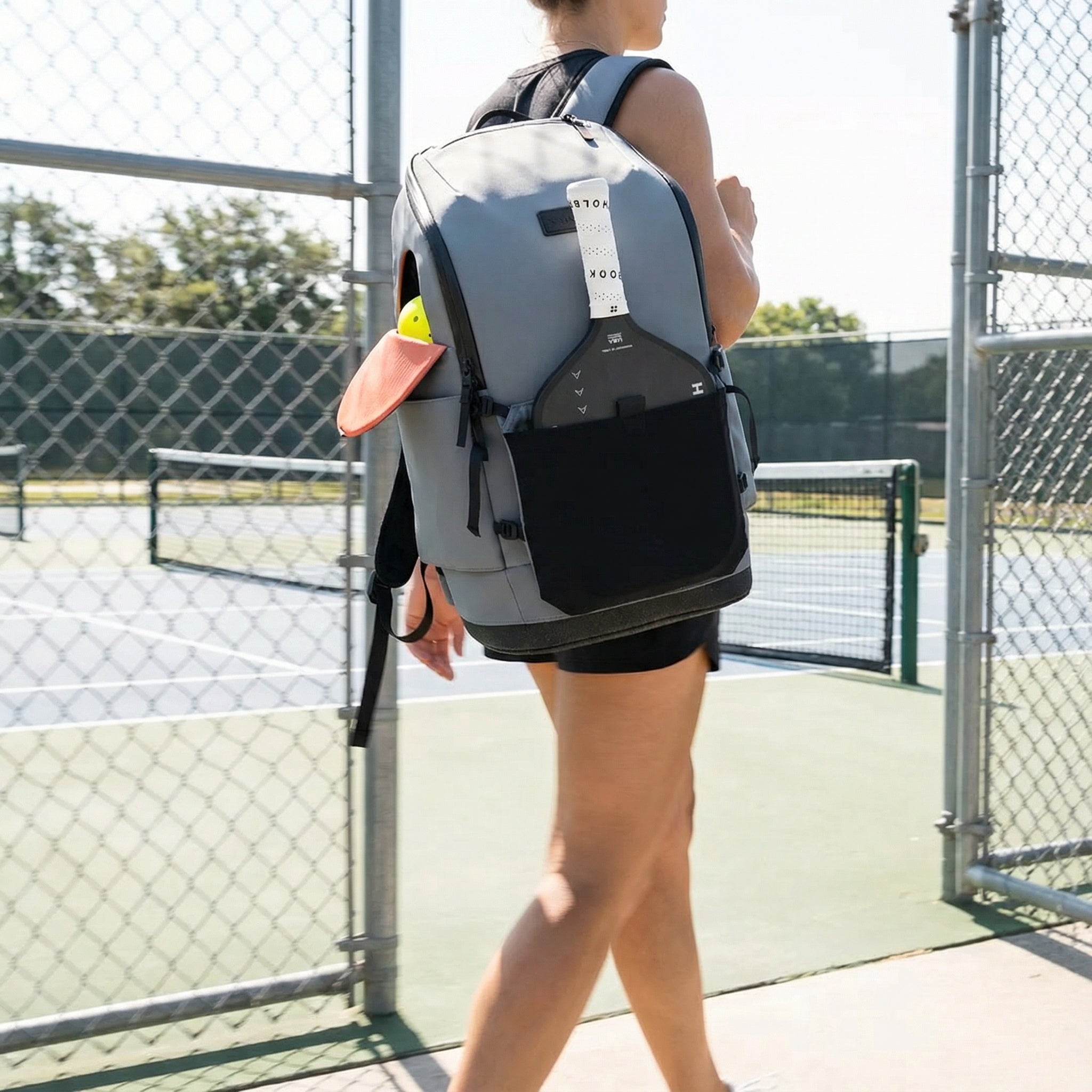
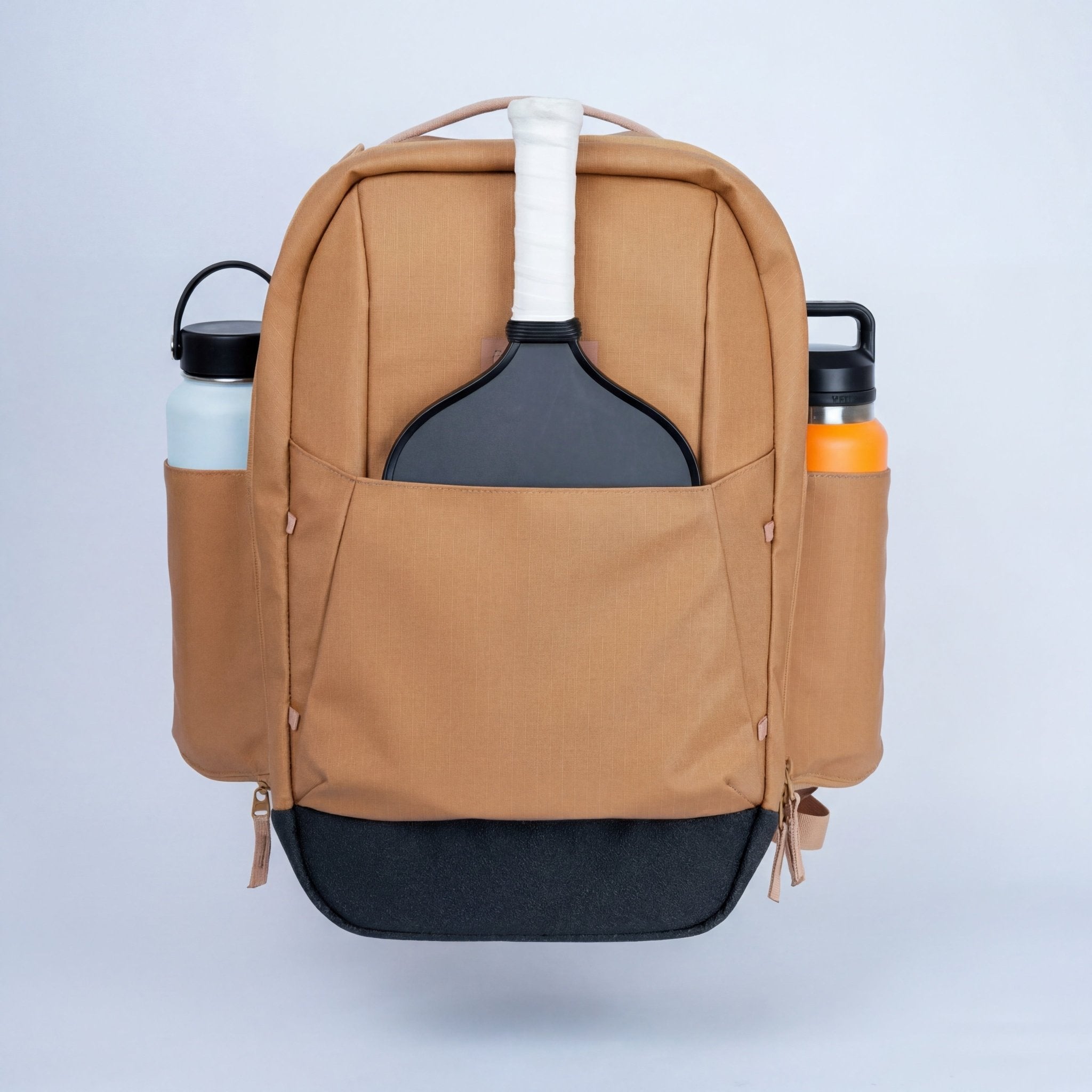
Backpack — the workhorse format for anyone playing regularly. Fits 2-4 paddles, balls, shoes, a laptop, and still has room for a jacket. This is what most serious recreational players use. Price range: $100-$325.
Duffle/tote — high-capacity, easy access, popular with coaches and players who bring a lot of gear. Harder to carry long distances.
Full type comparison: Pickleball Backpack vs Sling vs Duffle
What to Look For
Five things that separate a good pickleball bag from a bag you'll replace in a year:
- Paddle capacity — at least 2 dedicated slots; 4-5 if you're playing tournaments and need backups
- Laptop sleeve — court-to-work players need this. Look for padded, minimum 15".
- YKK zippers — the zipper is the first thing to fail on cheap bags. YKK AquaGuard is the standard.
- Organization — separate wet/dry, ball pockets, key clips
- Weather resistance — outdoor courts mean outdoor conditions. TPU-coated or ripstop fabric matters.
Full buying criteria: What to Look for in a Pickleball Bag
Our Picks
Everyday Player: FORWRD Court Ranger V2
16" laptop sleeve, 4 paddle capacity, YKK AquaGuard zippers, TPU-coated ripstop — built for players who go court-to-office and everywhere in between.
Tournament Player: FORWRD Court Caddy
15" padded laptop sleeve, 4-5 paddle capacity with full separation, YKK AquaGuard, modular paddle sleeve, lifetime warranty. Built for players who need to show up organized.
Both bags were designed with feedback from 500+ real players and featured in The Dink, Pickleball Effect, and The Kitchen. Full side-by-side: Best Pickleball Bags 2026
"I used to show up to tournaments with a drawstring bag. You forget ONE thing — a spare grip, a ball, your registration card — and you're scrambling. A proper bag with actual organization changed how I approach tournaments. It sounds like a small thing until you realize how much mental energy you waste on gear logistics."
— Grub, FORWRD co-founder
Pickleball Shoes: Why Court Shoes Are Non-Negotiable
Running shoes are designed to absorb impact moving forward. Pickleball is 80% lateral movement. When you lunge left for a dink and your running shoe's cushioned heel rolls, that's how ankle injuries happen — not dramatically, just gradually. Wrong footwear is one of the leading causes of lower-body injury in racket sports.
What a court shoe does differently:
- Gum rubber outsole — grips indoor and outdoor courts without marking surfaces
- Lateral support — stiffer sidewall construction prevents ankle roll on direction changes
- Low heel drop — 4-8mm vs 10-12mm in running shoes keeps you balanced at the kitchen line
- Reinforced toe cap — toe drag on the serve destroys a regular sneaker's toe box within weeks
Picks at Each Budget
Best value: K-Swiss Express Light ($115) — light, grippy, durable. The most popular court shoe among recreational players who don't want to spend $150+.
Best for wide feet: K-Swiss makes the Express Light 2E Wide at the same price. Full analysis: Best Pickleball Shoes for Wide Feet
Best cushioning: ASICS Gel-Resolution X — the Gel cushioning is excellent for players with knee or hip issues who still need lateral support.
Best for indoor: HEAD Motion Pro has exceptional grip on gym floors — better than any other shoe we tested indoors.
Premium: Nike Air Zoom Vapor Pro 2 for max responsiveness. Skechers Viper Court Pro 2.0 for players who prioritize comfort in long sessions.
Buy two pairs and rotate them. Court shoes compress over 40-60 hours of play and lose lateral support without looking worn. Rotating doubles the useful life of each pair.
Eye Protection: The Most Overlooked Piece of Gear
Eye injuries are one of the fastest-growing injury categories in pickleball — and most are completely preventable. A pickleball traveling at 30-45 mph hitting an unprotected eye socket causes serious damage. The plastic frame of standard sunglasses doesn't protect from behind. Impact-rated sports eyewear does.
What to look for:
- ANSI Z87.1 rating — impact-resistant standard, required for USAPA-sanctioned events
- Lens tint — yellow/amber for indoor low-light; gray or orange for outdoor sun
- Wrap-around coverage — reduces peripheral exposure that straight-frame glasses miss
- Anti-fog coating — critical for indoor play where temperature changes cause fogging during warm-up
Budget pick: ONIX Eagle Eyewear ($29.99) — basic ANSI-rated protection. Does the job.
Mid-range: Gearbox Vision ($44.99) — great fit, solid optics, well-reviewed at the intermediate level.
Best overall: CRBN Pivot — swappable lenses cover indoor and outdoor in one pair. Worth it if you play in both environments.
Outdoor premium: JOOLA RJX Lite ($97) — polarized lenses, solid wrap coverage, ideal for outdoor play in direct sun.
Full indoor comparison: Best Indoor Pickleball Glasses 2026
Overgrips: The Cheapest Performance Upgrade in Pickleball
Most players are hitting with a slick, compressed, slightly disgusting overgrip that's been on the handle since they bought the paddle. A fresh overgrip changes how the paddle feels — more secure, more responsive, less grip pressure needed. Less grip pressure means less forearm fatigue and lower pickleball elbow risk.
Replace your overgrip every 6-10 hours of play. If your hands sweat heavily, every 4-6 hours. It's a $2-$3 item. There's no reason to play on a dead grip.
Types:
- Tacky — grippy feel, dry conditions. GAMMA Honeycomb ($8.99) is the most popular.
- Cushion — thicker, softer, absorbs vibration. Good for players with elbow issues.
- Moisture-absorbing — rough texture, designed for sweaty hands. Gearbox Moisture Absorption ($8.99) is the go-to.
Grip size matters: too small and your hand compensates by squeezing harder, causing arm fatigue. Too large and you lose feel. Test: hold the paddle normally — there should be about 1/4" gap between your fingertips and your palm.
Best Pickleball Overgrips 2026 | How Often to Change Your Overgrip
Training Equipment: Ball Machines, Rebounders, and Practice Nets
Once you're playing 3+ times a week and want to actually improve — not just play more — training equipment starts to make sense. The gap between occasionally drilling and having a ball machine feed you 600 balls per session is significant. Pro players use them. Club-level competitive players use them. Recreational players who want to accelerate improvement are catching on.
Ball Machines ($200–$1,400)
The Pickleball Tutor Spin ($1,119) is the market standard — oscillating, programmable, holds ~125 balls, battery-powered. There's also the Tutor Plus ($1,319) for more control. At the budget end, the Pickleball Eye Coach ($199) is a rebound-based trainer good for solo dinking and reaction work.
Practice Nets ($50–$160)
The OnCourt OffCourt PickleNet Mini ($149) is the standard for solo practice. Sets up in 2 minutes, folds flat, works in a driveway or garage. Good for serving, dinking drills, and third-shot drop work.
Ball Hoppers
The GAMMA Ball Tube ($34.99) holds 15 balls and doubles as a serve stand. The Handy Hopper ($35.95) holds 50+ and is the drill-session standard when you're working with a coach or partner.
Full breakdown: Pickleball Training Equipment: The 2026 Tested Guide
Backyard Nets: Taking the Game Home
Setting up your own net — even just a portable one in a driveway — is one of the highest-leverage investments a serious player can make. Being able to drill 30 minutes before dinner instead of waiting for open play time accelerates improvement faster than almost anything else.
Portable vs permanent:
- Portable — sets up and breaks down, works on driveways, grass, or indoor spaces. The Rally Deluxe Portable Net System ($159) is the gold standard — regulation height, weather-resistant, stores in a carry bag.
- Permanent — installed into concrete, intended for a dedicated court. Costs $500-$2,000+ depending on poles and surface.
Most players are better served by portable unless they're building a full backyard court. Full breakdown: Best Pickleball Nets for Backyard & Driveway Play 2026
Accessories: The Small Stuff That Actually Adds Up
Some of this is personal preference. Some of it is stuff you'll wish you'd bought before the problem appeared.
Sweat Management
Sweatbands (wrist and head) keep your overgrip from soaking through between games. A moisture-wicking headband costs $8-$15 and is a meaningful quality-of-life item in summer outdoor play. The HEAD Airflow Tour Glove ($21.95) is popular among players who want extra grip in humid conditions.
Socks
Pickleball involves constant lateral movement and direction changes — standard cotton socks compress and bunch. The OS1st WP4+ Crew Socks ($12.59) have padding in the right places and hold their shape through long sessions. Small upgrade, real payoff.
Lead Tape
Advanced players use lead tape to adjust paddle weight distribution — adding to the tip increases drive power; adding to the sides widens the sweet spot. It's a $5-$8 item and a meaningful customization tool once you know your game well enough to know what you're adjusting for.
Paddle Protector Tape
Wraps the edge guard to prevent chipping from court contact or net hits. Cheap insurance for an expensive paddle.
Hydration
An insulated water bottle or electrolyte mix is gear, not luxury, when you're playing outdoors from May through September. Dehydration affects reaction time before you feel thirsty. The FORWRD Court Caddy has a dedicated bottle pocket sized for a 32 oz wide-mouth bottle.
Equipment Budget by Player Level
Here are realistic numbers, not aspirational ones:
Beginner — Just Starting Out (~$200–$350)
| Item | Budget pick | Cost |
|---|---|---|
| Paddle | Diadem Riptide | ~$60 |
| Balls (12-pack) | Franklin X-40 | ~$15 |
| Court shoes | K-Swiss Express Light | $115 |
| Bag | Basic sling | $15–$30 |
| Eye protection | ONIX Eagle | $30 |
| Total | ~$235 |
Recreational — Playing 3x/Week (~$500–$700)
| Item | Mid-range pick | Cost |
|---|---|---|
| Paddle | JOOLA Hyperion CFS 16 | $159 |
| Balls (x2 12-packs) | Franklin X-40 + X-26 indoor | ~$50 |
| Court shoes | K-Swiss or ASICS Gel-Resolution | $115–$140 |
| Bag | FORWRD Court Ranger V2 | $195 |
| Eye protection | Gearbox Vision or JOOLA RJX Lite | $45–$97 |
| Overgrips (6-pack) | GAMMA Honeycomb | ~$15 |
| Total | ~$575 |
Competitive — Tournament/DUPR-Rated (~$900–$1,400)
| Item | Premium pick | Cost |
|---|---|---|
| Paddles (x2) | Premium thermoformed x2 | ~$500 |
| Balls (x3 12-packs) | ONIX Dura Fast-40 + Franklin X-26 | ~$60 |
| Court shoes (x2 pairs) | Nike Vapor Pro 2 + Skechers Viper | ~$280 |
| Bag | FORWRD Court Caddy | $325 |
| Eye protection | CRBN Pivot (swappable lenses) | ~$120 |
| Overgrips + accessories | Grips, lead tape, protector tape | ~$30 |
| Total | ~$1,315 |
The competitive budget looks steep until you account for the paddle pair and shoes lasting 18-24 months of heavy play if you care for them properly.
Session Checklist: What to Bring Every Time
The number of times you'll get to the court and realize you forgot something is high until this becomes muscle memory:
- Paddle (+ backup if you have one)
- Balls — minimum 3 outdoor or indoor depending on venue
- Court shoes — not your driving shoes
- Overgrip backup — 1-2 extras in the bag at all times
- Eye protection
- Water bottle — minimum 24 oz, more in summer
- Wristband or headband for sweat management
- Sunscreen if outdoor (apply before you arrive, not courtside)
- Phone or DUPR card if playing rated events
- Change of shirt — you'll want it after
Tournament additions: spare paddle, towel, electrolytes, snacks between games, extra socks, knee or elbow support if you use them.
Frequently Asked Questions
What equipment do you need to play pickleball?
At minimum: a paddle ($50-$250), pickleball balls (a 12-pack runs $10-$35), court shoes with lateral support ($80-$150), and somewhere to carry it all. Eye protection is optional for casual play but recommended — pickleball eye injuries are one of the fastest-growing injury categories in the sport.
How much does pickleball equipment cost?
A complete beginner setup costs $200-$350. A mid-level recreational player's full kit runs $500-$700. Competitive and tournament players typically invest $900-$1,400, including two paddles, a premium bag, and multiple pairs of court shoes.
What's the best pickleball paddle for beginners?
Something in the $50-$120 range with a composite or graphite face, polymer core, and 7.5-8.0 oz weight. The Diadem Riptide (~$59) and HEAD Gravity (~$118) are both strong picks. Don't start on a thermoformed $250 paddle — the spin ceiling won't help when you're still learning ball placement.
Can I use tennis shoes for pickleball?
Hard-court tennis shoes work reasonably well — they have lateral support built in. Running shoes don't and shouldn't be used. The heel geometry and lack of lateral support increases ankle injury risk during pickleball's constant direction changes.
Do I need eye protection to play pickleball?
It's not required for recreational play, but is required for USAPA-sanctioned events. A pickleball traveling at 30-45 mph can cause serious eye injury without impact-rated protection. Budget options start at $30 (ONIX Eagle).
What's the difference between indoor and outdoor pickleballs?
Outdoor balls have 40 holes, are harder and heavier, and resist wind. Indoor balls have 26 holes, are softer and lighter, designed for gym floor bounce. Using the wrong ball significantly affects how the game plays — buy both types if you play in both settings.
How often should I replace my pickleball paddle?
Typically 12-18 months for recreational players or 6-9 months for competitive players. Test by running your fingernail across the face — if it doesn't catch like sandpaper, the spin-generating texture is gone.
What's the best pickleball bag for tournament players?
Tournament players need 4-5 paddle capacity for backups, a dedicated padded laptop sleeve, organized pockets, and YKK AquaGuard zippers that won't fail mid-event. The FORWRD Court Caddy ($325) was designed specifically for this with feedback from 500+ tournament players.
When should I upgrade my pickleball equipment?
Upgrade your paddle when equipment is limiting your spin and feel, usually around 3.5+ DUPR. Upgrade shoes when lateral support compresses (40-60 hours of play). Don't upgrade gear to compensate for technique gaps — it doesn't work that way.
What's the cheapest way to start playing pickleball?
Borrow a paddle for your first 3-4 sessions. Then buy a dedicated beginner paddle ($60-$80). Buy court shoes immediately — this is the one item you shouldn't borrow or delay. Budget $200-$250 total for your first full kit.
Related Guides — Complete Equipment Cluster
Paddles
- Best Pickleball Paddles for Beginners 2026
- Best Pickleball Paddles of 2026: By Category
- Budget vs Premium Paddles: Is the Upgrade Worth It?
Balls
- Best Pickleball Balls 2026: Tested and Ranked
- Franklin X-40 Review 2026
- Onix Dura Fast-40 Review 2026
Bags
- What to Look for in a Pickleball Bag
- Backpack vs Sling vs Duffle
- Best Pickleball Bags 2026: Full Roundup
- FORWRD Court Ranger V2 Review
Shoes
- Best Pickleball Shoes for Wide Feet 2026
- K-Swiss Express Light Review 2026
- ASICS Gel-Resolution X Review 2026
- HEAD Motion Pro Review 2026
- Nike Air Zoom Vapor Pro 2 Review 2026
- Skechers Viper Court Pro 2.0 Review 2026
Eye Protection
Overgrips
Training & Nets
- Pickleball Training Equipment: The 2026 Guide
- Pickleball Tutor Spin Review 2026
- Best Pickleball Nets for Backyard & Driveway 2026
Ready to stop hauling gear in a drawstring bag? The FORWRD Court Ranger V2 ($195) is the everyday-player bag — 16" laptop sleeve, 4-paddle capacity, YKK AquaGuard zippers, built to last. Or go all-in with the Court Caddy ($325) if you're playing tournaments and need serious organization. Both carry FORWRD's lifetime warranty.

Leave a comment
This site is protected by hCaptcha and the hCaptcha Privacy Policy and Terms of Service apply.