


FTC Disclosure: This article contains affiliate links to Pickleball Central. If you purchase through our links, FORWRD earns a commission at no additional cost to you. We tested this paddle honestly — affiliate status does not influence our verdict.
Last Updated: July 2026
Wilson showed up late to the pickleball paddle game. While CRBN, Selkirk, and JOOLA spent years building pickleball-specific tech, Wilson — a century-old tennis and racket sports company — only got serious about pickleball paddles in the last few years. The Vesper Power 14 is their statement entry: $249, elongated shape, floating core, Raw Hybrid face, single-piece Carbon Fiber OptiMax construction. It's a lot of tech language for a brand still earning its pickleball credibility. After testing it on outdoor hard courts against comparable carbon fiber options in the same price range, here's the honest take.
Quick Verdict
| Category | Rating |
|---|---|
| Power | ★★★★★ — Excellent for the price |
| Control at the kitchen | ★★★ — Average; 14mm core limits dwell |
| Spin | ★★★★ — Raw Hybrid face generates solid topspin |
| Feel / Vibration | ★★★★ — Floating core reduces dead spots |
| Value vs. alternatives | ★★★★ — $249 undercuts CRBN and JOOLA by $30–50 |
Pros:
- Floating core keeps the hitting face consistent — no dead spots around the edges
- 14mm core punches hard; excellent pop for drives and ATP attempts
- Raw Hybrid face (fiberglass + carbon layers) grabs the ball well for spin shots
- StableMax octagonal handle works better for two-handed backhands than the 5.25" spec suggests
- $249 undercuts comparable power-focused carbon paddles from CRBN and JOOLA by $30–50
Cons:
- 14mm core means less dwell time — soft game and third-shot drops require deliberate adjustment
- 5.25" handle is short for players who prefer 5.5"+ grips
- Wilson's pickleball track record is shorter than CRBN or JOOLA — long-term durability data still limited
- Elongated shape has a smaller effective sweet spot than a widebody at the same core thickness
Price: $249.00 at Pickleball Central
Who it's for: Aggressive baseliners, tennis-to-pickleball converts, 3.0–4.0 players who want attack-first performance without spending $300
Who should look elsewhere: Kitchen-focused players who live on dinks and drops, players who prefer longer handles
Check Price at Pickleball Central →
Specs at a Glance
| Specification | Wilson Vesper Power 14 |
|---|---|
| Price | $249.00 |
| Core Thickness | 14mm (floating core) |
| Face Material | Raw Hybrid (fiberglass + carbon fiber layers) |
| Frame | Carbon Fiber OptiMax, single-piece construction |
| Handle Length | 5.25" octagonal (StableMax Technology) |
| Face Width | 7.5" |
| Shape | Elongated |
| Construction | Single piece |
What Wilson's Tech Claims Actually Mean
Wilson packs a lot of branded terminology into the Vesper Power 14's spec sheet. Let's cut through it.
Floating core: Unlike traditional core construction where the hitting surface is bonded directly to the frame, a floating core allows the internal polymer core to "float" slightly within the frame structure. The practical effect is more consistent ball response across the entire face — you don't get that dead thud when you mishit toward the frame edge. For power hitters who occasionally push the boundaries of the sweet spot, this matters.
Carbon Fiber OptiMax frame: Single-piece carbon fiber frame construction. The "OptiMax" is Wilson's branding for their specific carbon weave specification. What it means practically: the frame is stiffer and lighter than aluminum or fiberglass alternatives, which means more energy transfers to the ball on contact rather than flexing into the frame.
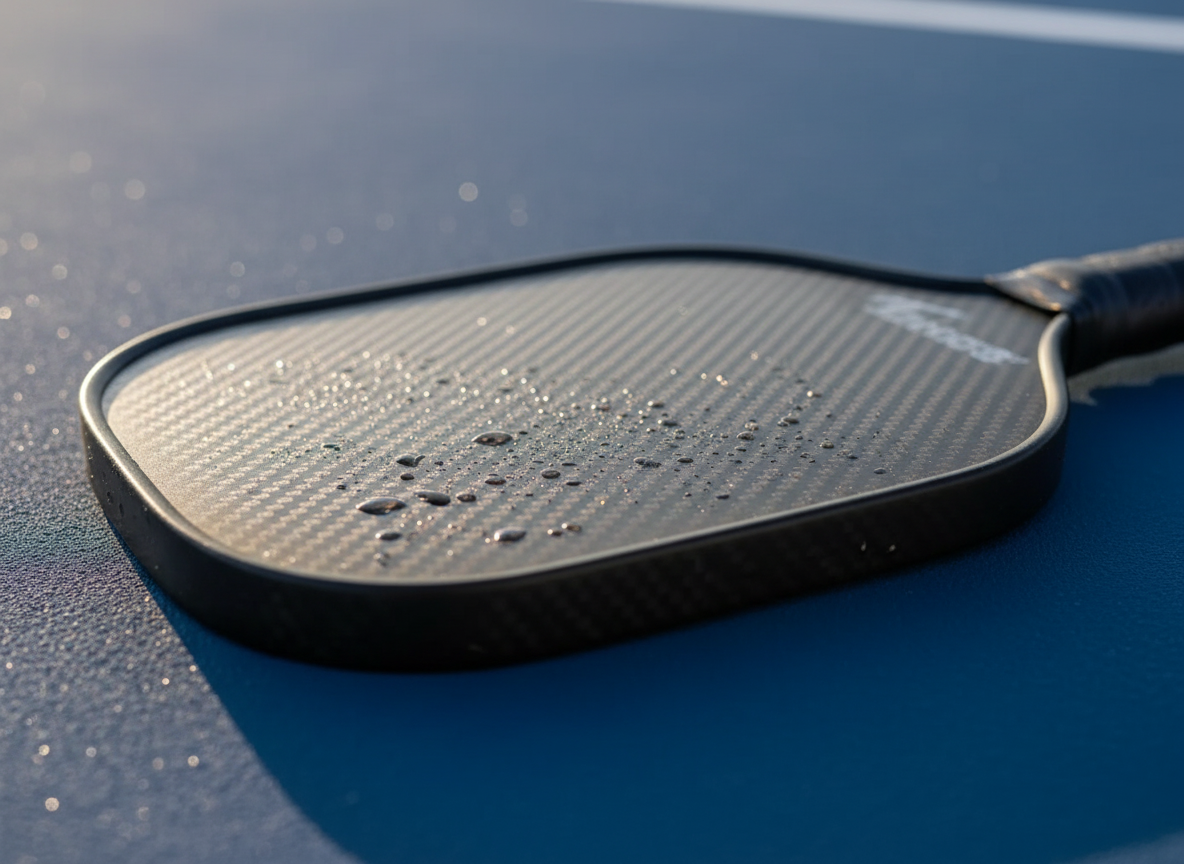
Raw Hybrid face: This is the most interesting piece of tech on the Vesper Power 14. The 7.5" hitting face uses a fiberglass base layer with carbon fiber layers on top. Fiberglass grips the ball and adds texture for spin; carbon fiber adds speed and stiffness. The "raw" designation means the outer surface isn't coated or smoothed — it's exposed carbon weave texture, which means more bite on spin shots.
StableMax octagonal handle: An octagonal cross-section gives you more deliberate repositioning on the fly — you can feel when you've shifted your grip angle without looking at the paddle. The 5.25" length is on the short side, but the angular geometry actually helps two-handed backhand players find their grip faster.
Performance Testing: Power, Control, Feel
We tested the Vesper Power 14 across outdoor concrete courts over several weeks, running it through drives from mid-court, third-shot drops from the baseline, net-battle dinking sessions, and overhead scenarios.
Raw power delivery — this is where the Vesper earns its name. The 14mm floating core punches noticeably harder than 16mm alternatives at the same swing speed. On cross-court drives and inside-out forehands, the ball explodes off the face. Tennis converts coming from a racket background will feel immediately at home — the power response has that familiar pop-through feeling rather than the muted thud of thicker cores.
Control and the soft game — here's where honesty matters. The 14mm core is a power specialist, not a touch specialist. At the NVZ, when you're trying to dink cross-court with soft hands, the paddle's energy return works against you. You'll overhit more than you expect in the first few sessions. The floating core helps with consistency across the face, but it doesn't change the fundamental physics: thinner core = less dwell time = less time to shape the ball mid-contact.
Third-shot drops are learnable but require deliberate adjustment. Players who had a 16mm paddle before will notice they need to soften their swing more than expected. After focused practice sessions, it becomes consistent — but the learning curve is real. If you're a kitchen player who wins points through patience and placement, this paddle will frustrate you. If you win points by attacking, it won't.
Spin generation — the Raw Hybrid face surprised us here. The fiberglass/carbon hybrid surface grabs the ball meaningfully on topspin serves and roll shots at the net. For players who want to generate spin as a primary strategy, the raw carbon texture provides more grip than fully-coated carbon faces.
Vibration and feel — the floating core delivers on its promise. Mishits toward the frame edge don't send vibration shock through the handle the way bonded-core paddles do. Over a long session, that's a real fatigue reducer. Players with elbow sensitivity may find this paddle gentler than stiffer construction options at the same core thickness.
Wilson Vesper Power 14 vs JOOLA Perseus Pro V Ben Johns 16mm ($299.95)
The JOOLA Perseus Pro V Ben Johns 16mm is one of the most discussed pro-spec paddles in the current market. Ben Johns has been the dominant player in pickleball for years, and this paddle is built around his preference for high-control performance at pro court speeds. It's $299.95 — $50 more than the Wilson.
The core thickness difference is the headline: 16mm vs 14mm. A 16mm core means more dwell time on contact, which translates to better feel on dinks, drops, and reset shots. At the NVZ, the Perseus gives you more time to shape the ball. The Wilson Vesper gives you less time but more energy return on drives.
Who wins? Depends entirely on what you're optimizing for. The Perseus Pro V is a control-first paddle that can still hit with authority. The Vesper Power 14 is a power-first paddle that can be tamed for control if you work for it. If you're a 4.0+ player with a refined soft game looking to add pace, the Perseus is worth the $50 premium. If you're a 3.0–3.5 aggressive player who wants to attack and doesn't want to spend $300, the Wilson wins on price-to-power ratio.
Honest edge: The Perseus is the better all-around paddle. But if budget matters and power is your priority, the Vesper Power 14 holds its own.
See JOOLA Perseus Pro V at Pickleball Central →
Wilson Vesper Power 14 vs CRBN 1 TruFoam Genesis ($279.99)
CRBN has been a favorite among serious players for its raw carbon fiber construction and spin generation. The CRBN 1 TruFoam Genesis uses foam core technology at $279.99 — TruFoam improves ball dwell vs standard polymer cores and gives the face a softer, more contact-time feel.
The TruFoam core vs Wilson's floating polymer core is an interesting matchup. TruFoam gives the CRBN a slightly softer feel at contact — more like the ball sinks into the face for a fraction longer. For spin generation and kitchen play, the CRBN 1 TruFoam Genesis is genuinely better. CRBN's carbon face texture also has a strong reputation for bite on slice shots.
Where Wilson takes it: raw power delivery and price. At $249 vs $279.99, the Wilson is $30 cheaper. On pure power metrics — drive speed, aggression off the face — the Vesper's 14mm floating core outperforms the softer TruFoam construction. If your game is built on attacking pace rather than spin manipulation, the Wilson gives you more.
Bottom line on the comparison: CRBN 1 TruFoam Genesis for spin-focused players willing to pay more. Wilson Vesper Power 14 for power-focused players who want to keep $30 in their pocket.
See CRBN 1 TruFoam Genesis at Pickleball Central →
For a deeper breakdown of how to choose between power and control paddles, our full power vs. control guide walks through the decision. And if you want to compare the Vesper against another aggressive power option, our Vulcan V740 MAX review covers a similarly attack-focused paddle tested across different player profiles.
Who Should Buy the Wilson Vesper Power 14
This paddle has a clear player profile. It's not trying to be everything to everyone.
Tennis converts: The elongated shape, octagonal handle, and power-biased construction will feel immediately familiar to players crossing over from tennis or racquetball. The raw power delivery rewards an athletic swing instead of punishing it. The 5.25" handle is short by pickleball standards but close to racket handle norms with an overgrip added — see our overgrip guide if you want to customize the feel and add grip circumference.
Intermediate players who attack first: The 3.0–4.0 player who wins points by attacking at the transition zone or driving off high bounces will find the Vesper Power 14's energy return works with their game rather than against it. You'll sacrifice some touch, but if you're playing a power game already, the trade is worth it.
Budget-conscious players who don't want to compromise on materials: At $249, this is genuine single-piece carbon fiber construction with legit floating core technology. It's not a budget paddle with budget specs — it's a premium paddle that happens to undercut the competition by $30–50.
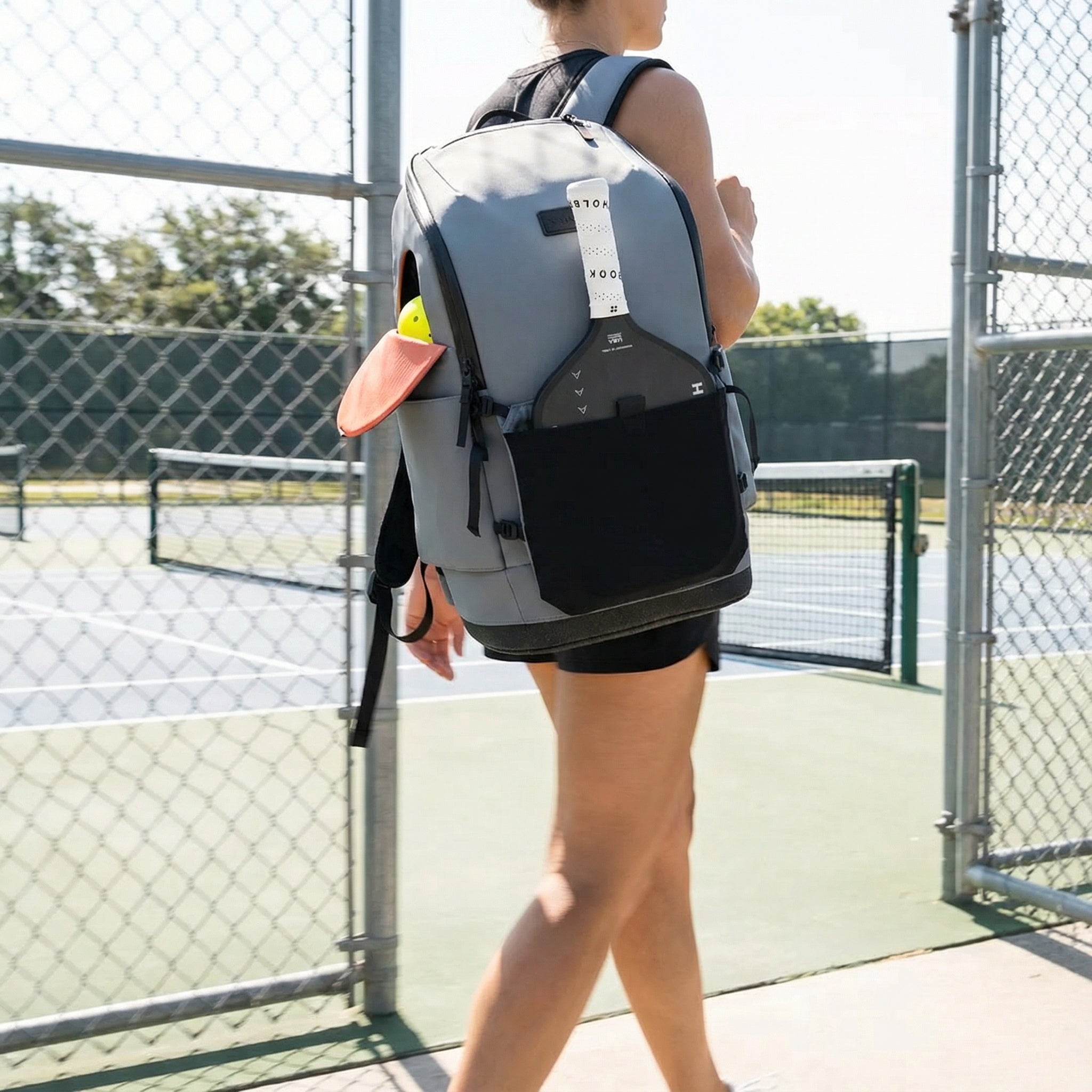
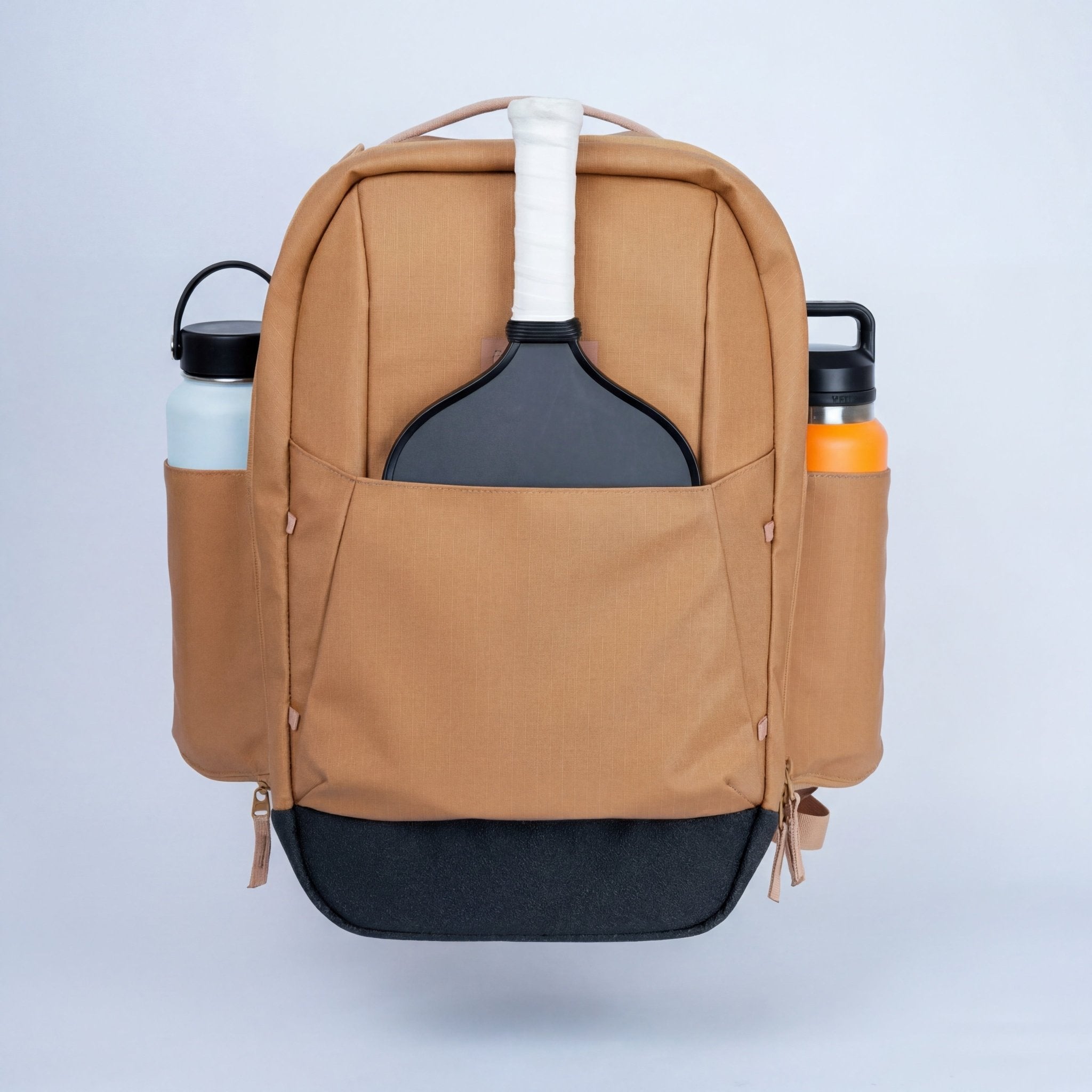
Tournament players who carry multiple paddles: If you're bringing a backup and traveling to sanctioned events, consider pairing this with the FORWRD Court Caddy Backpack — 4-paddle capacity, 15" laptop sleeve, and YKK AquaGuard zippers designed to protect gear that costs as much as this paddle does.
Who Should Look Elsewhere
Be honest with yourself here.
If you play most of your points at the NVZ through disciplined dinking and patient reset sequences, a 14mm power paddle will hurt your game more than help it. The kitchen rewards dwell time, and 14mm just doesn't give you enough. You'd be better served by the JOOLA Perseus, CRBN TruFoam, or a 16mm-core Selkirk option.
If your most important shot is the third-shot drop — the ability to reset from the baseline into a soft, arcing ball that lands in the kitchen — same answer. Power paddles require deliberate swing adjustments to hit soft; it's learnable, but you're fighting the paddle's natural tendency.
If you prefer a longer handle, this isn't your paddle. The 5.25" grip is fixed. Even with a thicker overgrip, you won't match the reach of a 5.5"+ handle construction.
Complete Your Setup
You've found your paddle. Now carry it right.
Every serious paddle deserves a bag that won't beat it up. The FORWRD Court Ranger V2 ($195) has a modular paddle sleeve that fits up to 4 paddles — paddles separated, faces protected, no scratching against other gear in the main compartment. There's also a 16" laptop sleeve if you're heading from the court to the office. Built for players who take their equipment seriously without paying luxury bag prices.

Pricing and Where to Buy
The Wilson Vesper Power 14 retails at $249.00. Pickleball Central carries it with free ground shipping on orders over $49, their standard rewards points program, and their 100% happy return policy.
For the money, this is one of the more competitively priced floating-core carbon paddles currently available. Comparable constructions from CRBN start at $279.99 and JOOLA's pro series starts at $299.95. The Wilson undercuts both while using genuine single-piece carbon construction — not a downgrade in materials, just a gap in brand premium that works in your favor as a buyer.
Buy Wilson Vesper Power 14 at Pickleball Central — $249 →
Frequently Asked Questions
Is the Wilson Vesper Power 14 good for beginners?
Probably not the first paddle you should own. The 14mm floating core and elongated shape reward players who can already generate consistent swing mechanics — beginners tend to mishit more, and a power paddle amplifies those mishits. Start with a 16mm widebody that's more forgiving on off-center contact. Once your mechanics are solid, the Vesper Power 14 makes more sense as an upgrade.
What's the difference between the Wilson Vesper Power 14 and Vesper Control 17?
Core thickness and play style. The Power 14 uses a 14mm core for maximum energy return on drives — less dwell time, more pop. The Control 17 uses a 17mm core for more dwell time, softer contact, and better feel on dinks and drops. Same frame and face construction across both; fundamentally different paddle philosophies built on the same Vesper platform. If your game is attack-first, the Power 14. If it's patience-and-placement, the Control 17.
How does the Wilson Vesper Power 14 hold up on outdoor concrete courts?
Single-piece carbon fiber construction handles outdoor play well. The edge guard protects against court scrapes on low shots. The floating core design means the face maintains consistency better over time than bonded-core paddles that can develop dead spots as the adhesive wears. Wilson's long-term durability data in pickleball is still more limited than established brands, but the materials spec is legitimate.
Is the Wilson Vesper Power 14 approved for tournament play?
USA Pickleball approval status should always be verified directly with USA Pickleball's official paddle approval list before tournament registration — approval status can change between seasons. Check the current USA Pickleball approved paddle database and confirm your specific colorway is listed before your next tournament. Don't rely on retailer listings for tournament approval status.
How does the octagonal handle affect my grip?
The eight-sided grip shape lets you feel grip angle changes by touch without looking at the paddle — useful for quick forehand-to-backhand transitions mid-rally. Players who constantly adjust grip angle may find it takes a session or two to stop over-rotating. Players with two-handed backhands typically adapt faster, since the tactile feedback on the off-hand helps locate the correct position. Adding a thin overgrip smooths the feel while keeping the tactile benefit.
How does the Wilson Vesper Power 14 compare to the CRBN 1 TruFoam Genesis?
The CRBN 1 TruFoam Genesis ($279.99) offers more spin potential and better kitchen feel with its TruFoam core technology. The Wilson Vesper Power 14 ($249) delivers more raw drive power and costs $30 less. For spin-focused players who live at the NVZ, CRBN wins. For power-first players who want to attack and keep some budget in reserve, Wilson makes more sense.
Final Verdict
Wilson built the Vesper Power 14 for a specific player type. If that's you — aggressive, attack-first, tennis background, mid-to-high recreational level — this paddle delivers on its specs at a price that legitimately undercuts the established competition.
It's not a paddle for every game style. The 14mm core limits you at the kitchen. The short handle won't satisfy players who want more reach. And Wilson is still building its pickleball track record compared to brands like CRBN or JOOLA with years of dedicated paddle development behind them.
But the tech is real, the price is right, and for a power-focused carbon paddle, $249 is hard to argue with when comparable options start at $280. Match the paddle to your game, and the Vesper Power 14 earns its spot on the short list.
Buy the Wilson Vesper Power 14 at Pickleball Central — $249 →

Leave a comment
This site is protected by hCaptcha and the hCaptcha Privacy Policy and Terms of Service apply.