

FTC Disclosure: This article contains affiliate links. If you purchase through our links, we earn a small commission at no extra cost to you. We only recommend products we'd genuinely point a friend toward.
Last Updated: October 2026
The Tutor Plus lands right in the middle of the Sports Tutor lineup — and that's both its strength and the thing that'll trip you up if you don't think it through. At $1,319 with topspin, backspin, and oscillation all included, it's the first Tutor that gives you real shot variety without getting into mid-tier ball machine territory. The problem is the add-on structure. Load it up with the remote, 2-line oscillation, and electronic elevation, and you're suddenly looking at $1,819 — which is $20 more than the Plus Ultra, a better-engineered machine from the same brand.
This review is specifically about whether the base Tutor Plus is the right call for your situation — and the honest answer depends heavily on how you plan to use it.
Quick Verdict
Pros
- Topspin, backspin, and oscillation included at $1,319 — no upsell required for core features
- 65 mph max speed, the fastest in the Tutor lineup
- AC or battery power at no price difference
- 110-ball hopper holds enough for a solid 20-minute solo session
- 3-year warranty (1 year on battery) — best coverage in this price range
Cons
- Wireless remote, 2-line oscillation, and electronic elevation cost $200, $200, and $100 extra — and must be configured at the factory
- Battery model weighs 34 lbs, which is heavy when you're hauling it to an outdoor court
- Fully loaded costs $1,819 — more than the Plus Ultra ($1,799)
- No app control, Bluetooth connectivity, or programmable drills (the ERNE has all of this at $1,776)
Price: $1,319 | Best for: Solo players who drill 3–5x/week and want spin variety | Skip if: You know you'll want the remote eventually — buy the Plus Ultra instead
Specs at a Glance
| Spec | Pickleball Tutor Plus |
|---|---|
| Price (base) | $1,319 |
| Ball capacity | 110 balls |
| Max speed | 65 mph |
| Spin | Topspin + Backspin |
| Oscillation | Standard (random, side-to-side) |
| Power options | AC/electric OR battery (same $1,319 price) |
| Weight | 27 lbs (AC), 34 lbs (battery) |
| Min feed interval | 1 second (fast rally simulation) |
| Shipping dimensions | 26" × 16" × 26" |
| Warranty | 3 years (1 year battery) |
Check Tutor Plus Price at Pickleball Central →
Why Trust This Review
FORWRD has published hands-on reviews of every machine in the Sports Tutor lineup — the Tutor Mini, Tutor Spin, Tutor Spin Ultra, and Tutor Plus Ultra — plus the Lobster Pickle Two, ERNE machine, and TITAN ACE. We've also written the comprehensive ball machine buying guide covering this entire category. That cross-machine context is where this review gets most of its value — we know exactly where the Tutor Plus fits, where it wins, and where you'd be better off with something else.
Where the Tutor Plus Sits in the Lineup
Sports Tutor makes five pickleball machines. Knowing where the Plus sits in that stack is the most useful thing this review can do for you.
| Machine | Price | Spin | Oscillation | What's the Gap |
|---|---|---|---|---|
| Tutor Mini | $849 | None | No | Entry-level; flat shots only |
| Tutor Spin | $1,119 | Yes | No | Spin, but fixed placement |
| Tutor Plus | $1,319 | Yes | Yes | Spin + oscillation; fastest speed |
| Tutor Spin Ultra | $1,649 | Yes | Yes | More spin range; upgraded internals |
| Tutor Plus Ultra | $1,799 | Yes | Yes | Remote + elevation standard; top-of-line |
The Tutor Plus is the first model in the lineup that gives you both topspin/backspin and oscillation in a single package. That's a meaningful jump from the Tutor Spin ($1,119), which has spin but drops the ball to the same spot every time. The $200 gap between the Spin and the Plus buys you the ability to practice moving to the ball — which is most of what drilling is actually for.
Performance: Speed, Spin, and Oscillation
Speed: 65 mph
Sports Tutor calls this "the fastest on the market," and for ball machines in this price tier that's roughly accurate. For context: a 3.5–4.0 player's third shot drop lands somewhere around 25–35 mph off the paddle. A hard reset from the transition zone is closer to 45–55 mph. The Tutor Plus's 65 mph ceiling gets you into drive territory, which means you can use it to practice resets and blocks against real pace.
More practically: you'll rarely use 65 mph in a drill. The useful range is usually 35–55 mph. But having the ceiling means you can dial in different speeds across a session rather than hitting the top limit and being stuck.
Spin: Topspin and Backspin
Both topspin and backspin are built into the standard Tutor Plus — not as a premium add-on, but as a core feature of the machine. You can set the spin type and intensity on the control panel. The practical difference from a flat machine is significant: topspin drops the ball into the kitchen at a different trajectory than flat drives, and backspin forces your arm to stay under the ball longer. You can't replicate either of those with a no-spin machine, no matter how good your drill setup is.
What the Tutor Plus doesn't have is programmable spin variation mid-drill — you set spin type before you start, not on the fly. That's a limitation compared to app-connected machines like the ERNE, but it's not unusual for machines in this category.
Oscillation: Standard and Useful
All Tutor Plus models come with random oscillation — meaning the machine sweeps side-to-side between shots. The sweep width is roughly the width of a singles court, which means you're getting real footwork involved in every drill. This is the feature that makes the Tutor Plus worth the $200 upgrade over the Tutor Spin for most players.
The add-on 2-Line Oscillation ($200 extra) takes this further by alternating shots between two preset spots — useful for coaches running group drills or players who want to practice specific forehand/backhand sequences. It must be factory-configured at purchase, so you can't add it later. If this is something you want, you need to decide before you order.
The AC vs Battery Decision (Don't Skip This)
This is the actual most important choice at checkout, and most reviews blow past it in a sentence. Here's the honest breakdown:
Choose AC/electric if: you have a home court, garage setup, or indoor facility with an outlet within 50 feet. The AC model weighs 27 lbs — manageable for one person to move. No battery to maintain, no wondering if you charged it. For anyone with a consistent, outlet-adjacent practice location, AC is the obvious call.
Choose battery if: you primarily play at public outdoor courts with no power access. The battery model gives you 2–4 hours of runtime per charge (varies with feed rate and ambient temperature). The trade-off is 34 lbs — that's 7 more pounds than the AC model, and it matters when you're hauling the machine from a car to a court.
Here's the thing many buyers don't realize: if you go battery-powered and later need an outlet option, you can add the External AC Power Supply as an accessory ($125 separately). You can't go the other direction — there's no add-on battery pack for the AC model. So if you're genuinely unsure, the battery model with the option to add AC later is slightly more flexible.
The External Battery Pack ($195) is an add-on accessory that gives the battery model an additional 4–6 hours of runtime. If you're doing long group sessions or teaching clinics, this is worth it. But it adds another 12 lbs to the machine.
The Add-On Math (Where the Trap Is)
This is the thing no other Tutor Plus review covers clearly. The machine has three optional upgrades that dramatically change how it functions — but they're not cheap, and they must be configured at the factory:
- Wireless 2-Function Remote: $200. Controls ball feed on/off and oscillation on/off. If you've ever tried to sprint to the machine between drills to turn it off, you understand why this matters.
- 2-Line Oscillation: $200. Alternates shots between two preset spots on the court. Required for most coach-led group drills.
- Electronic Elevation: $100. Replaces the manual elevation knob with a switch on the control panel. Not a feature you'll use mid-drill, but convenient for adjusting between sessions.
Add all three to the base $1,319: you're at $1,819.
The Tutor Plus Ultra costs $1,799 — and it's a better-integrated machine with these features built in at a lower price. If you're looking at the Tutor Plus and thinking you'll "add the remote later," you need to know that later means $200 more, and it has to be factory-configured — you can't install it yourself after purchase.
The practical rule: if you want more than just the base Tutor Plus, buy the Plus Ultra.
Tutor Plus vs Lobster Pickle Two ($1,599): Where Each Wins
The Lobster Pickle Two ($1,599) is the most direct competitor — $280 more than the base Tutor Plus.
| Feature | Tutor Plus ($1,319) | Lobster Pickle Two ($1,599) |
|---|---|---|
| Ball capacity | 110 | 135 |
| Max speed | 65 mph | 68 mph |
| Spin | Topspin + Backspin | Topspin + Backspin |
| Oscillation | Standard (random) | Random + 2-line |
| Remote | $200 add-on | Included |
| Weight (battery) | 34 lbs | ~40 lbs |
| Warranty | 3 years | 2 years |
| Price delta | — | +$280 |
Where the Lobster Two wins: it includes a wireless remote and 2-line oscillation as standard features. Larger hopper (135 vs 110 balls). Slightly higher top speed (68 vs 65 mph). For coaches who need the 2-line feature for group drills, the Lobster Two's $280 premium is actually a bargain — you're paying for what would cost $400 in add-ons on the Tutor Plus.
Where the Tutor Plus wins: $280 cheaper at base. Longer warranty (3 years vs 2 years). Lighter battery model (34 vs ~40 lbs). If you're a solo player who doesn't need the 2-line feature and can skip the remote (you can walk to the machine), the Tutor Plus saves real money.
The verdict: for solo drilling, the Tutor Plus at $1,319 is the better value. For coaching or group drill setups, the Lobster Two at $1,599 is almost certainly the better choice once you factor in what you'd spend on add-ons.
Who Should Buy the Tutor Plus
The Tutor Plus is right for you if you're a solo player who drills seriously — 3–5 sessions per week — and wants spin variety plus moving-ball placement without crossing into the $1,600+ tier. The base machine gives you everything you need for a hard solo session: topspin, backspin, oscillation, and enough speed to simulate real competitive pace.
It's especially good value if you have a home court or indoor facility with an outlet nearby. The AC model at 27 lbs is straightforward to set up, and you won't be dealing with battery life mid-session.
Who Should Look Elsewhere
Three situations where the Tutor Plus isn't the right call:
You know you'll want the wireless remote. That's an $200 add-on that must be factory-configured. If you want the remote, you're better off pricing the Tutor Plus Ultra ($1,799) or the Lobster Two ($1,599, remote included) from the start.
You're a coach running group drills. The base Tutor Plus has random oscillation — it doesn't let you preset two fixed court positions the way the 2-Line Oscillation add-on does. Add the 2-line feature ($200) and the remote ($200) and you're at $1,719 for something the Lobster Two gives you at $1,599.
You want app control and programmable drills. The ERNE machine ($1,776) has a 150-ball hopper, app connectivity, and programmable drill sequences. It's $457 more than the Tutor Plus but a fundamentally different kind of machine for players who want structured drill progressions rather than free-play oscillation.
Pricing and Availability
The Pickleball Tutor Plus is $1,319 at Pickleball Central, where it's currently in stock. That base price gets you the machine with oscillation, spin, and your choice of AC or battery power at no extra charge.
See Current Tutor Plus Price at Pickleball Central →
Accessories at PBC: External Battery Pack ($195) for battery-model owners who need extended run time. External AC Power Supply ($125) for battery-model owners who want an outlet option.
Complete Your Setup
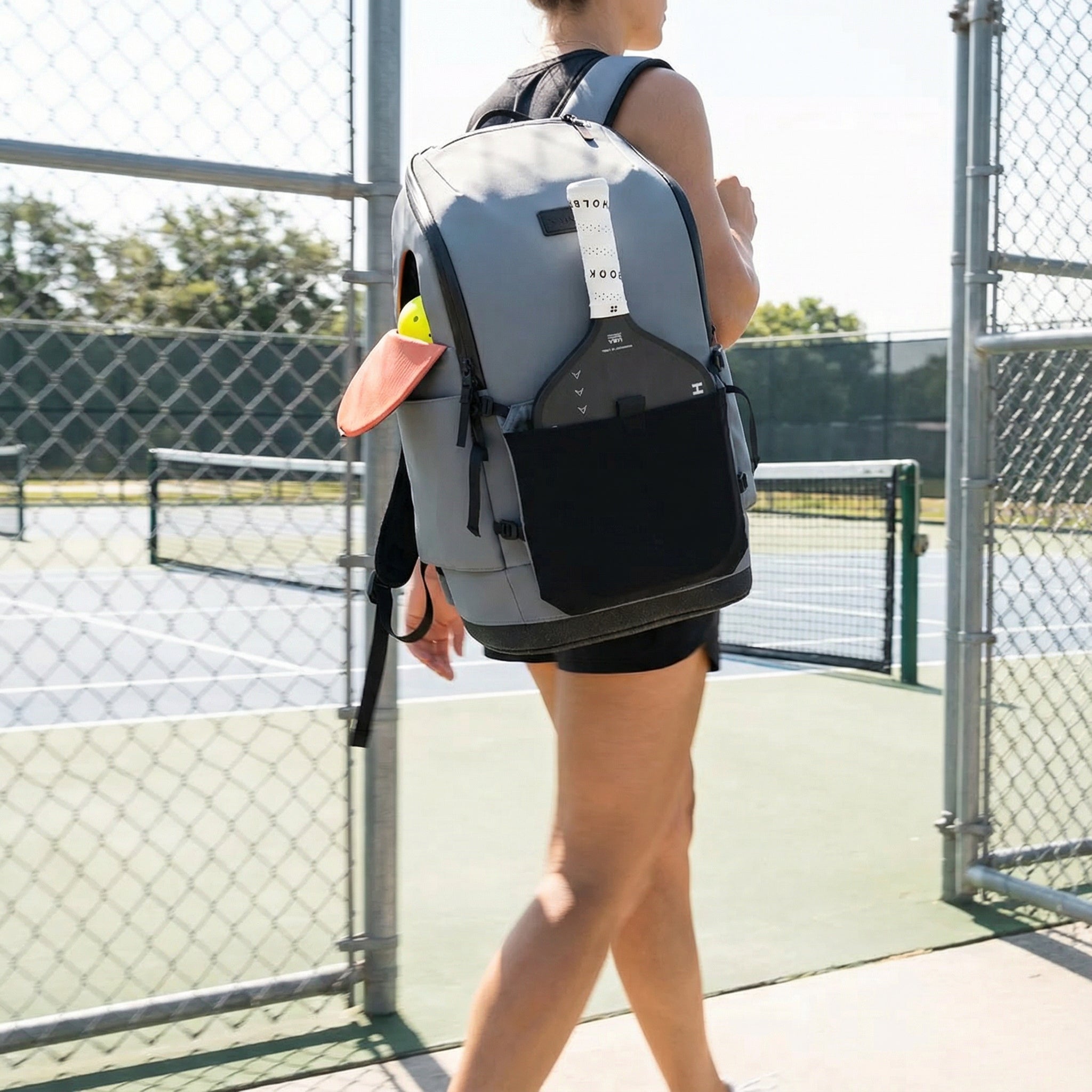
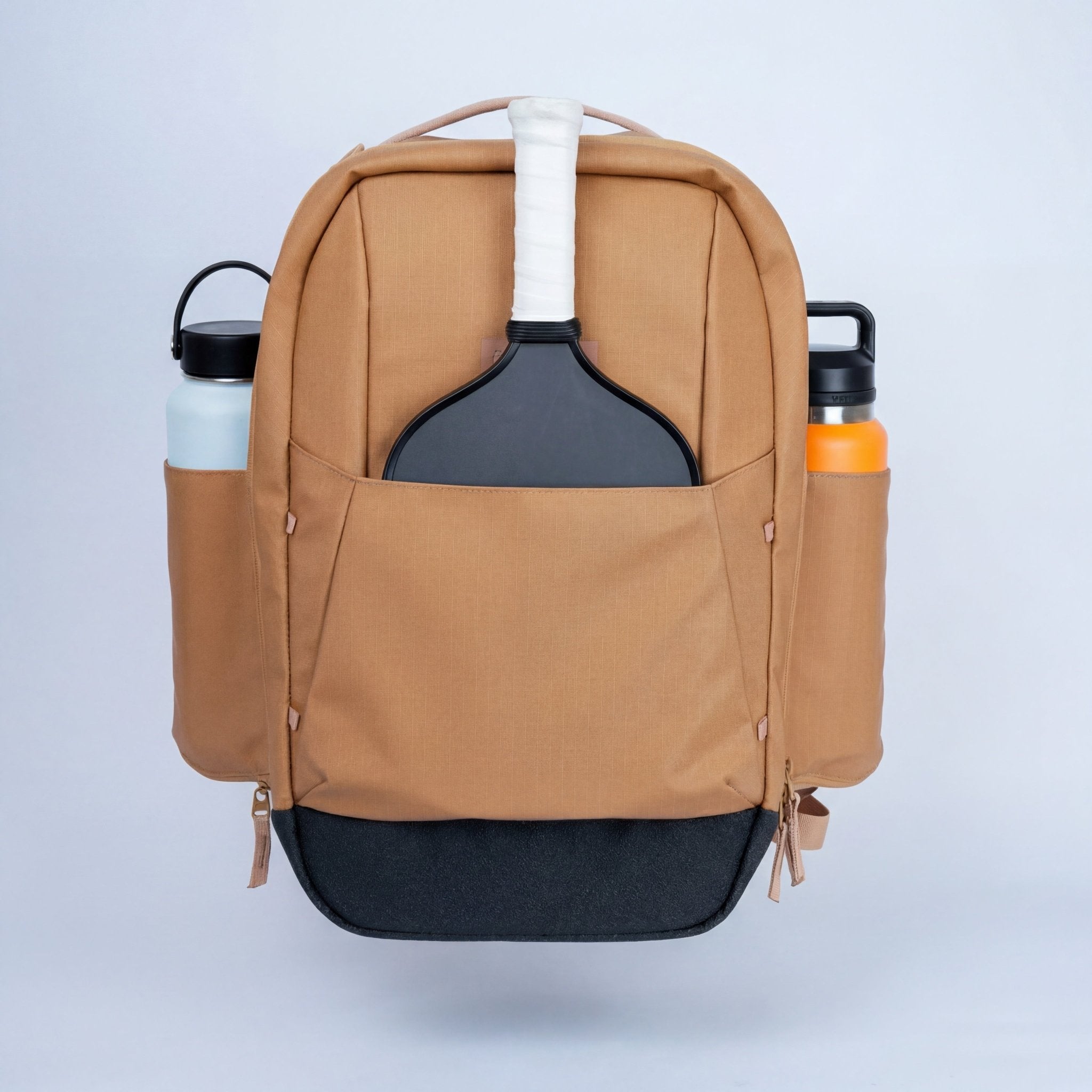
A ball machine without a bag to carry everything else is an incomplete setup. The FORWRD Court Ranger V2 ($195) has a dedicated exterior ball pocket for carrying a can of pickleballs to every session, a 16" laptop sleeve for watching drill footage between sessions, and YKK AquaGuard zippers that hold up on outdoor courts. It's the bag designed around the way serious recreational players actually train.

Frequently Asked Questions
Is the Pickleball Tutor Plus worth the upgrade from the Tutor Spin?
For most players, yes. The $200 jump from the Tutor Spin ($1,119) to the Tutor Plus ($1,319) buys you oscillation — the ability to practice moving to the ball instead of standing in one spot. That's the difference between drilling footwork patterns and just hitting the same shot in the same place every time. If you're drilling seriously more than twice a week, oscillation is worth the price.
Can you add the wireless remote to a Tutor Plus after purchase?
No. The wireless remote must be factory-configured at the time of purchase. It's a $200 add-on that has to be selected when you order, not a retrofit you can do later. If you know you want the remote, either add it to your order or consider the Tutor Plus Ultra, which integrates these features at a better total price.
What's the difference between the Tutor Plus and the Tutor Plus Ultra?
The Plus Ultra ($1,799) includes the wireless remote, electronic elevation, and more integrated controls as standard features — not add-ons. The base Tutor Plus ($1,319) is $480 cheaper but requires expensive factory add-ons if you want those features. If you're pricing a fully-loaded Tutor Plus with remote and elevation, the Plus Ultra is almost always the better value at $1,799 vs. $1,619 loaded.
How long does the battery last on the battery-powered model?
Sports Tutor rates the internal battery at approximately 2–4 hours of continuous use, depending on feed rate and temperature. The optional External Battery Pack ($195) adds another 4–6 hours of runtime. For most solo sessions (45–90 minutes), the internal battery is sufficient. Coaches running all-day clinics should budget for the external battery.
Is the Tutor Plus good for beginners?
It's functional for beginners but priced for serious players. A beginner who drills once or twice a week doesn't need oscillation and topspin — they need consistent flat shots at moderate speed, which the Tutor Mini ($849) handles just fine at $470 less. The Tutor Plus is the machine for players who've already outgrown flat-shot repetition and want to drill against realistic spin and placement variation.
How does the Tutor Plus compare to the ERNE machine?
The ERNE ($1,776) is a different kind of machine. It has a larger 150-ball hopper, app control for programmable drill sequences, and Bluetooth connectivity — all of which the Tutor Plus doesn't have. The ERNE costs $457 more at base. If you want structured, programmable drill progressions with app-based control, the ERNE earns its price. If you want a reliable machine with spin and oscillation that you control manually, the Tutor Plus at $1,319 does the job without the technical overhead.
Final Verdict
The Pickleball Tutor Plus earns its price at $1,319 for the right player: a serious solo driller who practices 3–5 times per week, has a consistent practice location (home court or indoor facility), and wants spin variety and oscillation without paying for features they don't need. In that specific scenario, it's one of the best values in the $1,200–$1,400 ball machine range.
The machine's weakness is its add-on structure. Buy the base Tutor Plus and commit to it as-is, and you'll get excellent value. Start adding factory options and you're spending your way into Plus Ultra territory without getting a Plus Ultra. Know what you want before you order — the Tutor Plus is a machine that rewards buyers who've done their homework.

Leave a comment
This site is protected by hCaptcha and the hCaptcha Privacy Policy and Terms of Service apply.