

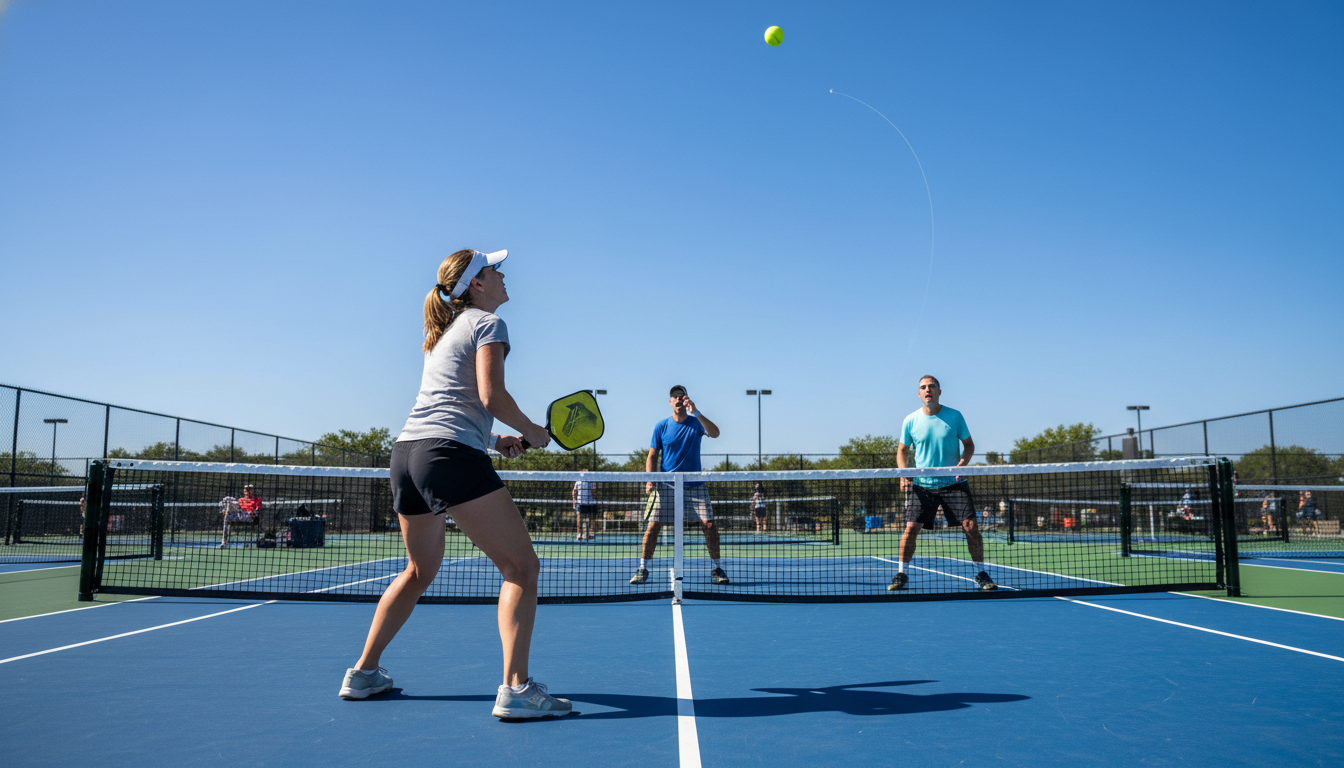
The lob is the most misunderstood shot in pickleball. At 3.0–3.5, it's genuinely underused — players who don't move well backward give you free points when you float one over their heads. At 4.0 and above, it's a specialty shot that gets punished if you lean on it. The honest answer to "should I lob?" is: it depends on who you're playing, where they're standing, and what the wind is doing. Here's how to make that call correctly.
Last updated: July 2026
"The lob is the most misunderstood shot in recreational pickleball. Players use it when they're scared, not when it's right. The best lobbers I've played against use it maybe twice a match — but those two shots are worth three points each because their opponents never see it coming." — Grub, FORWRD Co-Founder
What Makes a Good Pickleball Lob (And What Gets You Burned)
A good lob has two requirements: height and depth. Height means the ball clears your opponent's extended paddle by at least two feet — ideally three to four. Depth means it lands within the last three feet of the baseline, not in the transition zone where your opponent can run it down comfortably and overhead it back at you.
A lob that clears the net with two feet of height and drops four feet inside the baseline isn't a good lob. It's a setup ball. Your opponent has time to read it, backpedal, set their feet, and hit a full overhead. The only lob that causes real trouble is one that forces your opponent to chase backward, set feet under pressure, and execute an overhead moving away from the net.
Most recreational lobs fail on depth, not height. Players float the ball over comfortably enough but leave it short. That's actually worse than a lob that's too low — a short lob gives your opponent a comfortable attack with full balance, while an off-target lob at least creates some awkwardness.
Three types of lobs — and they're not interchangeable:
- Topspin lob (offensive): Hit with an upward brushing motion, creating topspin that pulls the ball down sharply after it peaks. Harder for opponents to judge trajectory. Best used offensively when they're crowded at the NVZ line.
- Defensive lob (flat): A flat arc hit to buy time — typically when you're pulled wide or out of position. Not intended to win the point; just to reset the rally and get back into position.
- Fake lob / cross-step reset: A shot that starts with open paddle face body language (lob cue) but becomes a reset or drive at the last second. Works exactly once per opponent per game — after that, they've seen it.
When to Lob: 4 Situations Where It Actually Works
Use the lob specifically, not randomly. These four situations are where it genuinely creates problems:
1. Both opponents crowded at the NVZ line, weight forward. When your opponents are leaning toward the net anticipating a drive or a dink, the lob exploits the space directly behind them. Their forward momentum works against a quick backpedal. This is the textbook offensive lob setup — and it requires you to read their body lean before pulling the trigger.
2. An opponent who doesn't move backward well. You'll identify this player by how they handle lobs in the first few games: they shuffle back awkwardly, they reach for overheads instead of setting under them, or they simply miss them. Once you've spotted it, the lob becomes a tactical weapon to deploy once or twice per game — not constantly, but at the exact right moment.
3. You've been pulled wide or deep and need time to reset. The defensive lob isn't glamorous, but it's functional. When you're stretched out of position and a sharp crosscourt dink is coming right at you, floating a defensive lob gives you the three to four seconds you need to get back to center. Don't try to win with this lob — just survive it.
4. After establishing a dinking pattern that's pulled them forward. Five or six soft dinks in a row gets your opponents leaning in, expecting the seventh soft ball. The lob off a dink pattern is disorienting because the pattern says "soft shot incoming" and the lob says "got you." The setup matters — a random lob on point one won't catch anyone leaning.
5. You've identified the sun-side opponent outdoors. Here's the tactic almost no guide covers: on a sunny outdoor day, identify which opponent is facing into the sun. A deep lob toward that player becomes extremely difficult to track and attack — the overhead requires looking directly into the sun at the peak of the swing. Players at 4.0+ level actively look for this opportunity. When you find the sun-side opponent, a lob to their backhand corner exploits both the sun and their weaker overhead side simultaneously. It's not luck — it's spatial awareness applied deliberately.
Doubles vs. singles: In doubles, the offensive lob carries more risk — one partner can often retreat to cover even a good lob while the other holds the kitchen. In singles, a lob that clears your opponent sends them from the NVZ to the baseline alone. If your lob is deep, they're hitting a defensive overhead or groundstroke from behind the baseline while you advance. The percentage math in singles strongly favors the lob at exactly the right moment — which is why elite singles players use it far more deliberately than doubles specialists do.
The Lob Decision Filter: 3 Questions Before You Commit
Before committing to any lob, run this 3-question filter. Once it's instinct, it takes half a second. Until then, it will save you from the most common lob disasters at club level.
Question 1: Are both opponents at the kitchen line?
A lob against players with room behind them isn't a lob — it's a slow ball they can track down and attack. Both players need to be at the NVZ line, close enough that retreating to the baseline requires real scrambling. In doubles, one retreating partner can often cover a lob even if the other is caught — which is why the offensive lob is a bigger weapon in singles than in doubles.
Question 2: Is my lob deep enough to clear their overhead reach?
A player at the NVZ line has about 7–8 feet of overhead reach. Anything below that trajectory gets attacked hard before it lands. Your lob needs to carry deep — landing within 3–4 feet of the baseline. Hitting it 8 feet deep instead of 14 feet is not a close miss. It's a comfortable overhead for the player you were trying to send sprinting to the back court.
Question 3: Do I have time to reset after they attack?
Even a well-executed lob sometimes gets attacked. If your opponent retreats, sets up, and smashes — are you back in position to handle it? Lobbing from a scramble position when you're still off-balance means the overhead coming back ends the point before you can respond. Only lob when you can recover your position afterward.
All three yes: lob. Any one is no: hold back, continue the dink exchange, and wait for the right moment. This filter is what separates players who lob with purpose from players who lob on hope.
How to Hit a Topspin Lob vs Defensive Lob (Mechanics)
Topspin lob mechanics:
Start from a low-to-high swing path, opening your paddle face slightly. Contact the ball below center and brush upward aggressively — you're generating topspin the same way you would on a topspin drive, just with a steep upward finish. The ball should leave the paddle with forward spin that pulls it down toward the baseline. Aim for the back two feet of the court. Your follow-through finishes above your shoulder.
Where most players go wrong: they hit the topspin lob with a flat, looping motion that produces more arc than spin. A ball that arcs high but drops flat is easier to judge. Add actual spin — your opponent's brain has trouble calculating where a rotating ball will land versus a flat-flying one.
Defensive lob mechanics:
Open your paddle face early and use a gentle upward push, not a full swing. You're lobbing to buy time, so you don't need pace — you need height and depth. Aim for the back third of the court, not the middle. A defensive lob that lands in the transition zone is a death sentence; your opponent walks it down comfortably. Get depth, accept the lower height, and use those seconds to recover position.
Cross-Court vs Down-the-Line: Where to Send the Lob
Direction matters as much as height and depth. The two choices — cross-court or down-the-line — have different risk/reward profiles, and the right call depends on who you're lobbing over and where you're standing.
Cross-court lob: The ball travels over the lower center of the net (the strap runs ~34 inches; the net at the sidelines is 36 inches). That extra two inches of clearance matters when you're lobbing defensively from a stretched position. Cross-court also gives you more recovery time — the longer flight path means an extra half-second to reset your position. In doubles, a cross-court lob aimed at the seam between opponents creates the "mine/yours" moment of hesitation that loses them a split-second of reaction time.
Down-the-line lob: Shorter flight path means your opponent sees and reacts faster — so this one needs to be deep. It works best when the opponent on that side has their weight shifted toward the middle, leaving the line open. Against a sun-side opponent outdoors, lob down their line every time: shorter flight means they're tracking a fast-traveling ball directly into the sun before they can get under it.
Practical rule: when in doubt, go cross-court. The net clearance margin and recovery time are better. Save the down-the-line lob for a specific setup: the line is genuinely open and your opponent is committed away from it.
Defending the Lob: Overhead Setup and Recovery
The lob defense starts before the lob happens. Watch for three cues that telegraph a lob is coming:
- Open paddle face + slight backward lean. Players preparing to lob typically drop their paddle angle to slightly open (face pointing up) and lean their weight fractionally back as they set up for the shot. It's subtle, but it's there if you're watching their paddle.
- Feet turning sideways. A player about to drive or dink keeps their feet roughly square to the net. Someone about to lob often pivots slightly sideways — their body is orienting for the upward swing without realizing it.
- Excessive dinking depth from the NVZ. Players who are about to lob will frequently dink one ball deep into your court to push you back slightly — creating the gap behind you they need to lob into. If your opponent dinks it unusually deep when you're crowding the kitchen, take a half-step back.
Once the lob is in the air:
Turn and run — don't backpedal. Backpedaling means you're watching the ball and running sideways, which kills your speed. Turn your hips, run back on a diagonal toward where the ball is landing, then set under it. You get there faster and you arrive with actual footwork underneath you.
Call it early. In doubles, whoever is better positioned calls "mine" immediately. A lob that both players watch because neither called it is a lost point. The player on the side the lob went to usually takes it; the other player covers the middle.
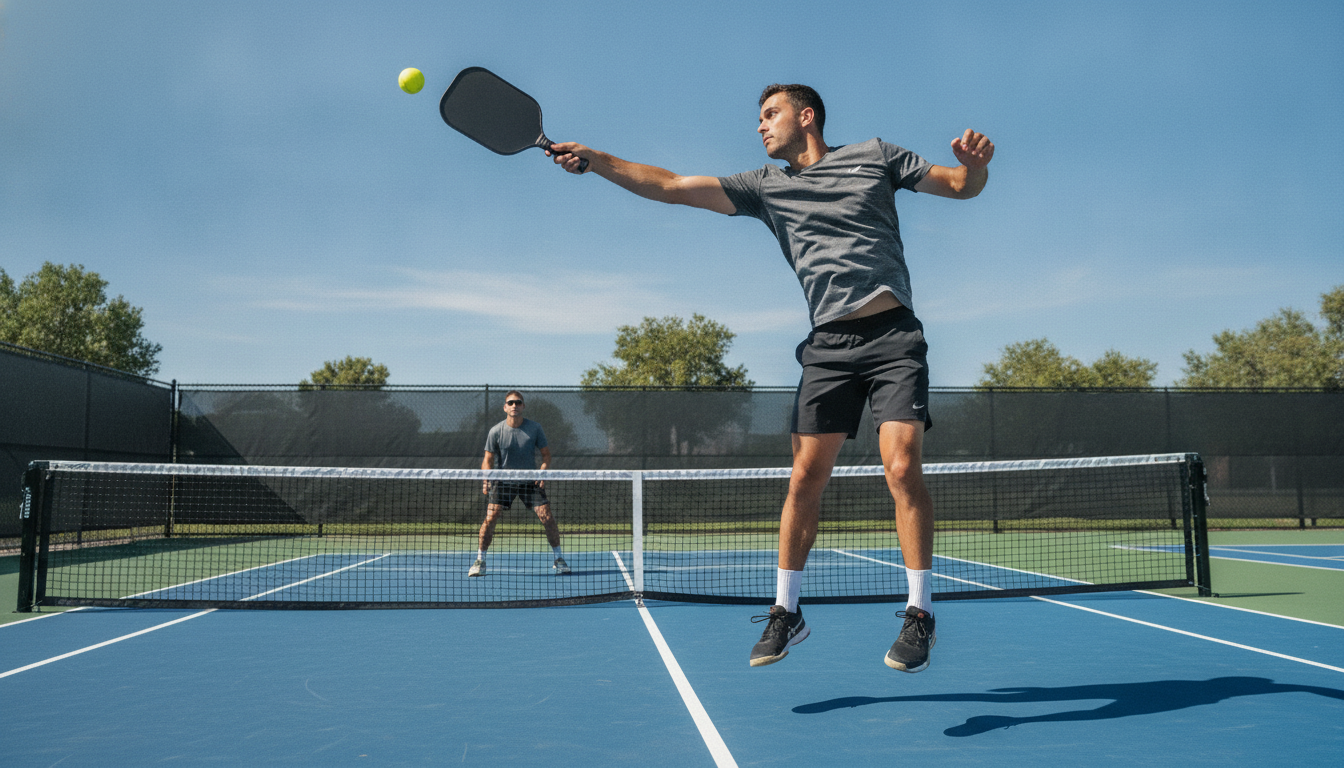
The overhead mistake everyone makes. Hitting the overhead too hard before you've set your feet. Players reach for the ball while still moving backward and swing full force — the result is an error into the net or long. Set under the ball, feet planted, then swing at 75% power cross-court. A controlled overhead into a corner wins the point just as well as a smash, without the error rate.
For a complete breakdown of overhead mechanics, footwork, and when to put the smash away vs. hit a controlled placement, the Pickleball Overhead Smash Strategy guide covers every scenario. See also: the reset shot guide covers what to do when you're out of position after a lob gets overhead'd back at you hard.
When the Lob Backfires (And What to Do Instead)
Most guides treat the lob as a legitimate option in all contexts. It isn't. Three specific situations where lobbing gets you punished:
Against a lefty positioned on the left (ad) side. A lob over a right-handed player at the ad side lands near their backhand — that's a harder overhead. Lob over a lefty on the ad side and you've given them a forehand overhead, their strongest shot. This is one of the most common lob errors in mixed doubles and rec play. If the lefty is on the left, drive instead. Lob to their backhand side (the right/deuce side).
Against a player with a reliable overhead. If your opponent has overhead'd two or three lobs cleanly in the current game — setting feet, tracking well, hitting controlled angles — stop lobbing against them. You've already seen their overhead in action. Use drives and sharp dinks instead; save the lob for the player on the other side of the court.
In significant outdoor wind. A topspin lob in a 15-mph tailwind doesn't dip — it keeps sailing. A headwind lob that you've weighted for depth lands three feet inside the baseline instead of one foot in. Wind makes lob depth control nearly impossible on gusty days. On those days, dink more, drive more, and lob only when you're truly desperate and a defensive float is your only out.
When you've already lobbed twice in the last five points. The lob works because of surprise. Two lobs in a short sequence and your opponent has already adjusted — they're watching your paddle face, they've positioned slightly deeper, and they've mentally prepared for it. Mix in a drive to the hip, a sharp angle dink, or a body shot instead.
For more on how the lob fits into broader doubles strategy, and how to layer shot-selection patterns that keep opponents guessing, the full strategy guide covers point construction from serve through NVZ play. When you decide not to lob, you need an alternative — Pickleball Shot Selection: Attack, Reset, or Dink walks through the decision tree. If the right call is an aggressive drive, the speed-up shot guide has the mechanics for when and how to execute it.
Complete Your Setup
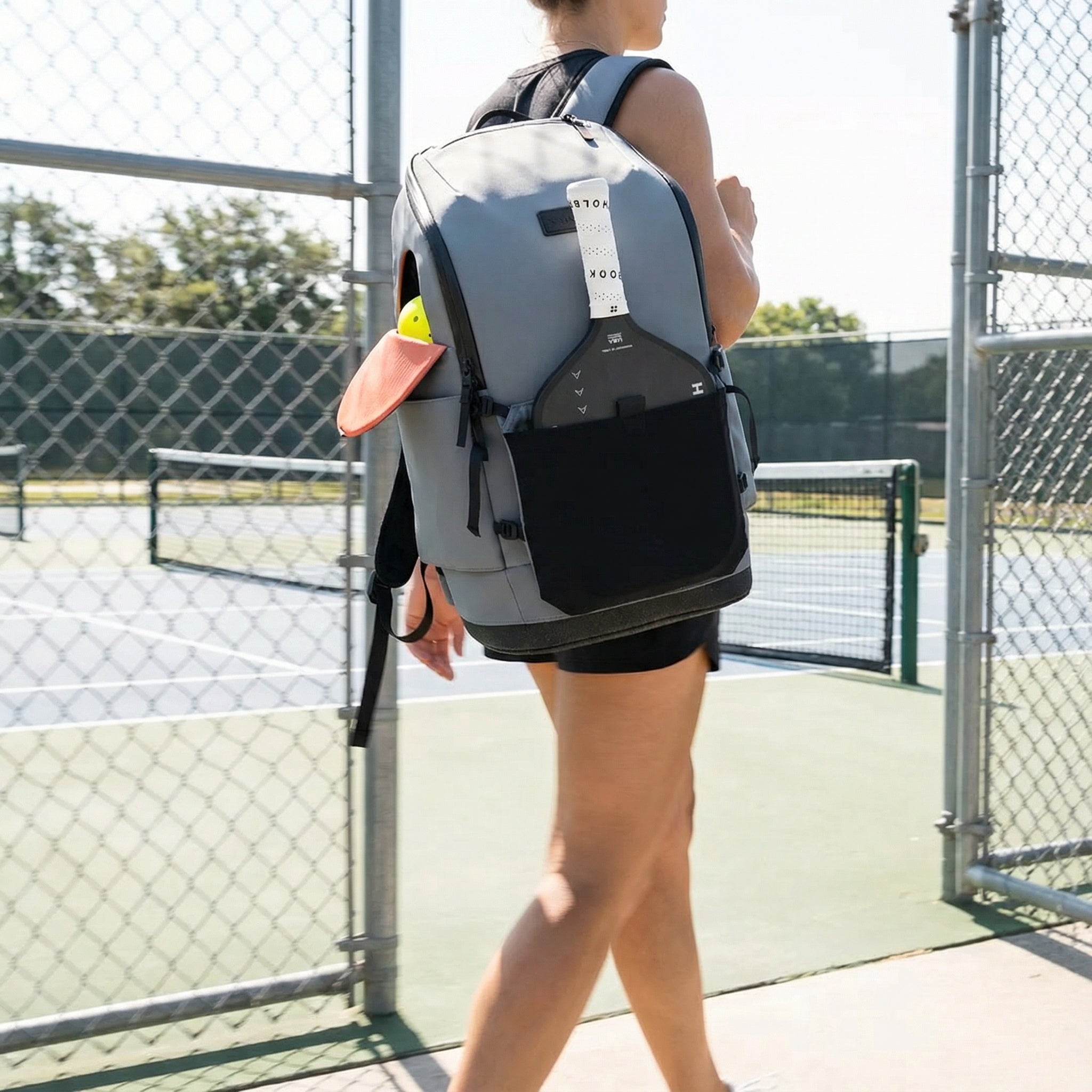
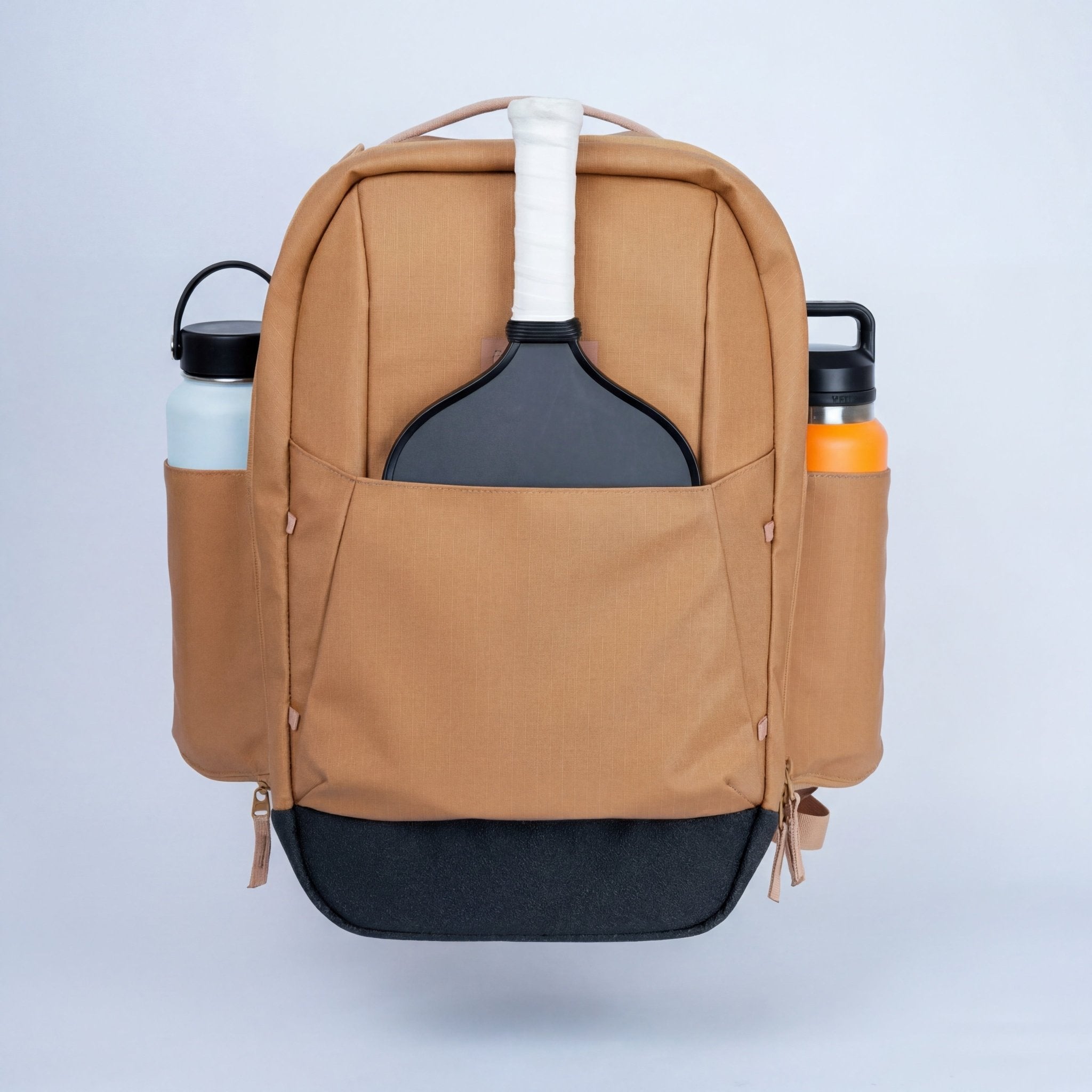
Strategy wins games, but a disorganized bag loses you time between sets. The Court Ranger V2 keeps two paddles and all your court gear sorted — 16" laptop sleeve, modular paddle sleeve, YKK AquaGuard zippers. Designed with 500+ real players.
FAQ: Pickleball Lob Questions
When should you lob in pickleball?
Lob when both opponents are crowded at the NVZ line with weight forward, when you've identified an opponent who struggles moving backward, or when you're pulled wide and need time to reset. Don't lob randomly — the setup determines whether the lob is a weapon or a free overhead for your opponent.
Is lobbing legal in pickleball?
Yes, lobbing is completely legal in pickleball. There are no restrictions on shot type, arc, or height in USA Pickleball rules. The only relevant rule is that the ball must land in-bounds — which for a deep lob means inside or on the baseline.
How do you hit an effective pickleball lob?
An effective lob needs height (clear your opponent's extended paddle by two to three feet) and depth (land in the back two to three feet of the court). For an offensive topspin lob, brush upward through the ball with an aggressive finish above your shoulder. For a defensive lob, use a gentle open-face push aimed at the back third.
How do you defend against a pickleball lob?
Turn and run diagonally toward the landing spot rather than backpedaling. Watch for the three pre-lob cues: open paddle face, slight backward lean, and sideways foot position. Once positioned under the ball, hit a controlled overhead cross-court at 75% power — not a full smash. Set your feet before you swing.
Is the lob a good strategy in pickleball?
At 3.0–3.5 recreational play, yes — many players don't move backward well and the lob is underused. At 4.0 and above, it's a specialty shot with a narrow window of effectiveness. It works when players are crowded at the kitchen and you've established a pattern, but it's punished consistently against opponents with reliable overheads.
And one more: the kitchen rules guide is worth bookmarking — understanding exactly where you can and can't volley changes how you think about lob placement near the NVZ.
Ready to upgrade your gear? Shop the Court Caddy Backpack ($325) — built with 500+ real players for exactly this kind of game.

Leave a comment
This site is protected by hCaptcha and the hCaptcha Privacy Policy and Terms of Service apply.